

TL;DR: How to Survive (and Enjoy) Camping in the Rain
Don't let a bad forecast ruin your trip! Here is a quick guide to staying warm, dry, and completely unbothered when the weather turns sour:
- Pick Your Spot Wisely: Never camp on perfectly flat ground. Look for slight elevation so water drains away from your tent, and avoid "drip zones" directly under trees.
- Avoid the Footprint Trap: A tarp that sticks out past your tent edges will act like a swimming pool. Use a custom-fit footprint tucked entirely underneath to stop rain from pooling.
- Cover Up First: Traditional tents get soaked during assembly. With a Coody air tent, you can drape the rainfly over the structure before inflating, keeping the interior 100% dry.
- Stake It Down Hard: Wet ground is soft ground. Drive long pegs in at a 45-degree angle and tension your guy lines immediately so your rainfly doesn't sag and leak.
- Don't Seal It Shut: Condensation is the real enemy. Keep your vents open to let humid air escape. Coody's breathable canvas helps prevent that clammy, wet feeling inside.
“Might as well sleep in a puddle.”
If you’ve ever tried to pitch a tent in anything approaching steady rain, you’ve probably muttered something like this under your breath—or watched a friend wrestle with a soggy rain fly, mud-covered tent pegs, and a growing sense of dread. And sure, with a $120 big-box tent and no real plan, getting soaked is kinda inevitable.
But here’s the truth: staying dry in the rain isn’t about luck, it’s about tent design, preparation, and knowing what actually works.
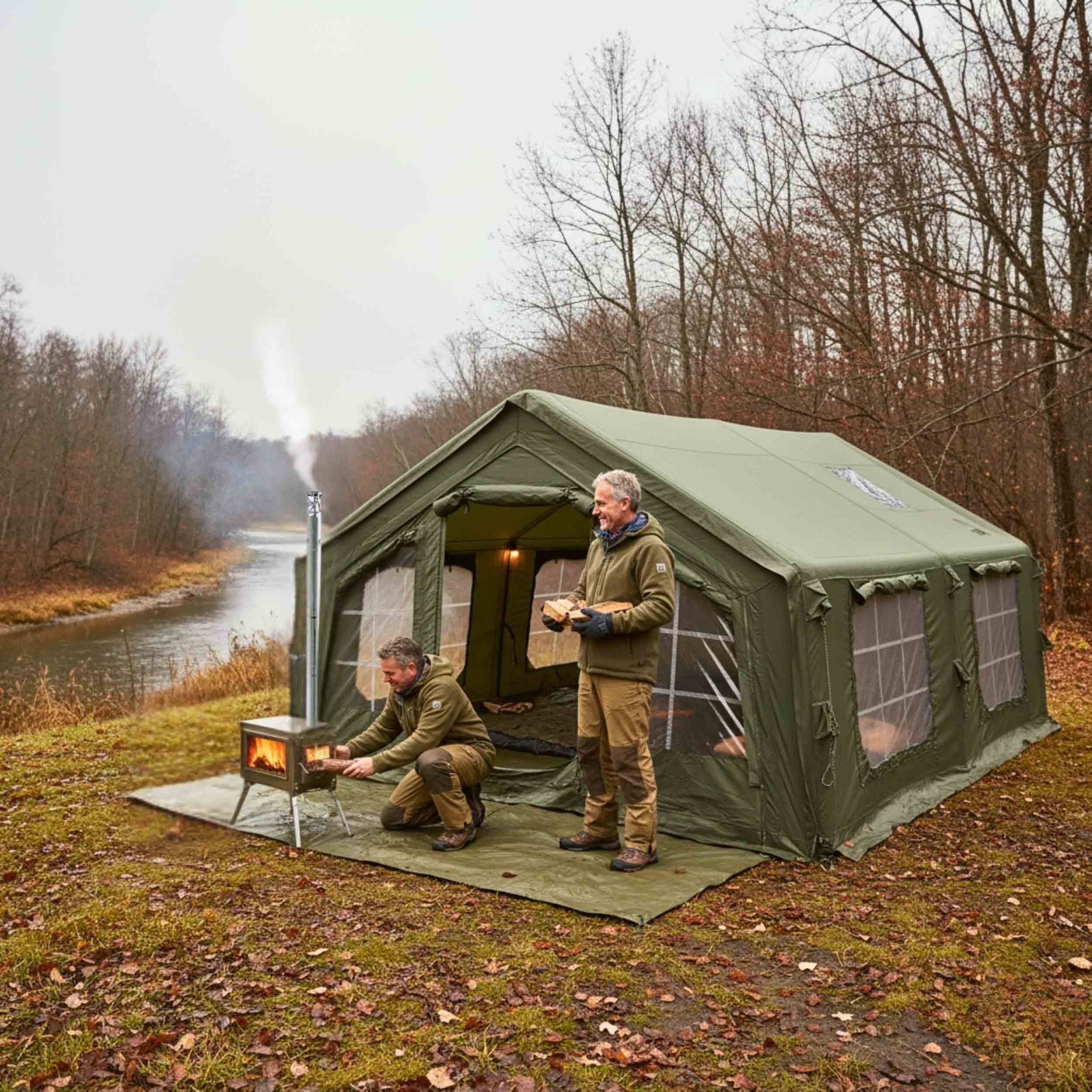
And if you’re using a tent built for real conditions — like a Coody — you’re not just surviving the storm. You’re setting up calmly, staying dry from the first stake to the last zipper pull, and ending the night warm, dry, and probably even smiling as the rain drums steadily on your rain fly.
The Real Problem Isn’t the Rain—It’s the Setup


Most tents fail in wet weather not because of the storm, but because of three fatal flaws:
-
Poor site selection (hello, puddle bed)
-
Flimsy materials that leak at the seams or sag under water weight
-
A setup process that requires you to get soaked just to stay dry
Cheap tents assume you’ll be camping in fair weather. Premium shelters — like Coody —don’t just assume you’ll face wind, snow, and hours of rain, they’re built to cope easily with these conditions.
How to Set Up a Tent in the Rain—Without Becoming Part of the Drainage System
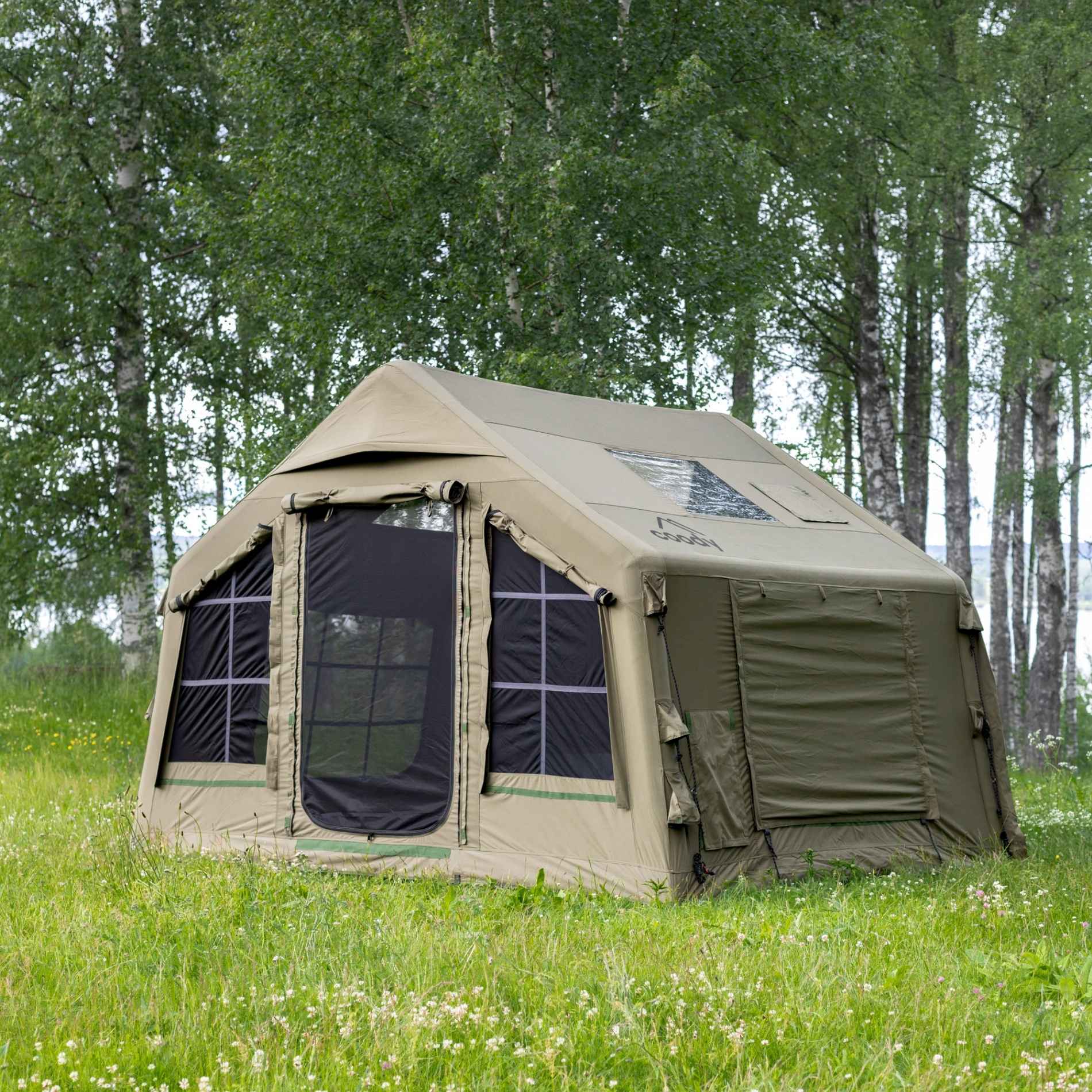
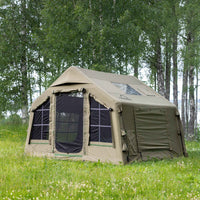
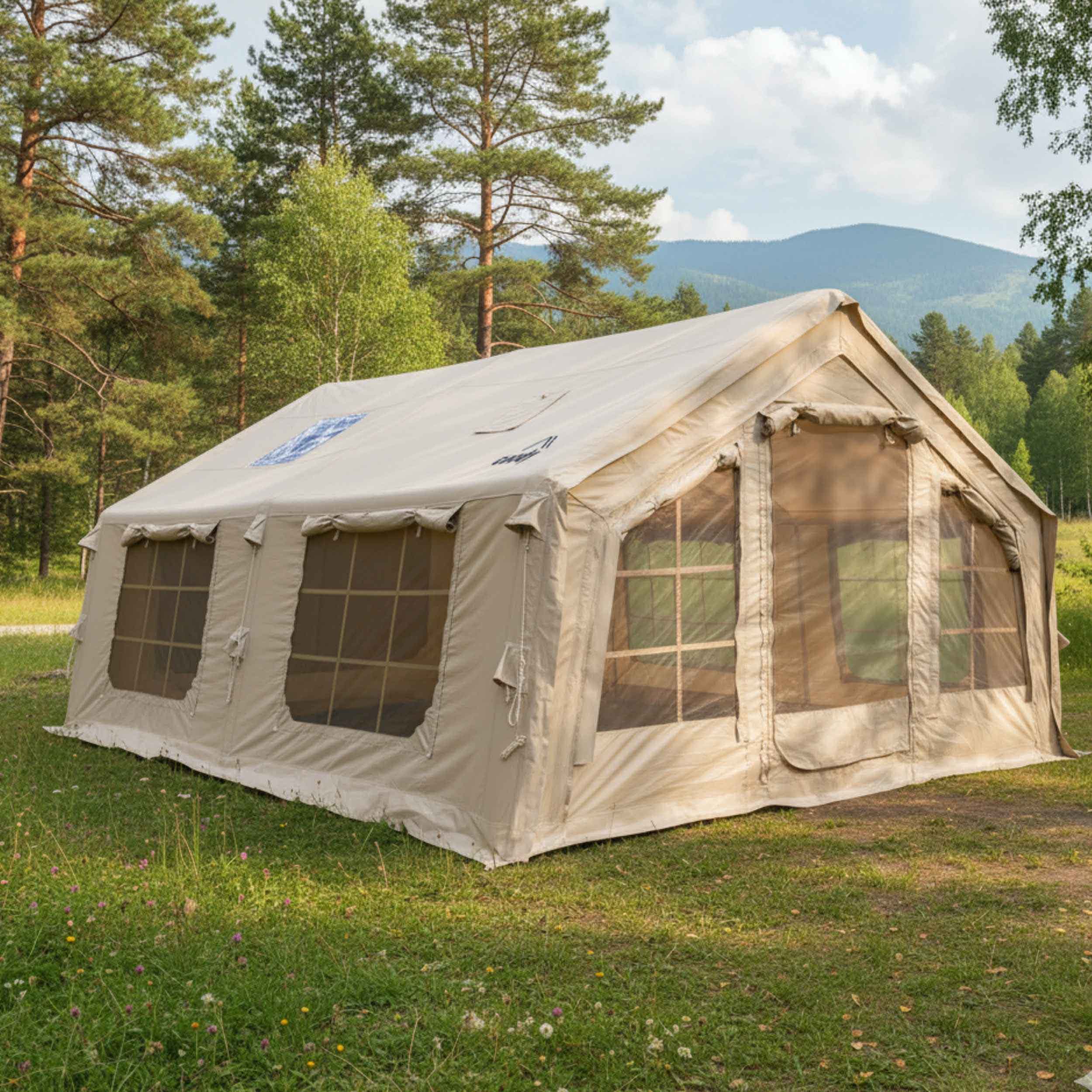
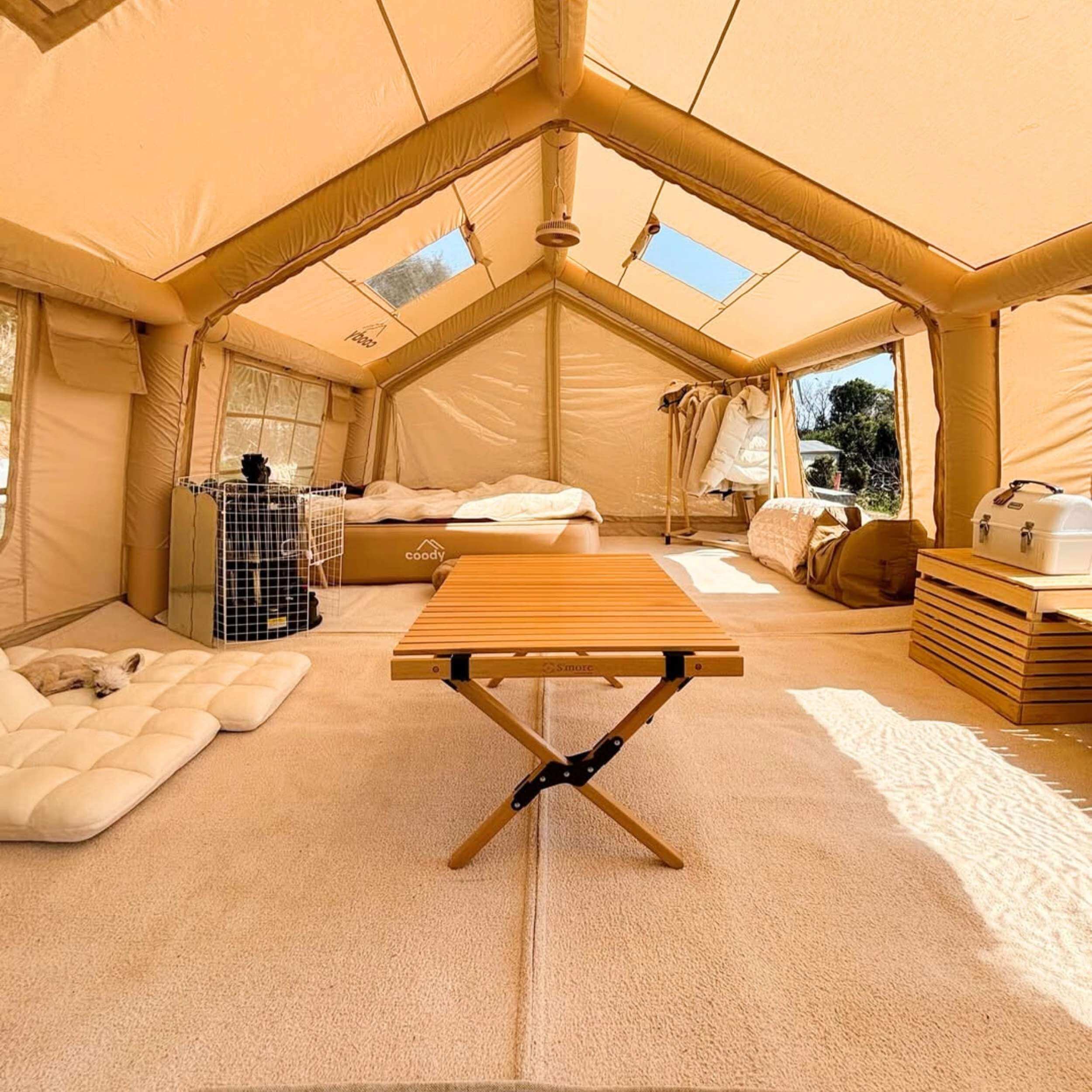
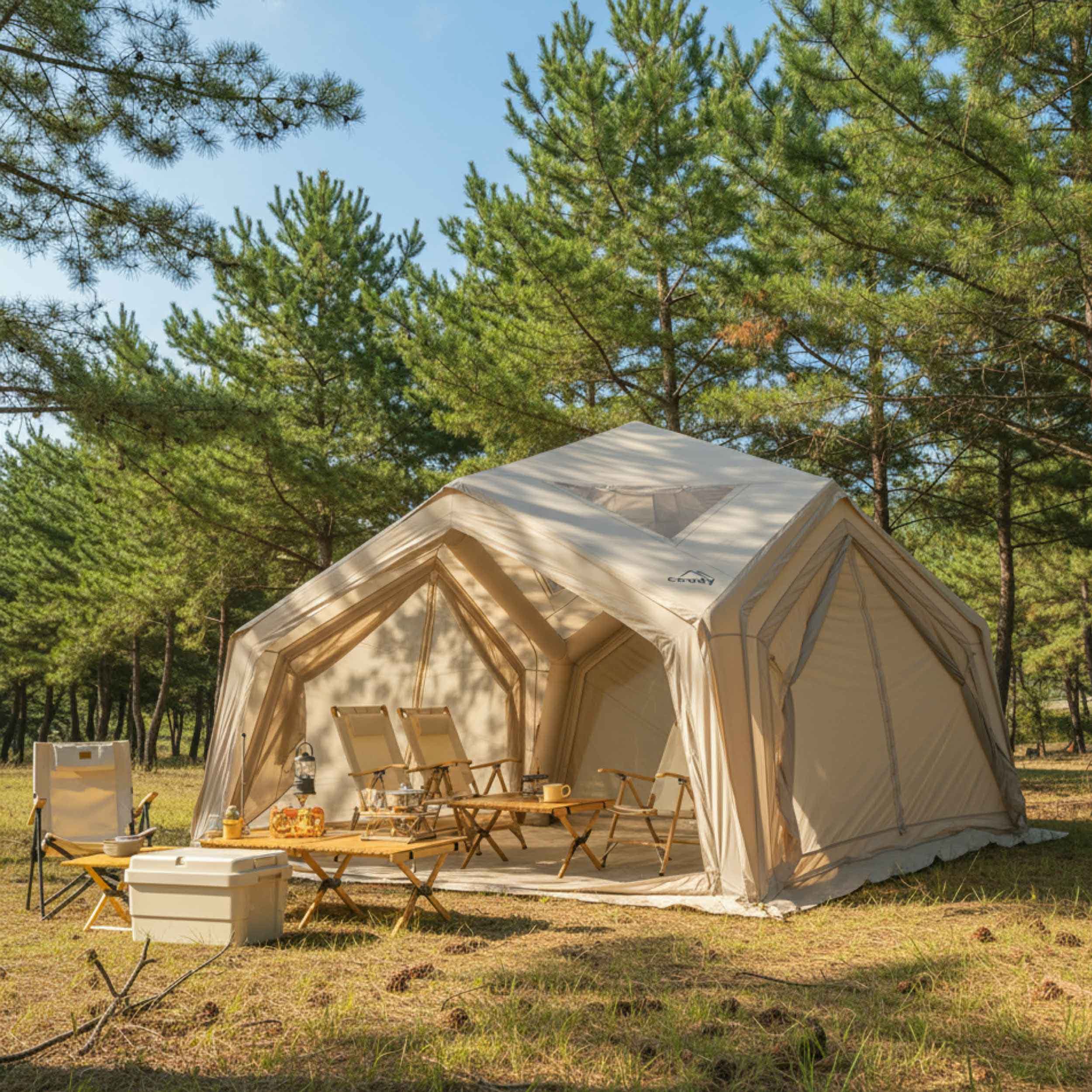
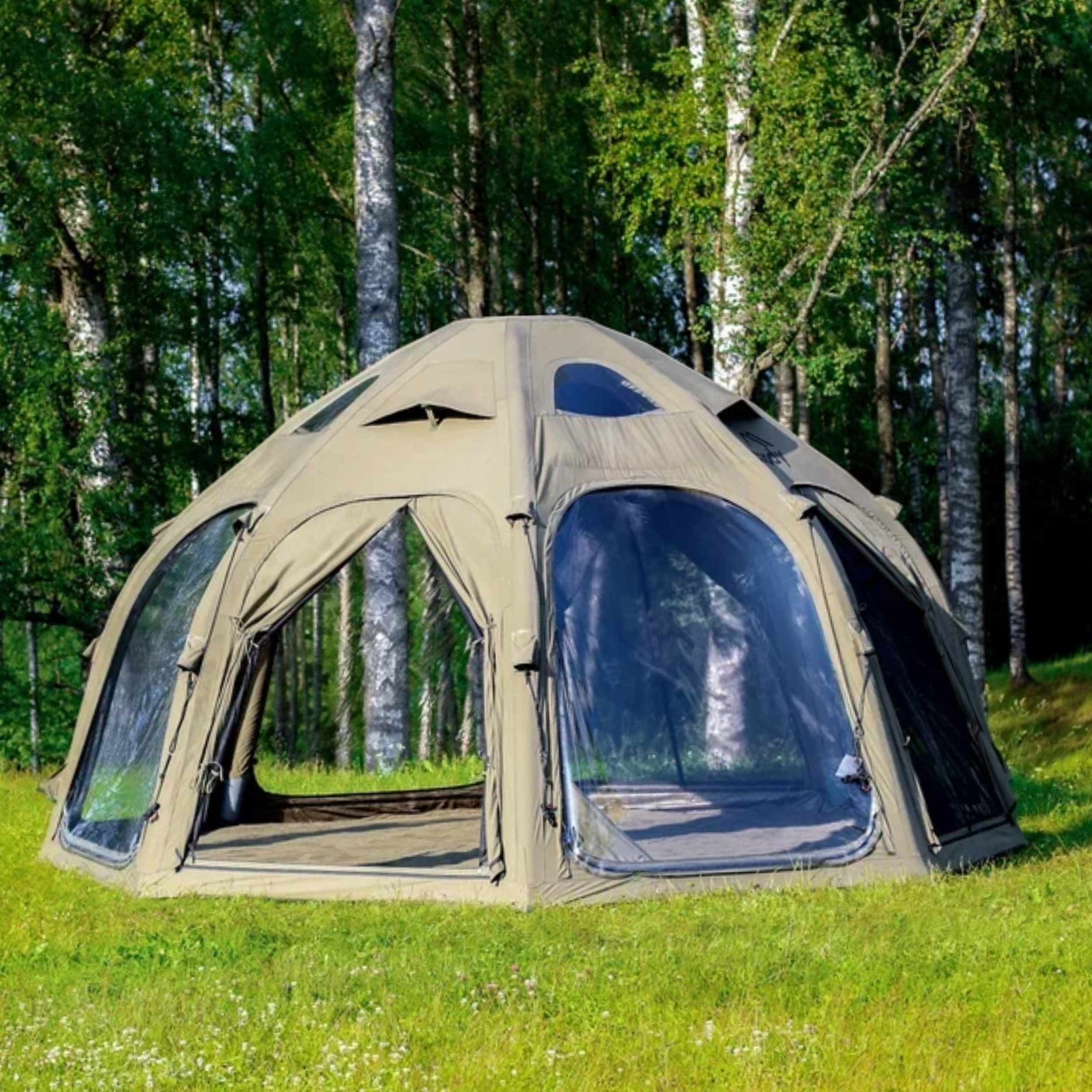
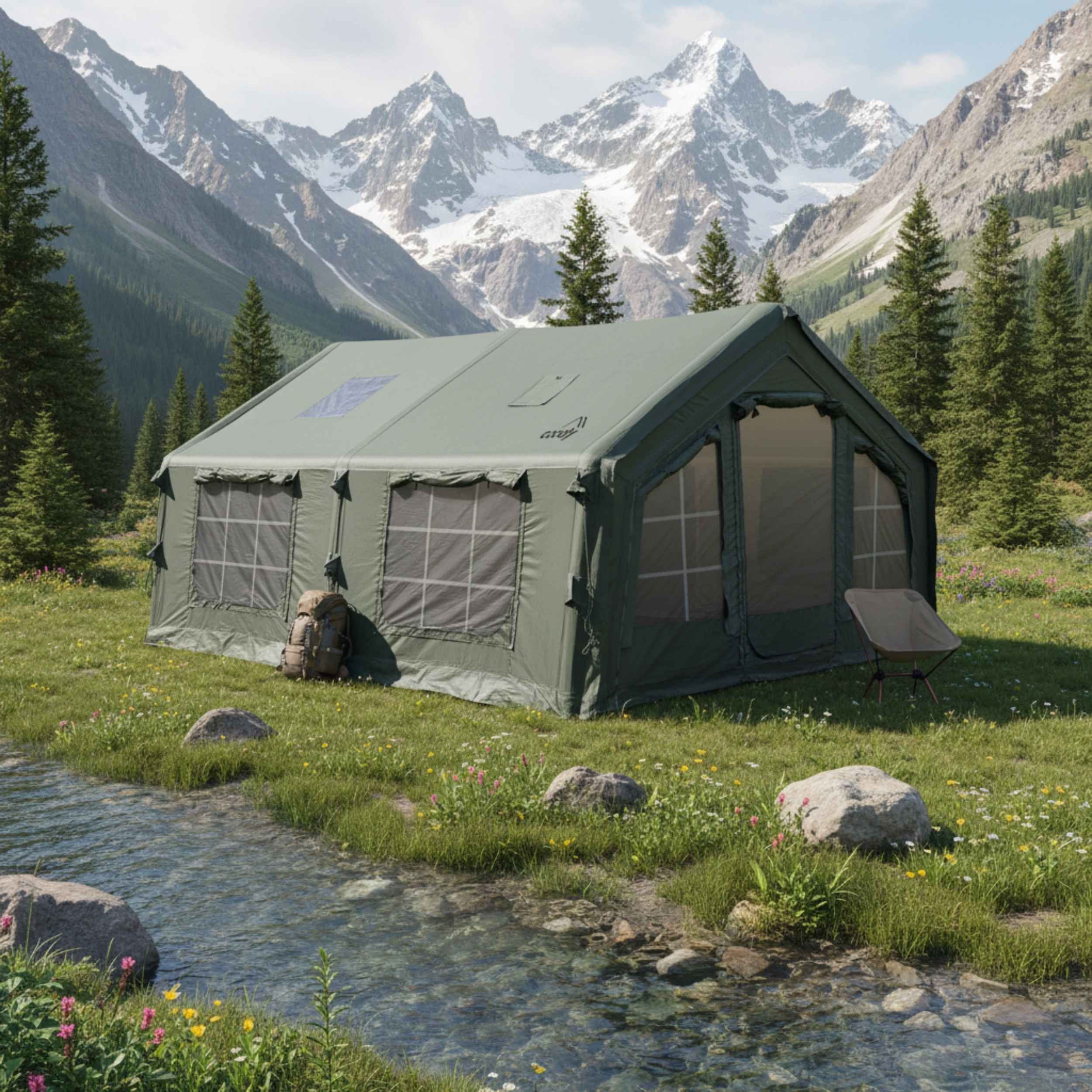
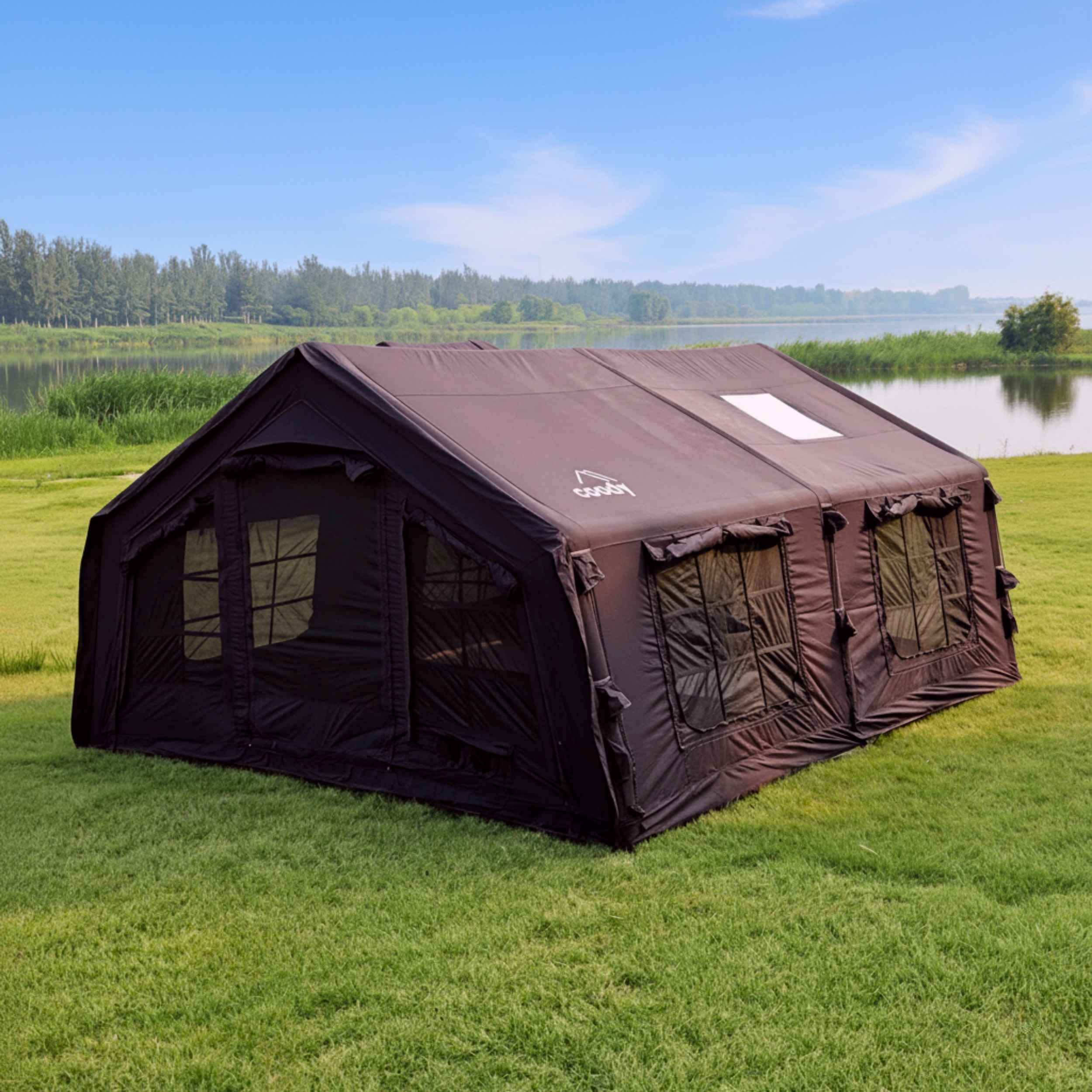
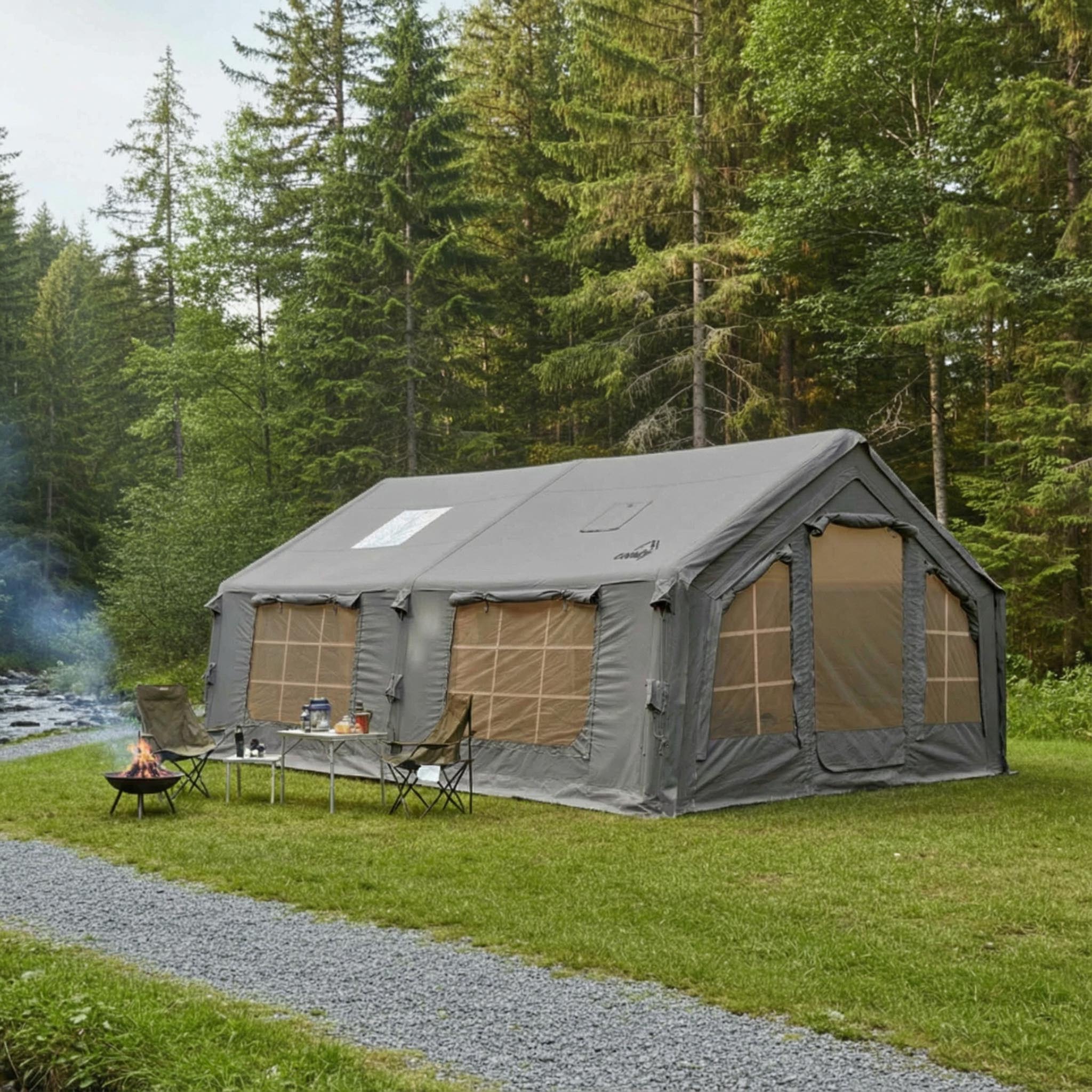
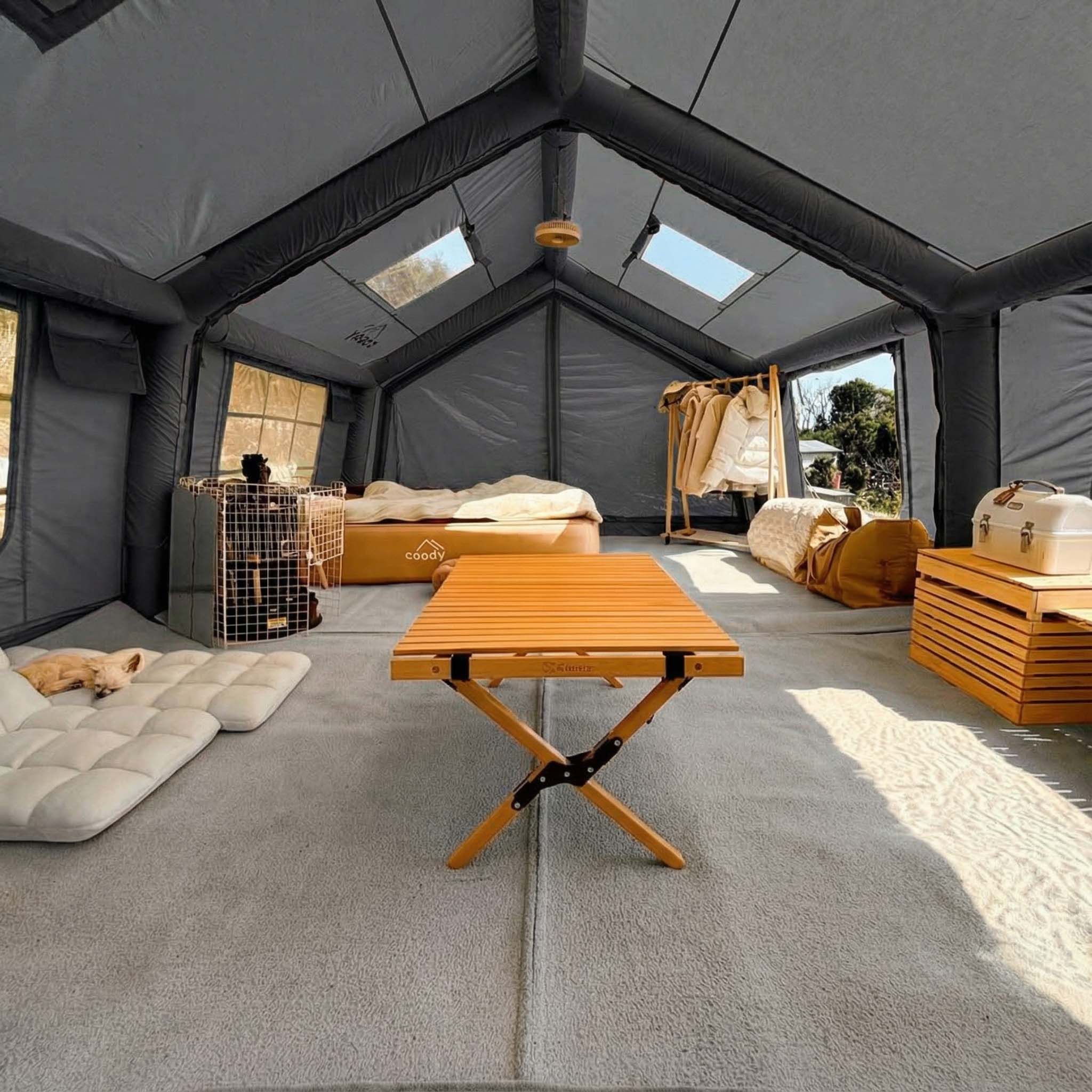
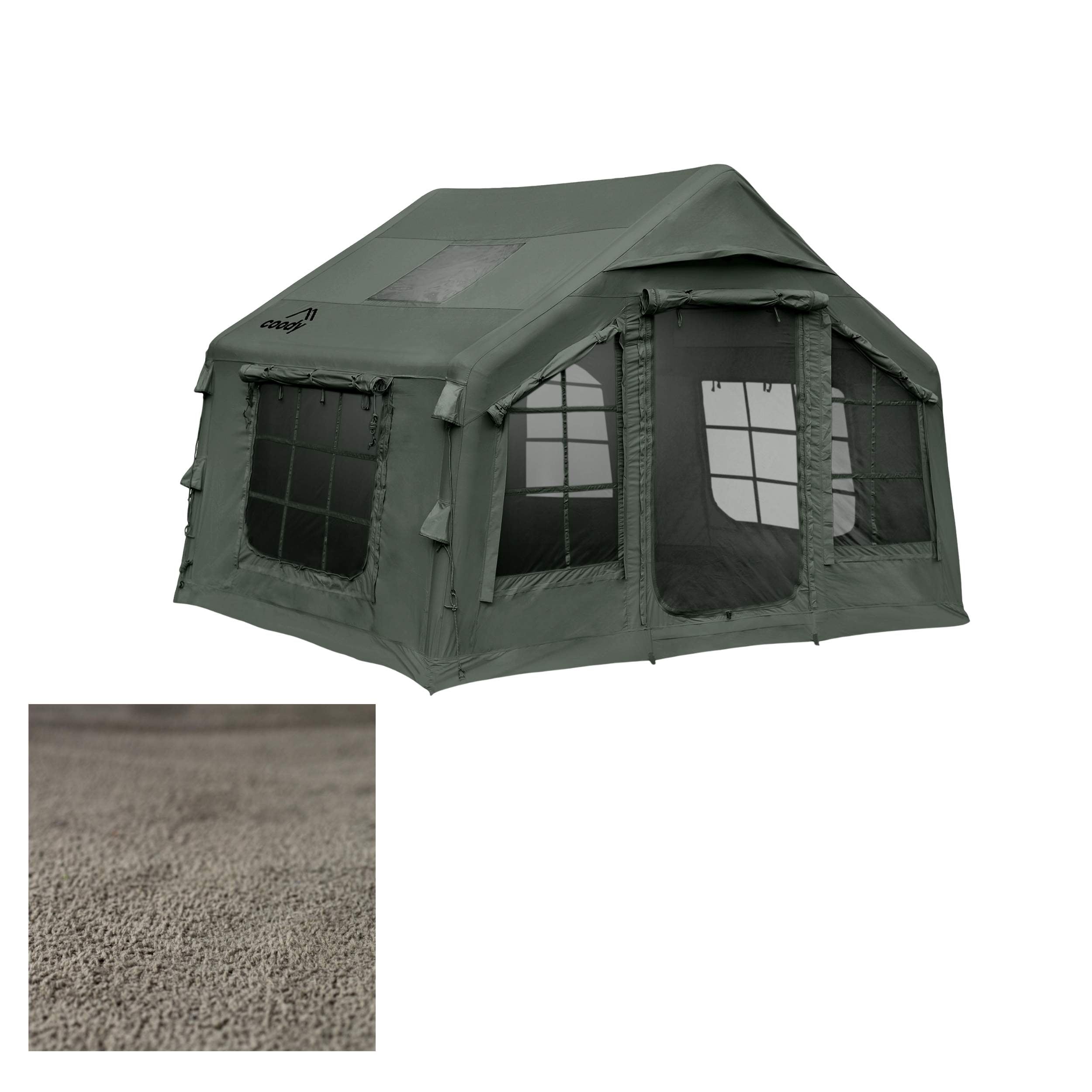
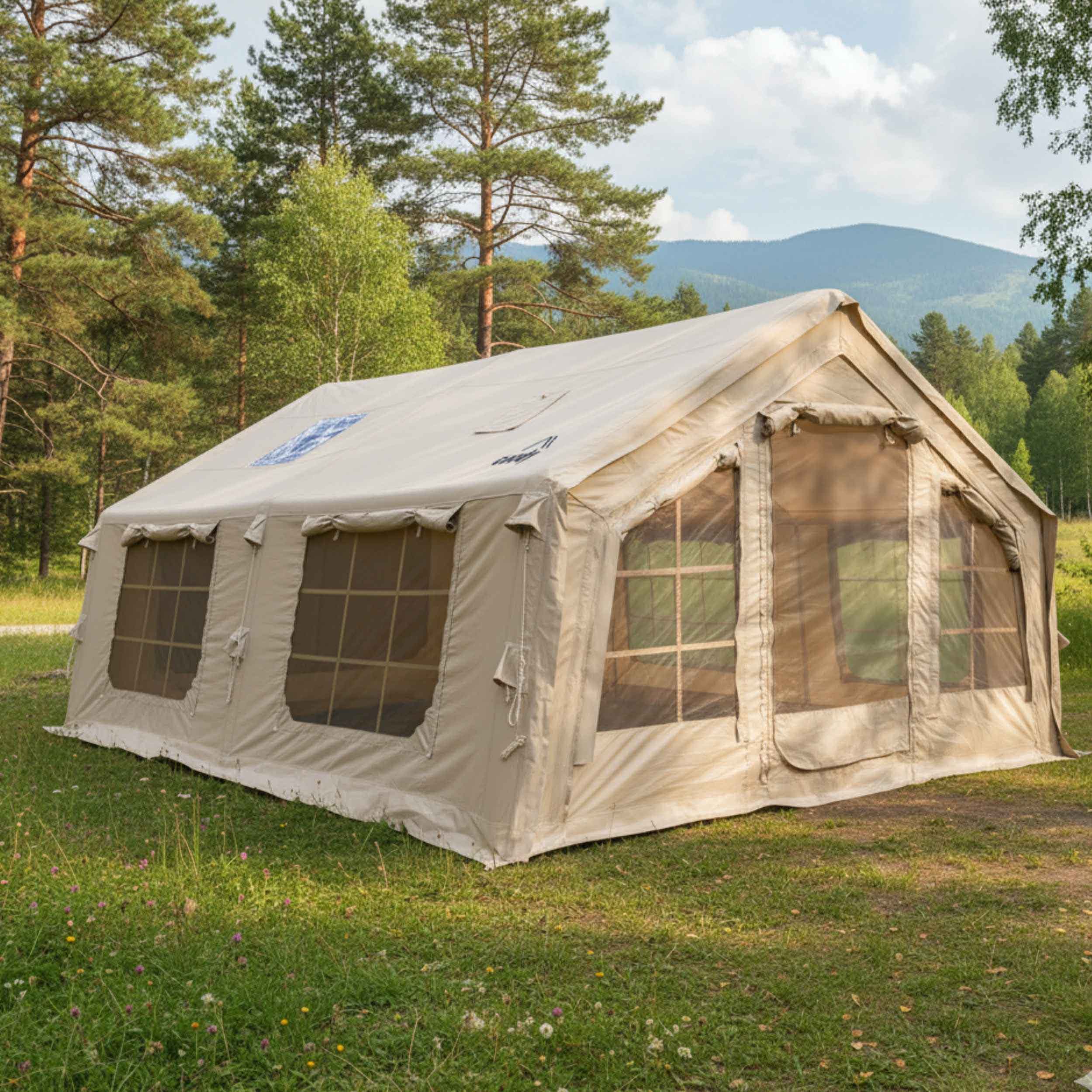
 Coody 8.0 khaki
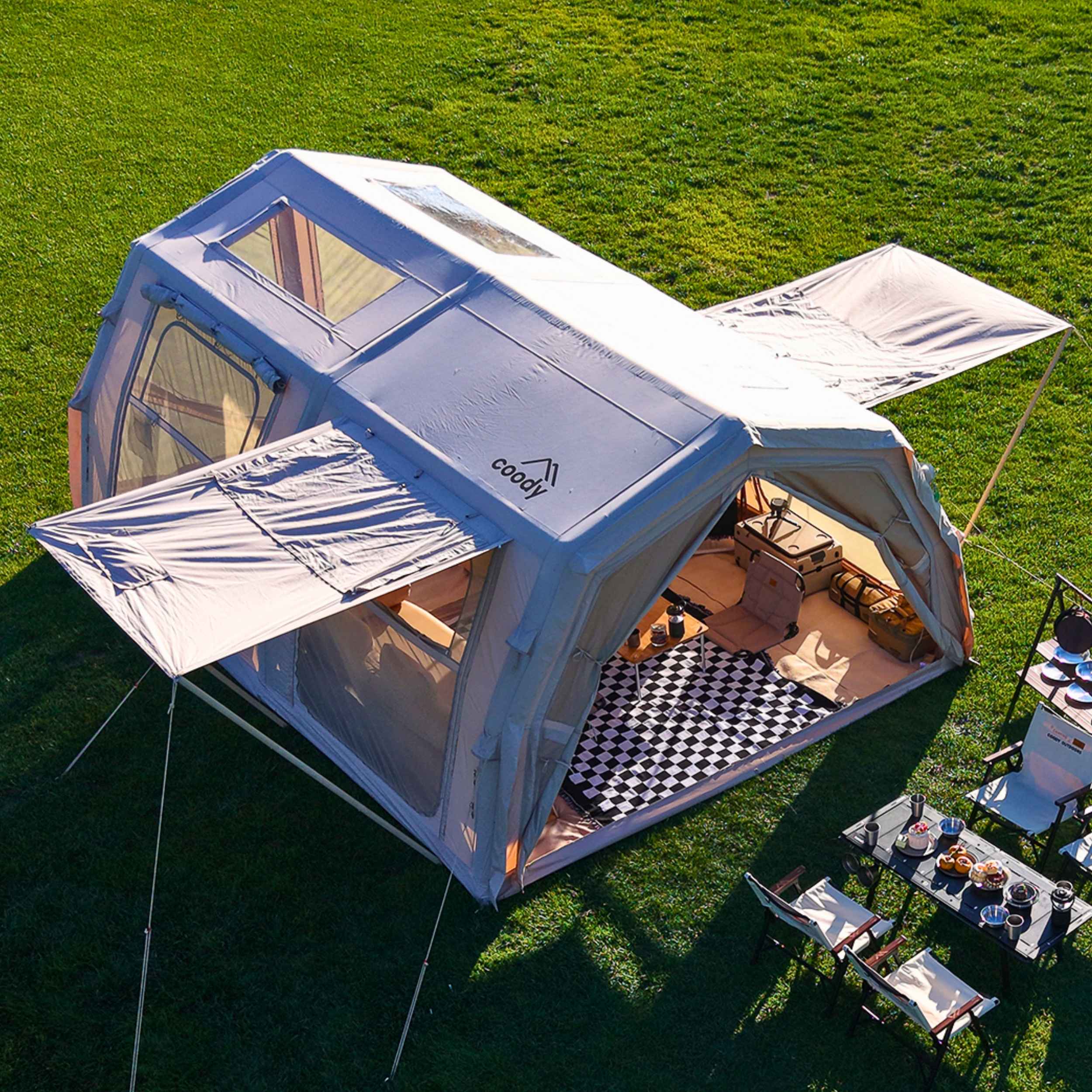
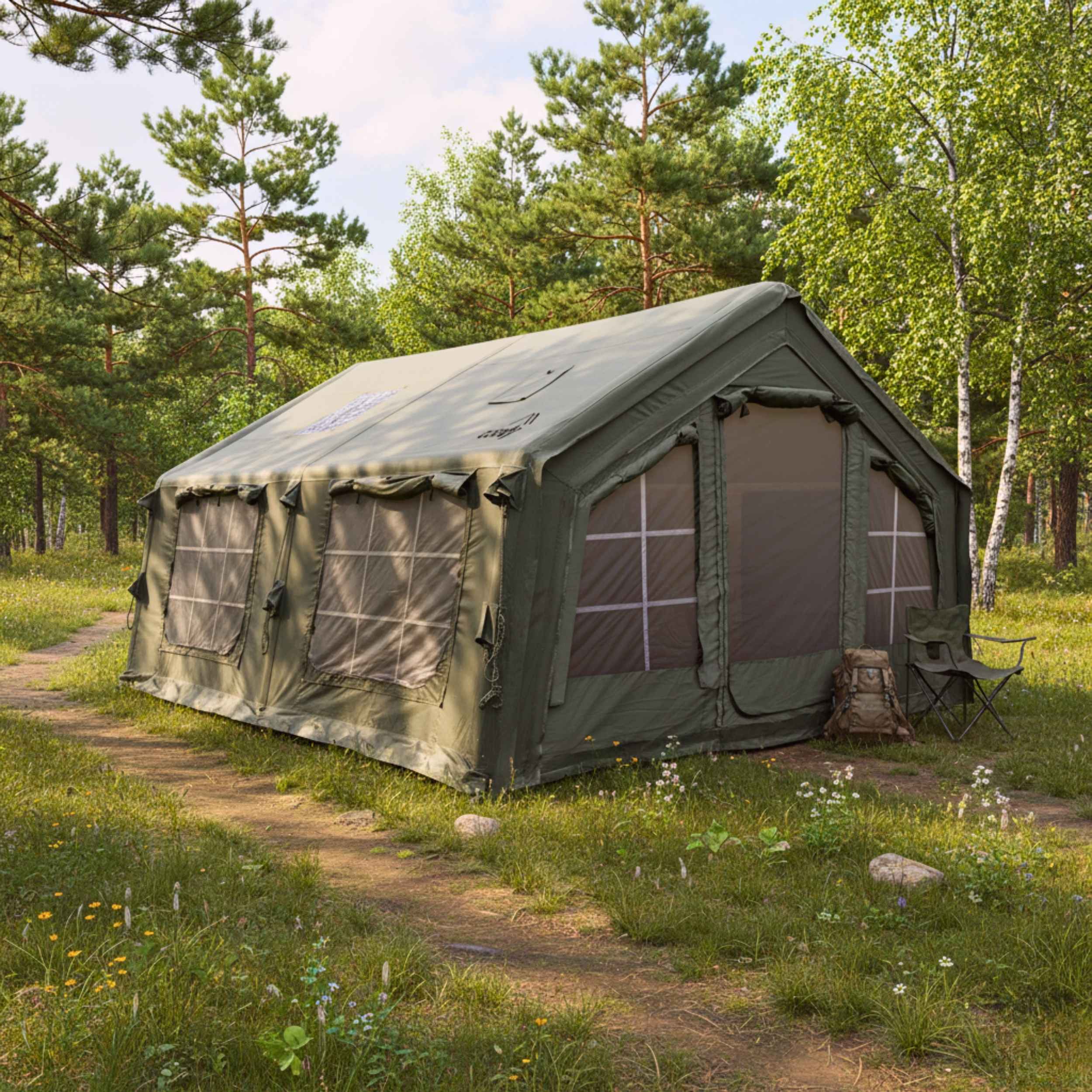
 Coody tent 17.2
Step 1: Choose Ground Like Your Comfort Depends on It (Because It Does)
Forget “flat.” In the rain, drainage is king.
✅ Elevate slightly – Even 6 inches of rise keeps you out of any runoff.
✅ Slope away from your door – Water should flow past your tent, not into it.
✅ Avoid tree drip zones – Yes, trees block rain—but they also collect and dump it in concentrated streams. Set up near cover, not directly under it.
Pro insight: If your footprint fills with water within 10 minutes, you’ve picked the wrong spot. Walk 10-20 feet in another direction and try again.
Step 2: Deploy the Rainfly First — Like a Pro
This is where most tents fail you. With a traditional tent, you’re forced to unroll a wet inner tent, thread poles in the rain, and hope the fly fits quickly and smoothly. The reality is that no matter how fast you are and how few poles you’ve got, the inner tent will already be wet before you’ve erected the tent and slung the outer cover over.
If the location allows, you can tie the rain fly between trees. If you’re camping in a group, you could try reversing a couple of vehicles together, kill the engines and open the rear hatches. With the rain fly hung over the two hatches you could give yourself a temporary shelter to avoid the worst of the rain.
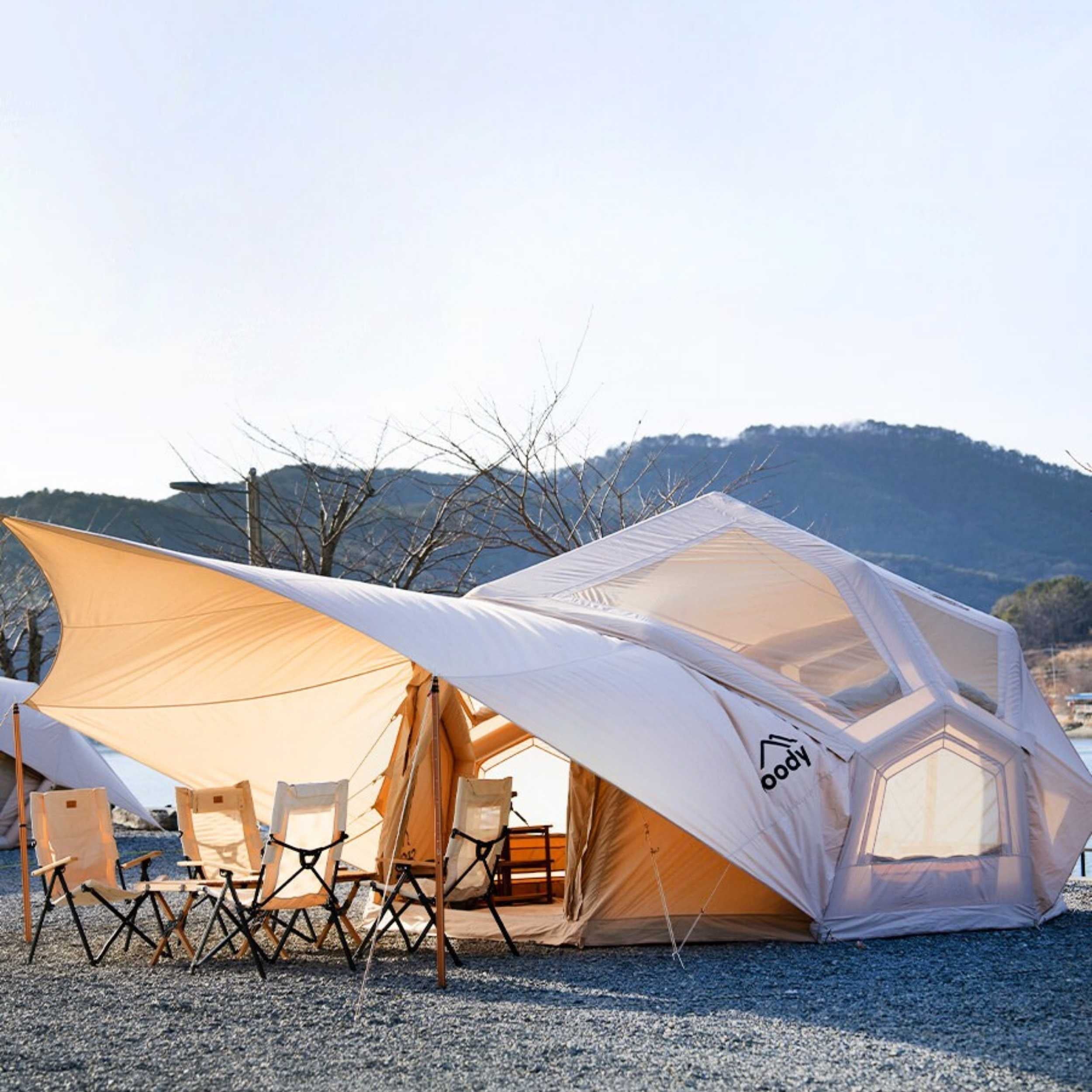
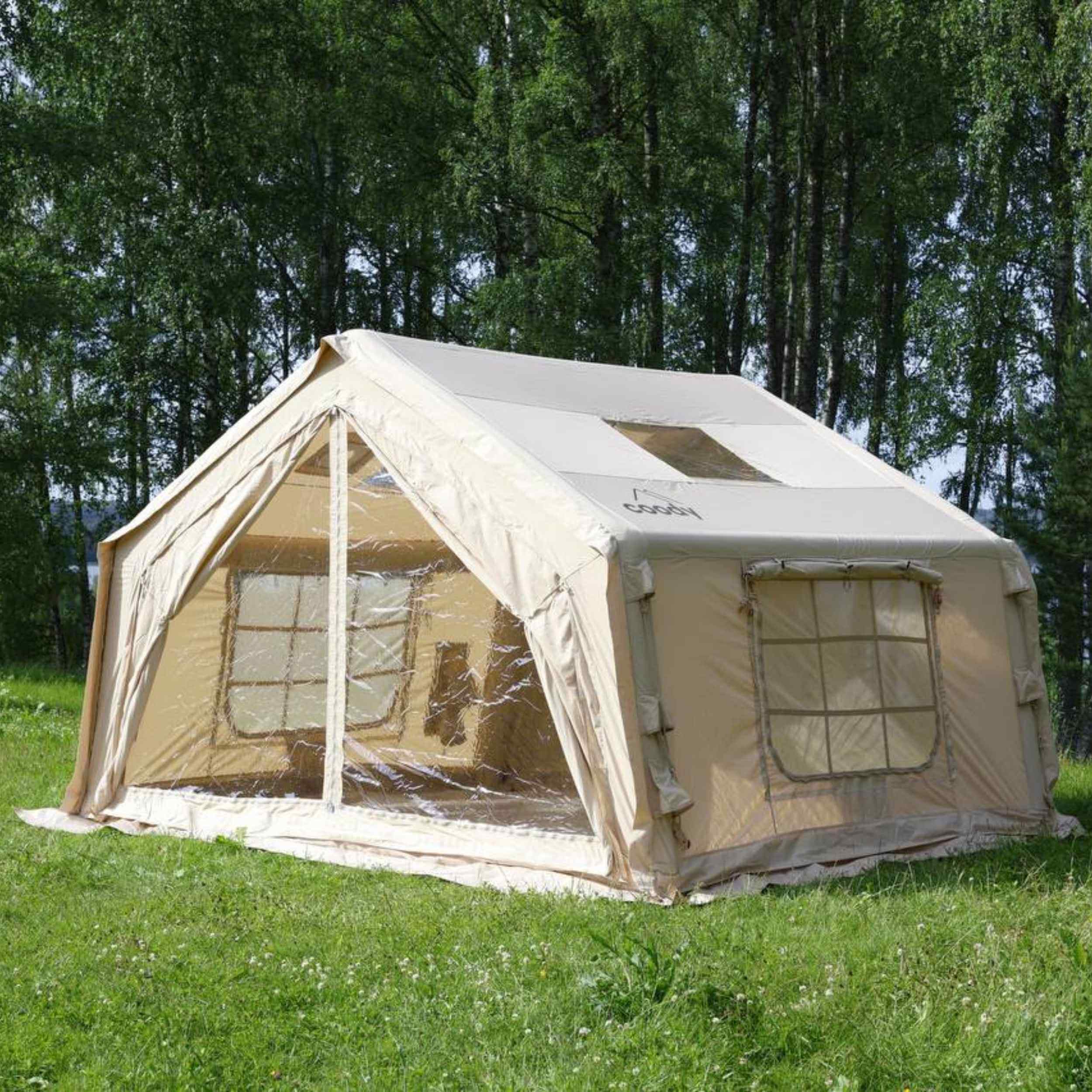
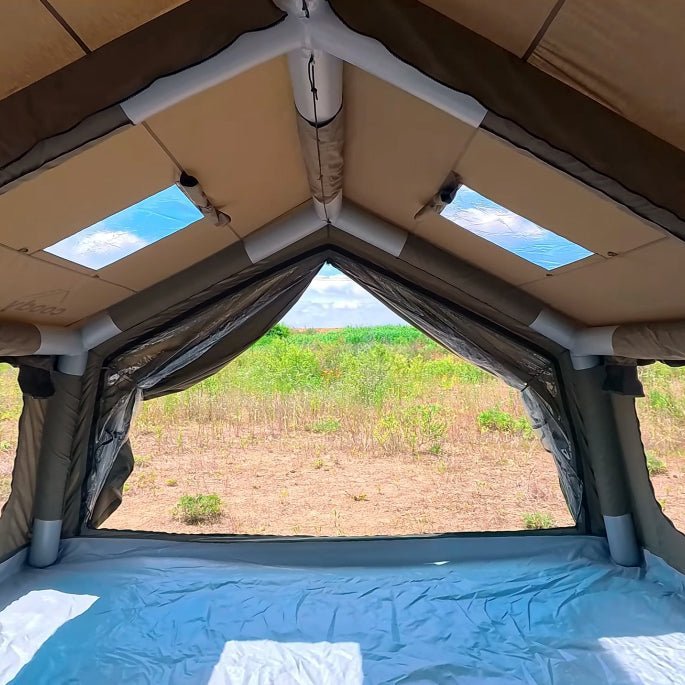
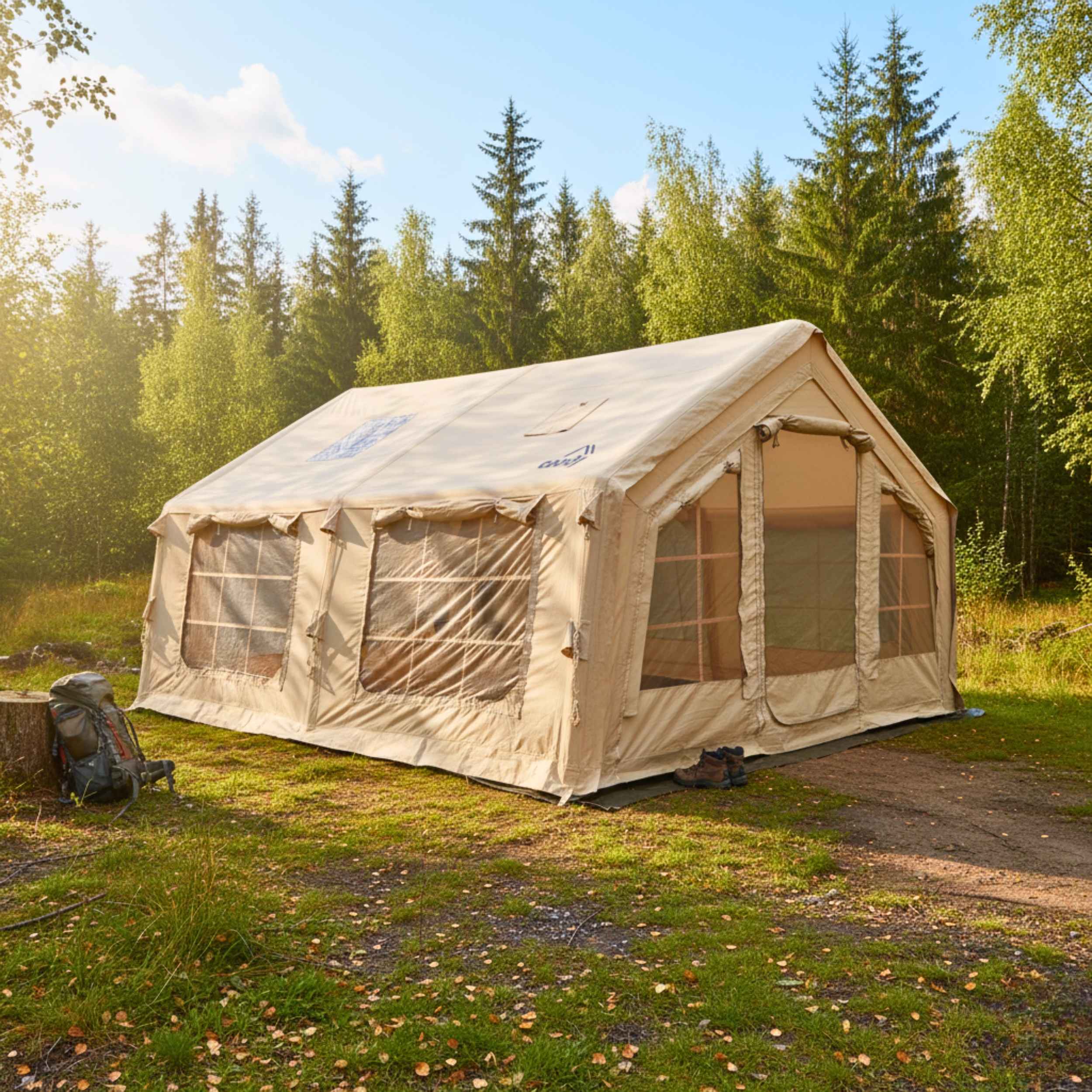
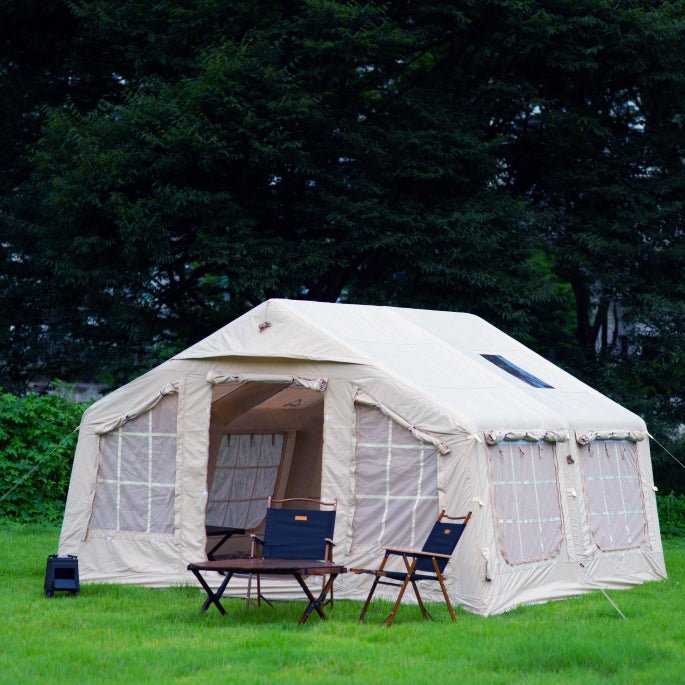
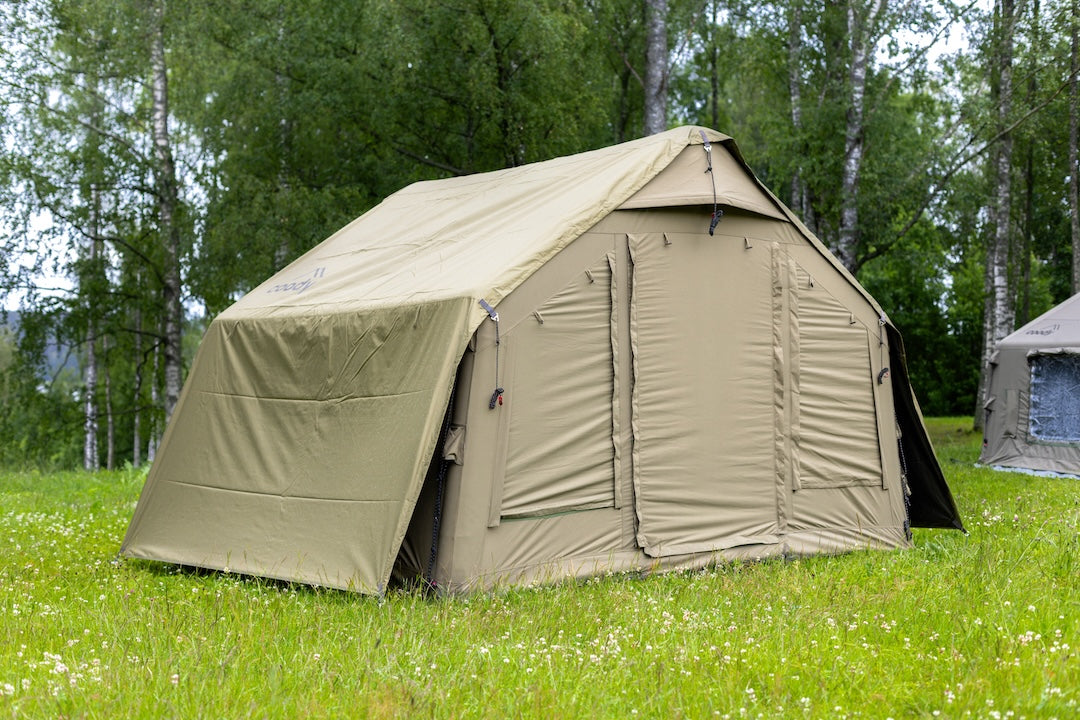
With a Coody tent, you can drape the rainfly over the whole tent like a protective shell. There is no inner tent, the tent is the tent, that’s it. With the Coody rain tarps covering the whole tent, you inflate while covered. Simple.
That way the integrated rainfly covers 100% of the structure from minute one.
No pole threading in the downpour. No wrestling with wet guy lines while kneeling in mud.
You stay dry during setup—not just after.
This isn’t convenience. It’s weather-proof logic.
Step 3: Secure It to Survive—Not Just Hold
Rain softens soil. Wind follows storms. Your tent pegs need to grip, not slip.
Use long, solid tent pegs (included with Coody) driven at a 45-degree angle away from the tent.
Tension guy lines immediately—don’t wait. Wet fabric stretches; a loose rain fly pools water and leaks.
In muddy ground, add rocks or logs over stake ends for extra hold.
This isn’t overkill. It’s what keeps your shelter standing when others are flapping like sails.
Step 4: Never Let Your Footprint Betray You
Here’s a secret most campers miss: a groundsheet that sticks out past your tent floor is a water trap. I know, I know, we’ve all been there, buy a big tarp (groundsheet) and put the tent on top. What may take many trips (or many years to find out) is that you’ve basically set your tent up on something that’s a cross between a river bed and a swimming pool. You’ve actually made the situation worse.
Rain hits the exposed tarp, runs underneath, and floods your floor from below.
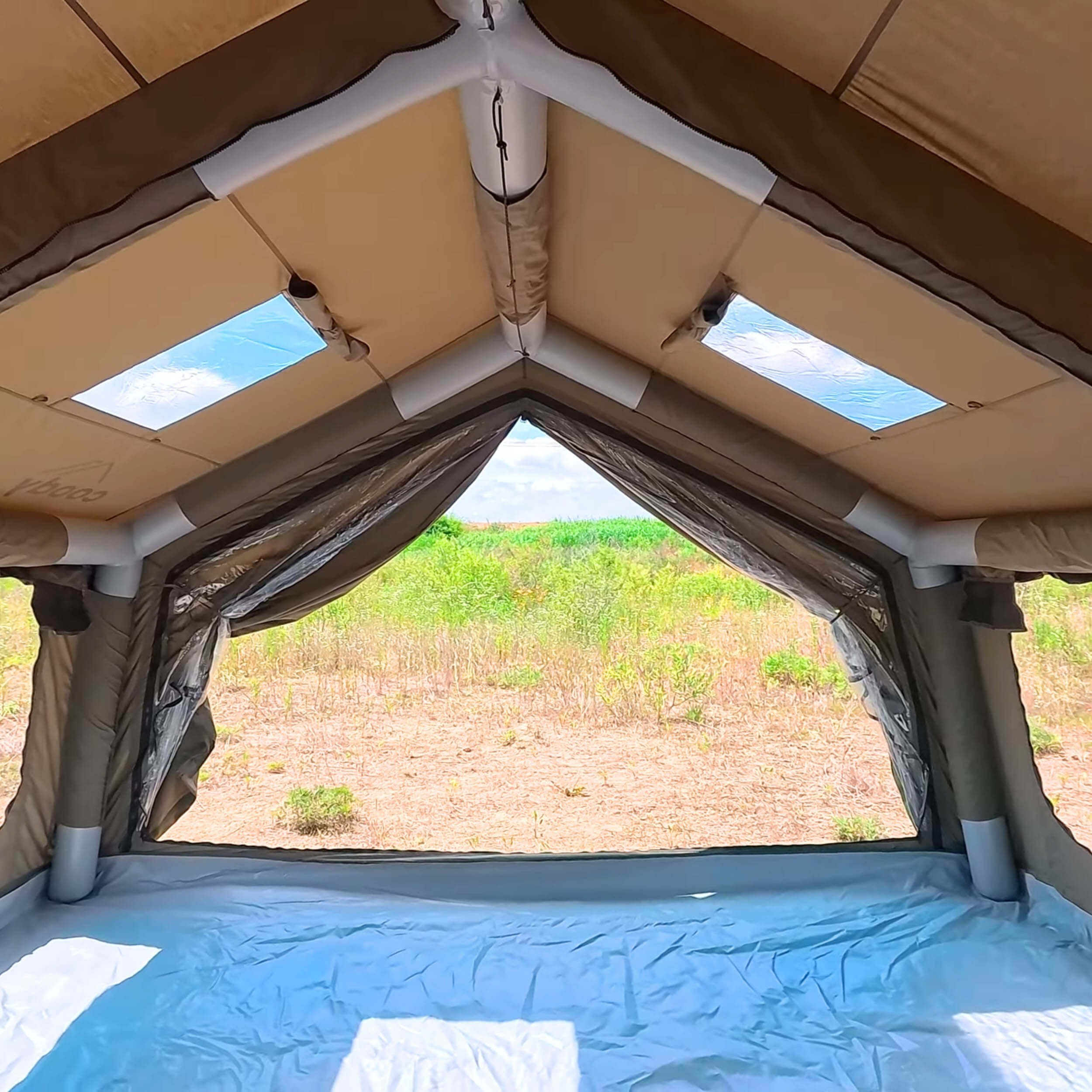
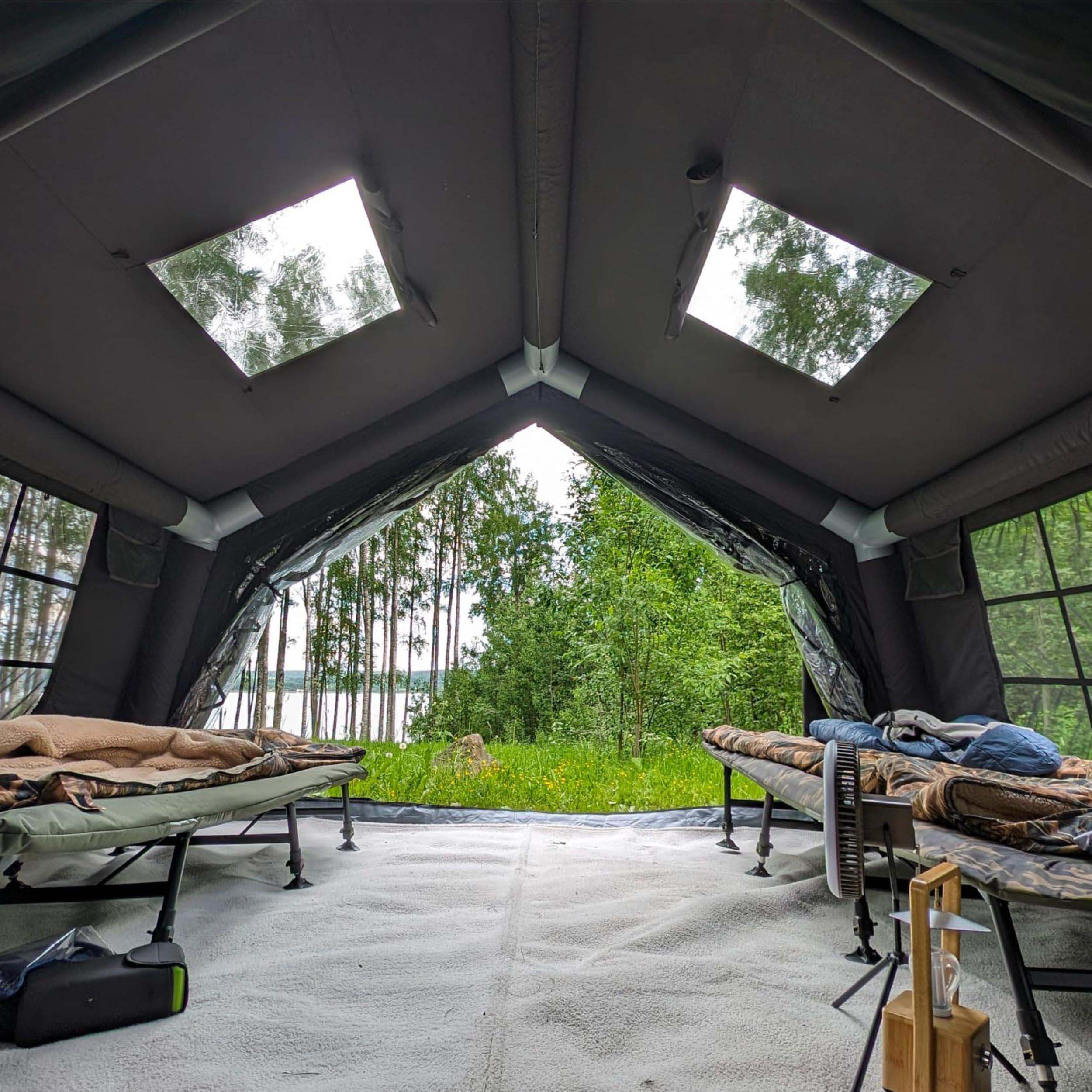
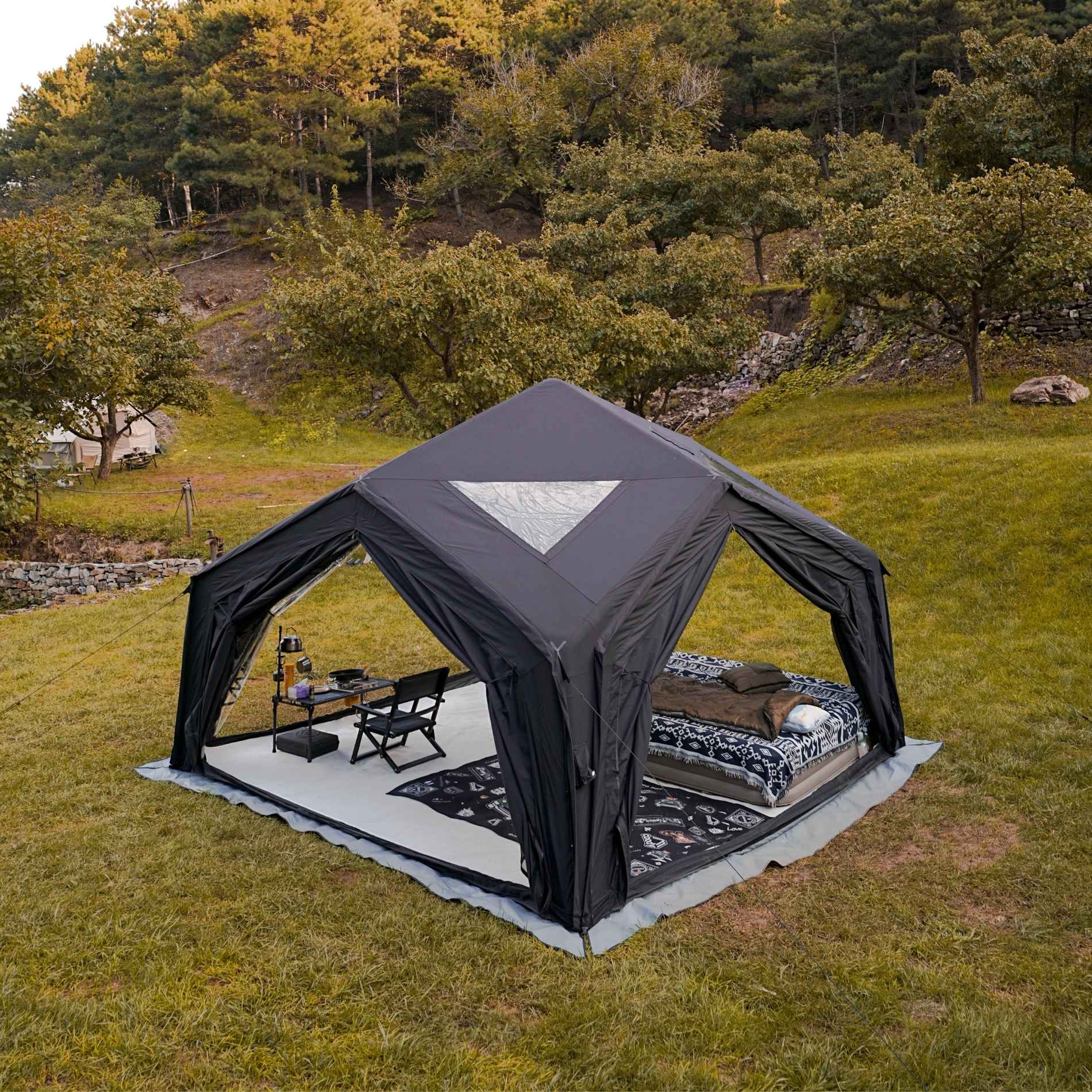
Coody tents solve this with a custom-fit footprint, available separately from the Coody store, that sits entirely beneath the tent—no overhang, no gutter effect. Pair that with a PVC floor found in the 13.6, 8.0, that behaves like a little boat (raised 4+ inches at the edges), and ground moisture simply can’t get in.
Your sleeping pad stays dry. Your gear stays dry. You stay dry.
Step 5: Ventilate—Even in the Rain
Condensation isn’t a leak. It’s physics. And it’s the #1 reason people think their “waterproof” tent failed.
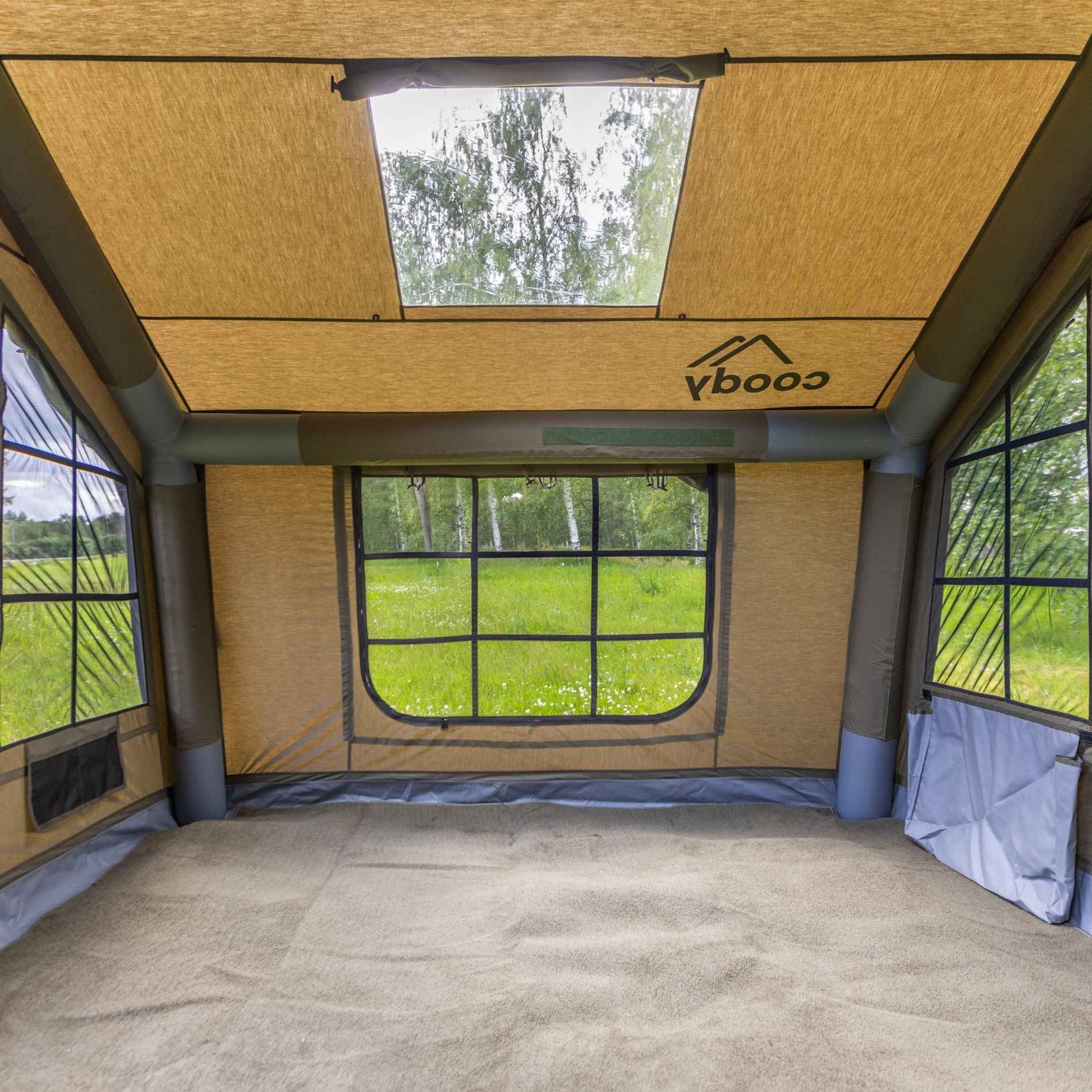
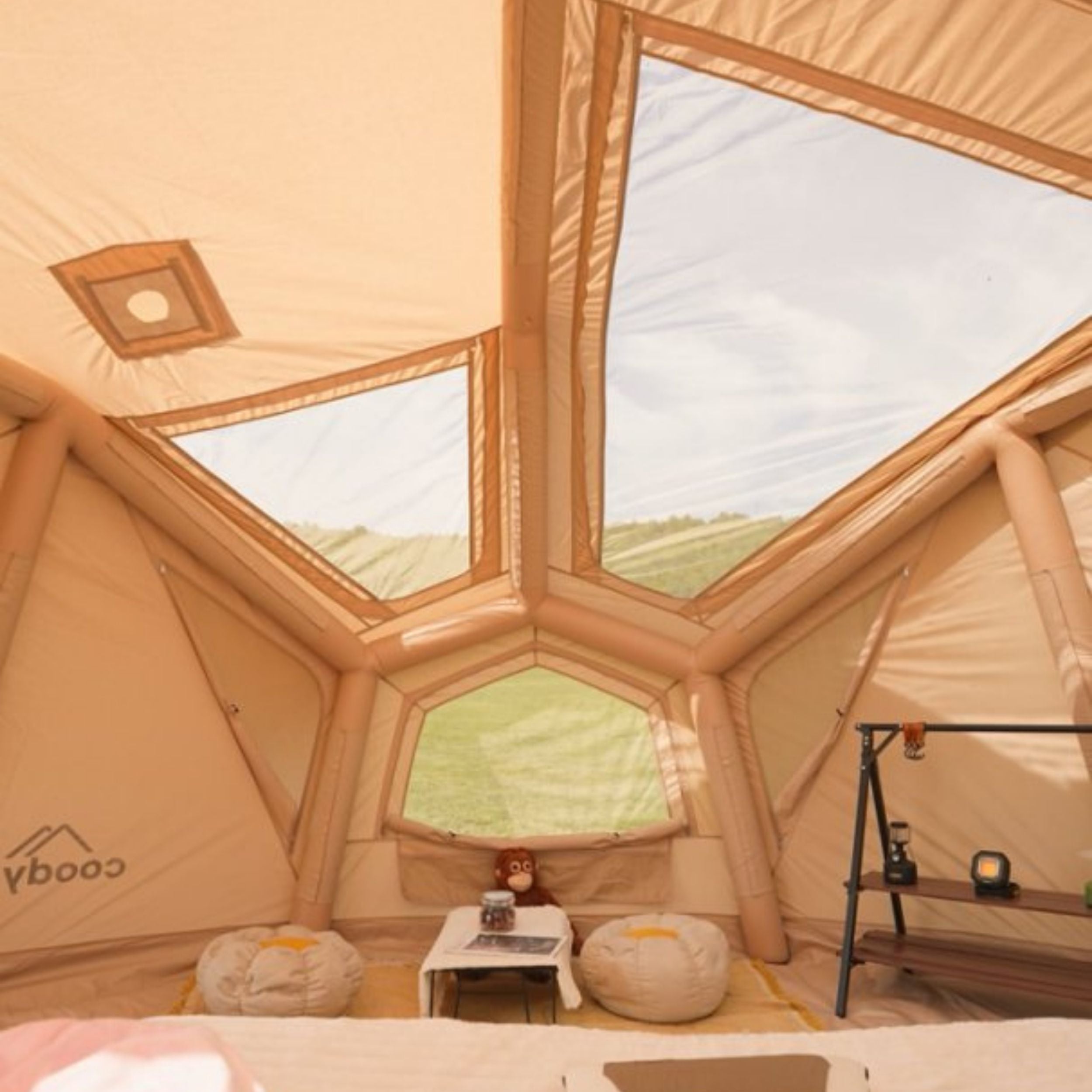
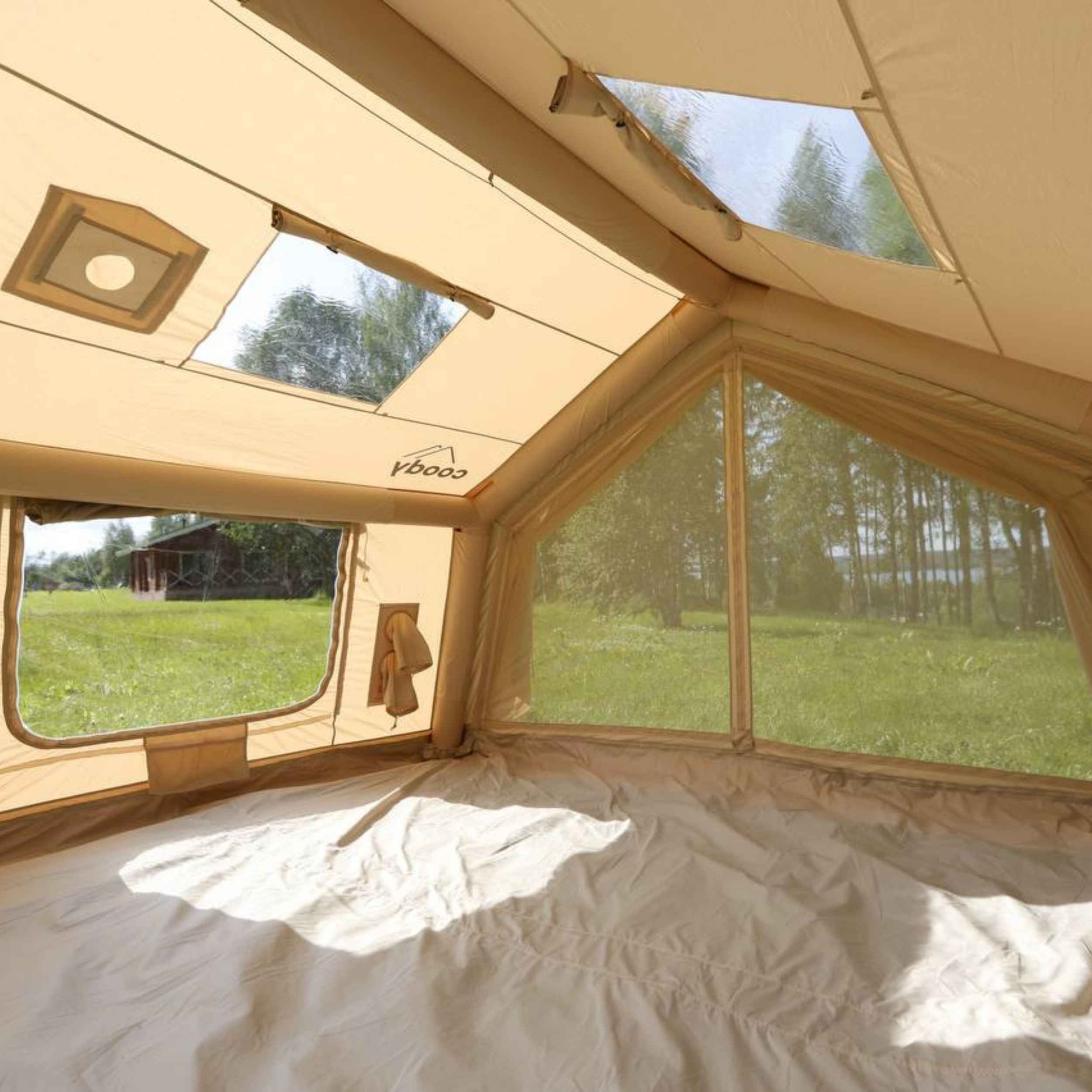
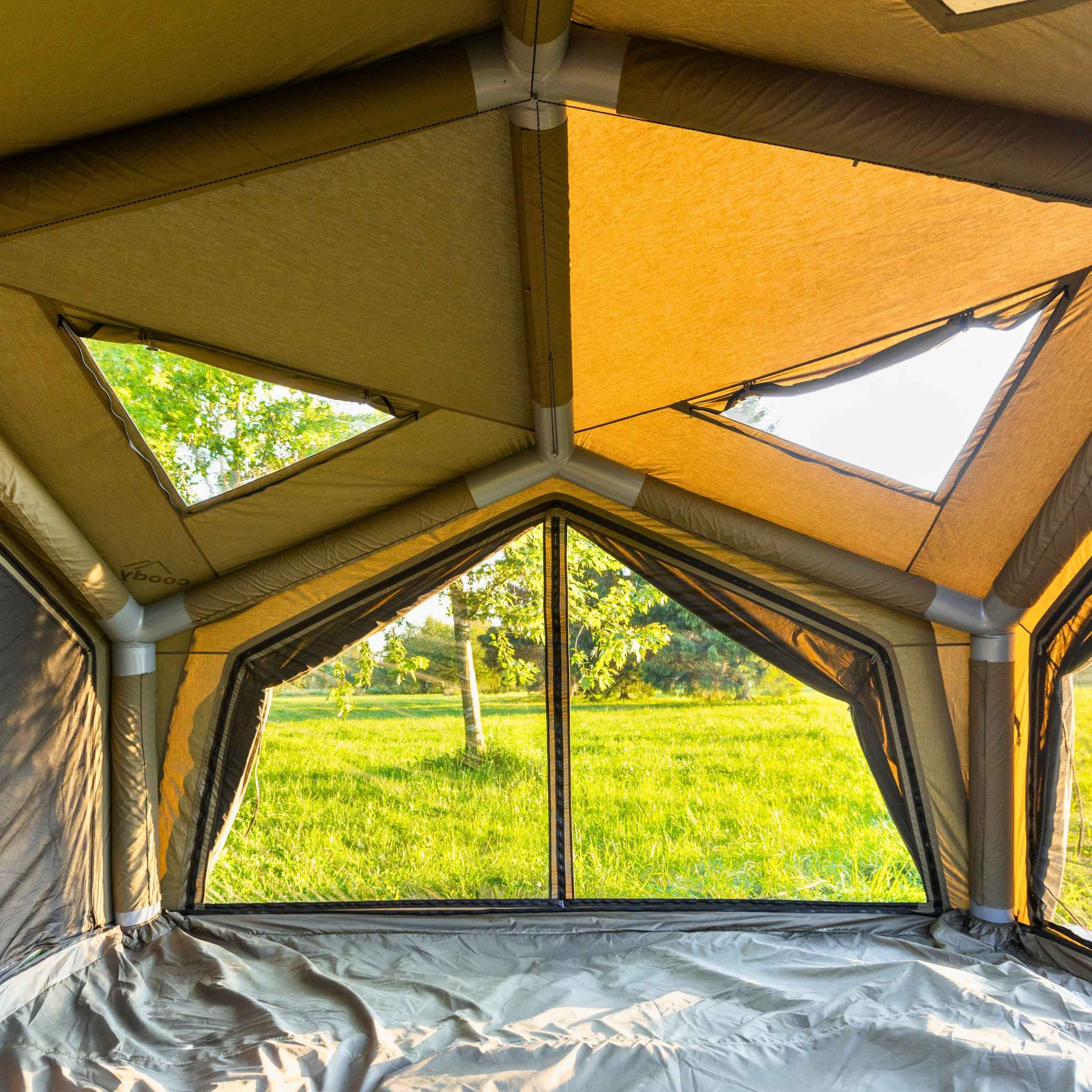
Coody tents use breathable Terylene-Cotton canvas (a mix of polyester and cotton) + strategically designed airflow vents (even in heavy rain) to let humid air escape while keeping rain out.
Never seal your tent completely—even in a storm.
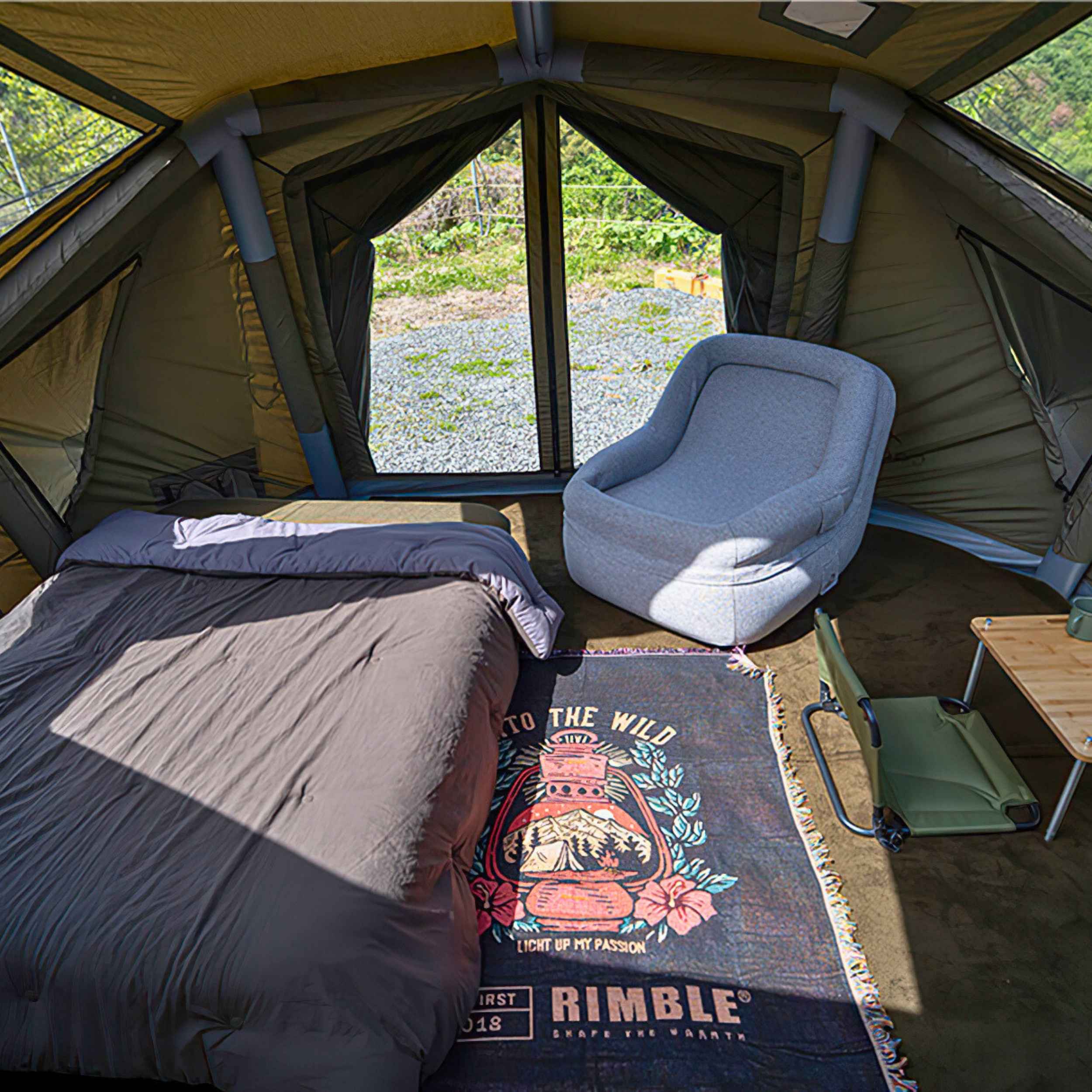
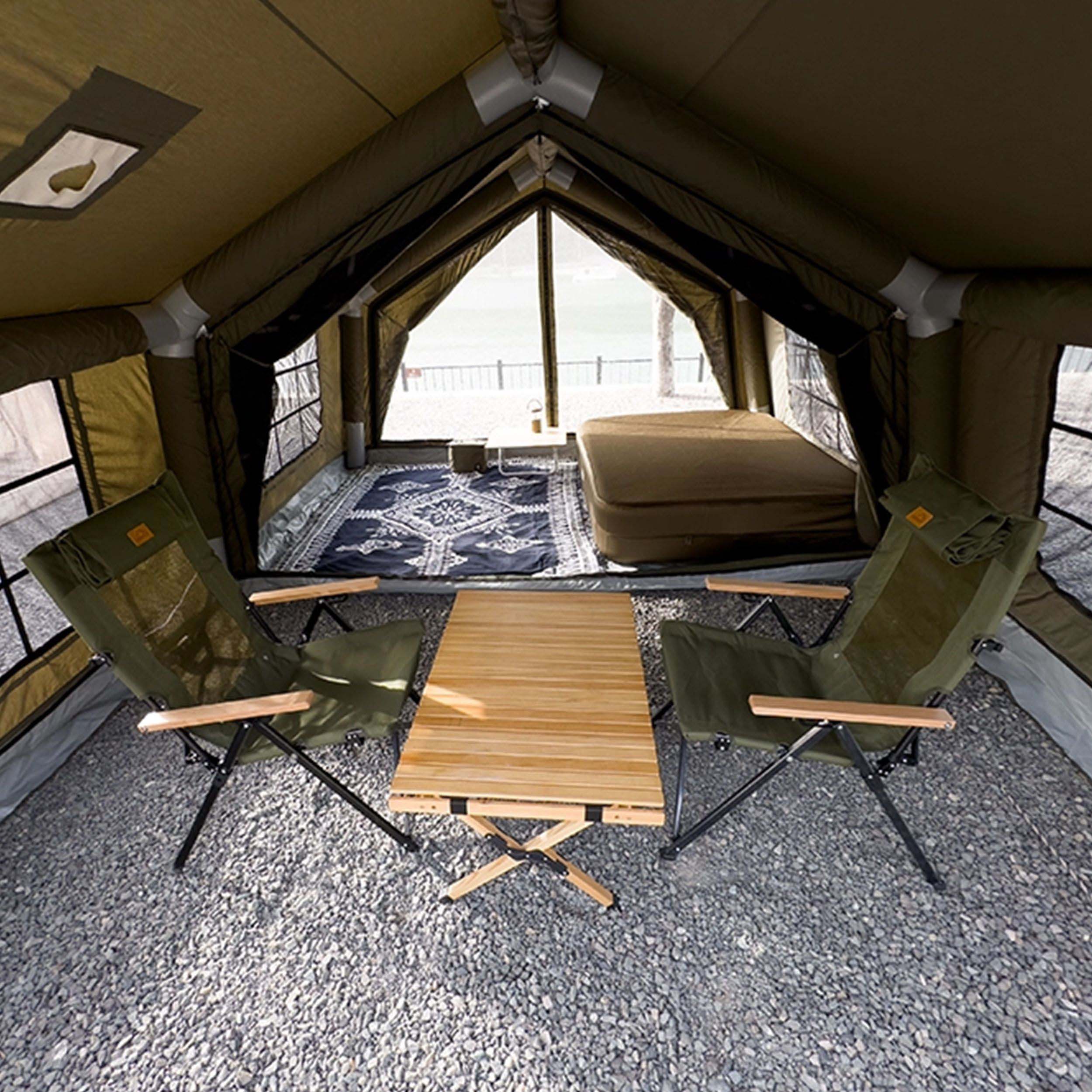
Use the dual-door design to create cross-ventilation under the rainfly’s overhang.
Wipe down wet gear before bringing it inside. Even one soaked backpack = instant humidity spike.
Dry air in = dry sleep all night.
Check out our tents and choose the best for your camp!
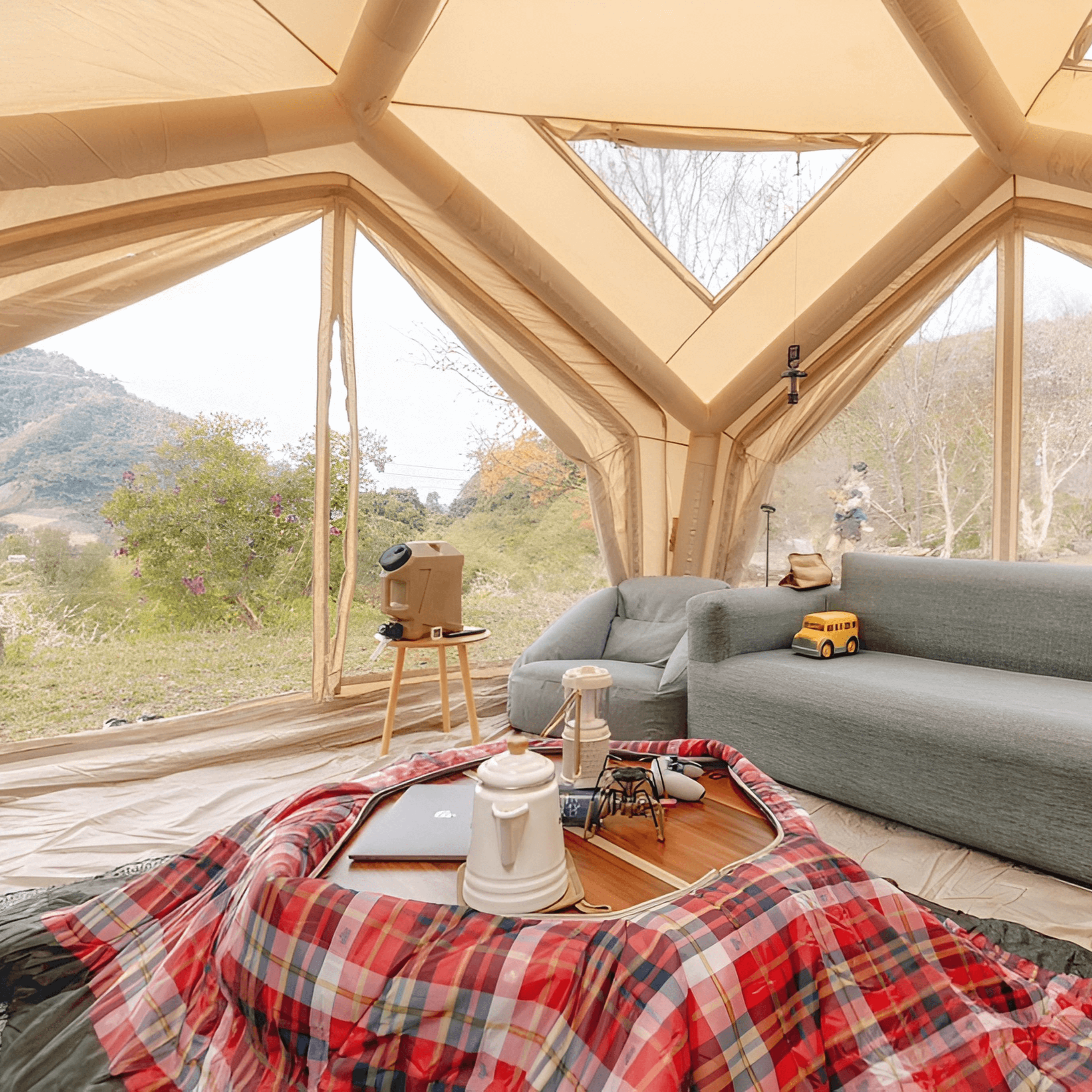
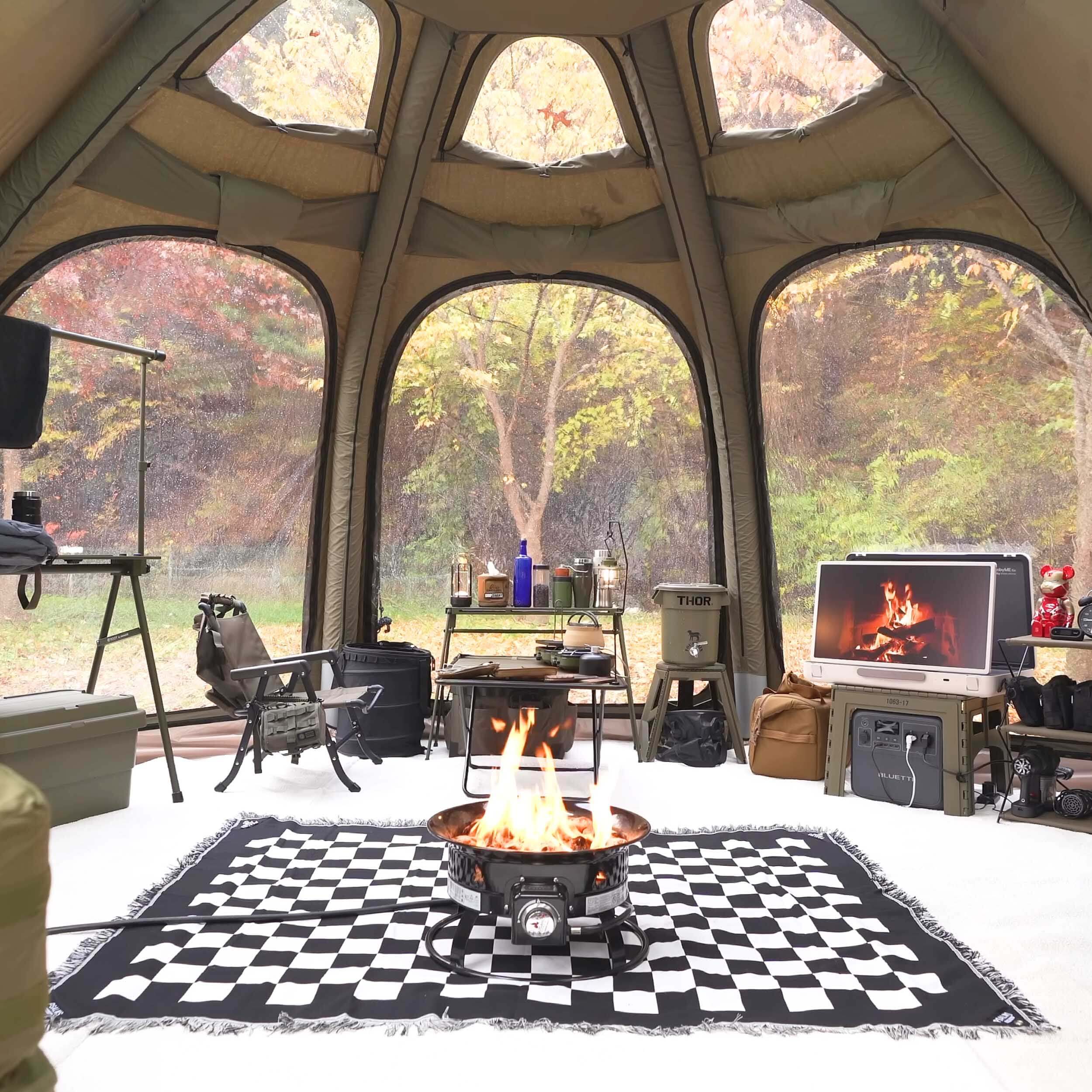
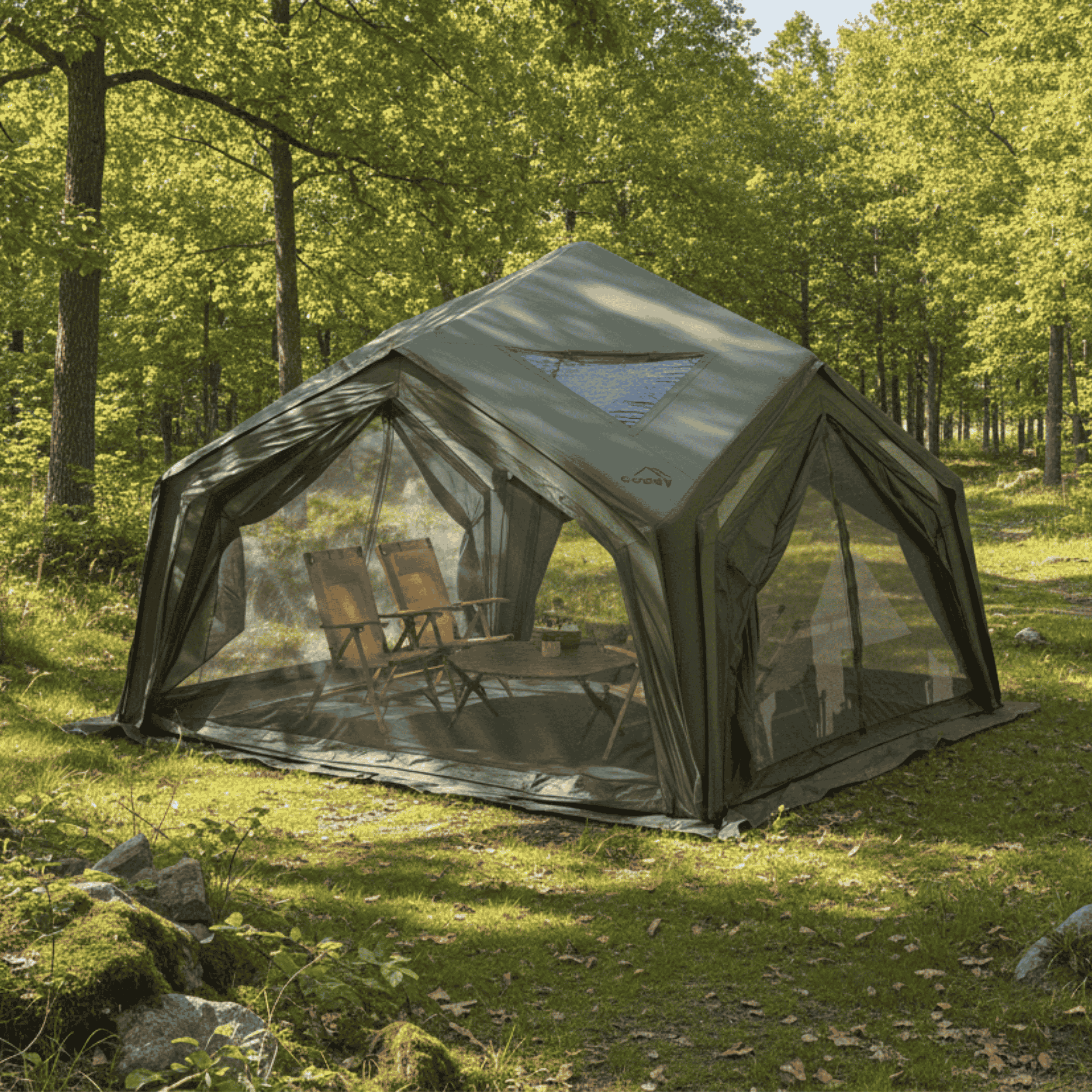
 Coody Aurora Dome
 Coody tent 17.2
 Coody tent 13.6
 Coody Hub Shelter
 Coody tent 10
 Coody tent 8.0
Why “Just Any Tent” Fails When It Rains
Let’s be honest: a lot of tents are designed for Instagram photos on sunny afternoons, not real weather.
Polyester walls trap condensation → clammy walls, damp sleeping bags.
Fiberglass poles snap in the wind or freeze in winter.
Seams unsealed from day one → water wicks through stitching like a sponge.
Floors thin as paper → one sharp pebble, and you’re sleeping in a puddle.
You don’t just get wet. You get discouraged. And that’s how people quit camping.
A Coody? It’s built for all the trips that happen in bad weather—because those are the ones that test your gear… and your resolve.
What You’re Really Buying
When you choose a shelter like a Coody, you’re not buying fabric and poles. You’re buying:
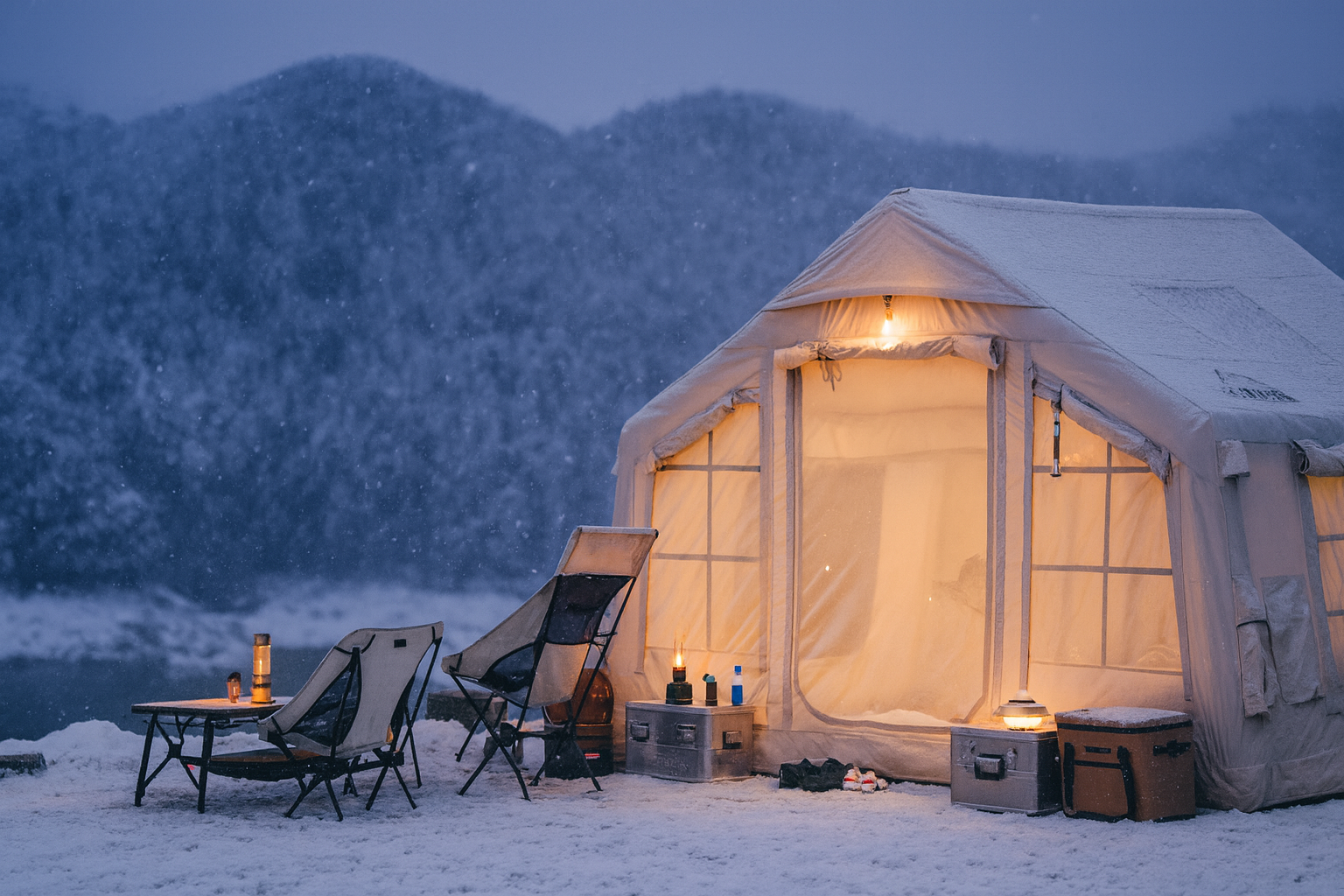
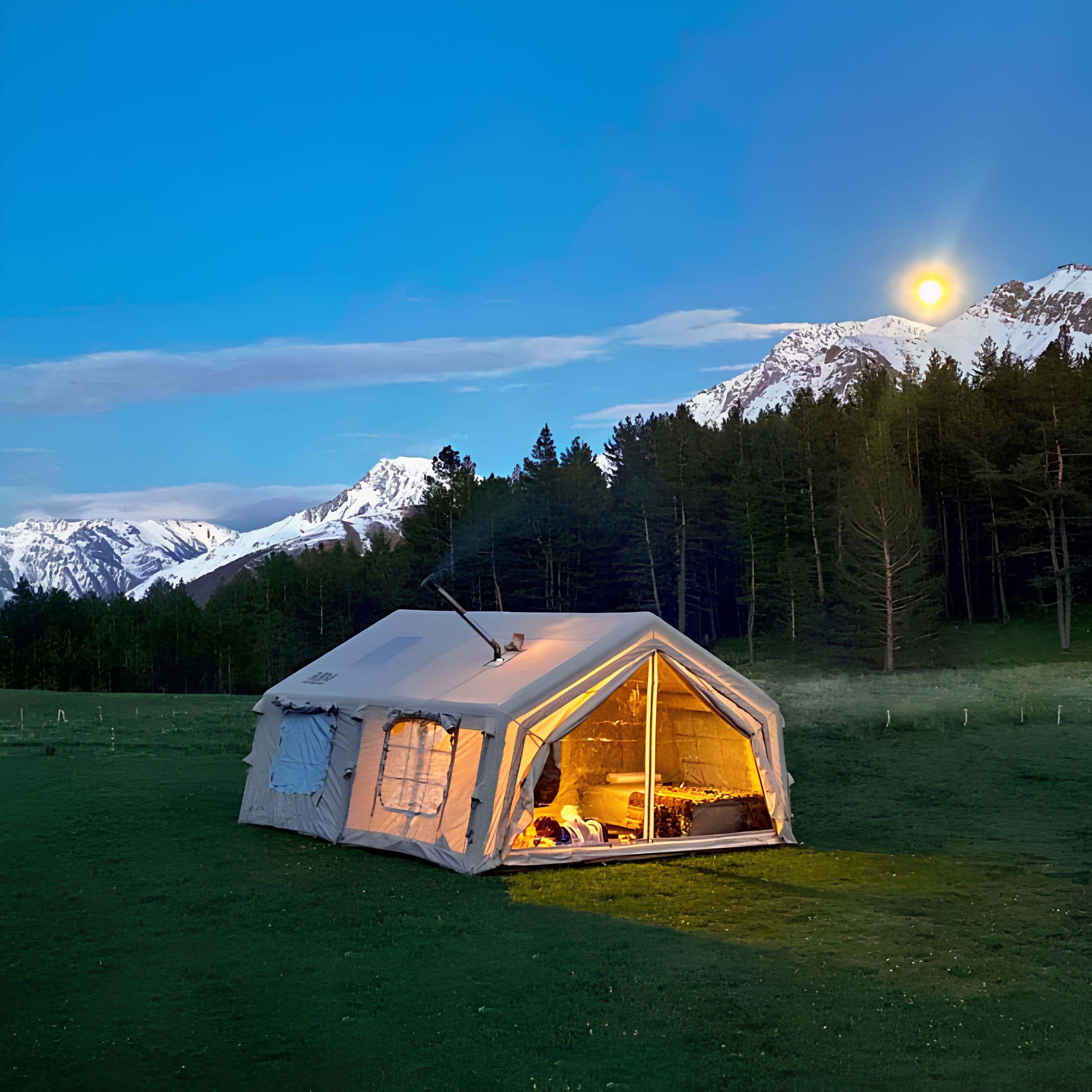
Confidence to camp in April showers or October snow (down to -15° deg C)
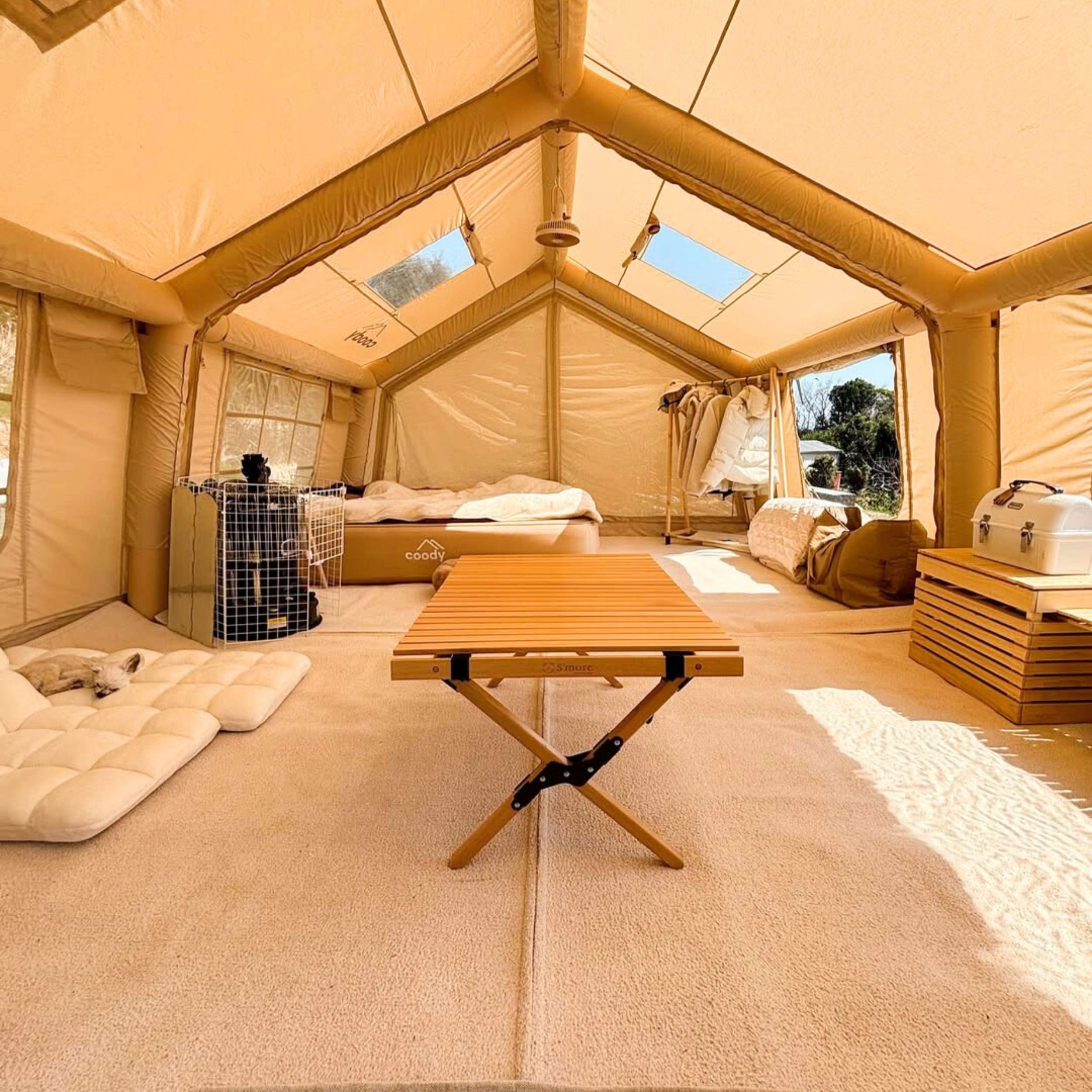
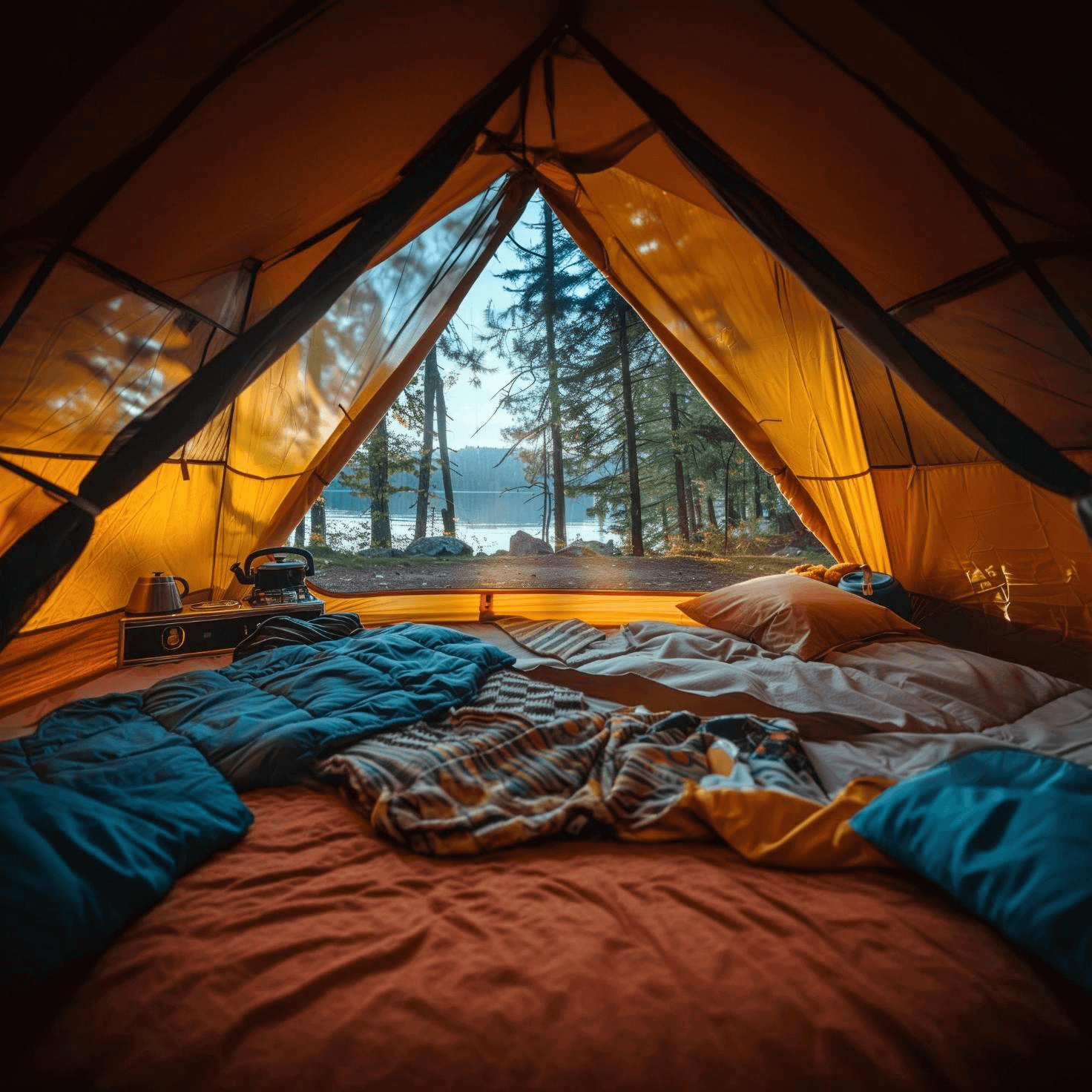
Comfort that turns a storm into ambiance, not anxiety
Time—because setup takes minutes, not frantic, soaked hours
Continuity—one system that works spring, summer, autumn, and everything between
“We used to bail on trips when the forecast turned. Now? We check the radar and say, ‘Perfect—no crowds.’”
— Maya, Pacific Northwest camper
Final Thought: Rain Isn’t the Enemy—Poor Gear and Planning Are

You don’t need to avoid rain. You just need a tent and a set-up process that respects it.
A Coody doesn’t just keep you dry. It lets you lean into the weather, knowing your shelter is stronger than the storm. And that changes everything—not just your trip, but your whole relationship with the outdoors.
So next time it pours, don’t pack up.
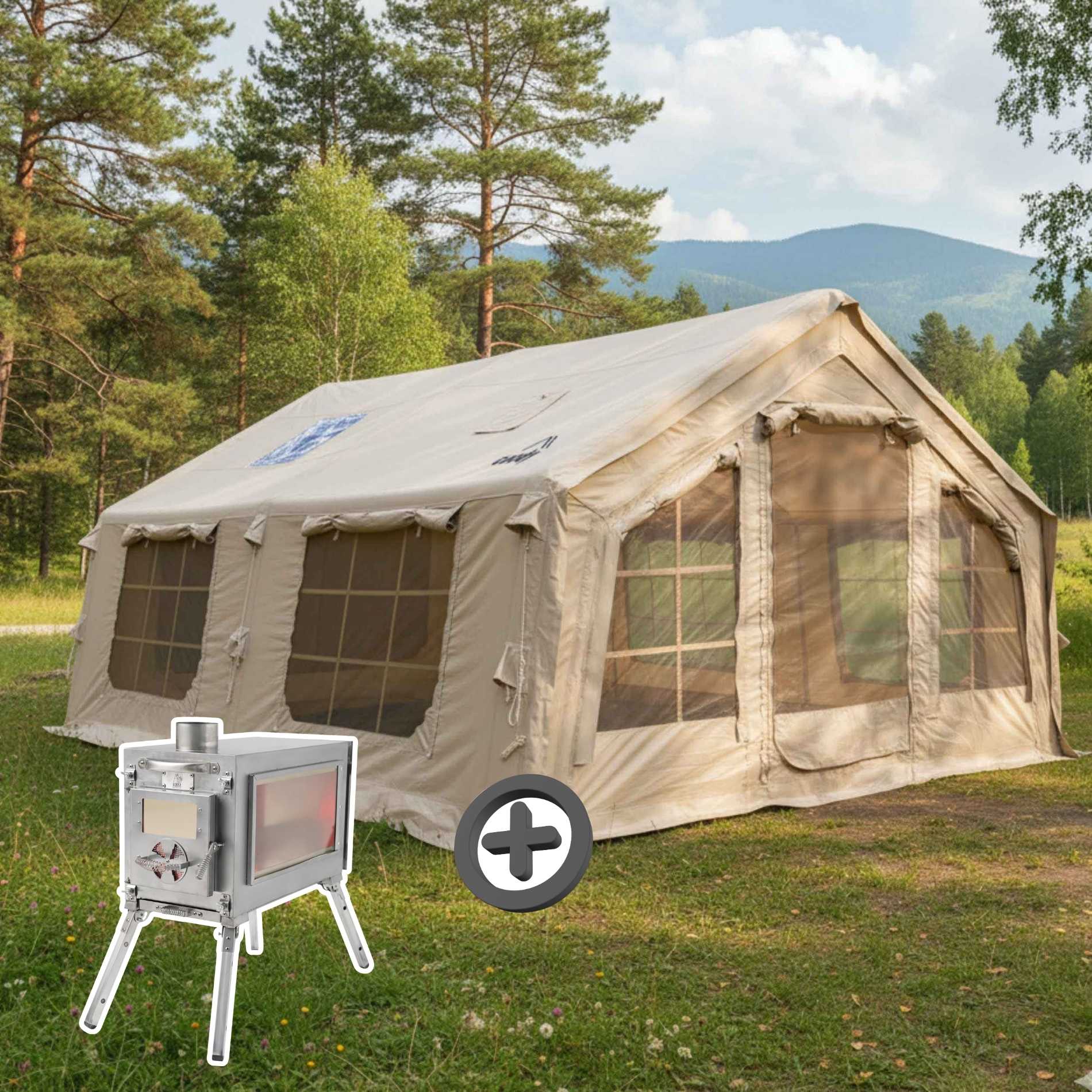
Pitch your tent, light your stove, and enjoy the sound of rain on canvas—dry, warm, and utterly unbothered.
Because with the right shelter, the worst weather often makes the best memories.