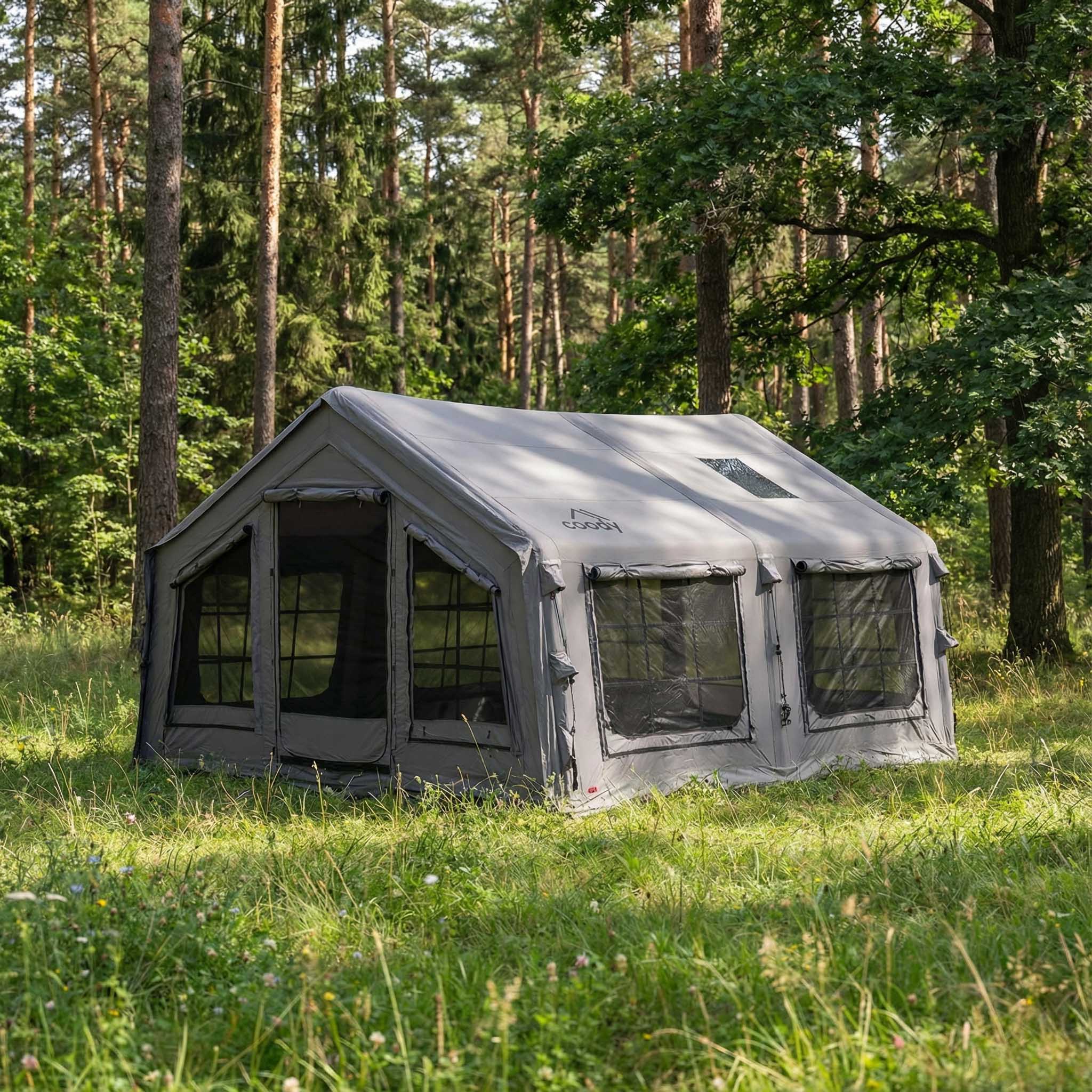
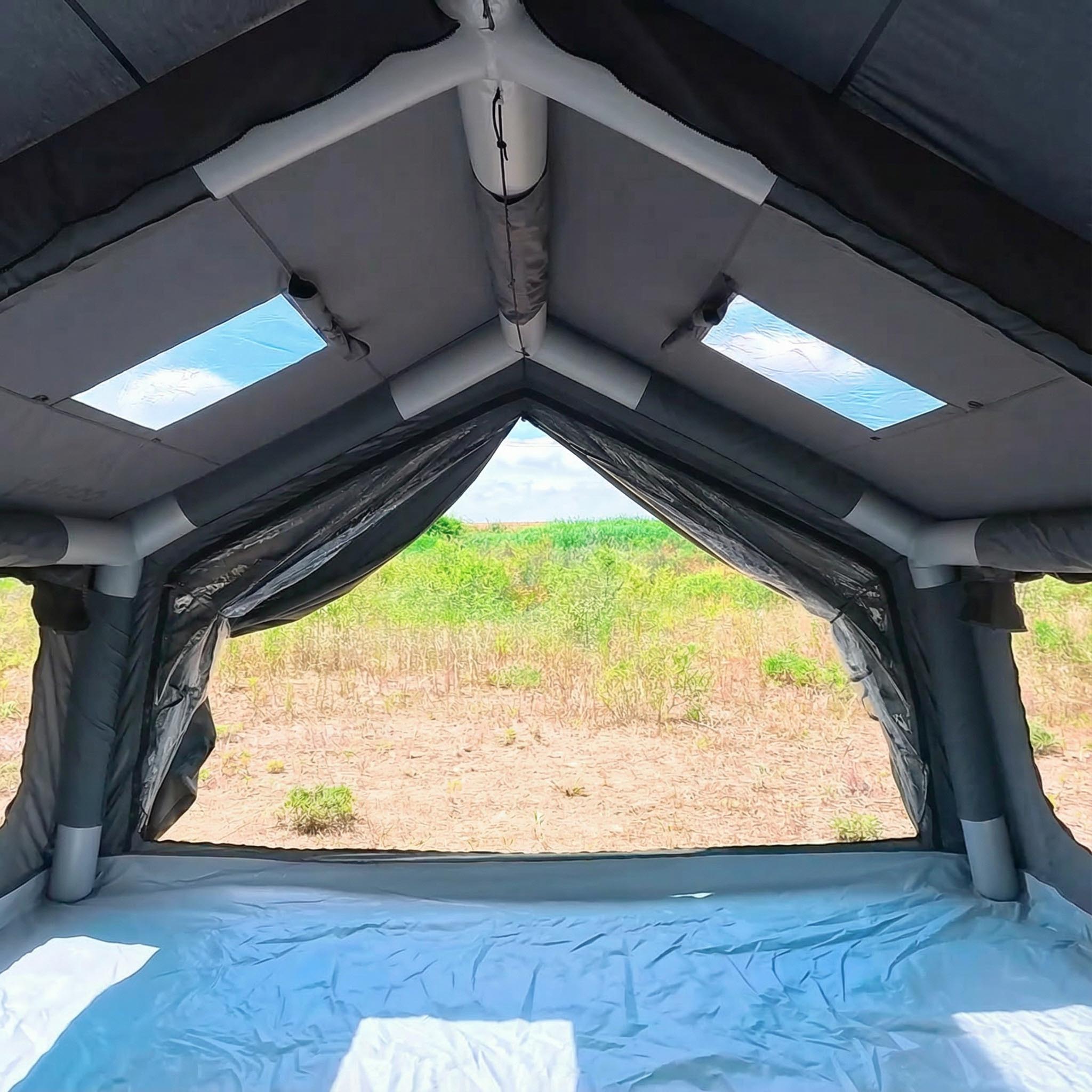
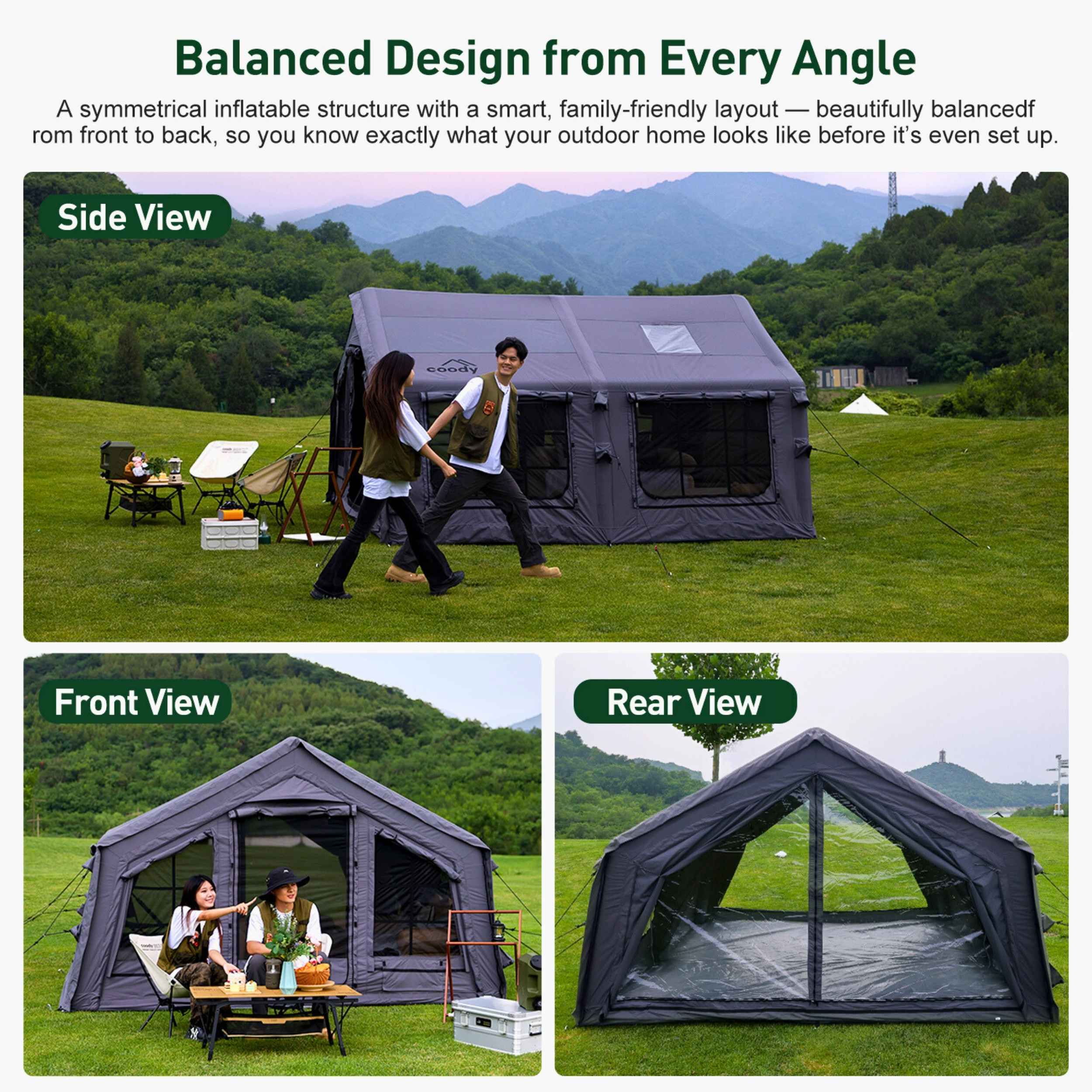
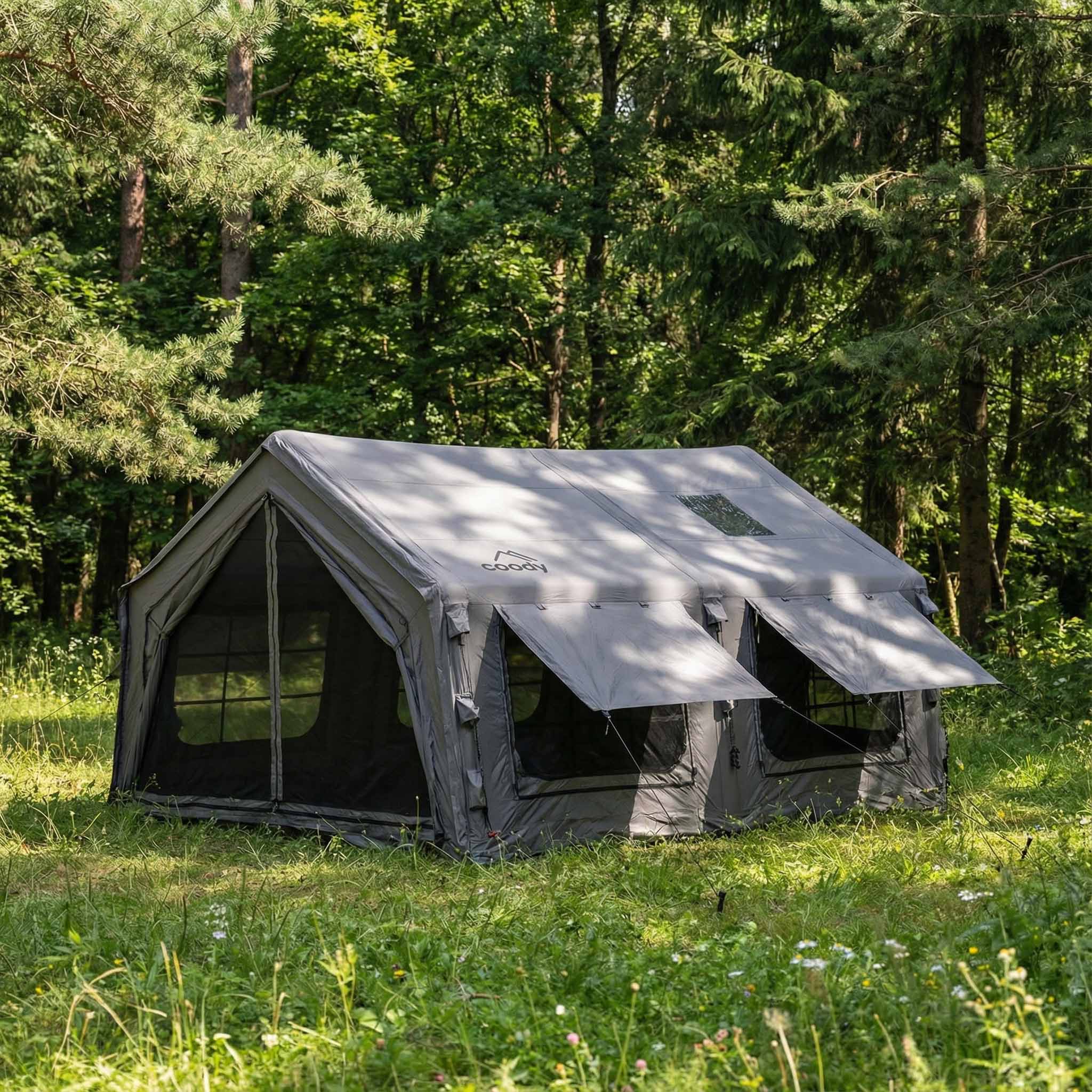
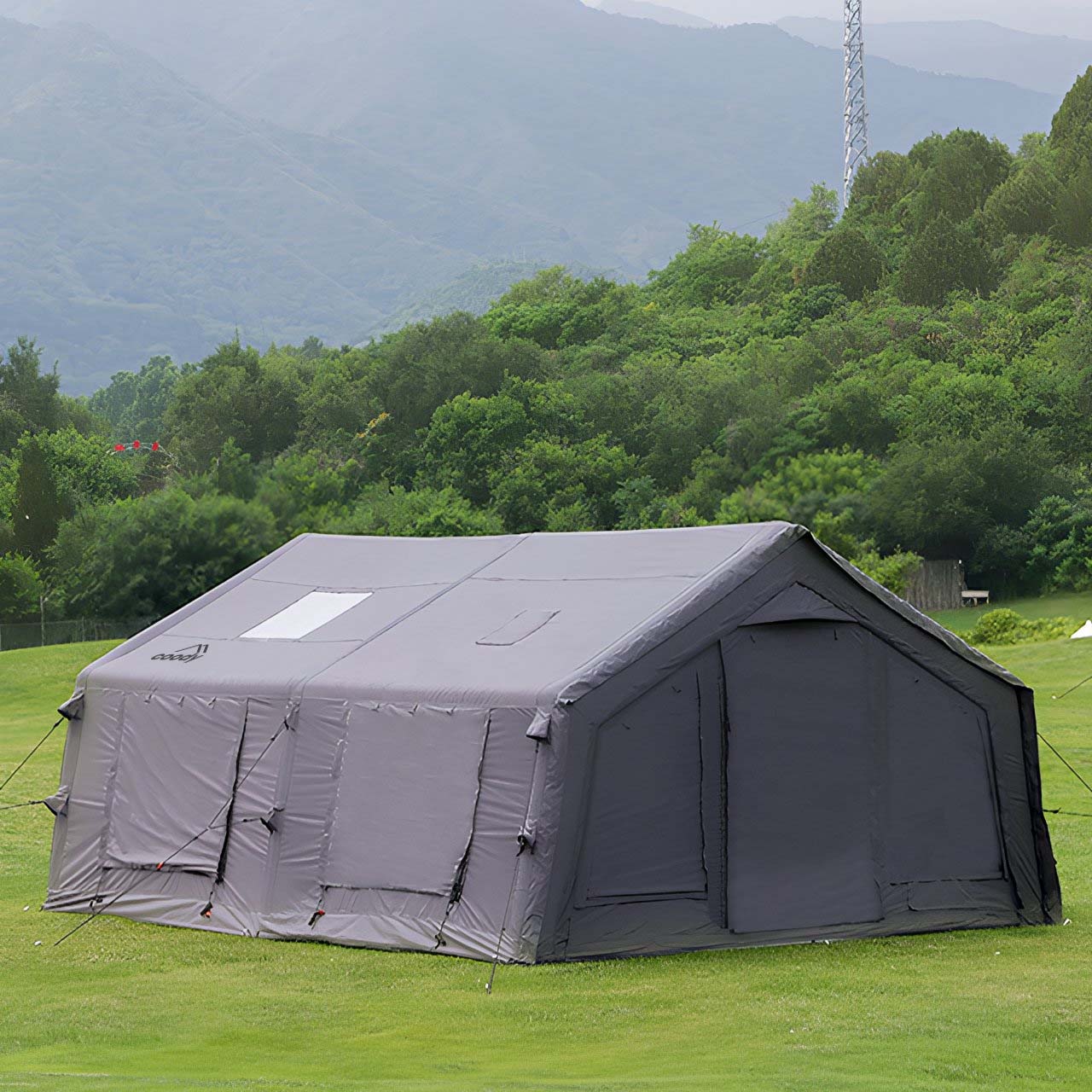
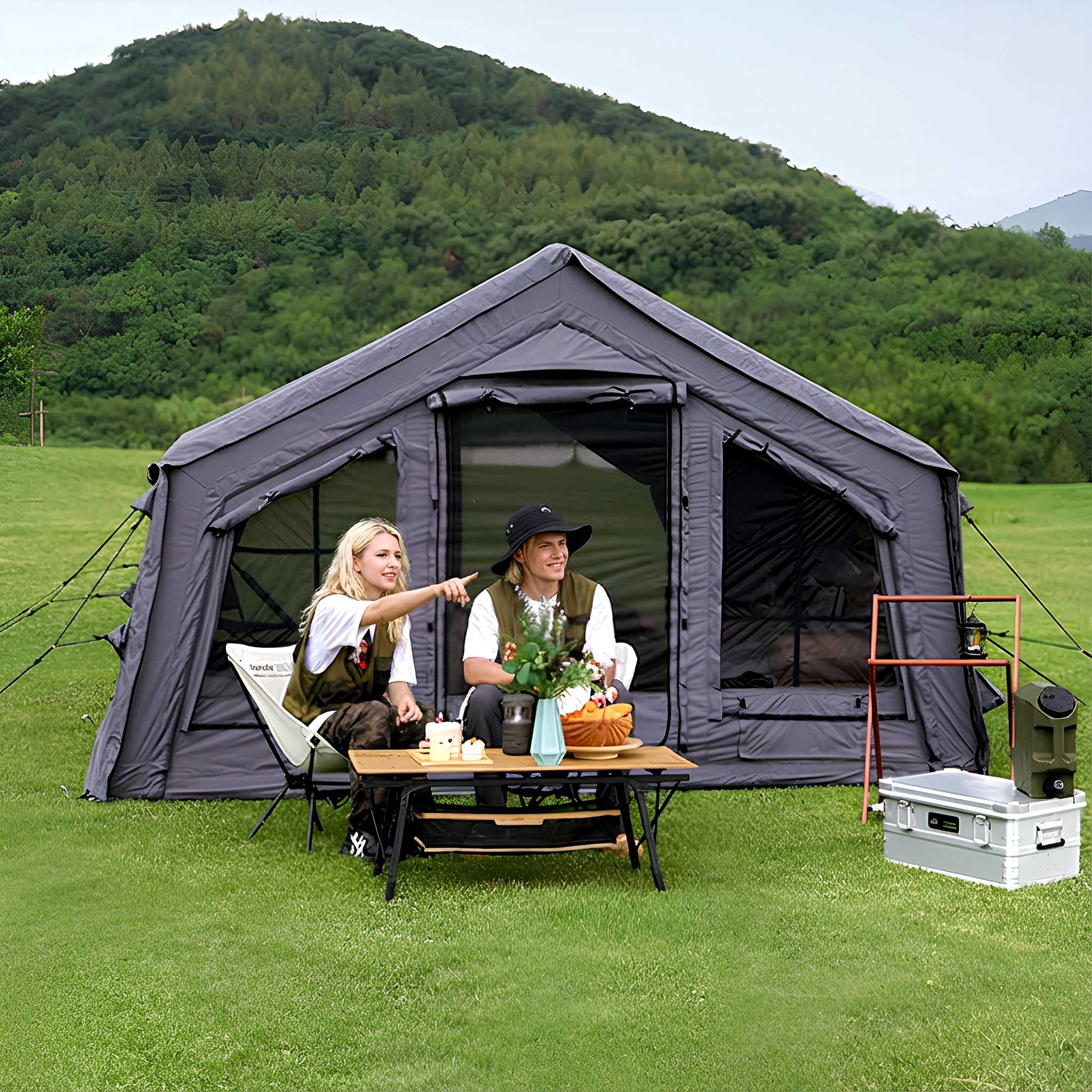
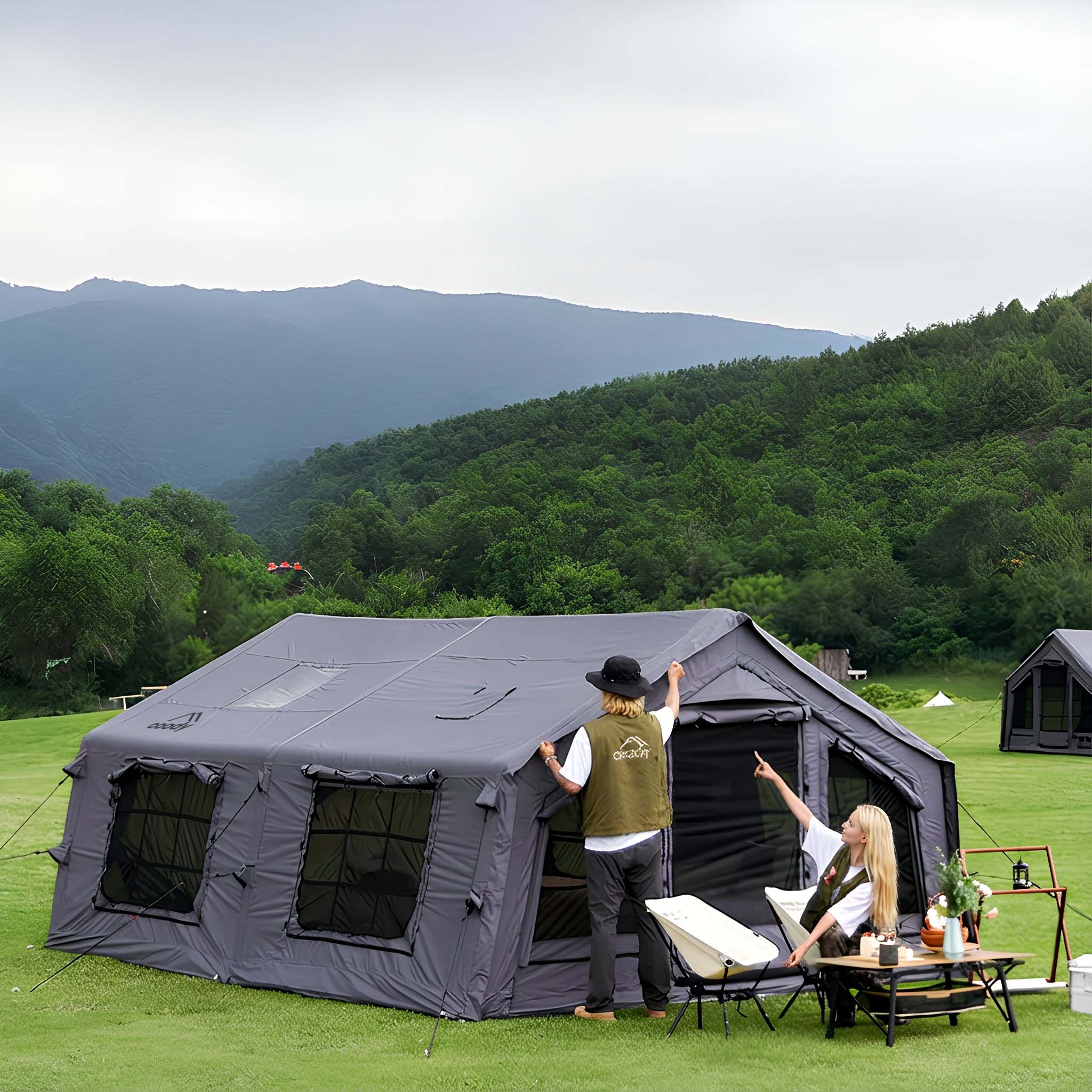
Preparation and Setup
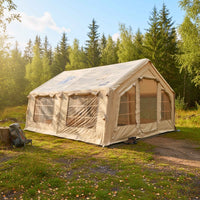
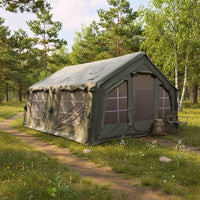
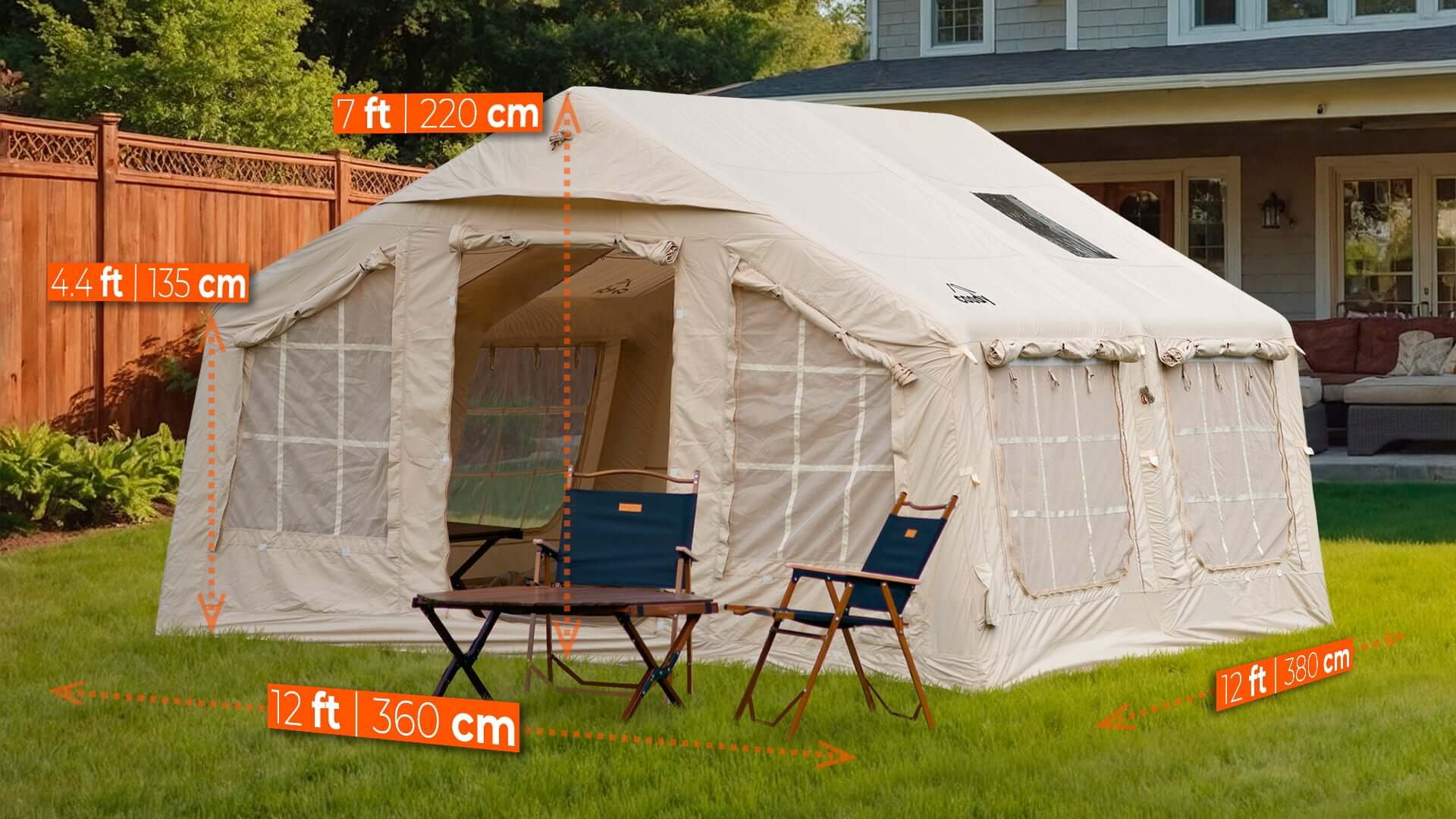
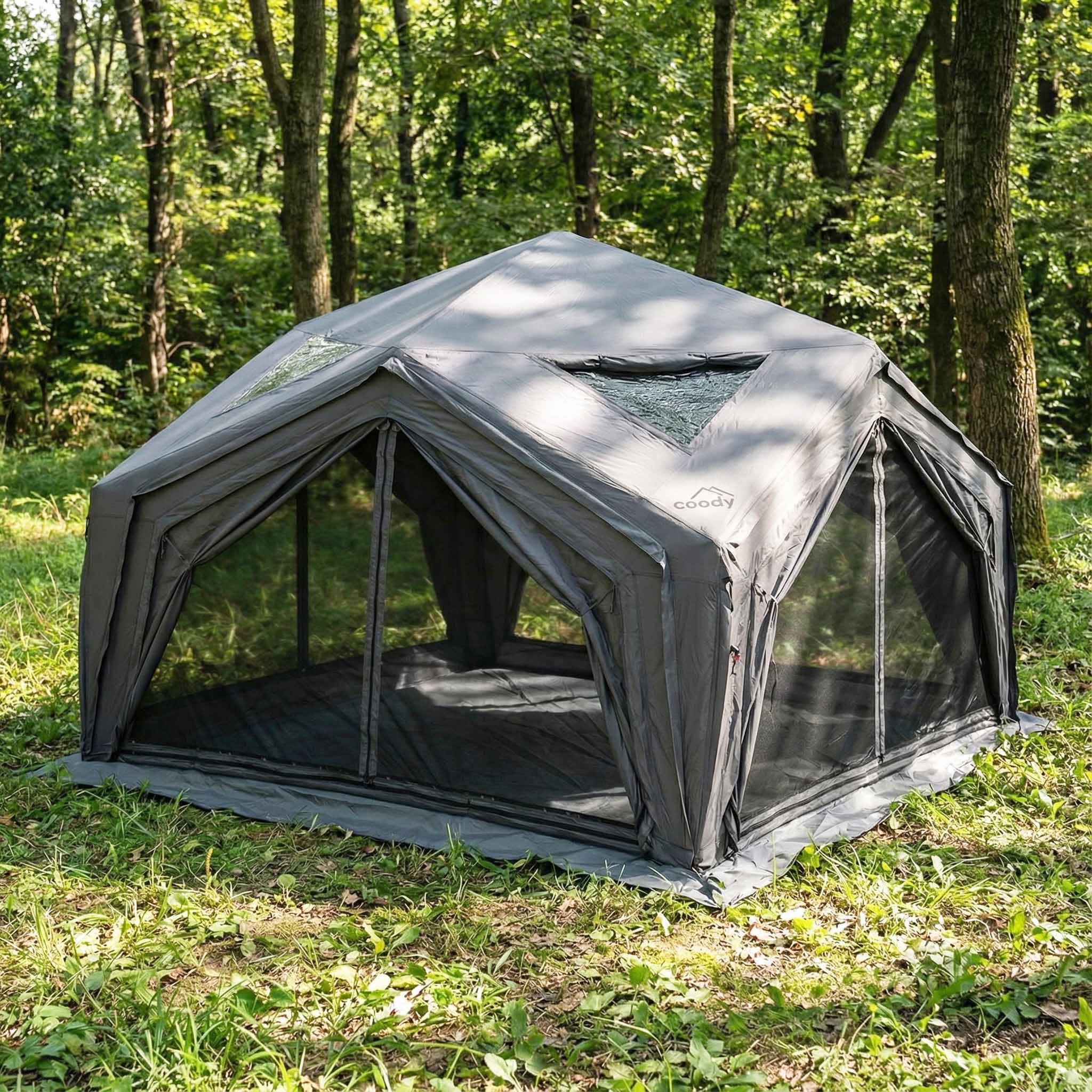
Choose level, well-drained ground and remove stones, branches, roots, and other sharp objects before unfolding the tent. Fully unfold and position the tent before inflation.
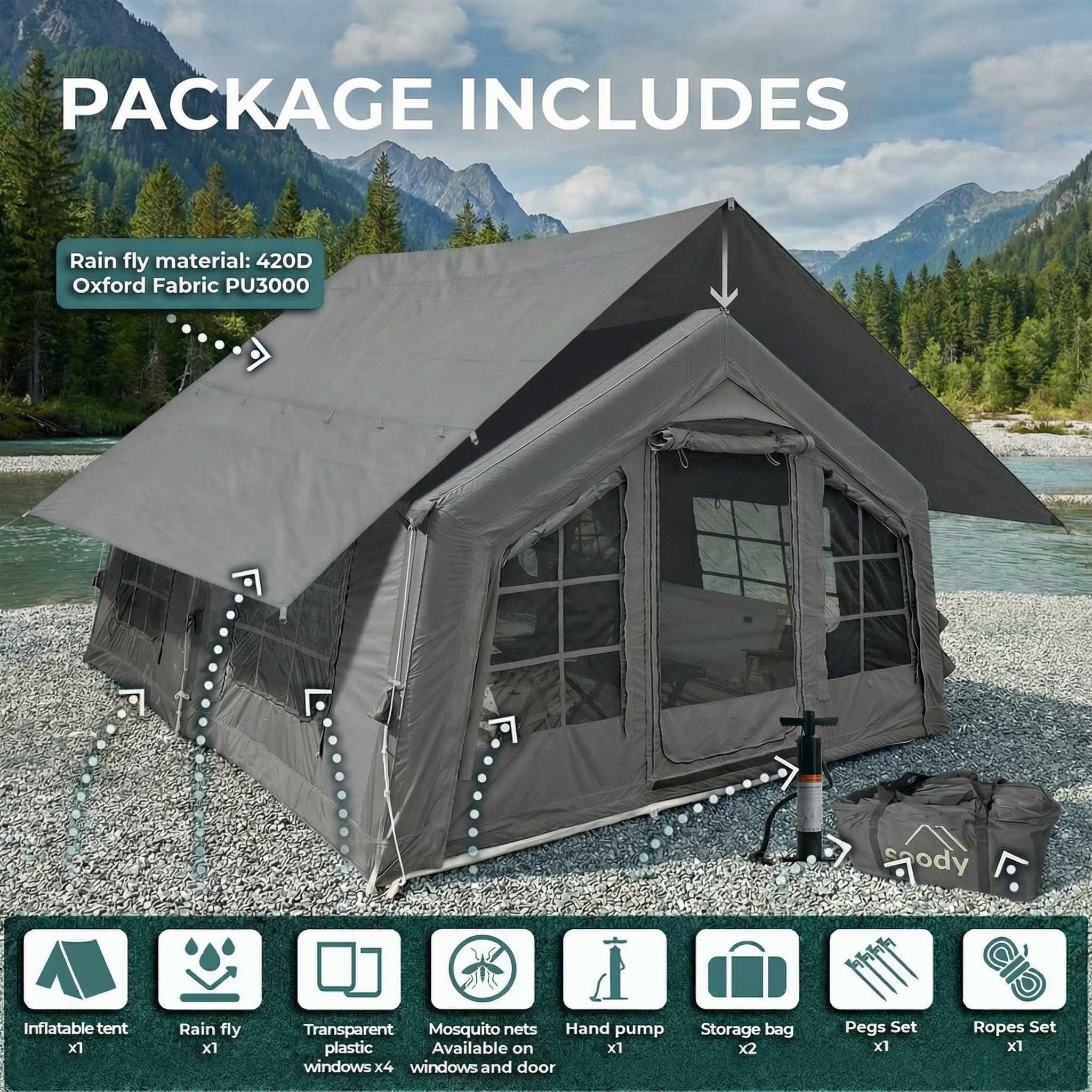
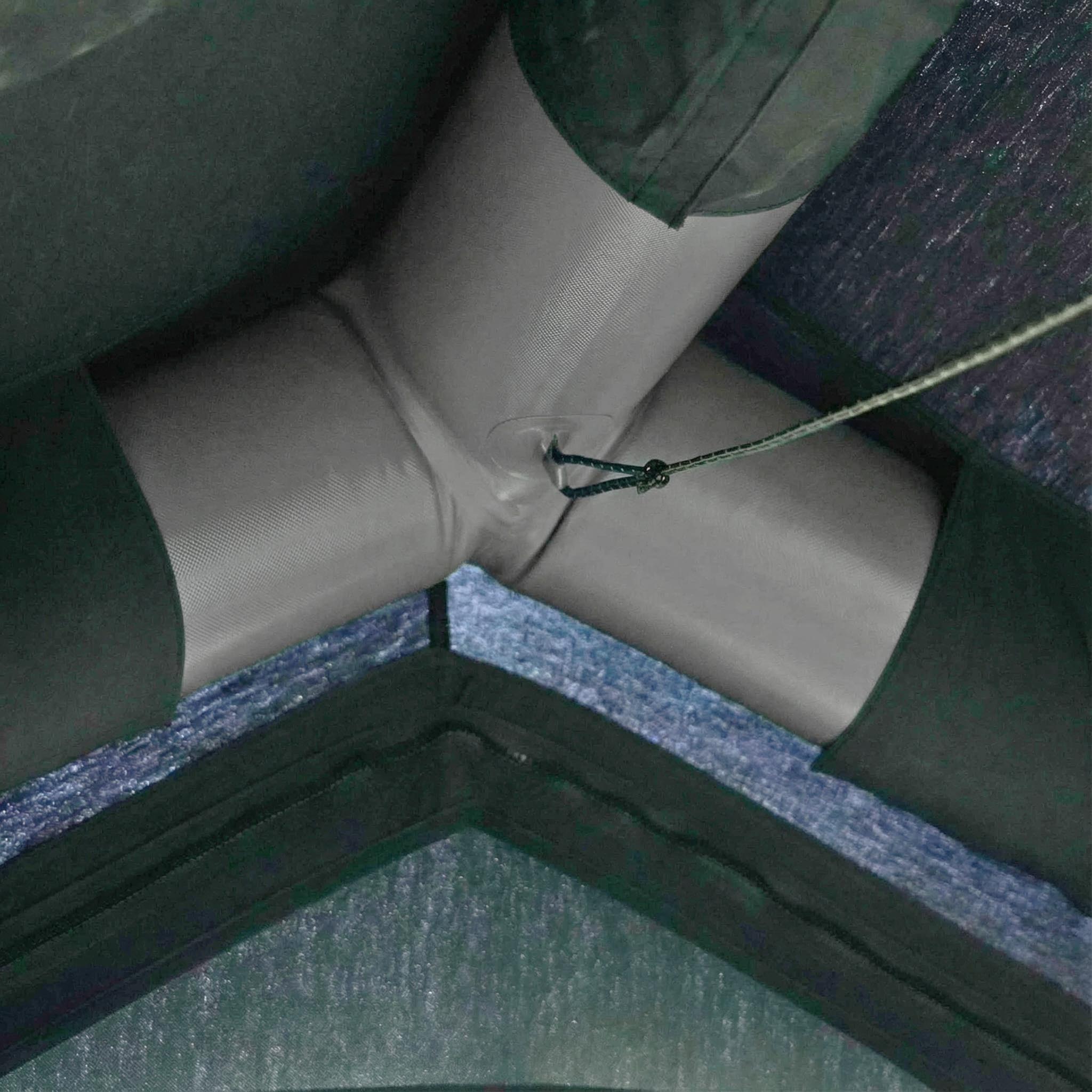
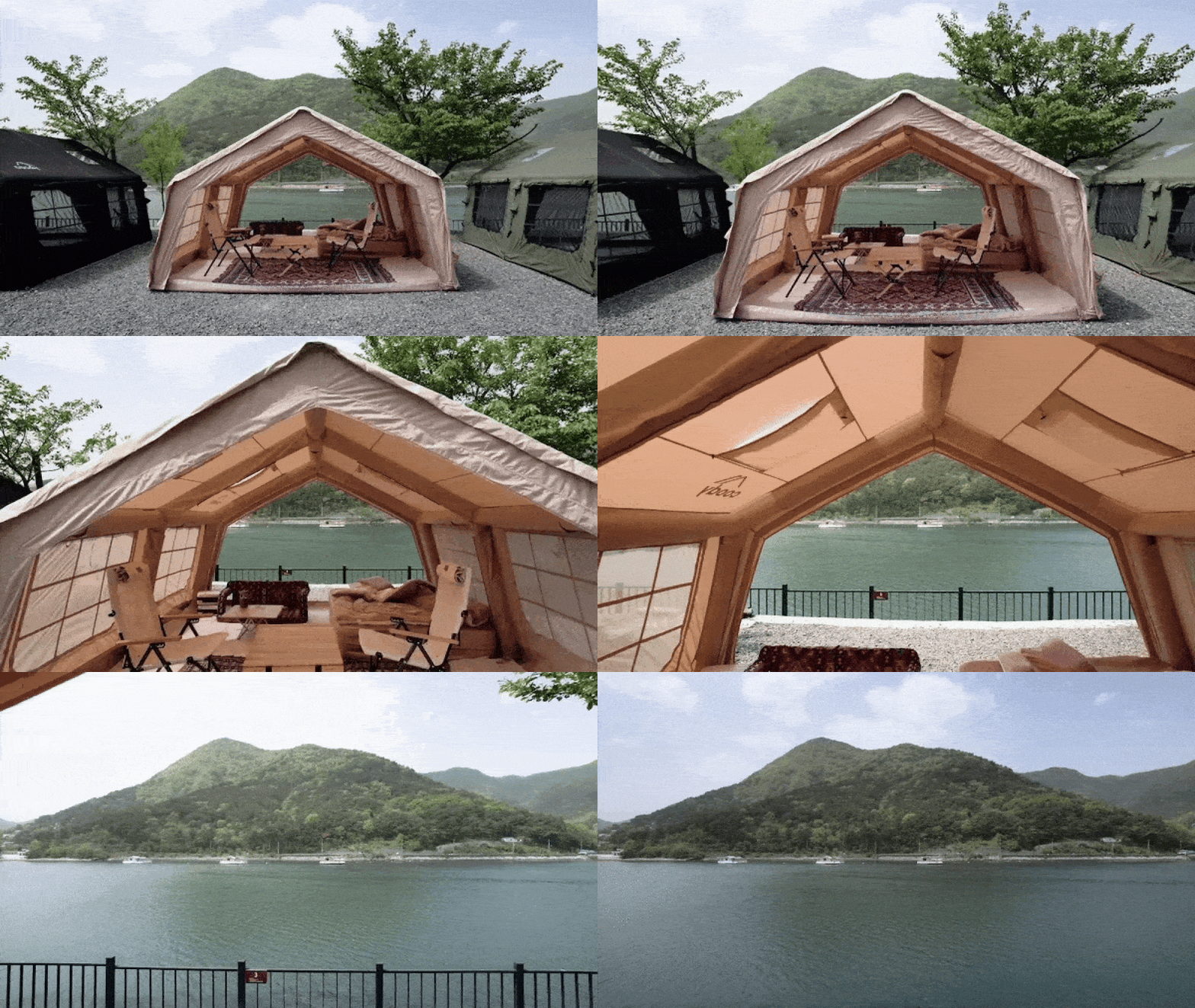
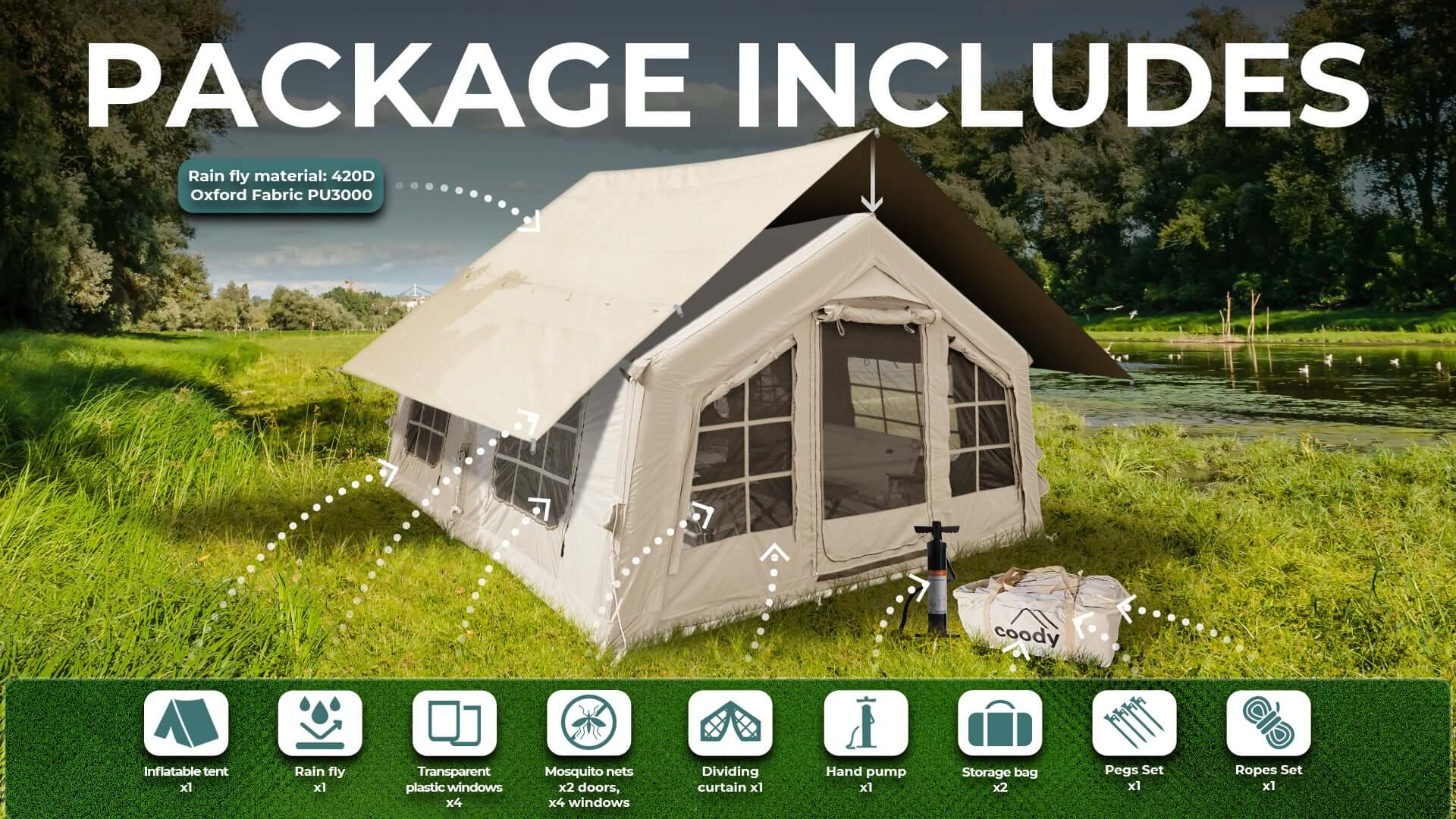
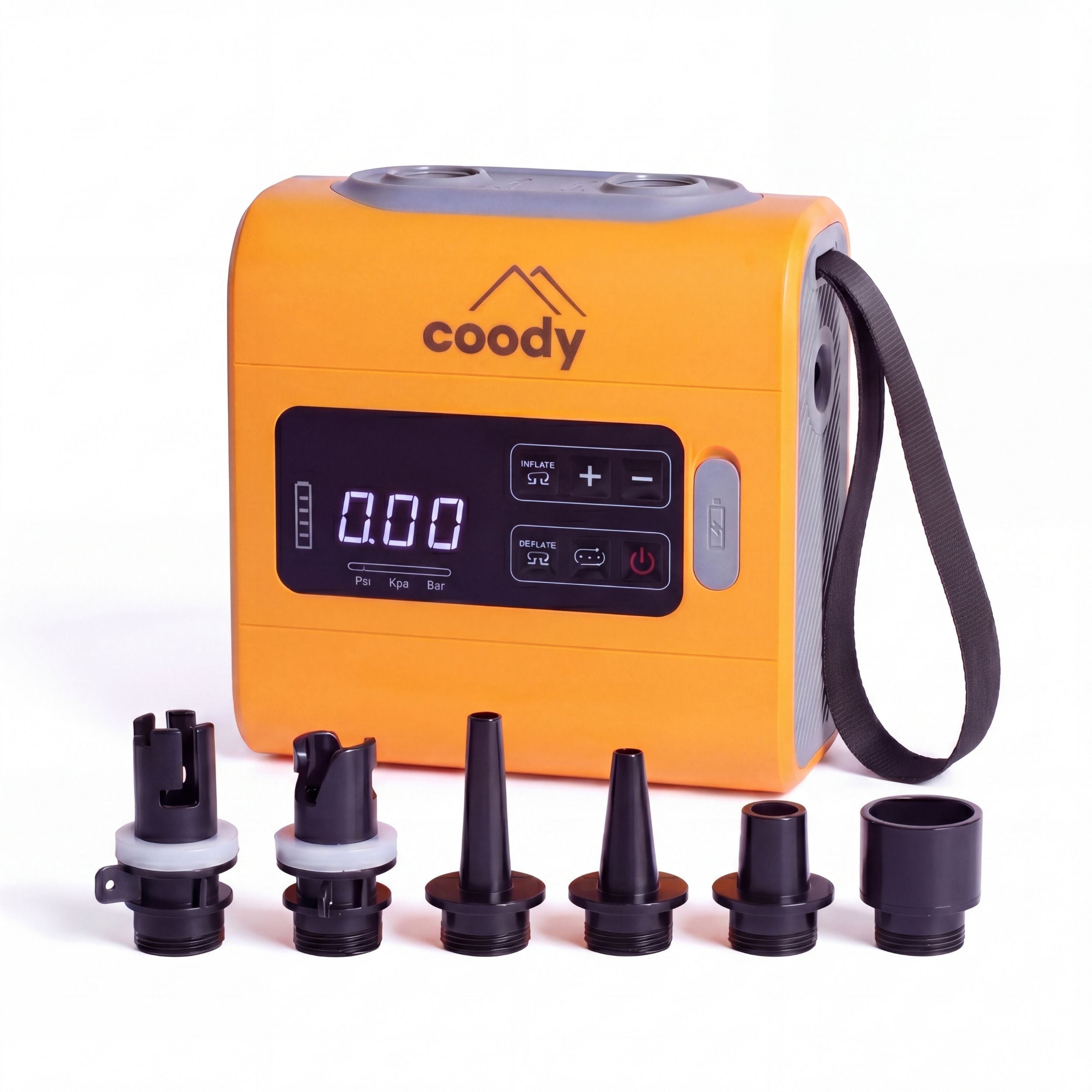
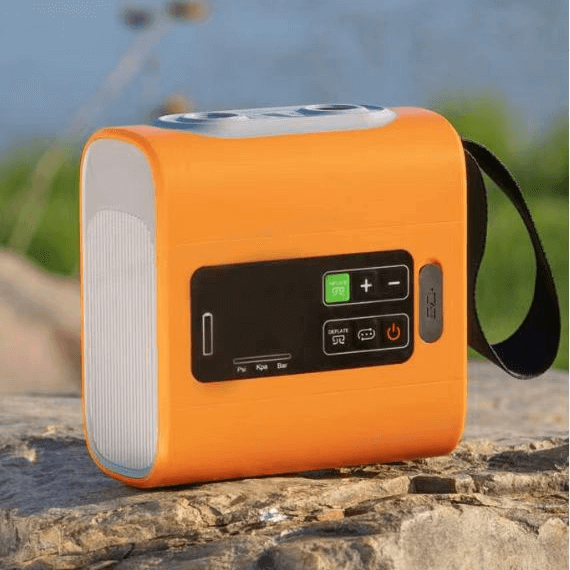
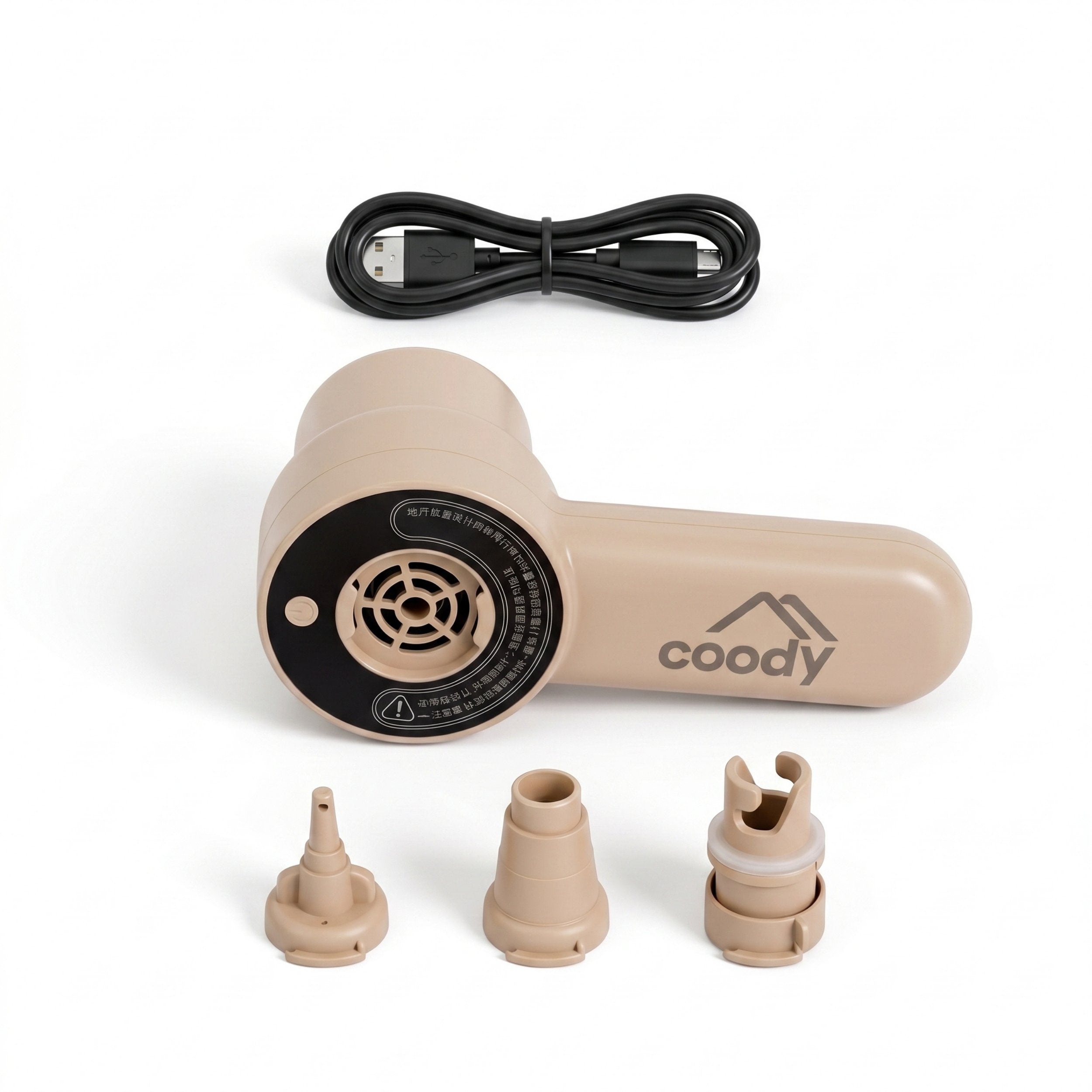
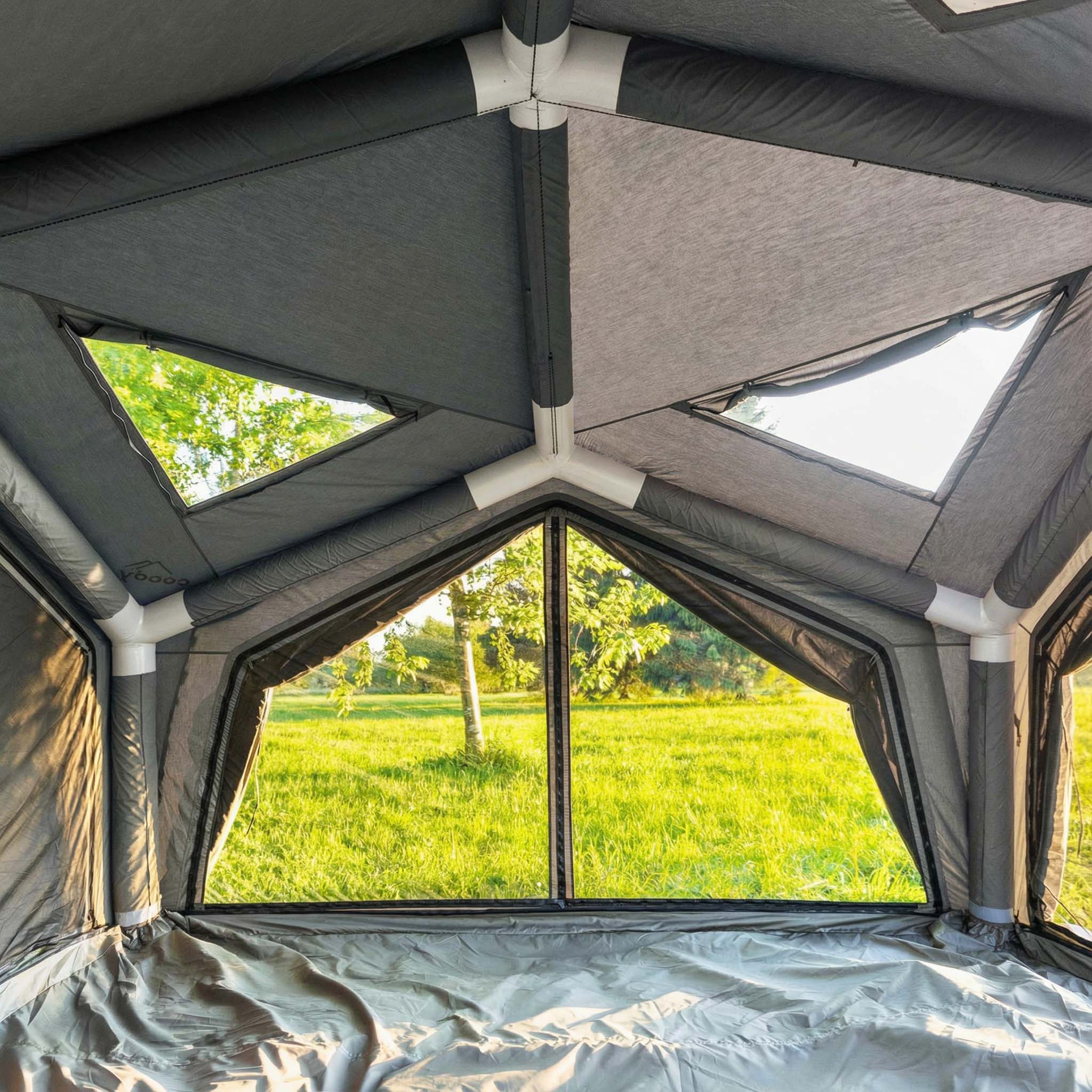
Inflate the air frame to 6–8 psi using the included hand pump. Do not exceed the recommended pressure. Make sure all external and internal valves are securely closed after inflation.
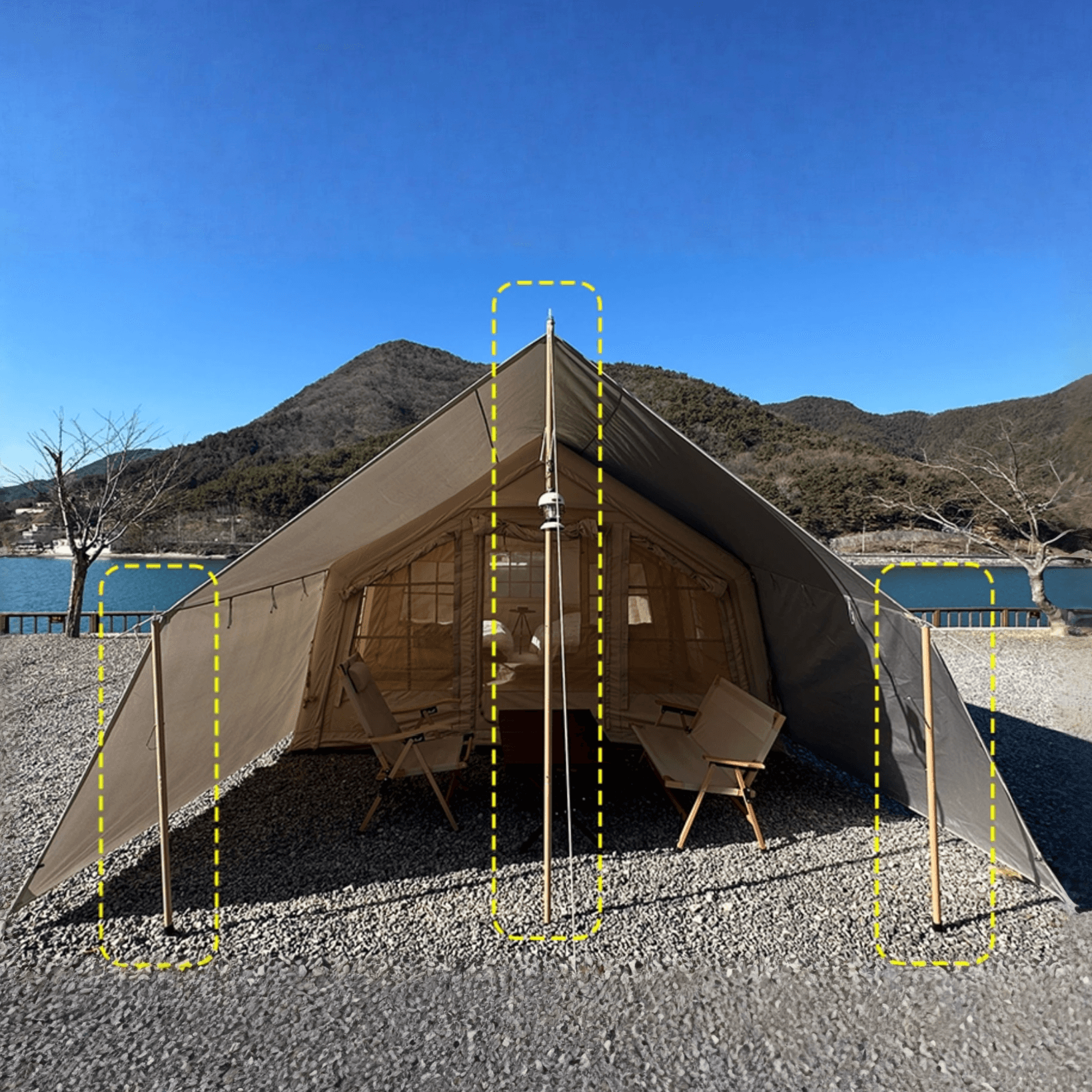
Secure the tent using all 16 pegs and the 14 preinstalled guy lines. Add suitable extra anchoring if wind conditions require it. Install the included rainfly when rain, snow, or prolonged strong sunlight is expected.
Temperature and Cold-Weather Use
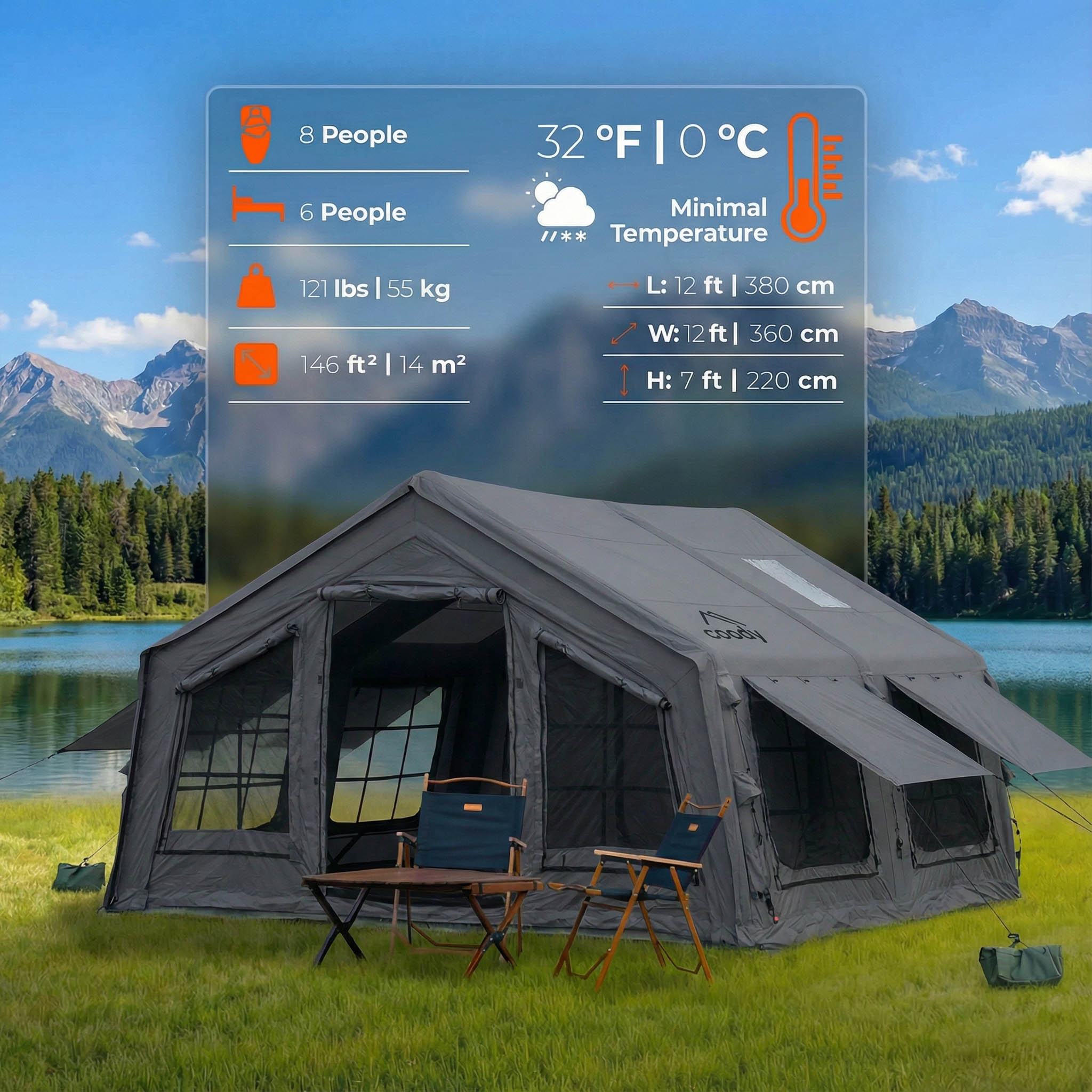
The approved operating range is from -10 °C to +40 °C (14 °F to 104 °F).
Air pressure may decrease as the temperature falls. Check the air frame regularly and add air when necessary without exceeding 8 psi. Use sleeping bags and insulated sleeping mats rated for the expected conditions.
After using the tent below 0 °C (32 °F), dry it completely in a warm, dry indoor space before storage.
Stove and Ventilation Safety
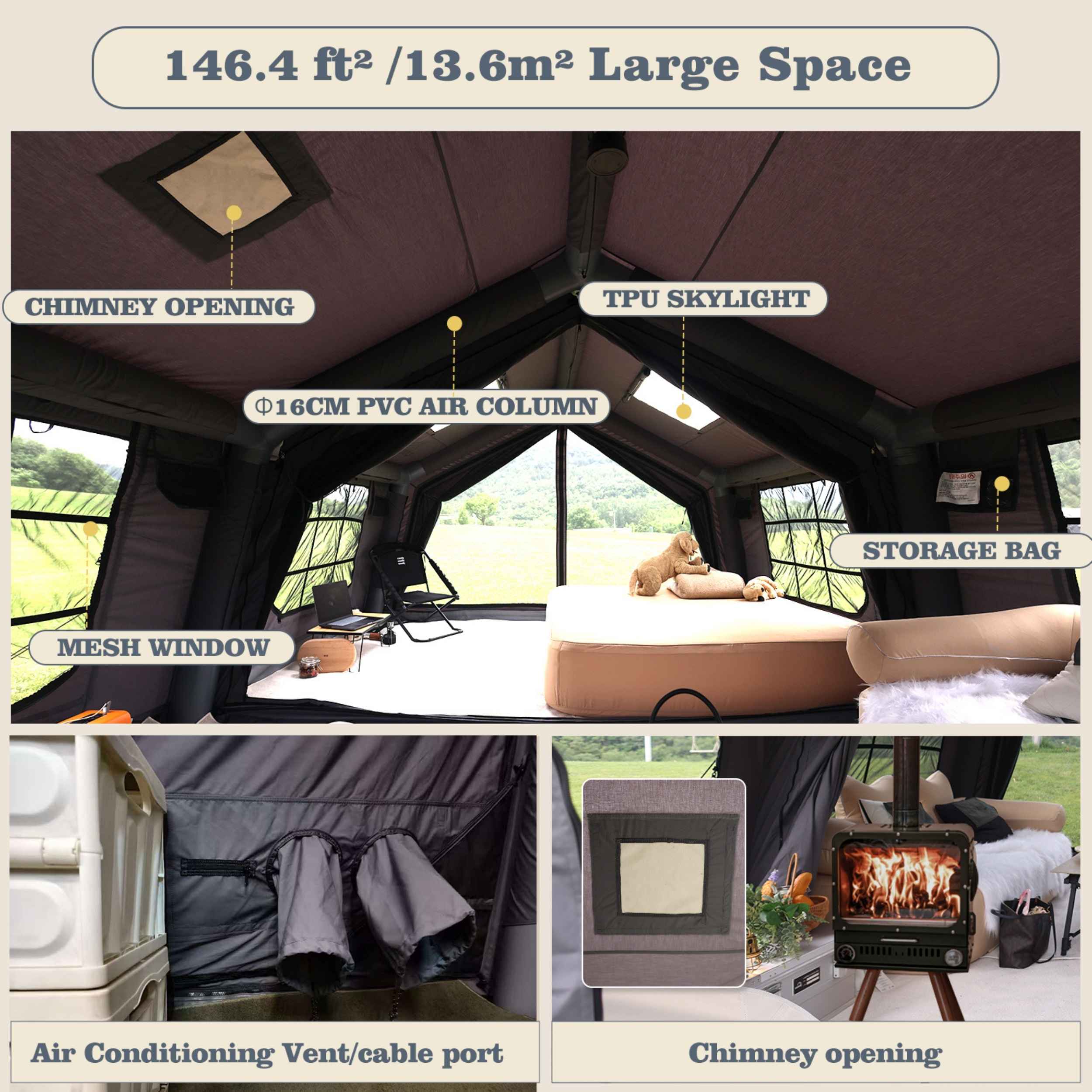
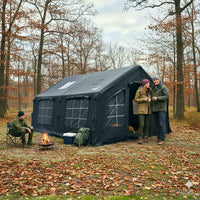
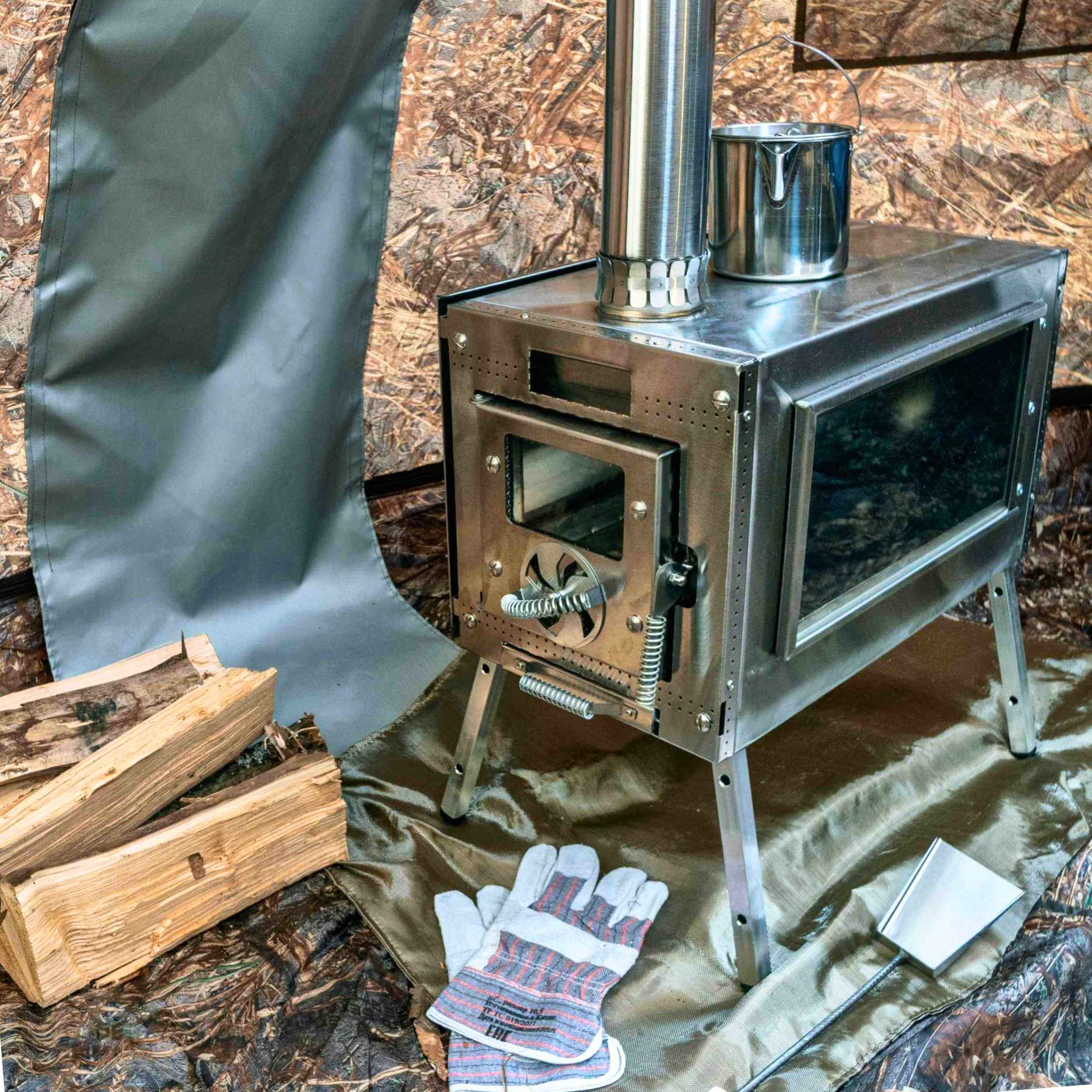
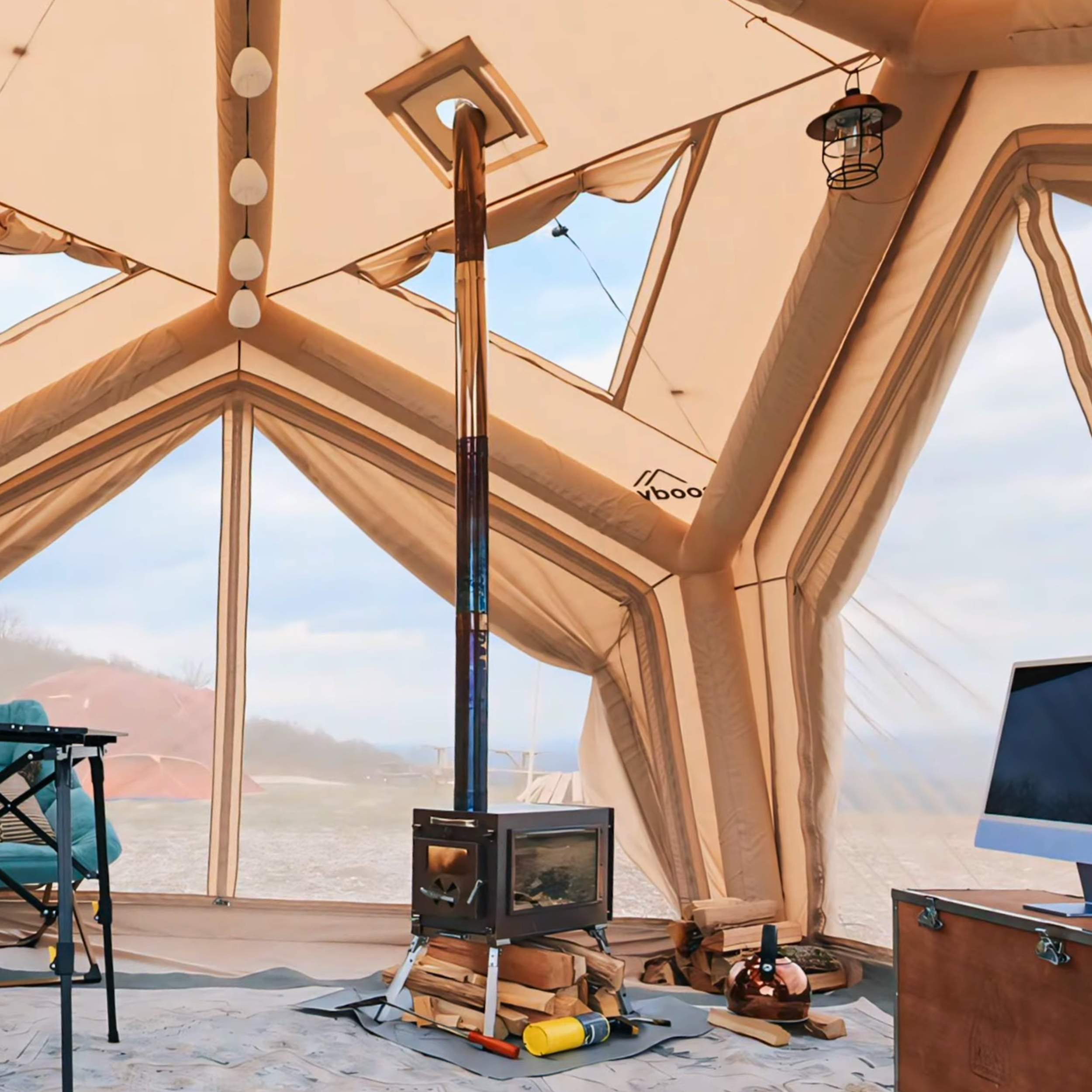
The stove is not included with this product. Use only a compatible wood-burning tent stove installed through the designated stove jack.
Use a spark arrestor and heat-resistant stove mat. Follow the stove manufacturer’s clearance requirements and maintain continuous ventilation whenever a stove is operating. Use working smoke and carbon monoxide alarms.
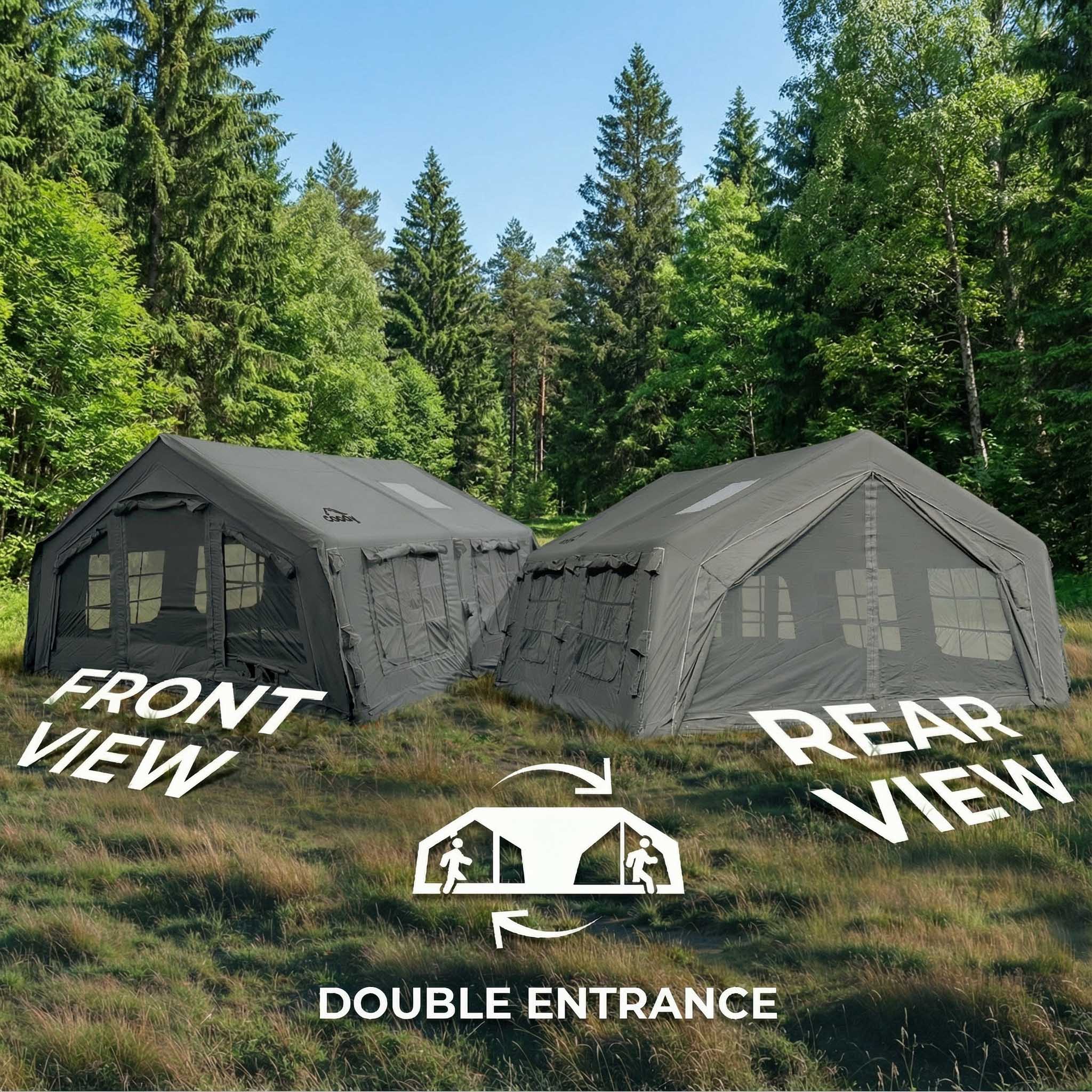
Never leave a burning stove unattended or operating while everyone is asleep. Keep entrances and emergency exit routes clear.
Condensation and Moisture
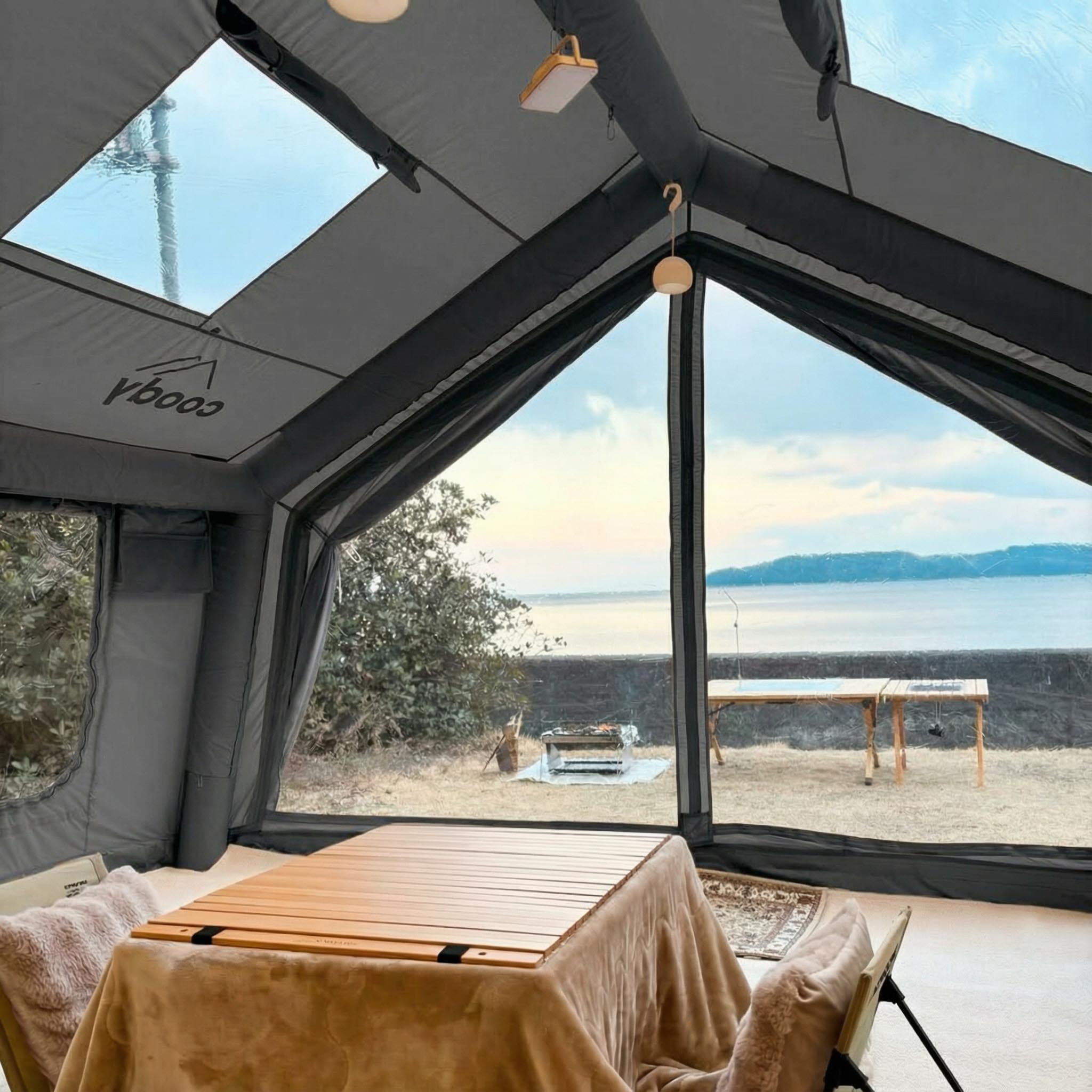
Condensation can form when warm, humid air contacts a colder tent surface. Keep vents slightly open and maintain steady airflow.
Increase the interior temperature gradually rather than heating the tent suddenly. Use a groundsheet and choose dry ground whenever possible to reduce moisture rising from below.
Wipe away accumulated moisture and allow the tent to dry completely before packing.
Rain, Snow, and Wind
Use the included rainfly during sustained rain and whenever snow is expected. Keep the rainfly correctly tensioned and prevent water from pooling on the fabric.
Remove accumulated snow from the roof regularly. Check all pegs and guy lines during changing or strong winds. Move to safer shelter or take the tent down if conditions become unsafe.
After rain or snow, remove or lift the rainfly when conditions allow so the tent can ventilate and dry.
Packing, Storage, and Care
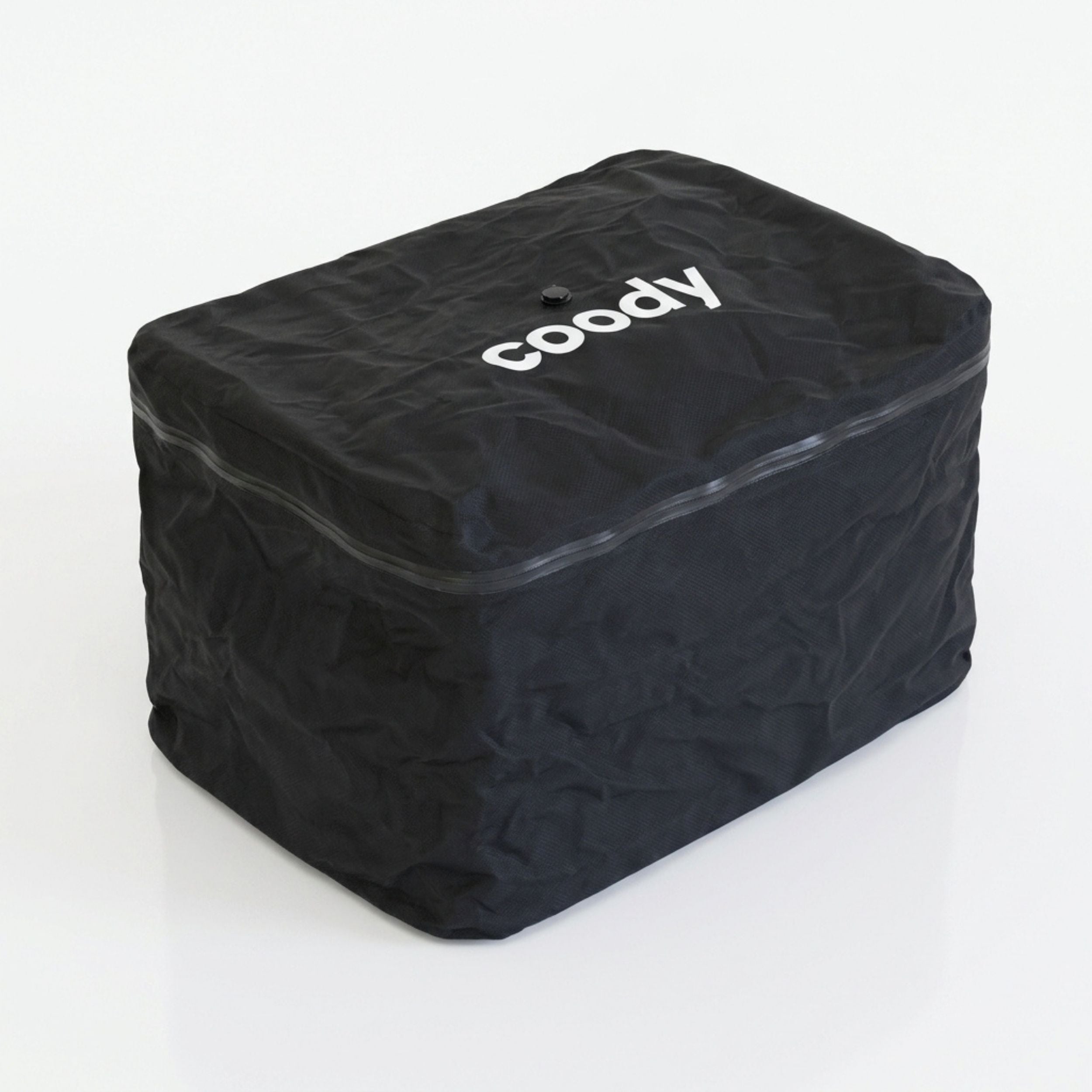
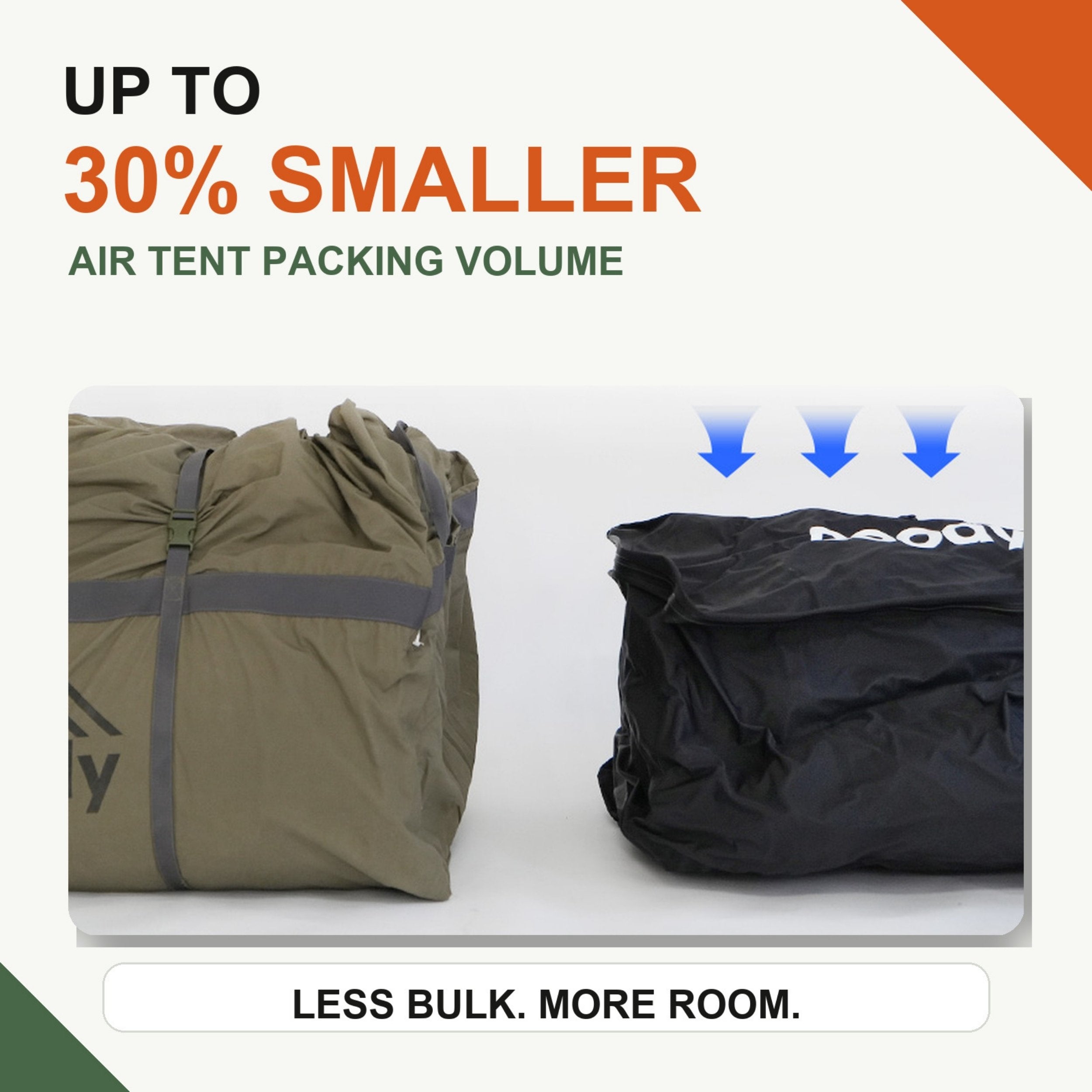
Fully deflate the air frame before folding the tent. Remove dirt and moisture and dry every component completely in a well-ventilated area.
Pack and store the tent only when it is clean and completely dry. Store it in a clean, dry conditions protected from mold and prolonged UV exposure.