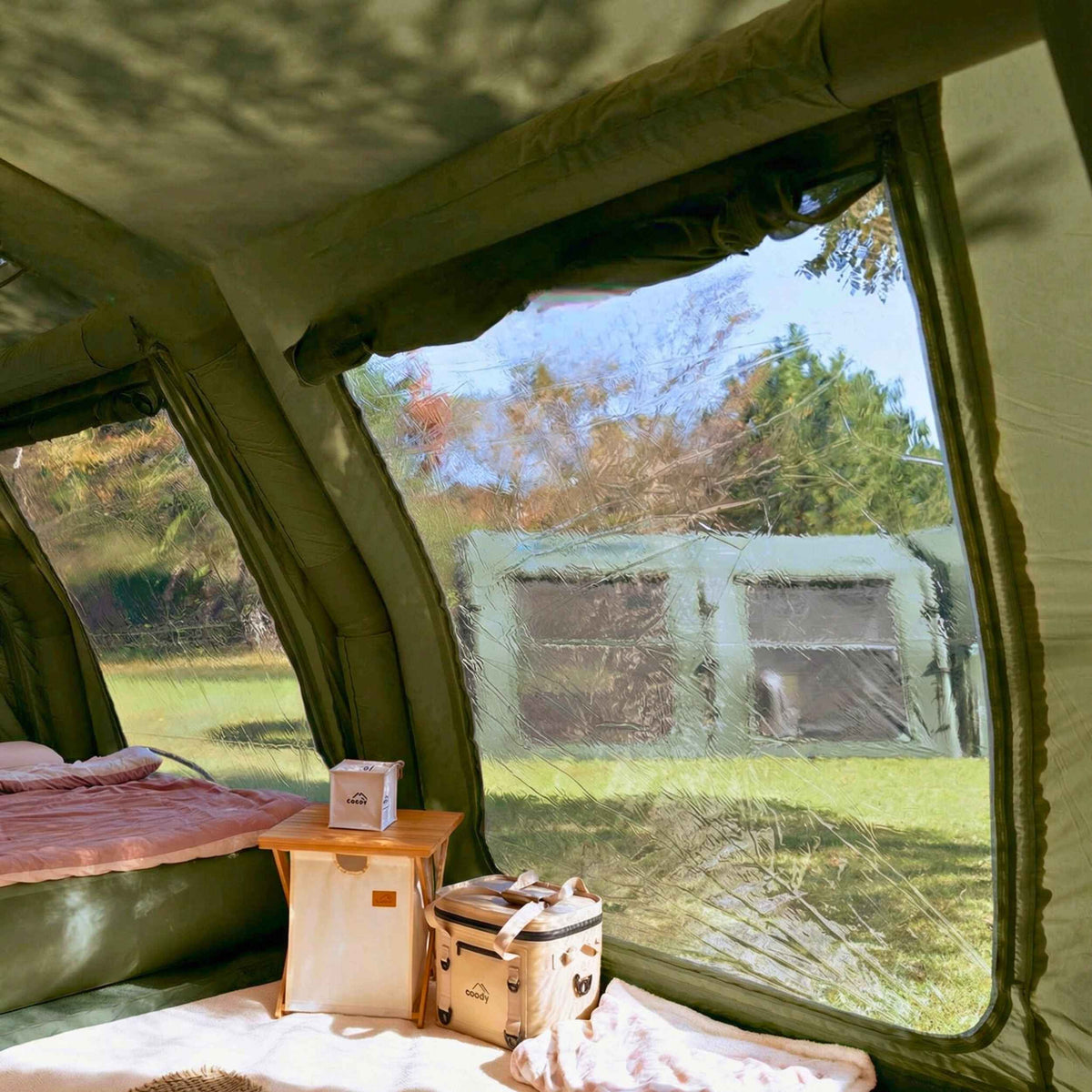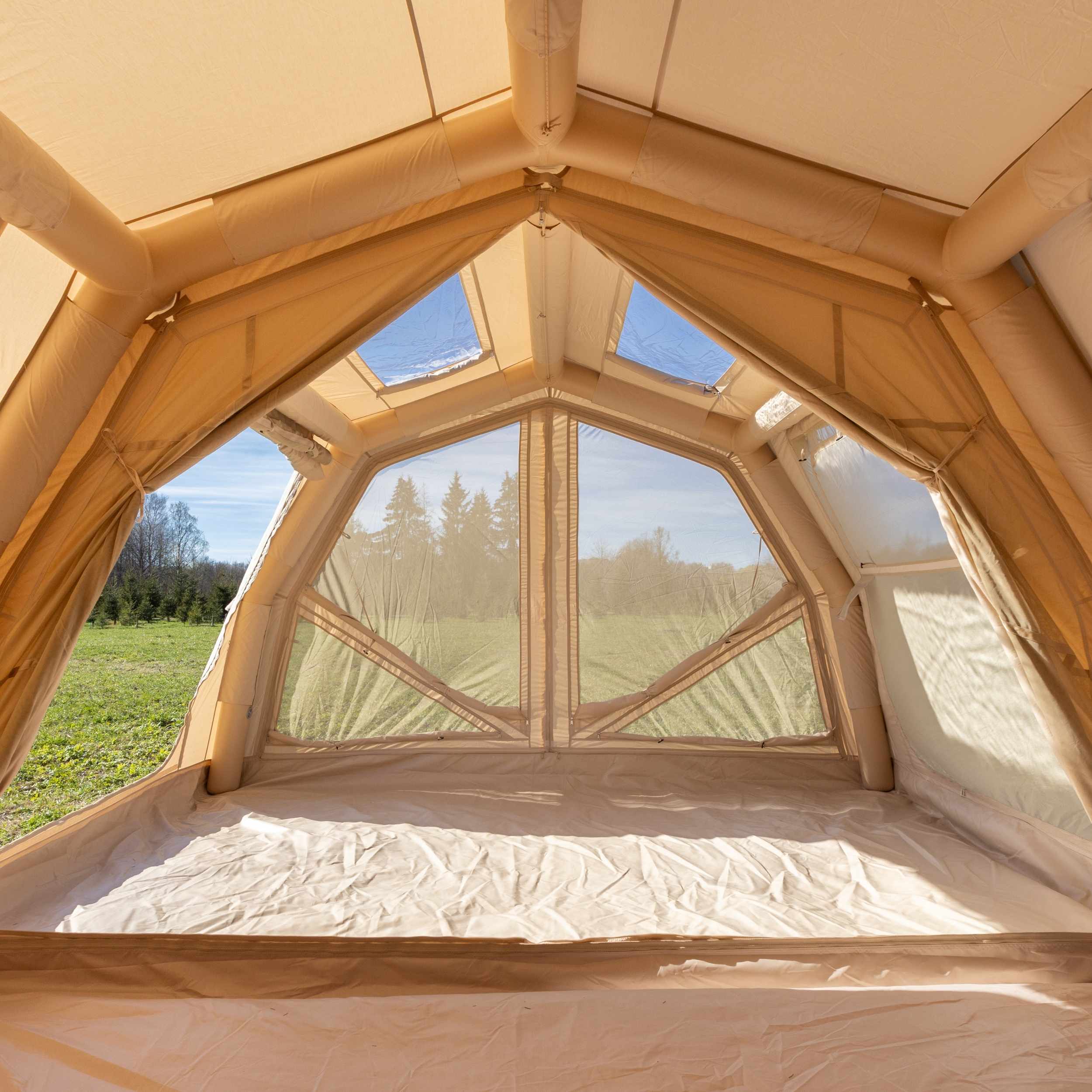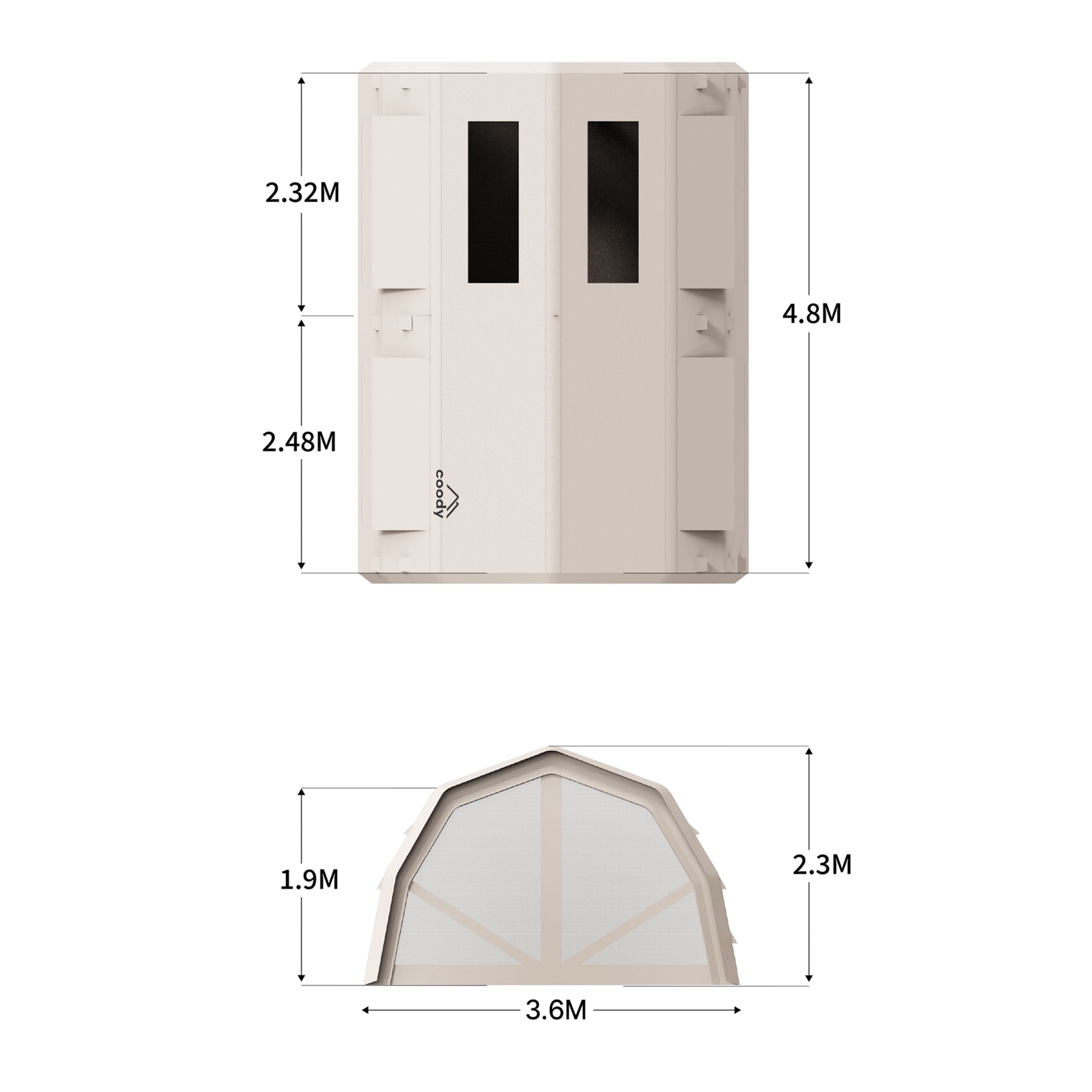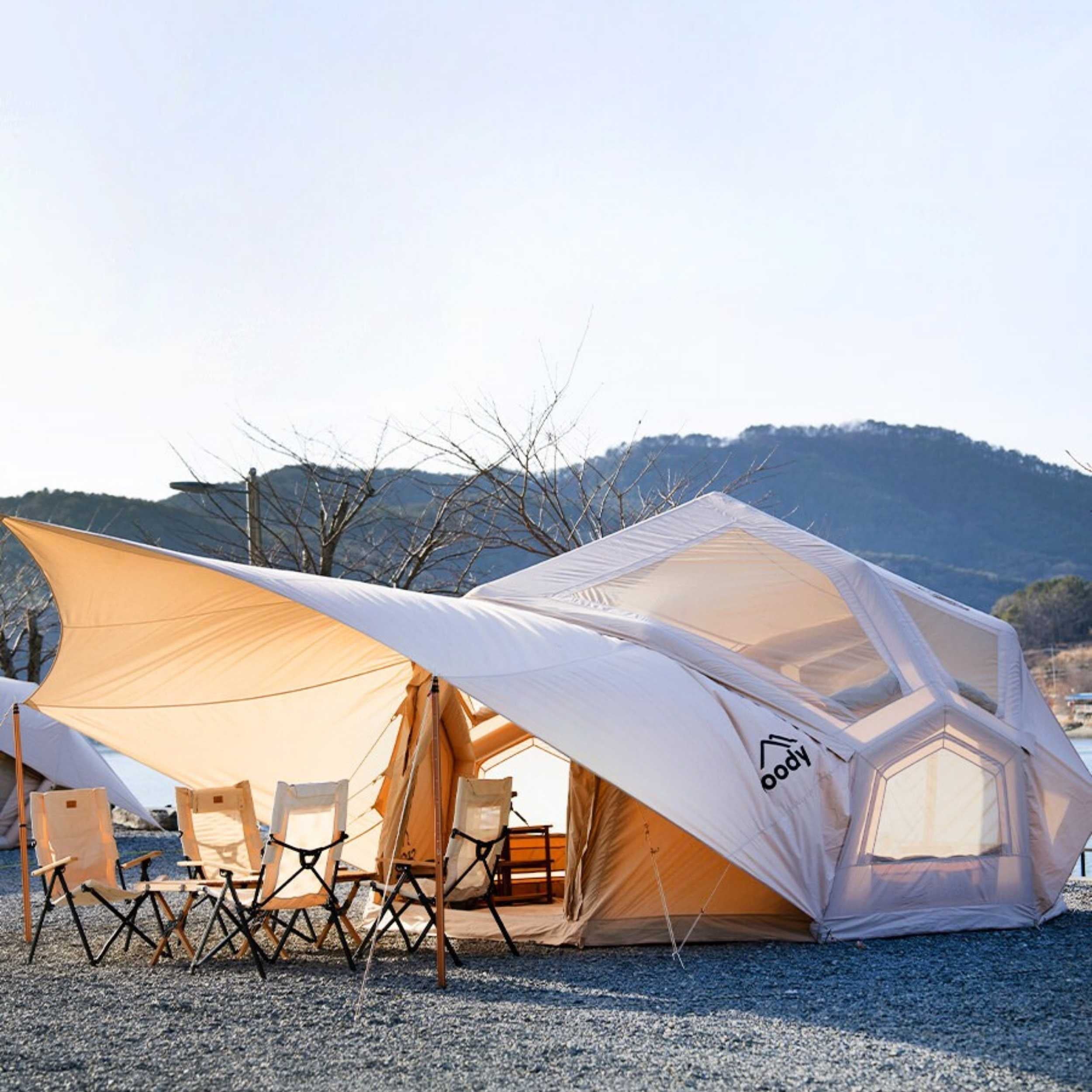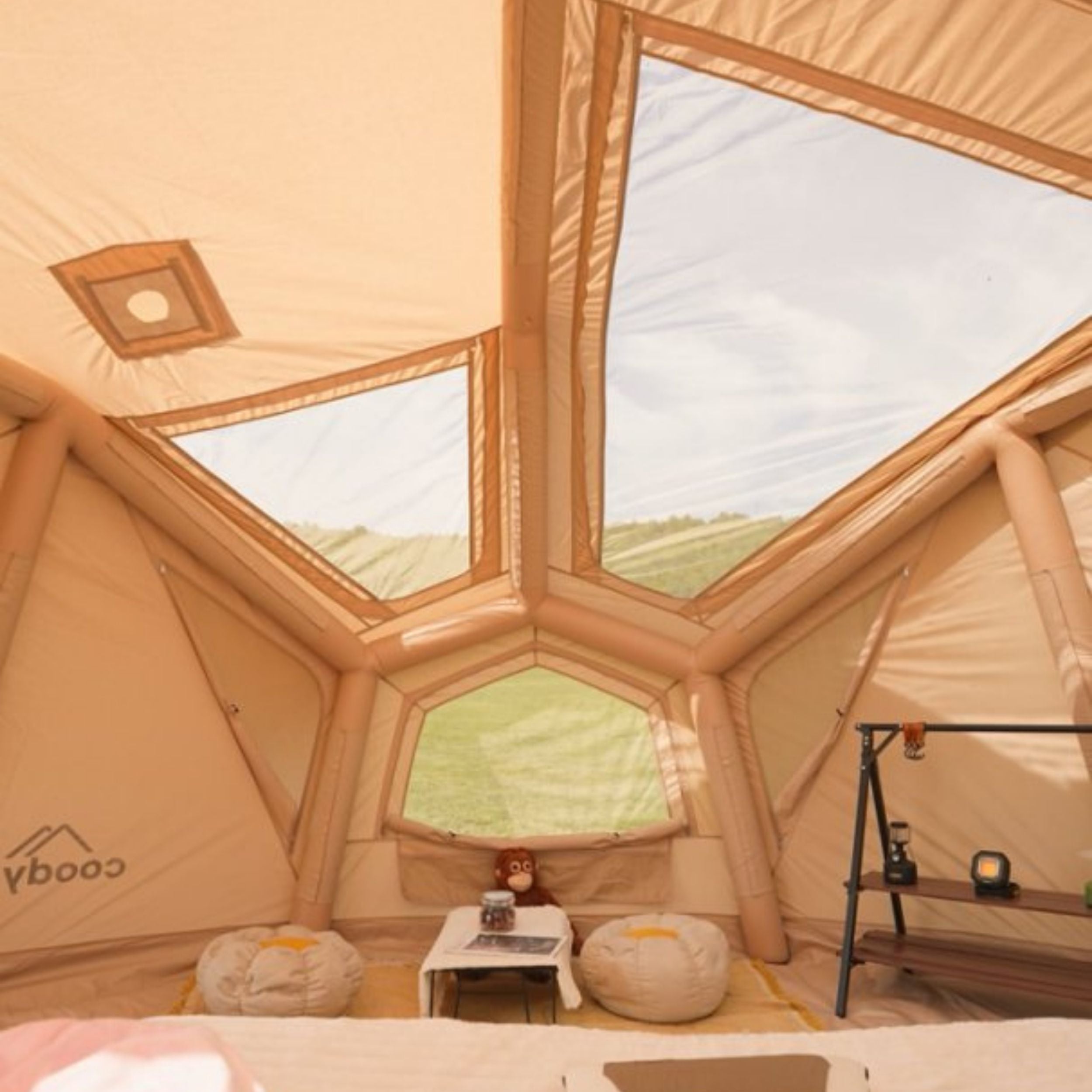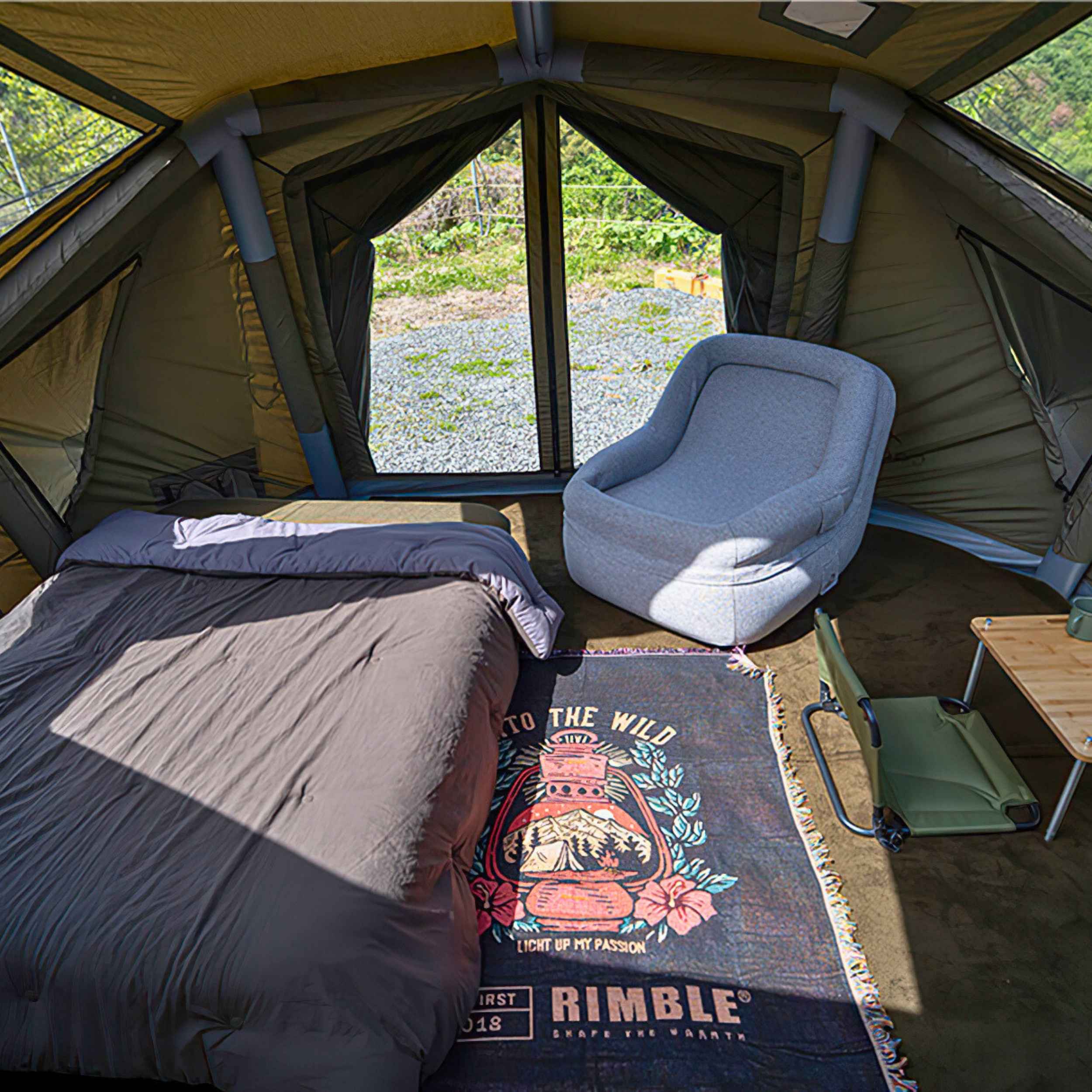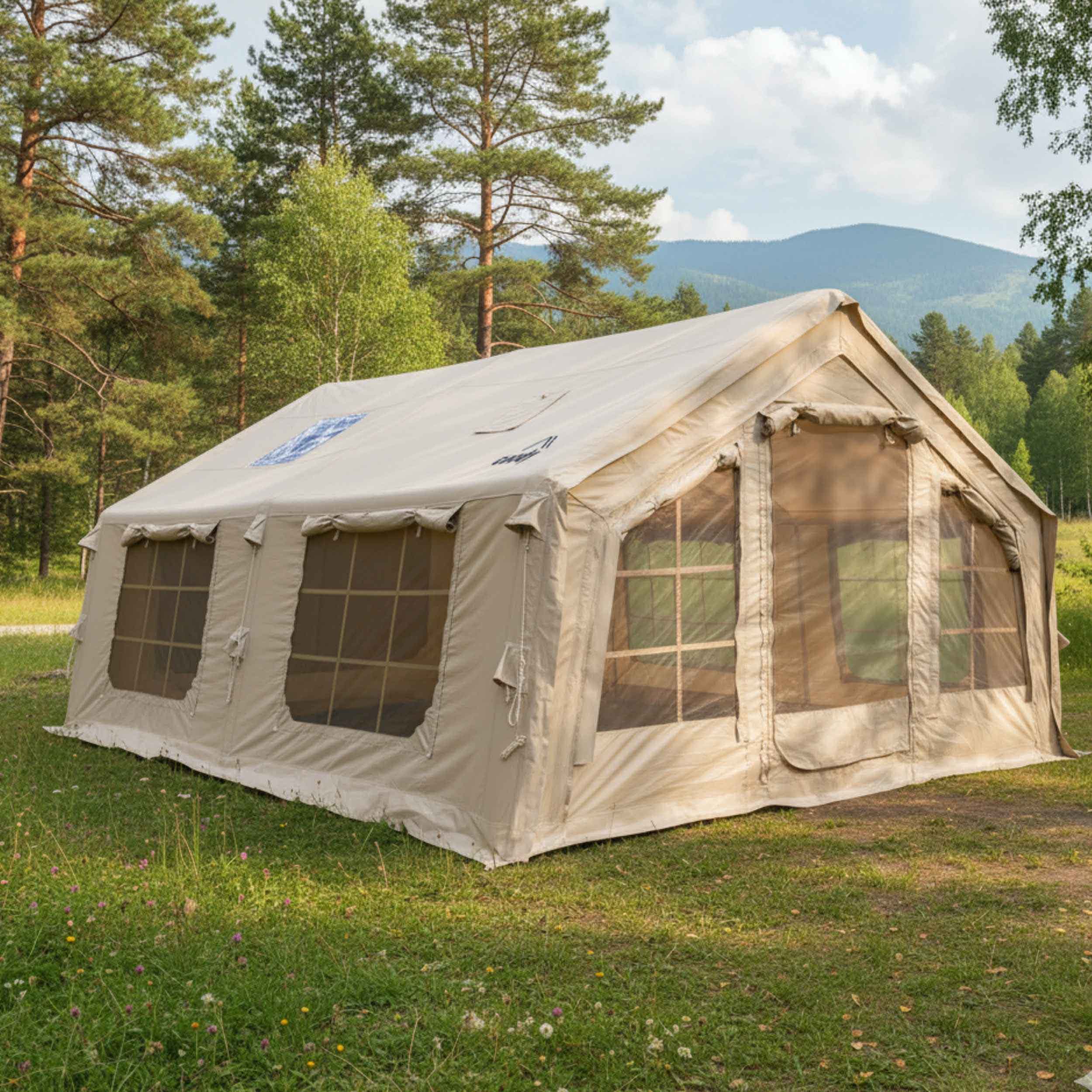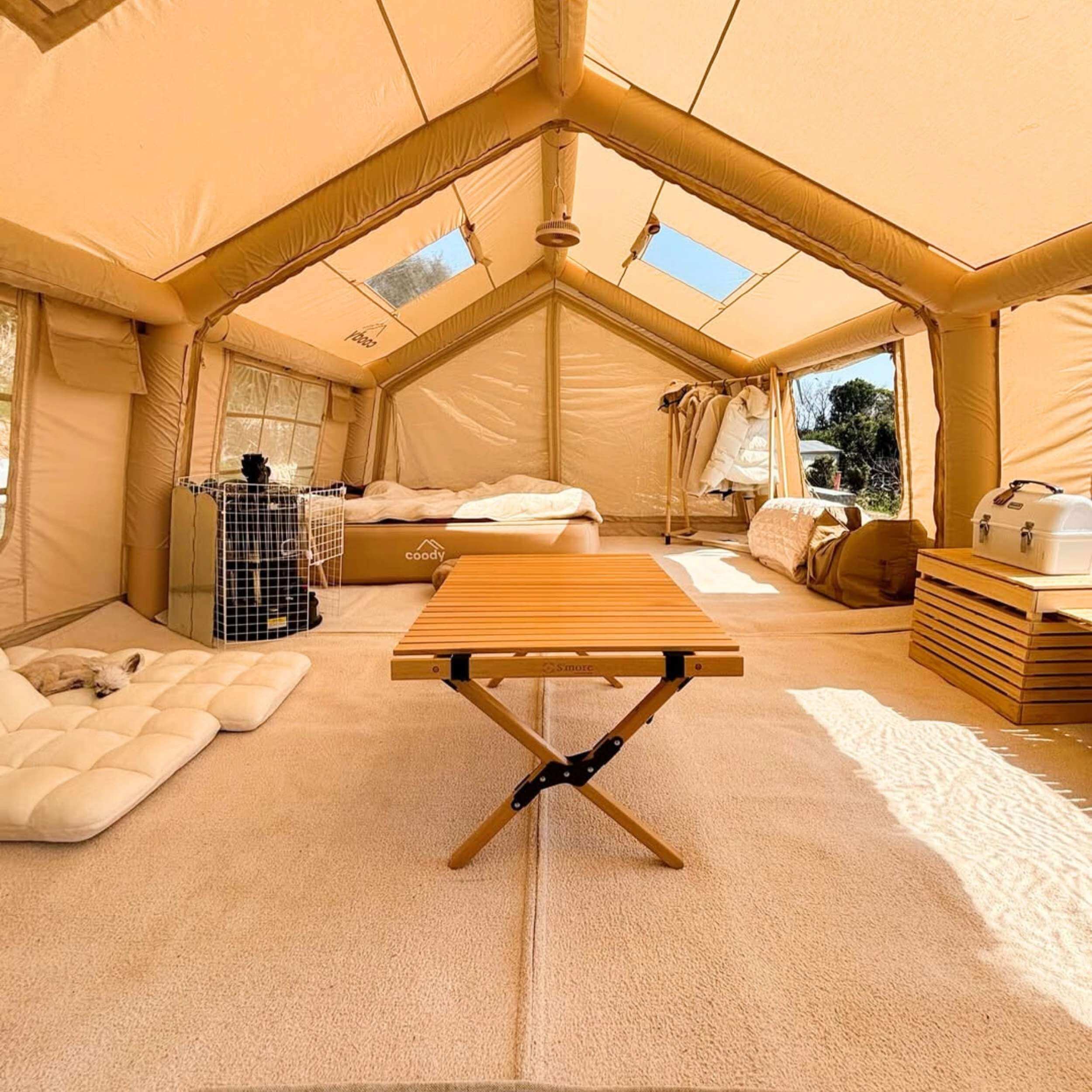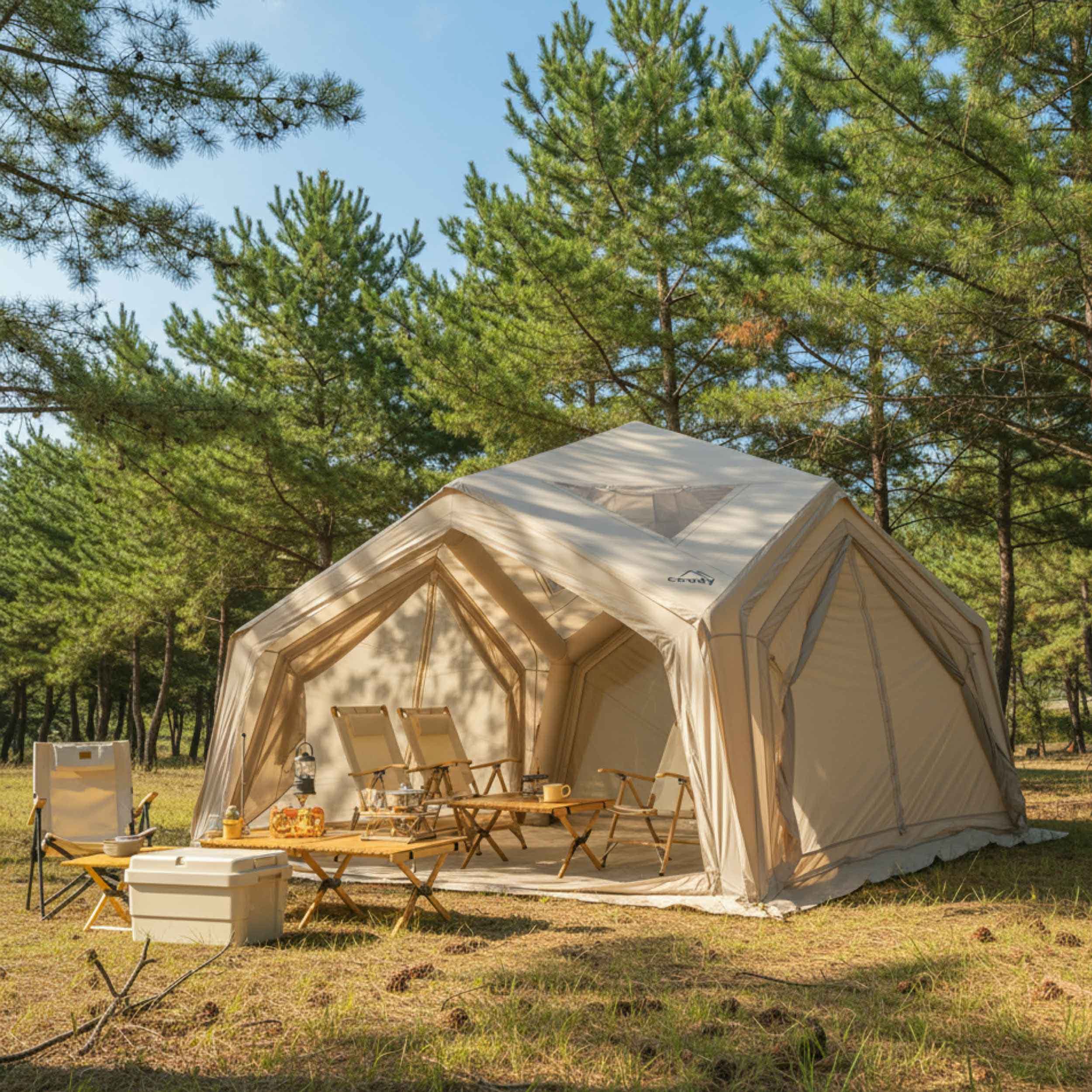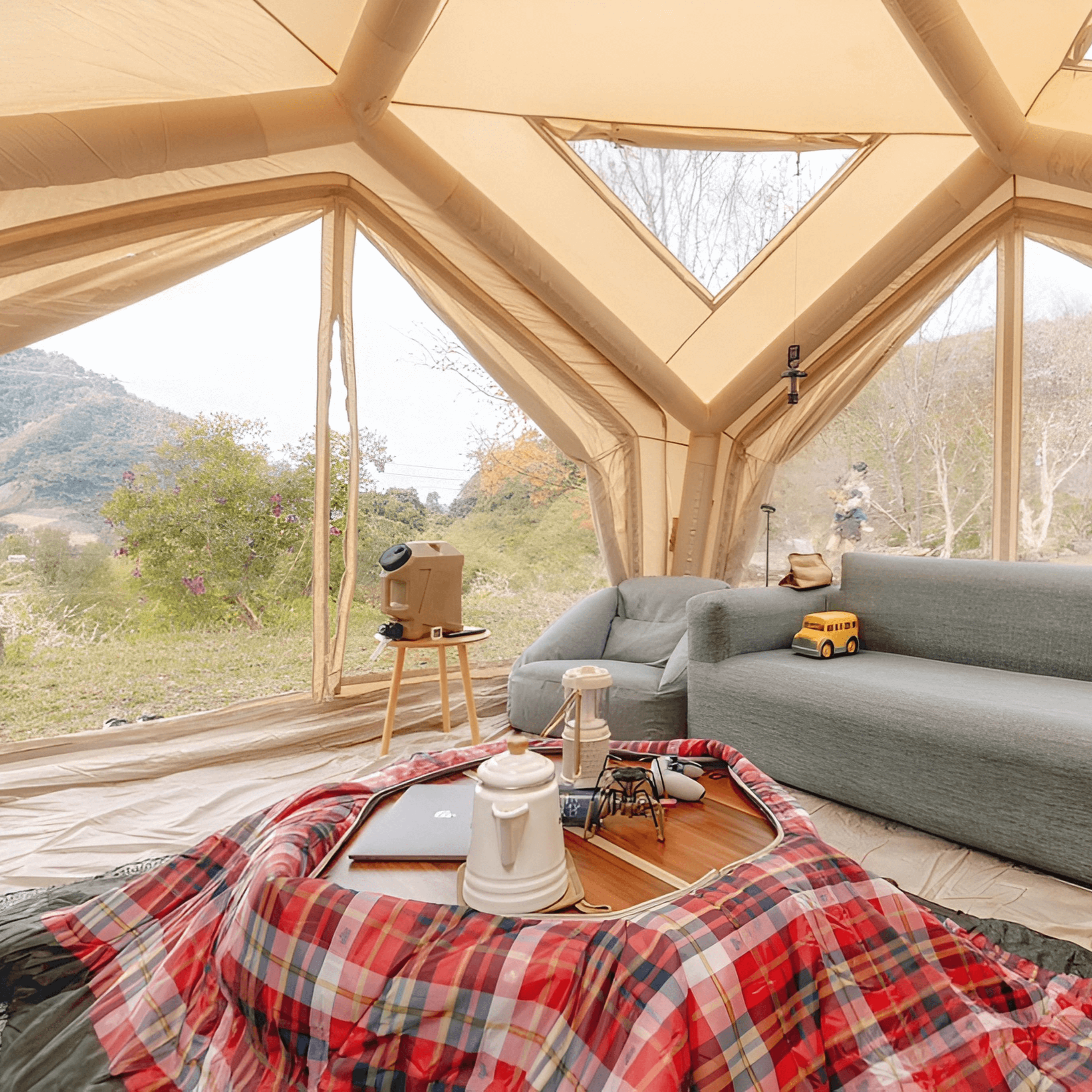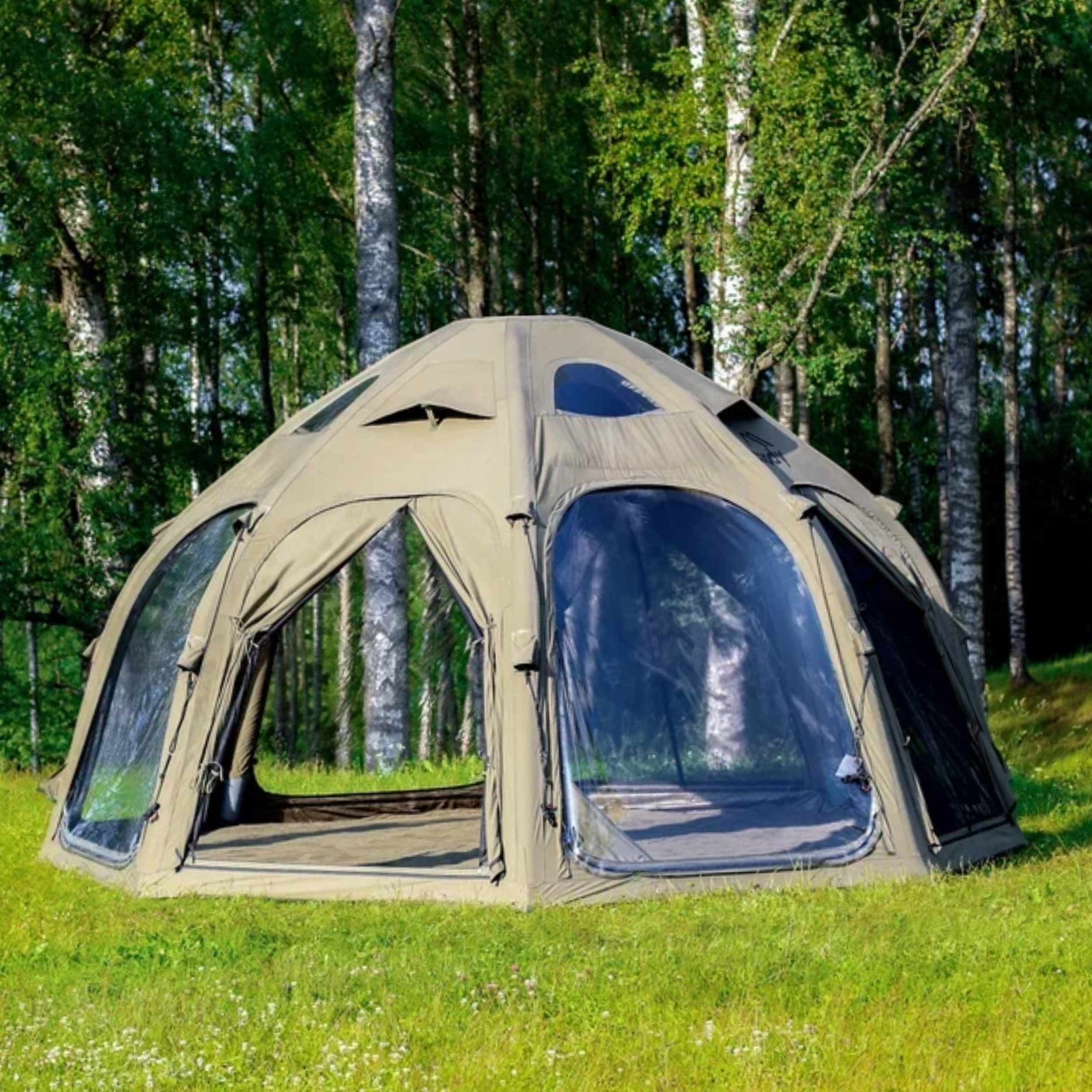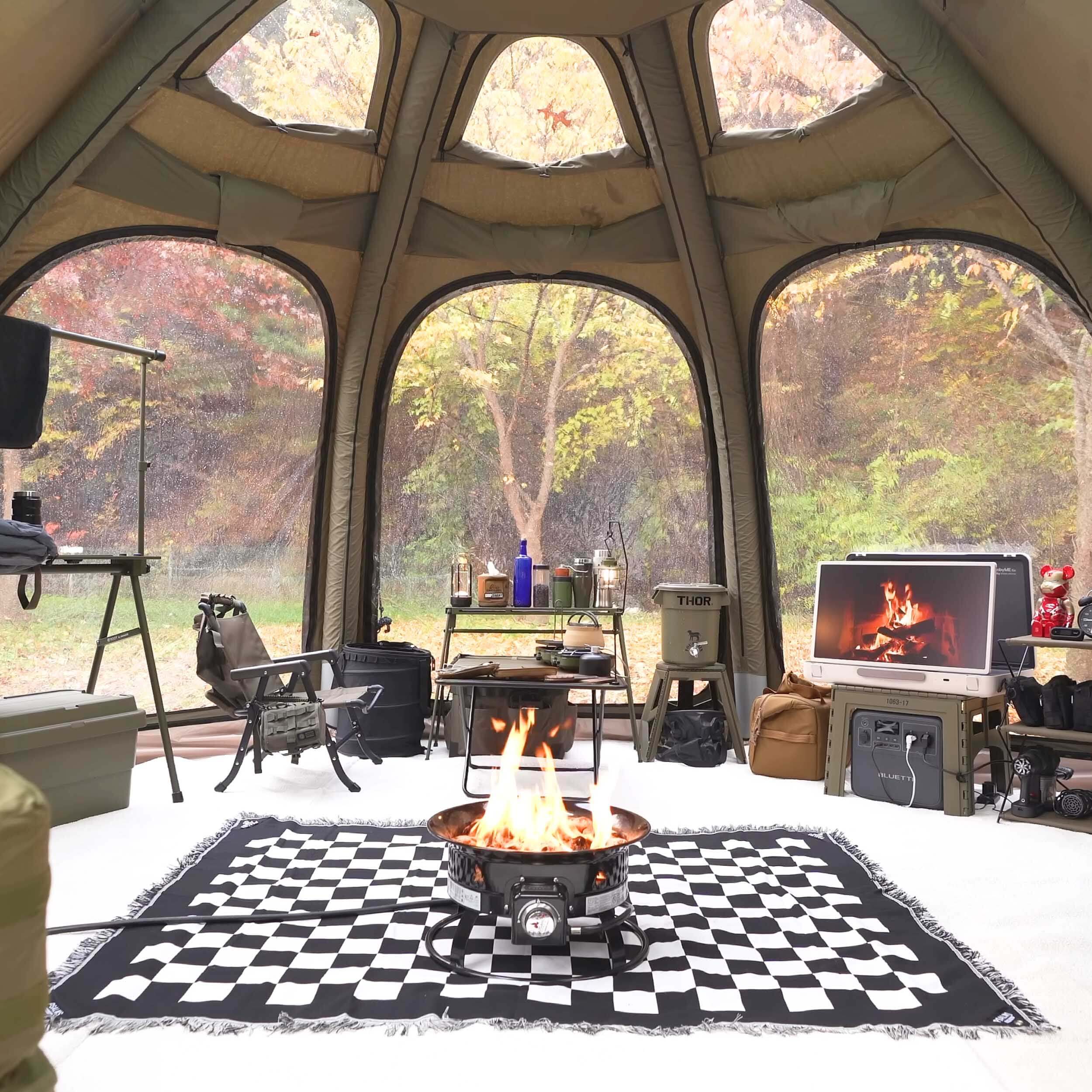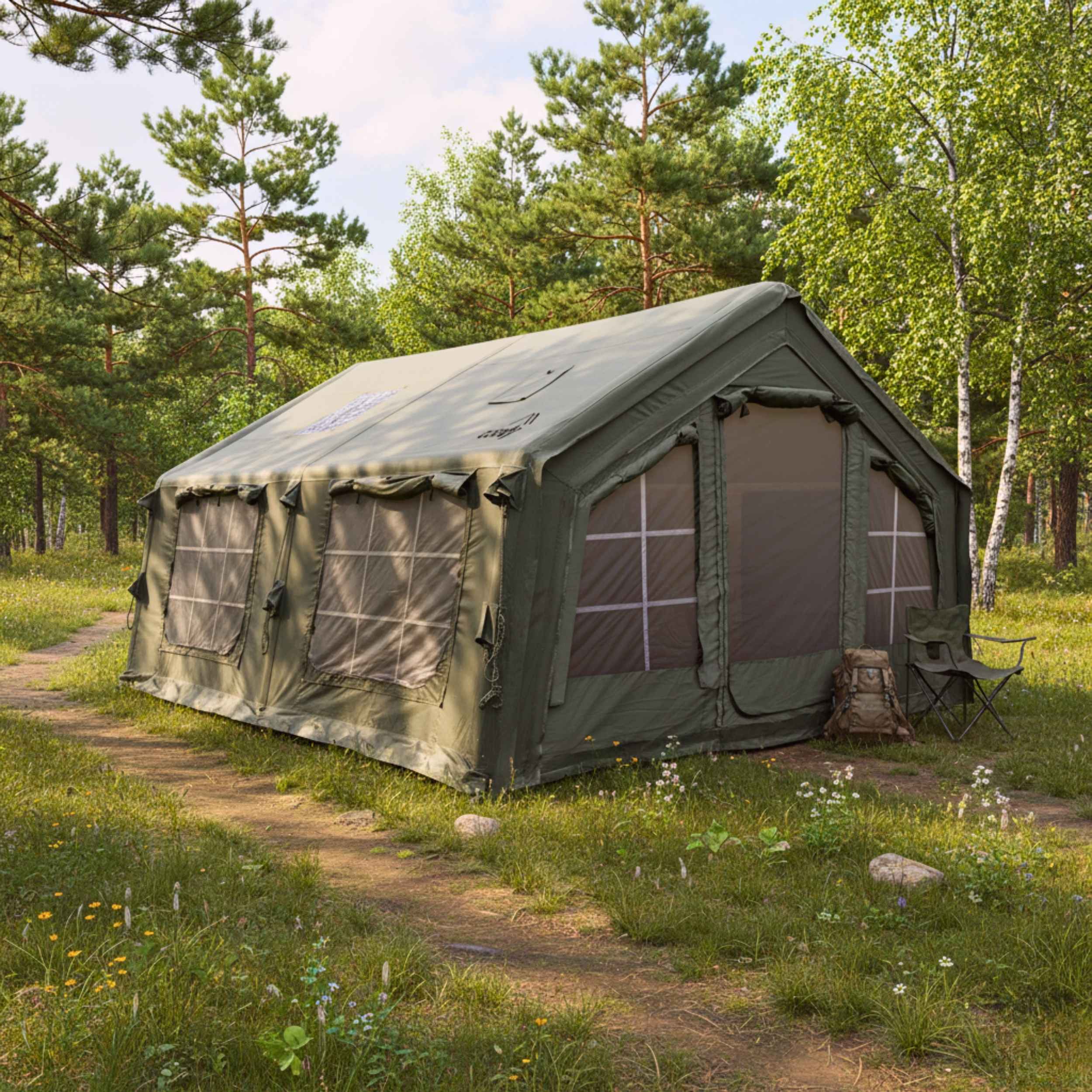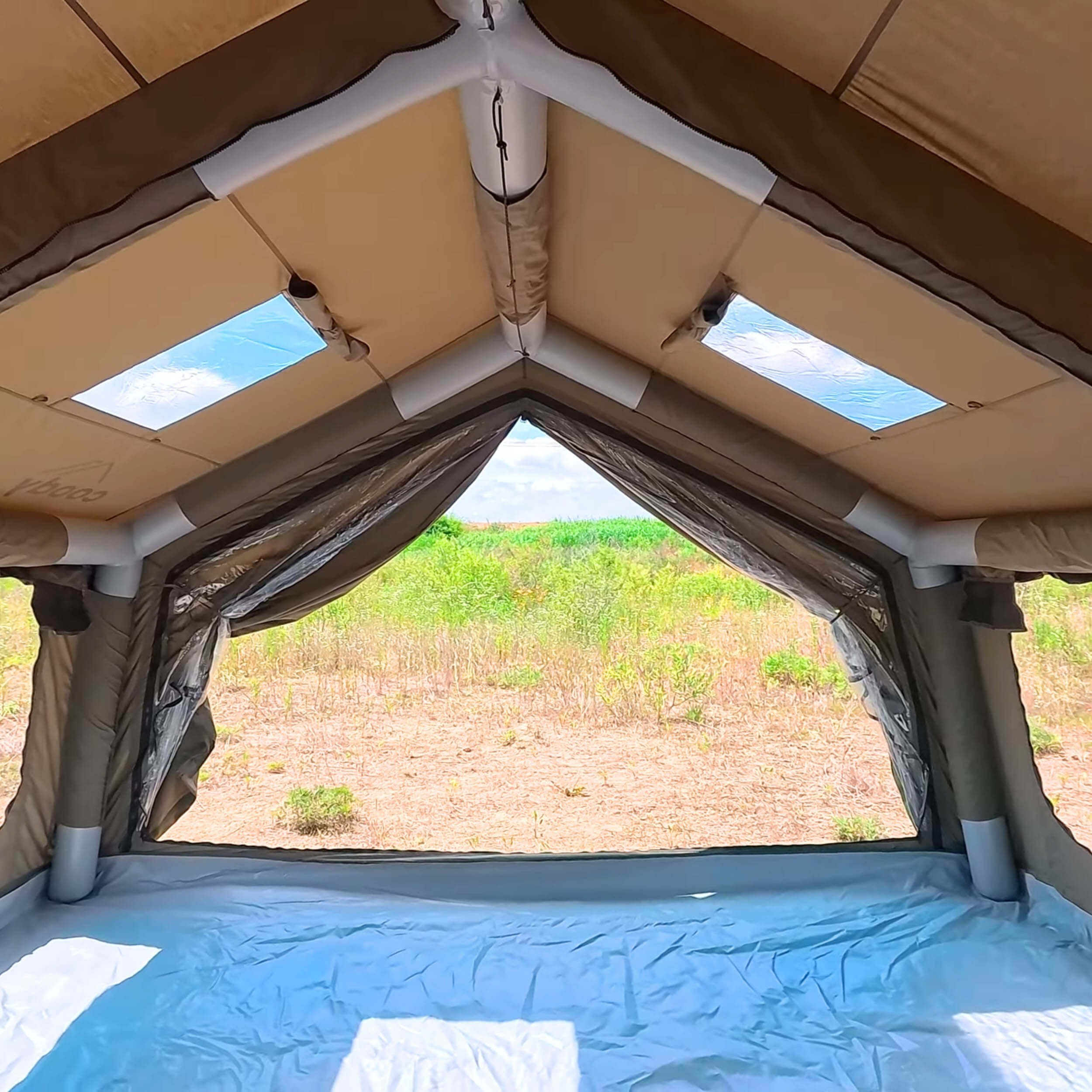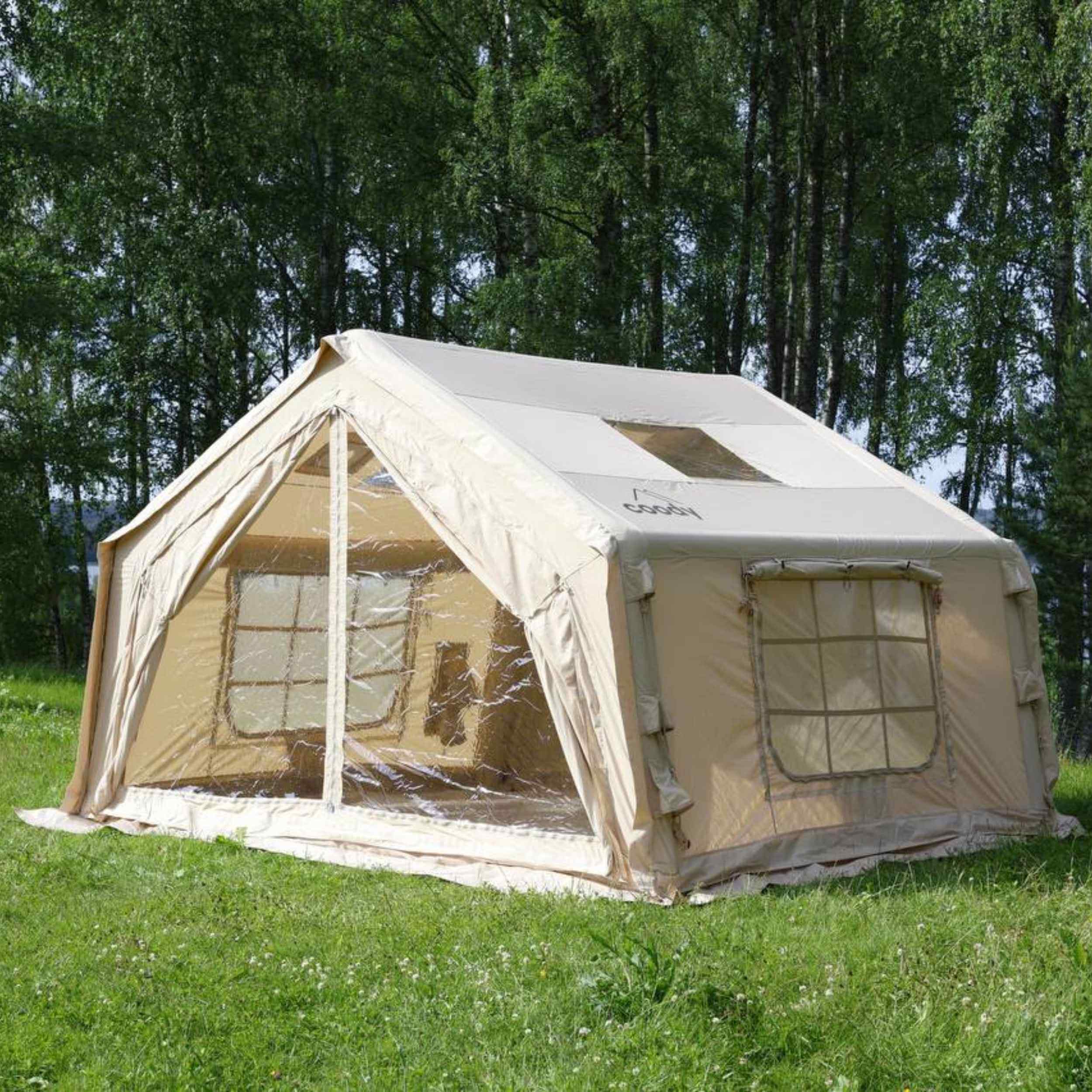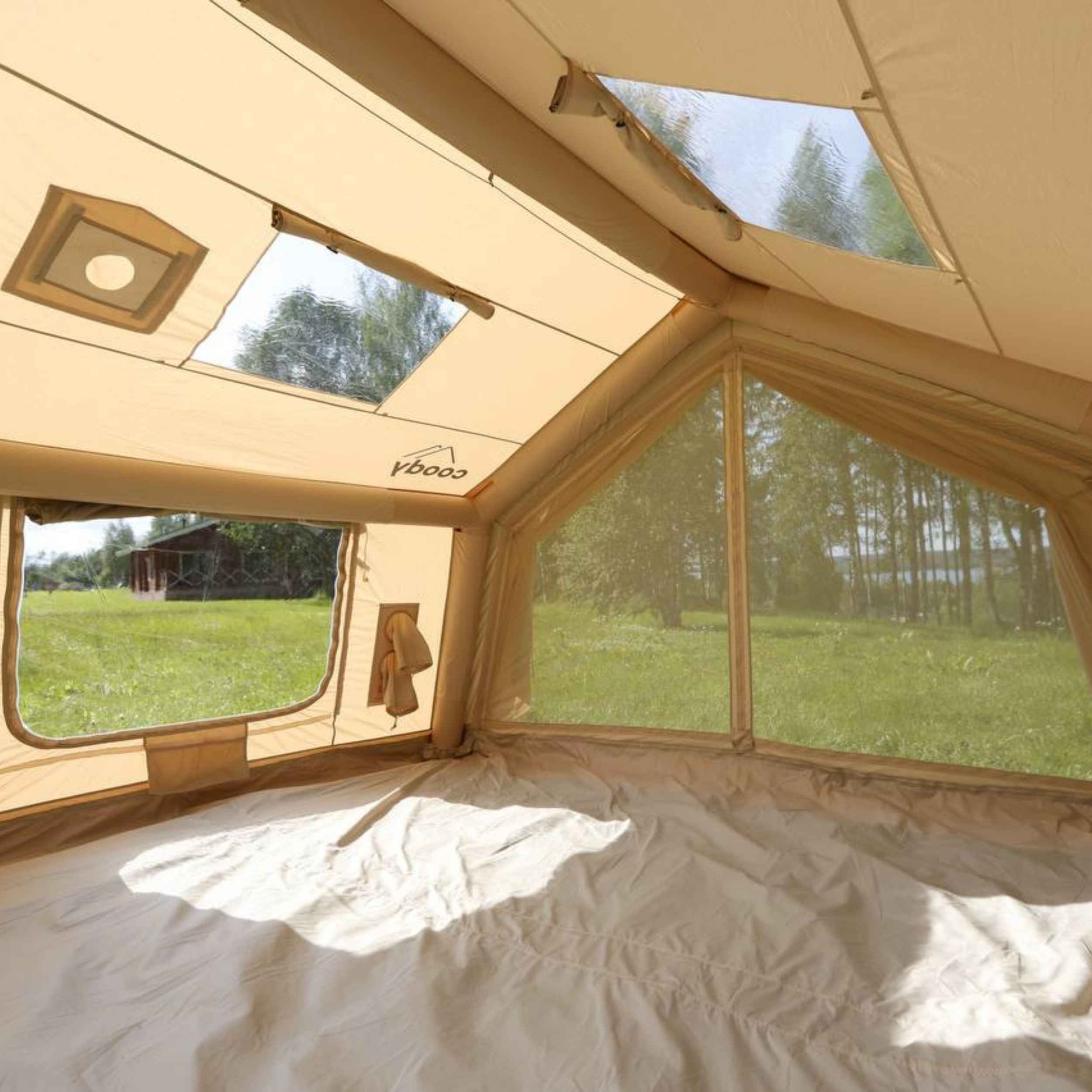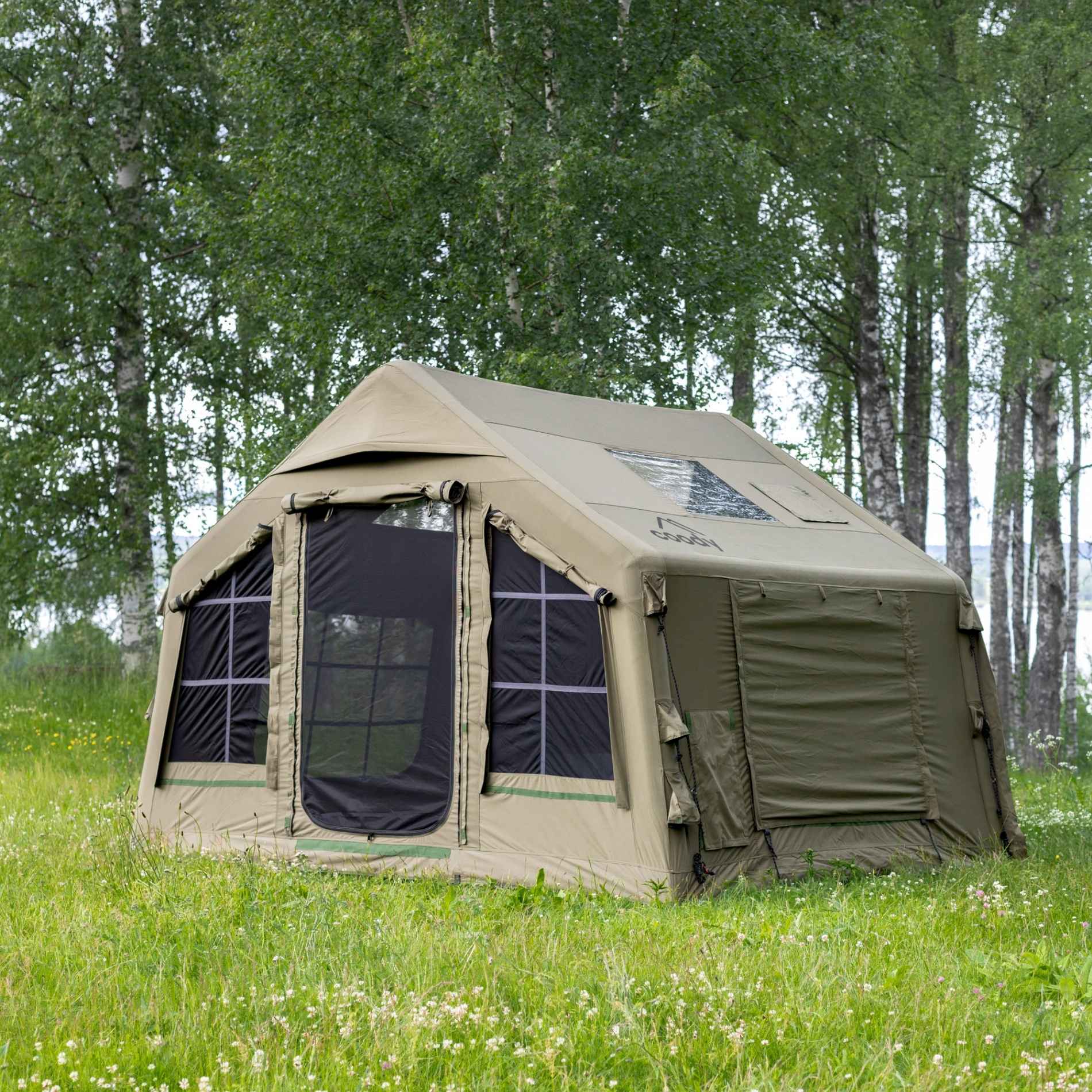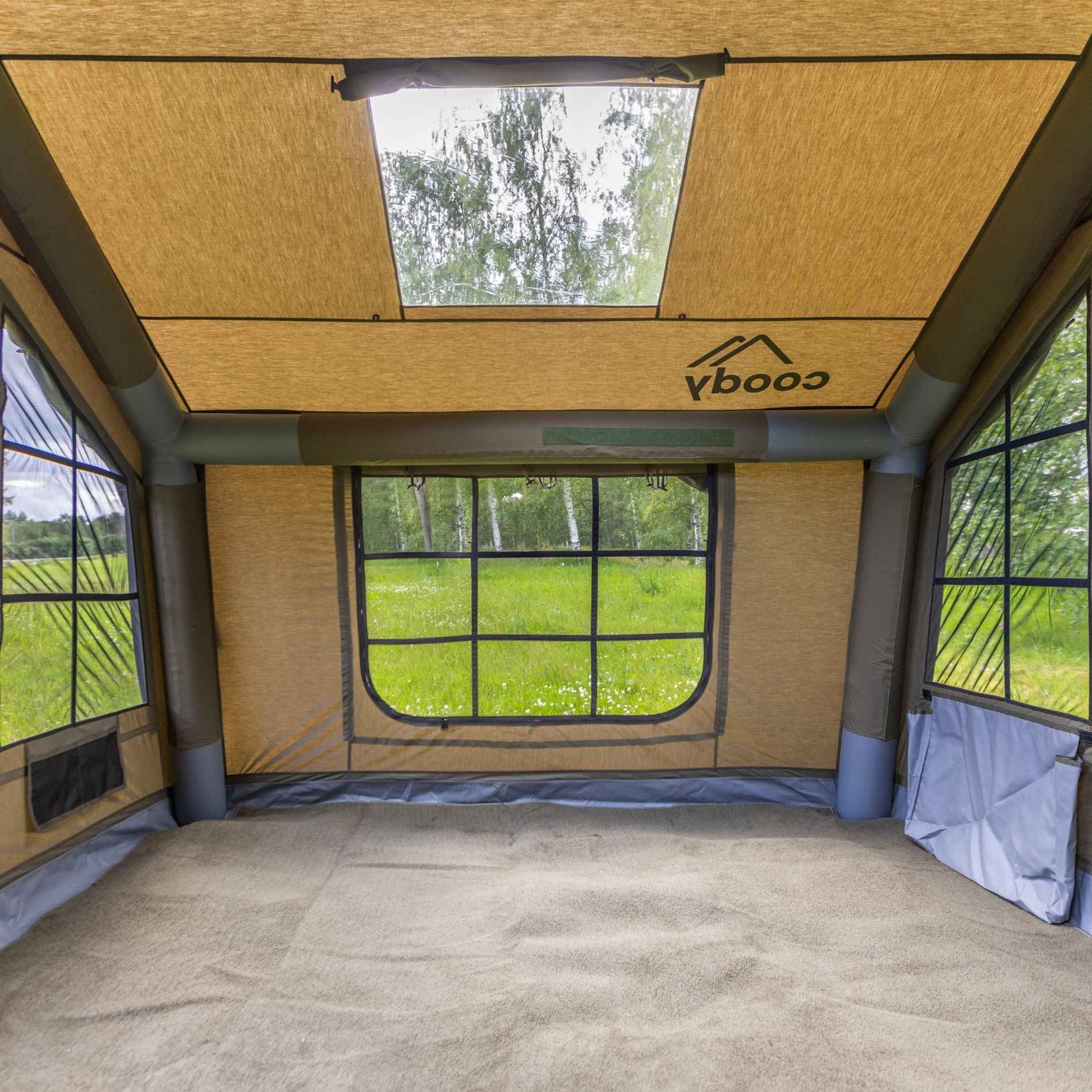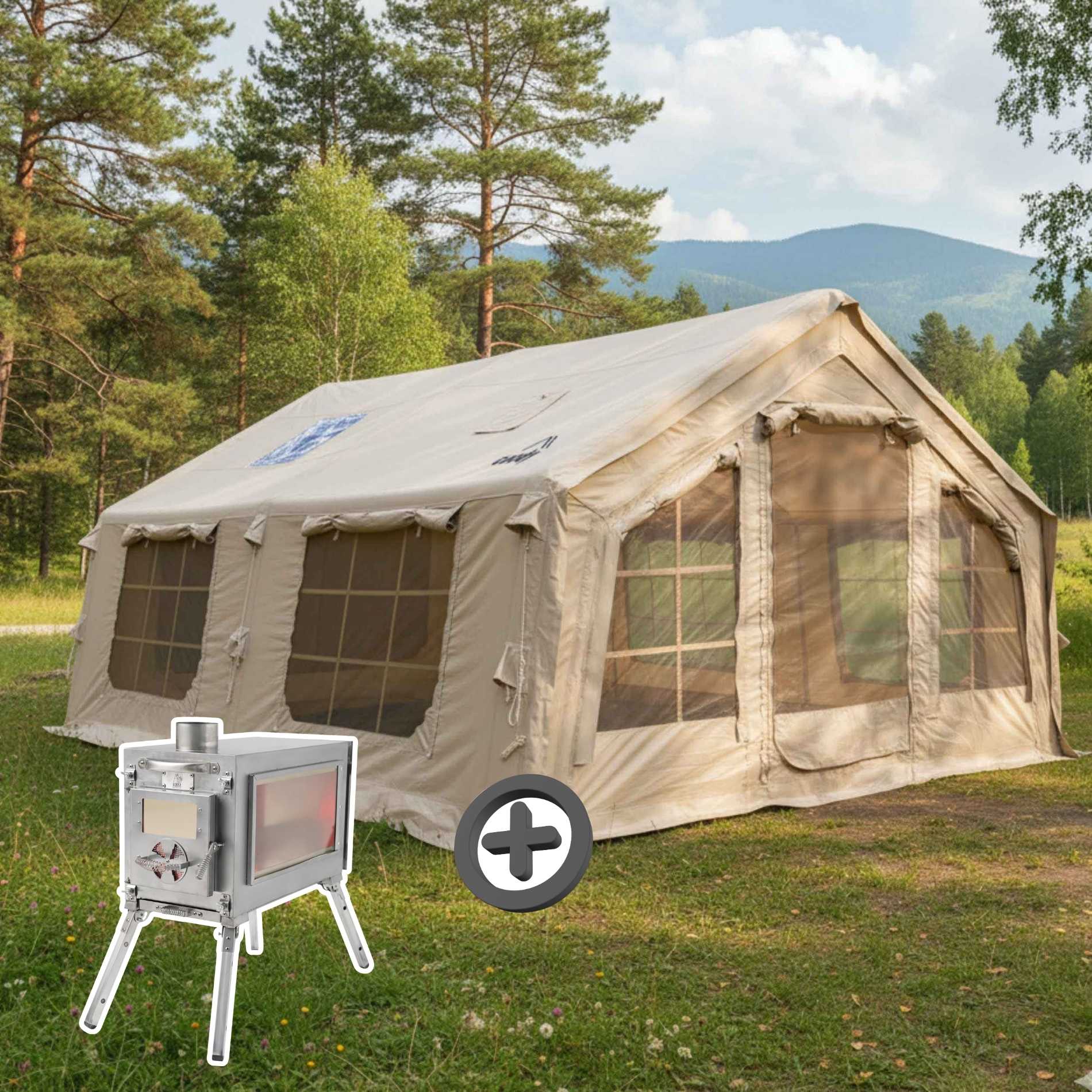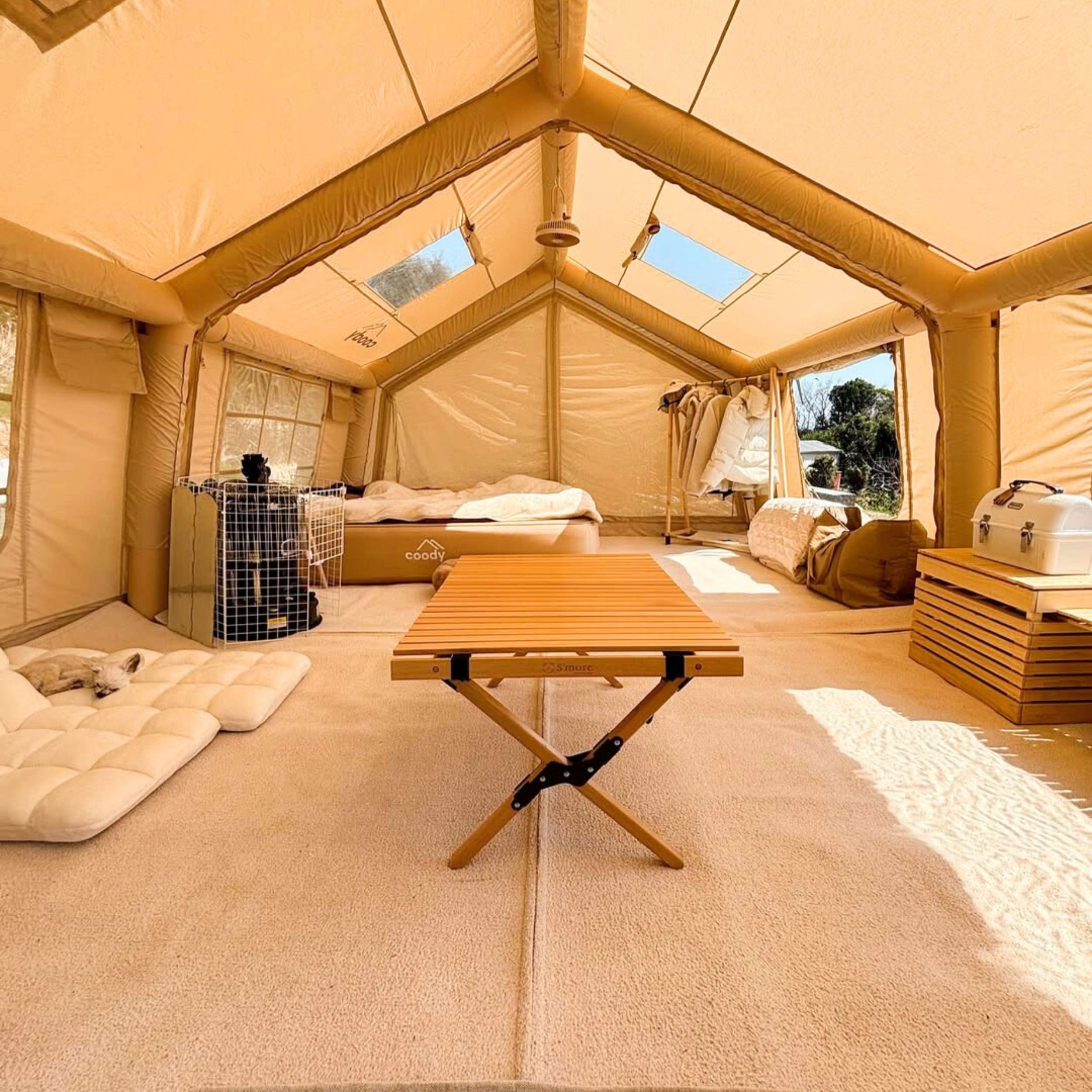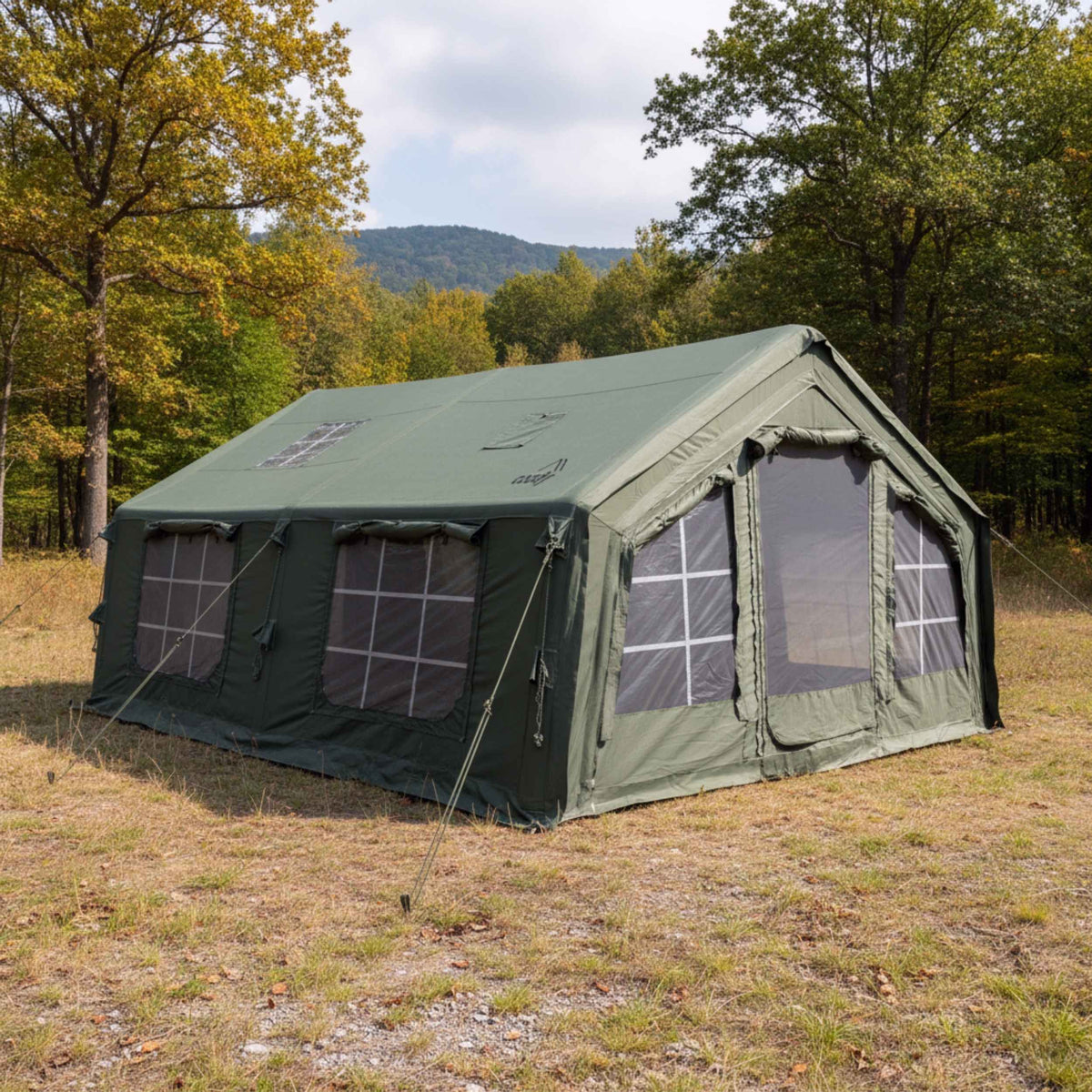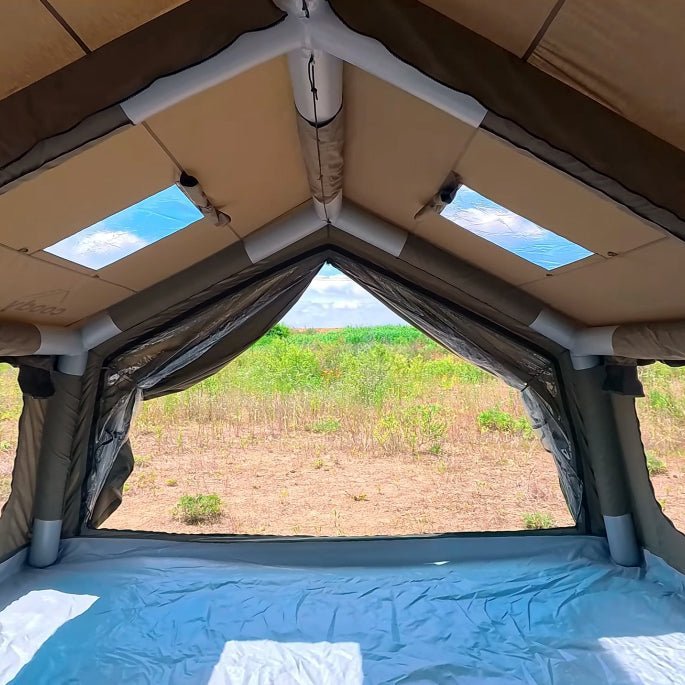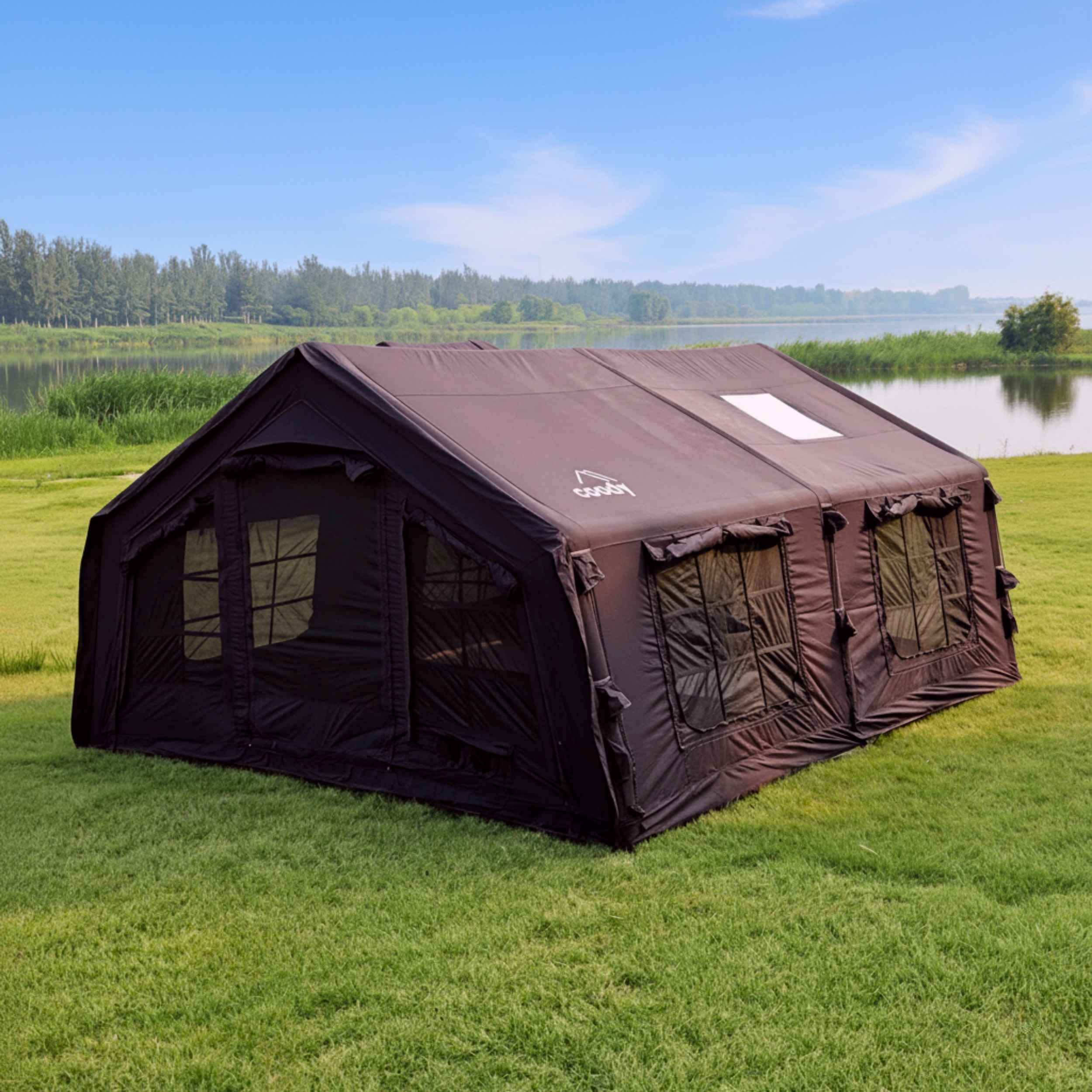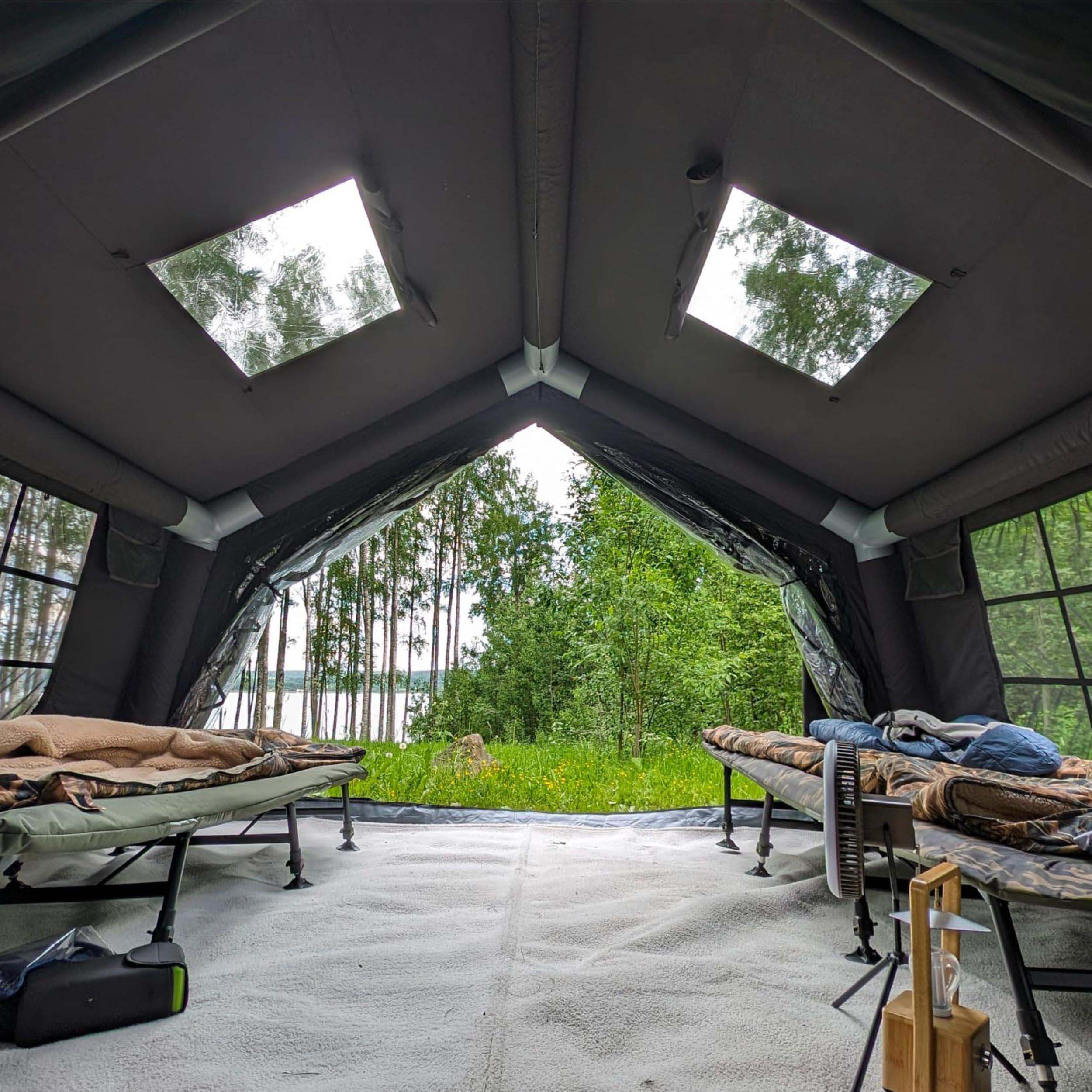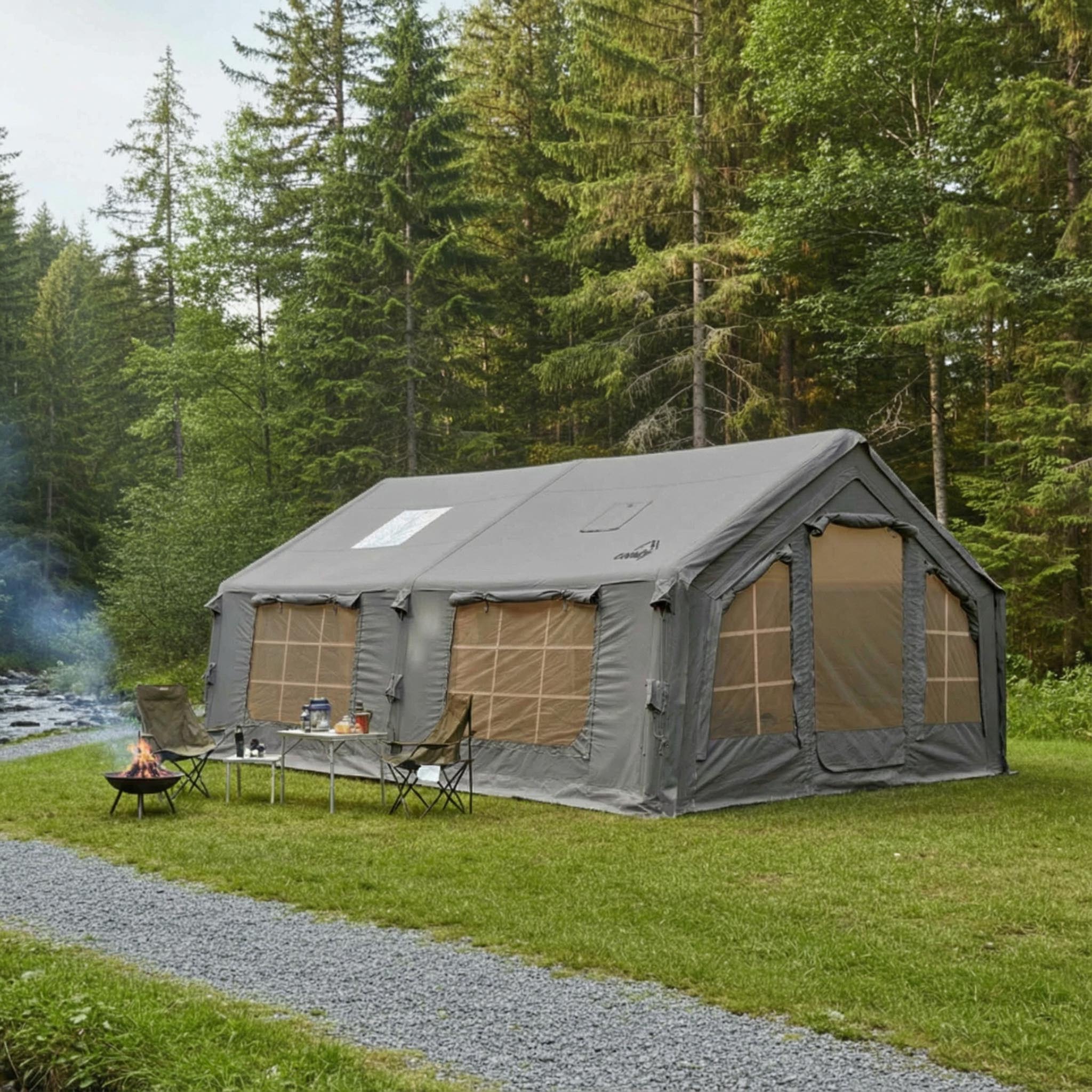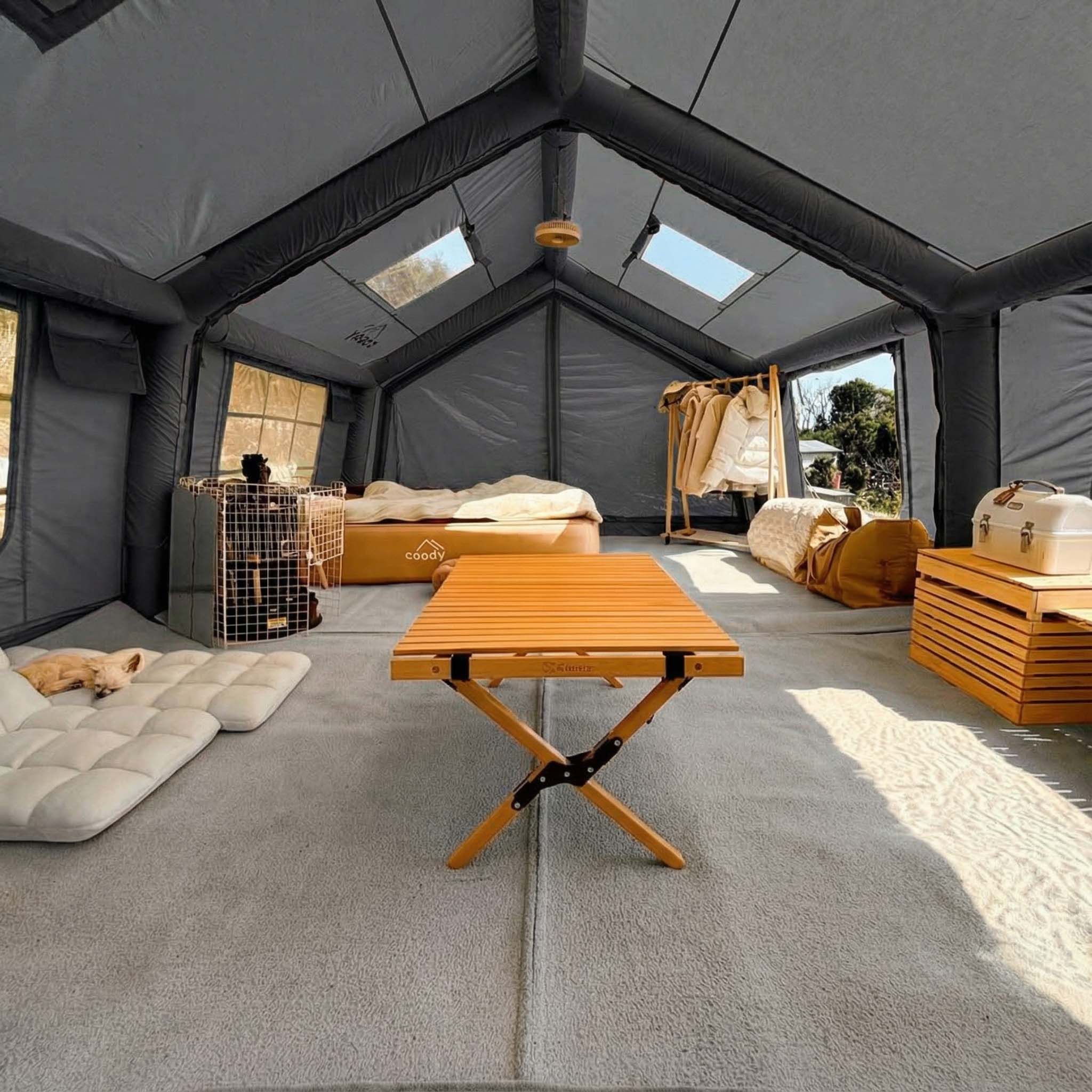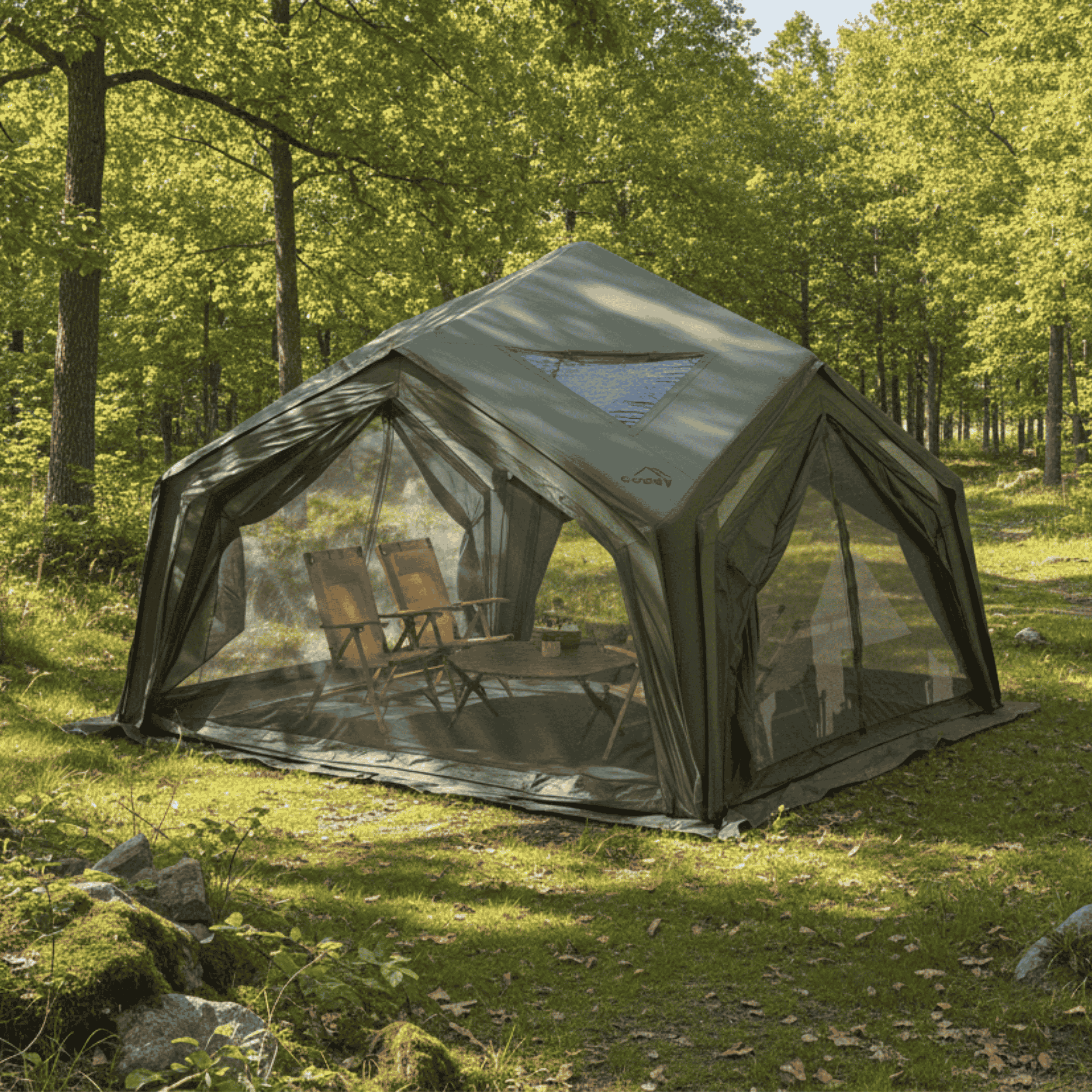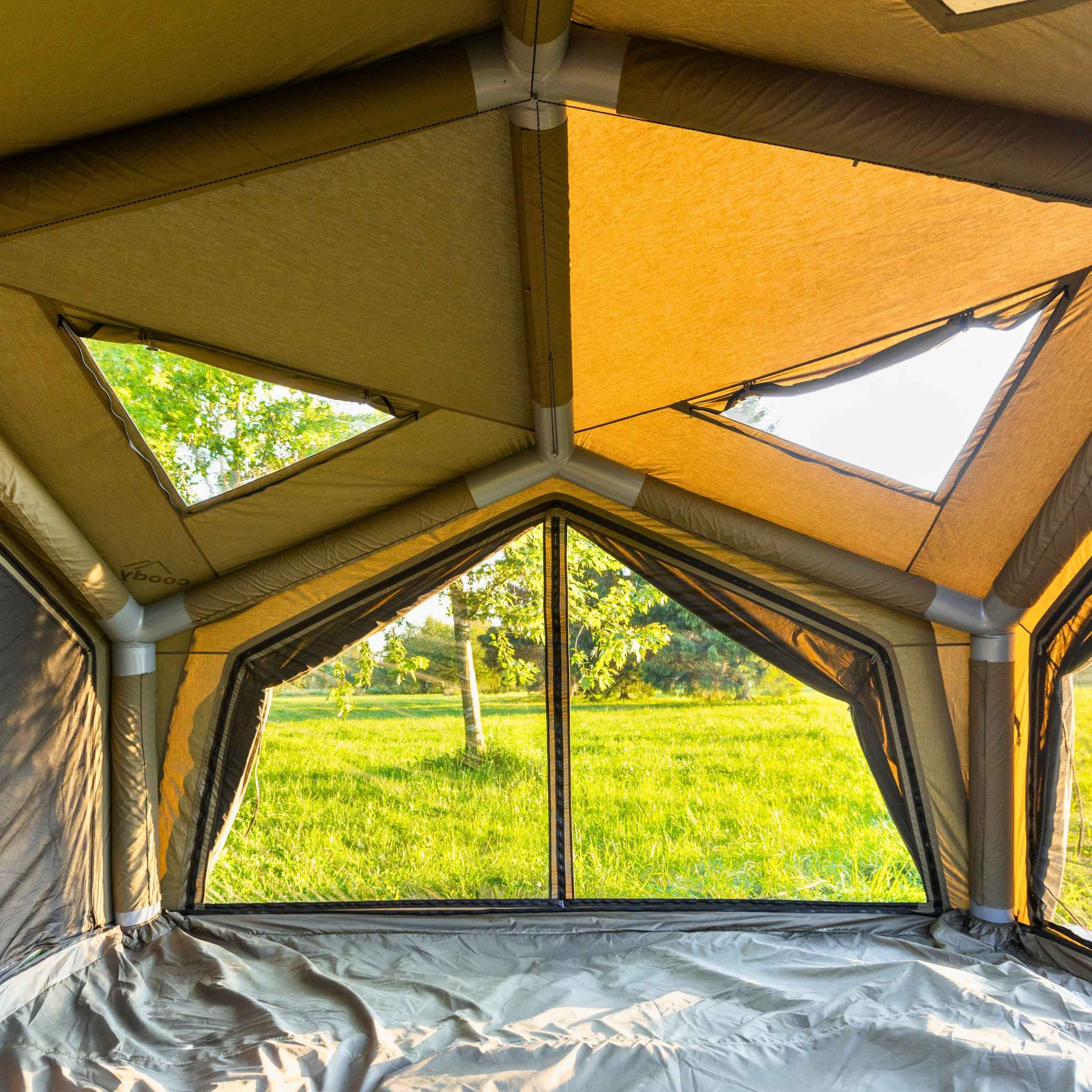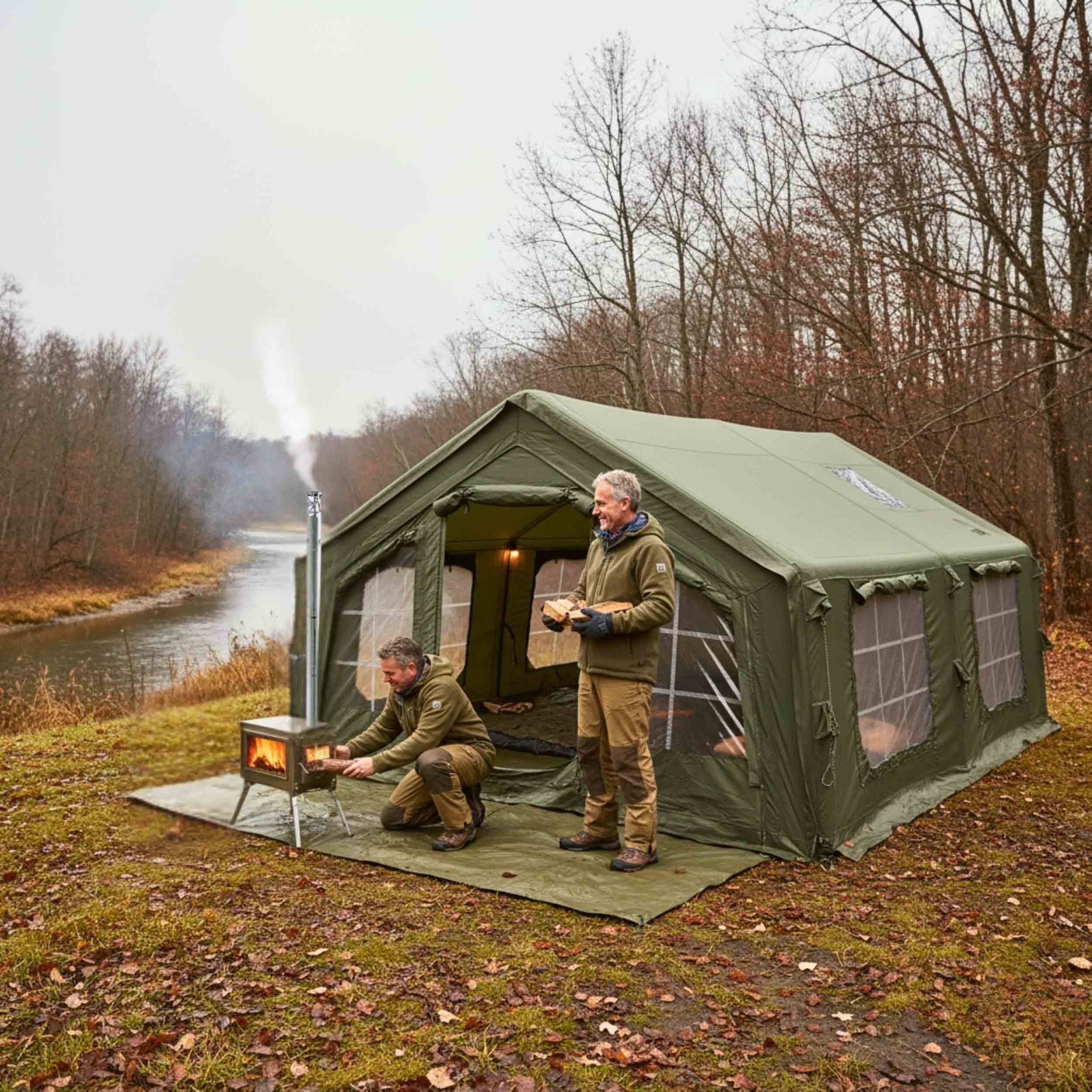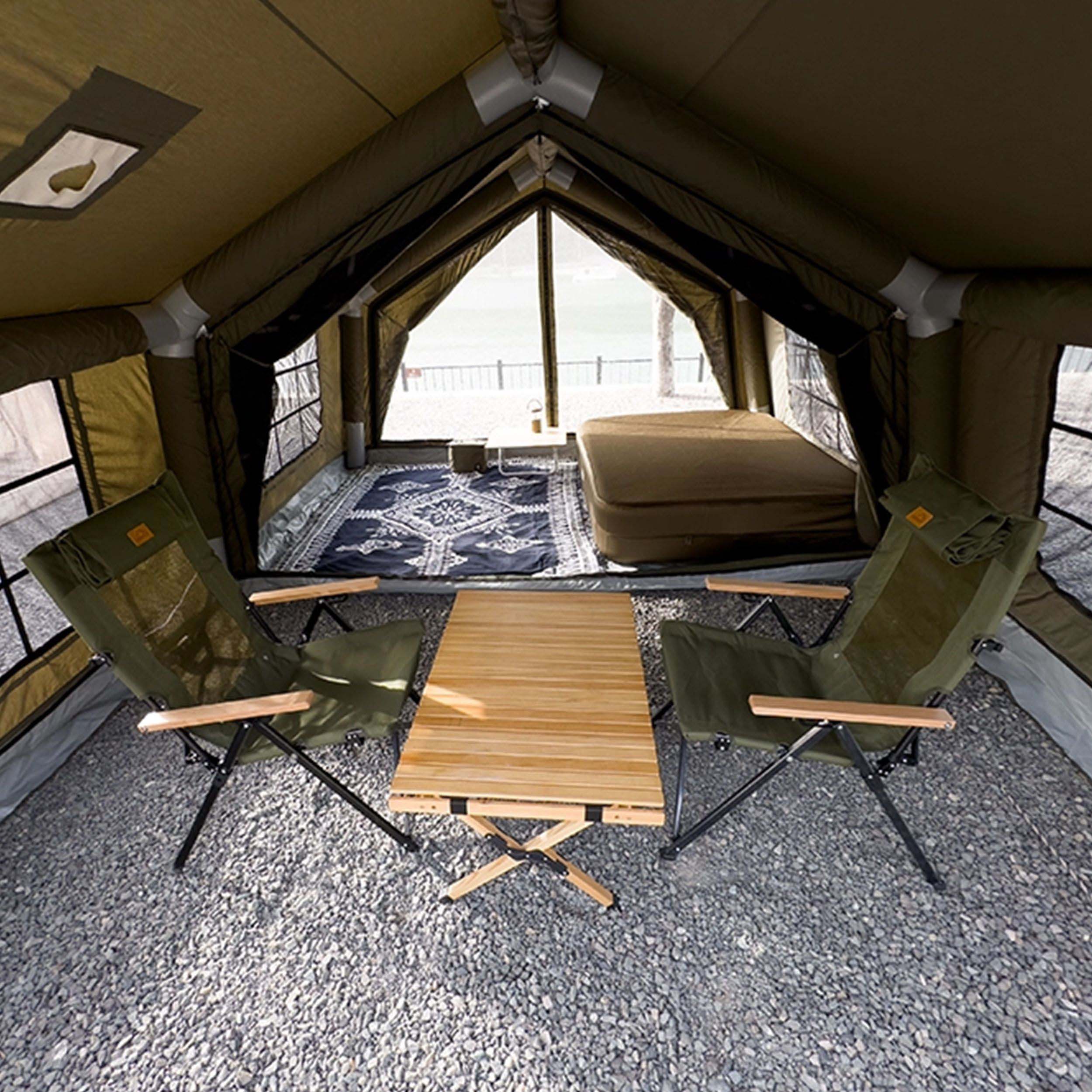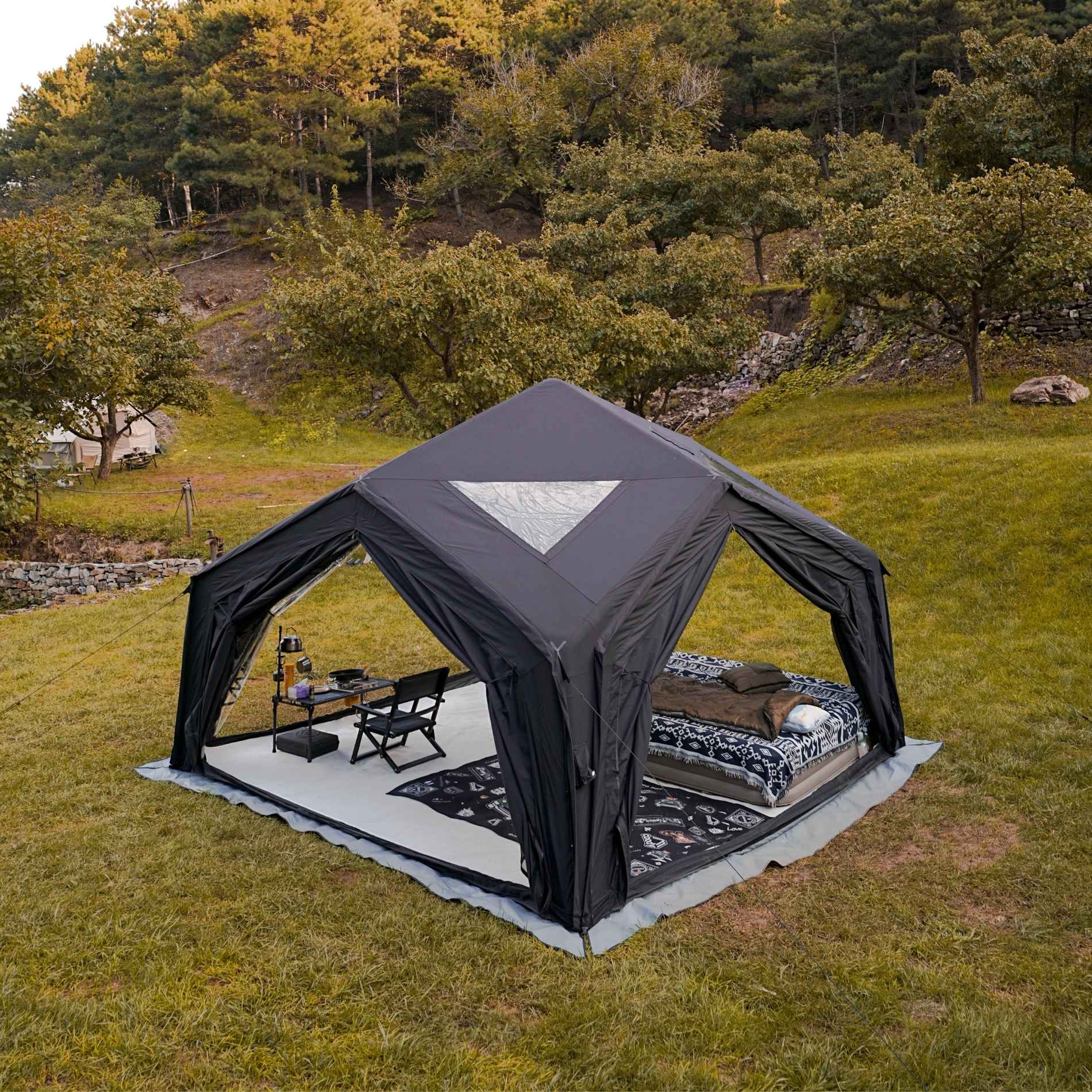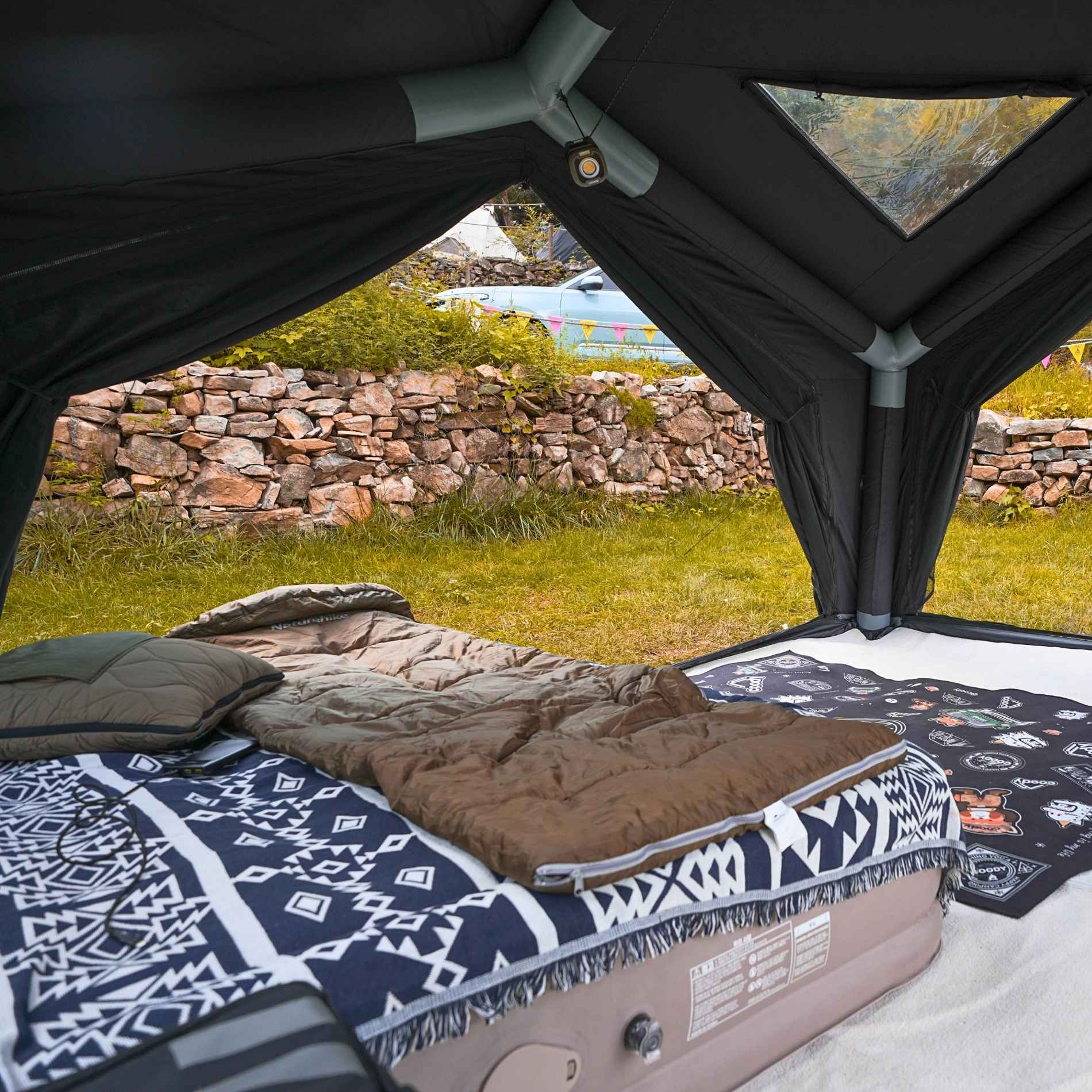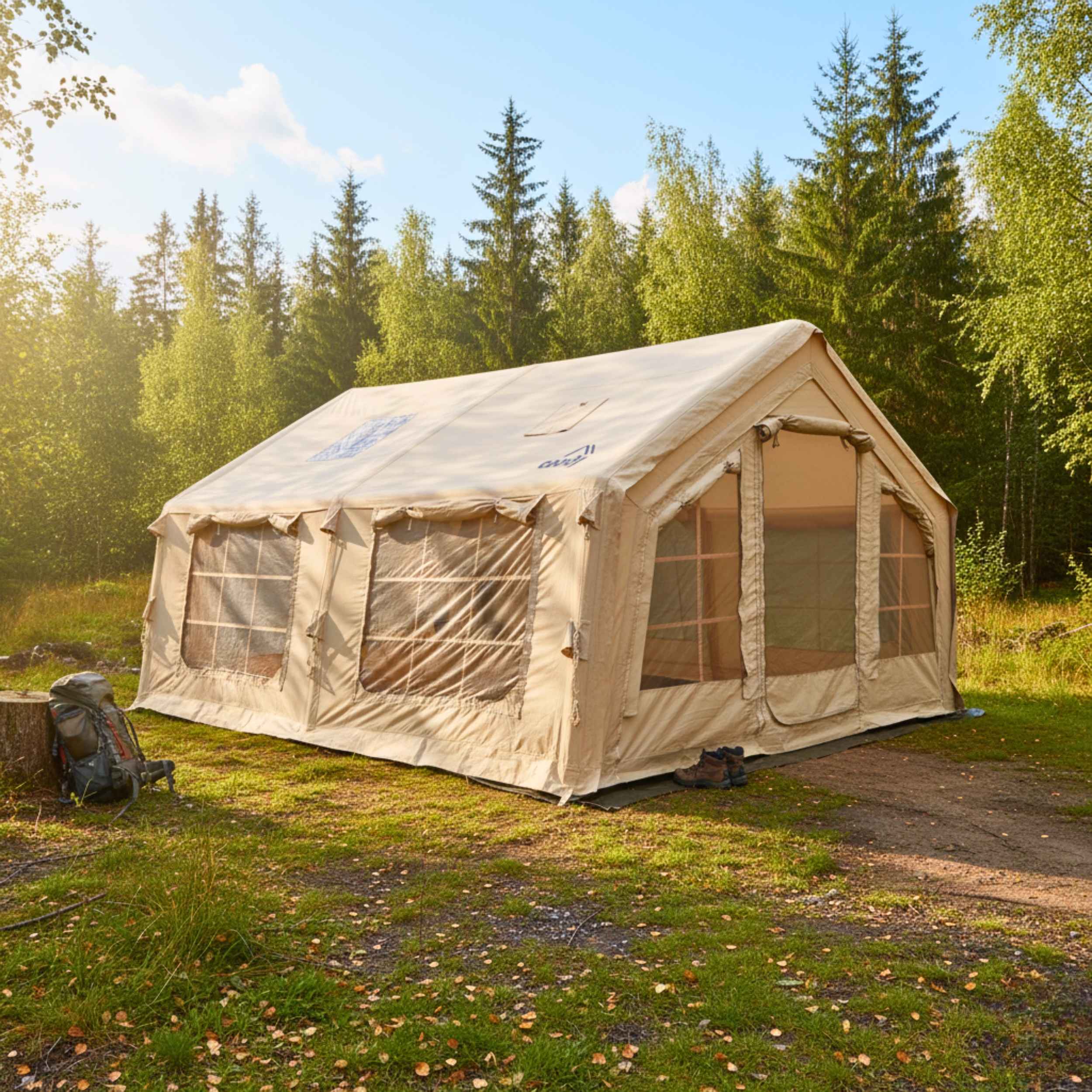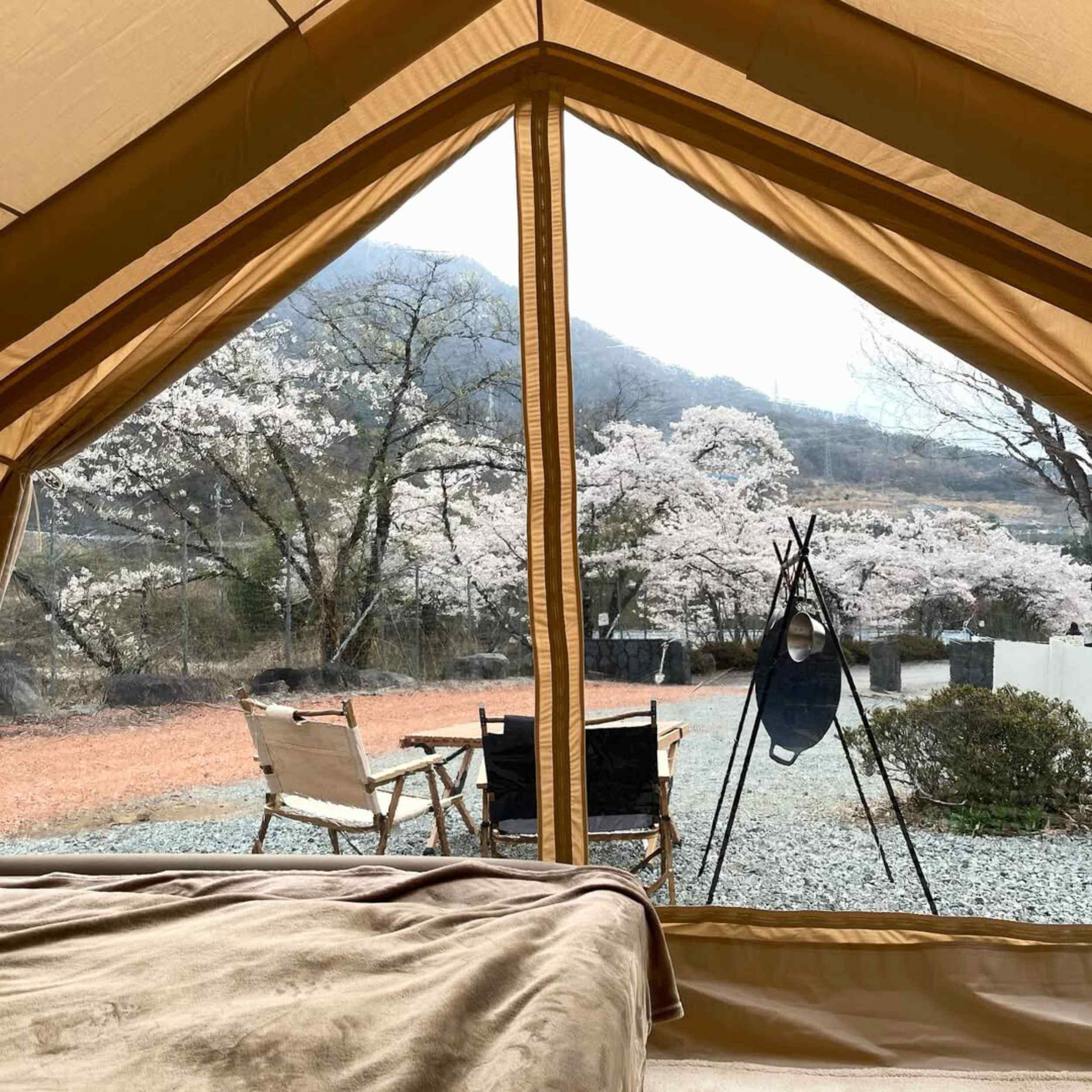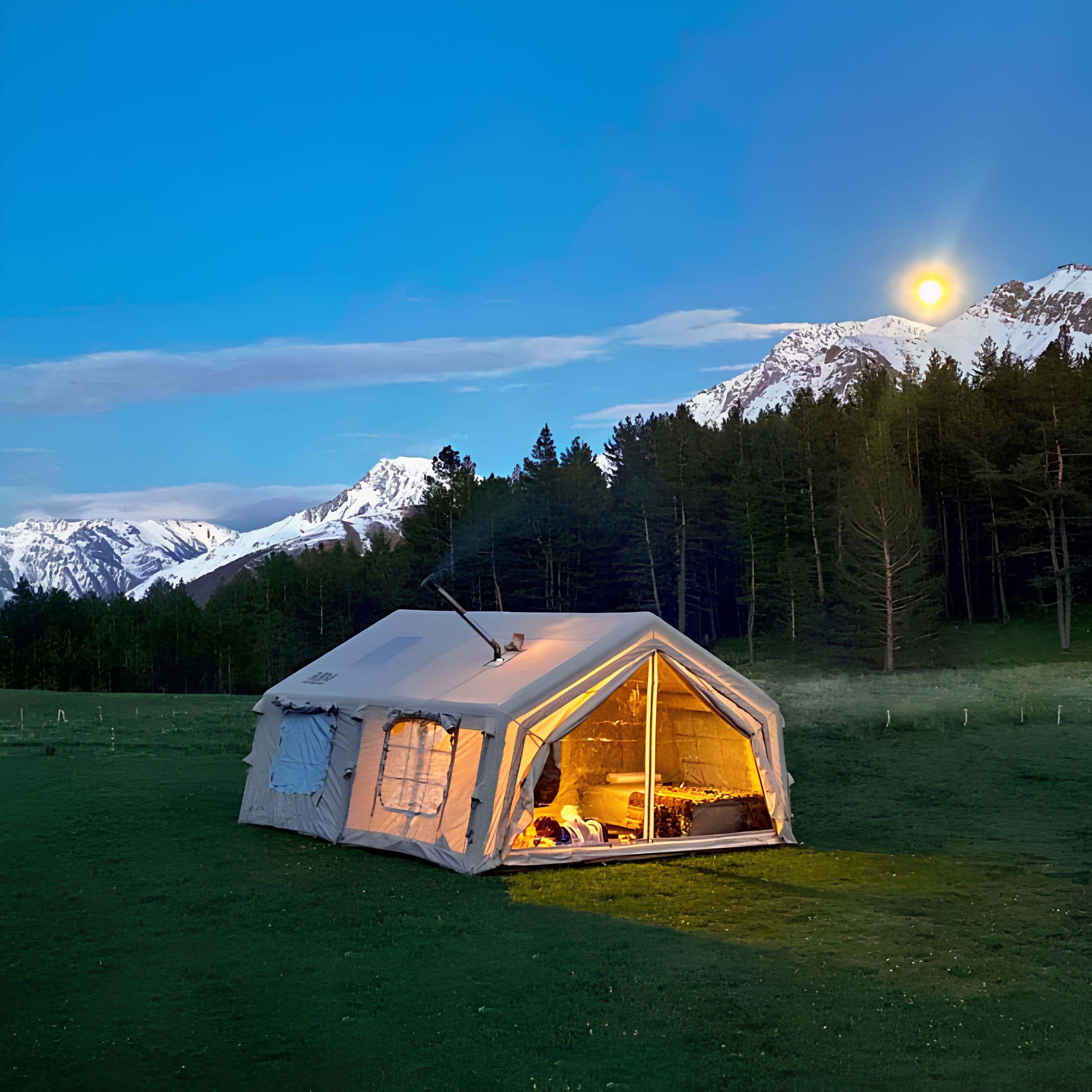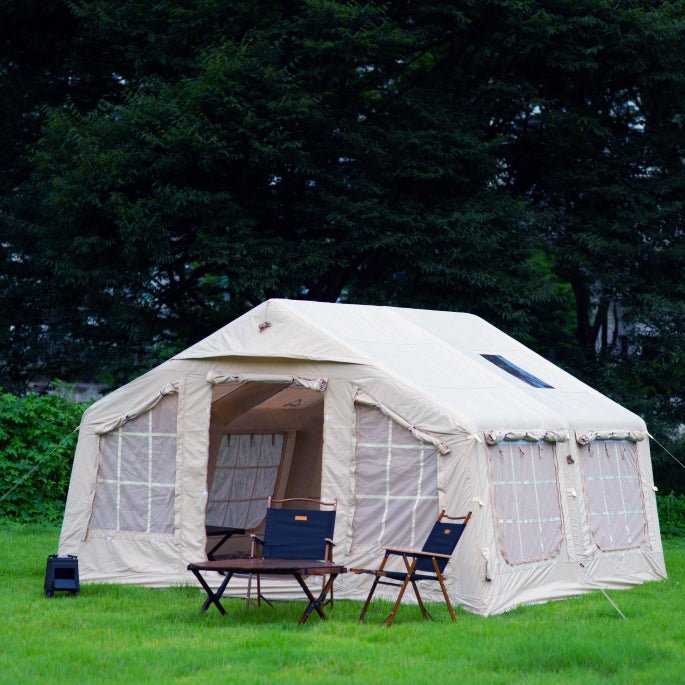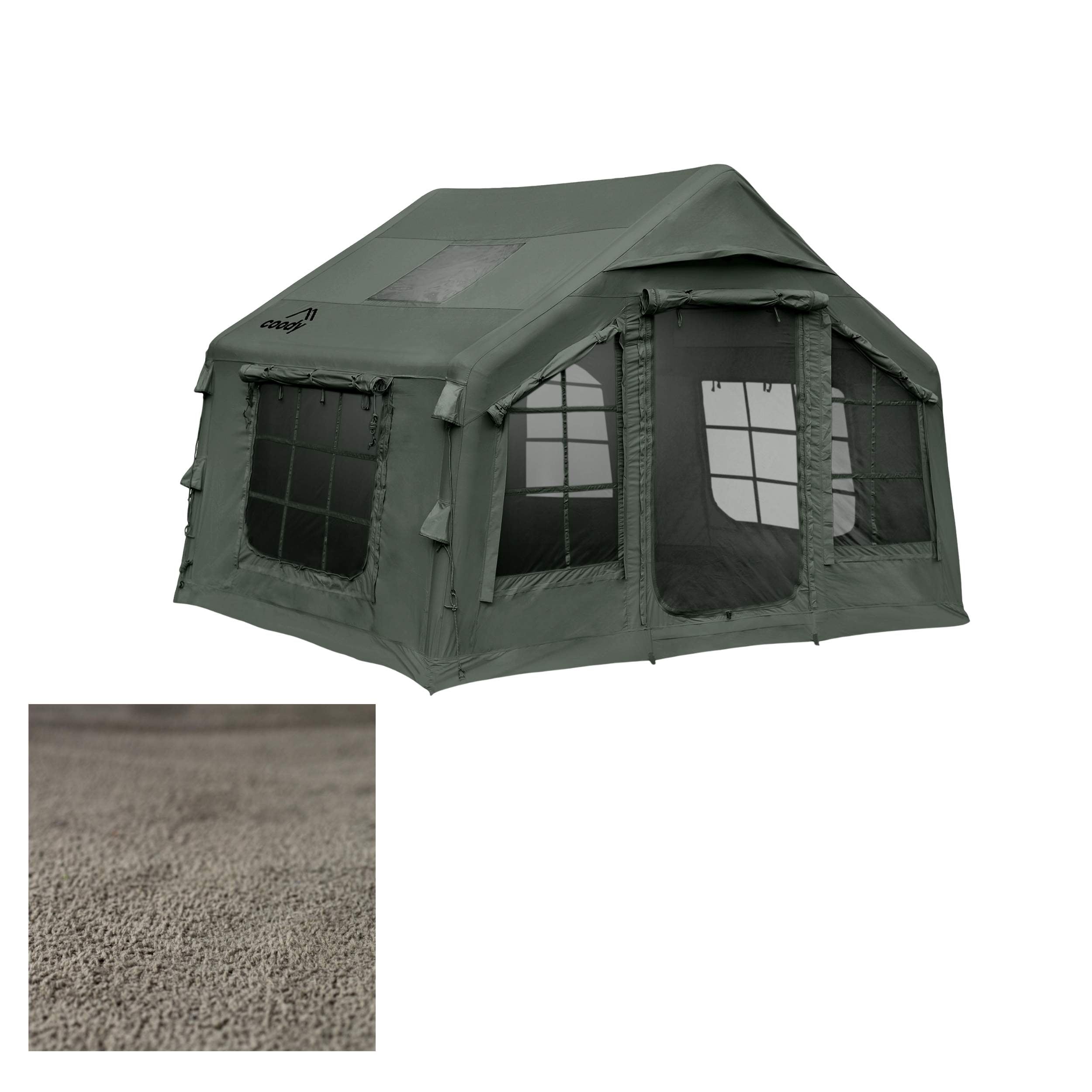

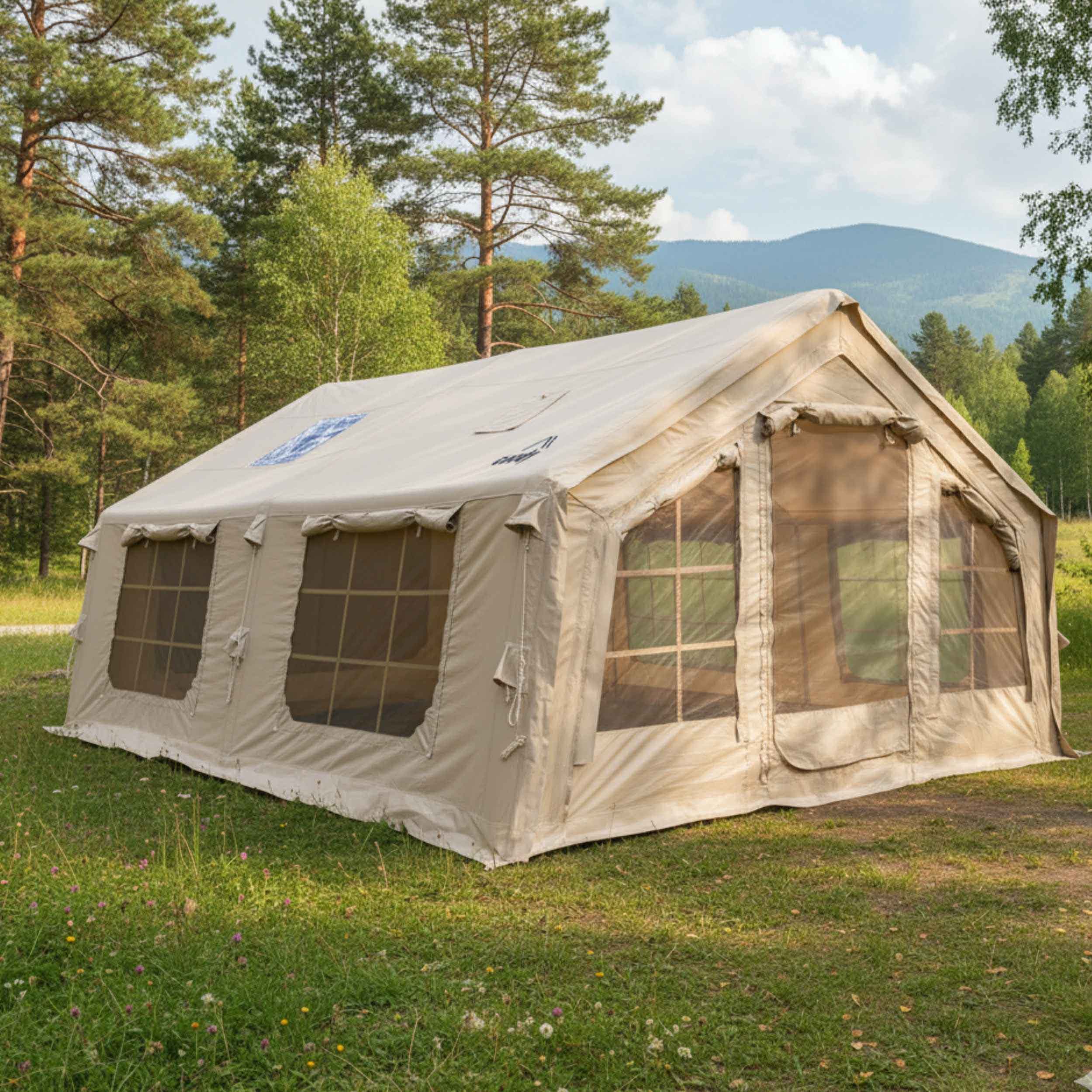

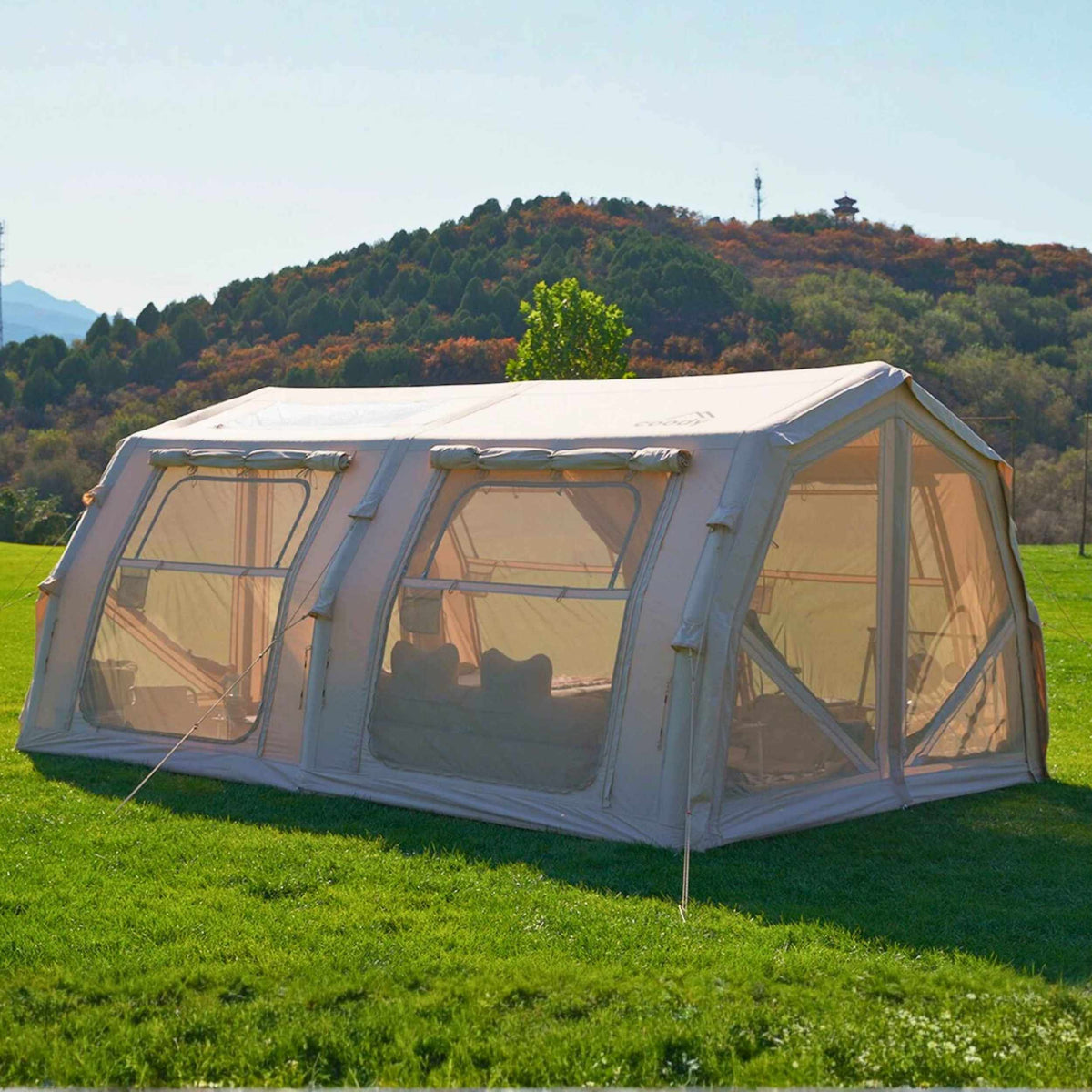
These tents do not all solve the same camping problem. Coody combines an inflatable frame with 210 gsm TC canvas and built-in stove-jack access. White Duck uses a traditional pole-supported cotton-canvas wall-tent format. Zempire is a large synthetic family air tent. KingCamp builds a TC-canvas cabin around aluminum poles, while Naturehike uses a lightweight modular inflatable system. The useful question is not which brand wins every category, but which construction fits your campsite, weather, transport and heating plan.
The comparisons below use Coody's current specification workbook and published product pages, plus the manufacturers' own pages for the competing models. Prices are intentionally omitted because promotions, regions and included accessories change too quickly for a durable technical comparison.
Table of Contents
- What changes when the frame is inflatable?
- 1. Coody Familia 17.2 Pro vs White Duck Alpha 14 x 16
- 2. Coody Familia 13.6 vs Zempire Pro III V2
- 3. Coody 10.0 Pro vs KingCamp KHAN Villa
- 4. Coody Hub Pro vs Naturehike Gen FL 13.0
- TC canvas, condensation and rain
- Cold-weather use: what the temperature range really means
- Wood-stove safety
- Frequently asked questions
What changes when the frame is inflatable?
An air frame removes the bundle of long rigid poles, but it does not remove campsite work. The tent still has to be spread out, inflated to the specified pressure, positioned, pegged and guyed. Published Coody setup times refer to inflation and initial pitching under normal conditions; final anchoring and interior setup take additional time.
Coody's comparison models use PVC air tubes, a pressure-relief valve and a recommended pressure of 6-8 psi. The company specifies a 72-hour factory inflation check for leakage and a wind test up to 72 km/h (45 mph). Those figures are not permission to ignore the forecast. Wind direction, ground, peg holding power and correct guy-line tension still matter.
How to read the tables
- Floor area and overall footprint are not always measured the same way. Where a manufacturer publishes a total footprint, bedroom area or vestibule separately, the distinction is retained.
- An inflation time is not necessarily a complete campsite-ready time. Unknown setup times are marked as not published rather than estimated.
- A stove jack is a pass-through, not a complete heating system. The stove, chimney, heat shielding, ventilation and clearances must all match the relevant instructions.
- Capacity is a maximum sleeping-layout figure. Cots, furniture, gear and a stove reduce practical occupancy.
1. Coody Familia 17.2 Pro vs White Duck Alpha 14 x 16
This is the closest comparison in the article for long-stay hot-tent use, but the structures are very different. The Coody is a two-room inflatable TC-canvas tent. The White Duck Alpha is a larger traditional wall tent with an anodized-aluminum pole frame and galvanized angle fittings.

Coody Familia 17.2 Pro: a two-room inflatable TC-canvas hot tent
|
Comparison point |
Coody Familia 17.2 Pro |
White Duck Alpha 14 x 16 |
|
Construction |
Inflatable frame; 210 gsm TC canvas |
Pole frame; 10.10 oz Army Duck cotton canvas |
|
Capacity |
2-10 people; two rooms |
Sleeps 12 maximum; 7-8 in published glamping layouts |
|
Floor space |
17.2 m² (185.14 ft²) |
14 x 16 ft; 224 ft² (20.81 m²) |
|
Height |
2.30 m (90.55") exterior; 2.14 m (84.25") ceiling |
2.90 m (9 ft 5 in) center; 1.52 m (5 ft) walls |
|
Setup figure |
About 10 min for inflation and initial pitch |
Not published on the product page |
|
Weight |
72 kg (158.73 lb) net |
262-276 lb (118.8-125.2 kg) total, depending on fabric option |
|
Floor |
PVC and Oxford; removable Oxford floor in one room |
Free-floating 16 oz PVC groundsheet |
|
Stove provision |
10 cm (3.94") stove jack; rainfly also has a stove-jack opening |
One silicone-coated jack with 5 in and 6 in pre-cut patterns |
|
Doors / windows |
2 doors; 6 windows including 2 roof windows |
1 door; 4 windows |
Choose the Coody when a two-room layout, inflatable setup and lower transport weight matter most. Choose the Alpha when you want the larger published floor, taller ridge and traditional heavy wall-tent structure—and can handle more than 260 lb of tent, groundsheet and frame. The Alpha page does not publish a setup time, so a minute-for-minute claim would be guesswork.
Sources: Coody 17.2 Pro | White Duck Alpha 14 x 16
2. Coody Familia 13.6 vs Zempire Pro III V2
Both are inflatable family tents for up to eight people, but the priorities split quickly. Coody uses TC canvas and includes a stove jack. Zempire uses a synthetic fly-and-inner system, publishes a very fast inflation time and devotes substantial space to three sleeping areas plus living and vestibule zones.

Coody Familia 13.6: an eight-person inflatable TC-canvas hot tent
|
Comparison point |
Coody Familia 13.6 |
Zempire Pro III V2 |
|
Construction |
Inflatable frame; 210 gsm TC canvas |
Inflatable airsystem; 210D poly-Oxford ripstop fly and polyester inner |
|
Capacity |
2-8 people |
Sleeps up to 8; 3 sleeping areas |
|
Published area |
13.6 m² (146.39 ft²) usable interior |
24.1 m² (259 ft²) total floor area; 15.1 m² bedroom; 4.8 m² vestibule |
|
Overall dimensions |
3.60 x 3.80 x 2.20 m (141.73 x 149.61 x 86.61") |
6.50 x 6.80 m (256 x 267"); 2.40 m (94.5") peak |
|
Inflation time |
About 8 min |
About 3 min |
|
Weight |
60 kg (132.28 lb) net |
51.7 kg (114 lb) |
|
Weather ratings |
Body PU2000+; rainfly PU3000+; UPF 50+ |
8,000 mm waterhead; UPF 50+ |
|
Stove provision |
10 cm (3.94") stove jack |
No stove jack listed on the official product page |
|
Doors / windows |
2 doors; 6 windows including 2 roof windows |
Three-panel window design; door count not used here because the page presents multiple zoned openings |
The Zempire is the faster and lighter published package, and its multi-zone layout suits a large family that wants defined bedrooms and an awning-style living area. The Coody is the hot-tent option in this pair: TC canvas, a 10 cm stove jack and a more compact overall footprint. The two area figures are not perfectly interchangeable, because Zempire publishes total, bedroom and vestibule areas separately.
Sources: Coody 13.6 | Zempire Pro III V2
3. Coody 10.0 Pro vs KingCamp KHAN Villa
These models share TC fabric and stove readiness, but they are not direct size matches. Coody 10.0 Pro is an inflatable two-to-four-person tent. The KHAN Villa is a pole-supported four-to-six-person cabin with two bedrooms and a central living room.

Coody 10.0 Pro: compact inflatable TC-canvas shelter with tall side walls
|
Comparison point |
Coody 10.0 Pro |
KingCamp KHAN Villa |
|
Construction |
Inflatable PVC air frame |
Dual 30 mm aluminum-alloy pole structure |
|
Capacity |
2-4 people |
4-6 people; 2 bedrooms and 1 living room |
|
Dimensions |
3.60 x 2.80 x 2.30 m (141.7 x 110.2 x 90.6") |
15.1 x 9.8 x 7.9 ft (4.60 x 2.99 x 2.41 m) |
|
Usable area |
10.0 m² (107.64 ft²) |
Not published as a floor-area figure |
|
Setup figure |
About 6 min for inflation and initial pitch |
Not published on the product page |
|
Weight |
42.6 kg (93.92 lb) net |
26.6 kg (58.6 lb) |
|
Fabric |
210 gsm TC; 65% polyester / 35% cotton |
210 g TC; 65% polyester / 35% cotton |
|
Floor / rain protection |
Removable Oxford floor; 420D Oxford PU3000+ rainfly |
210D Oxford floor rated 10,000 mm; fly rated 350 mm |
|
Stove provision |
10 cm (3.94") stove jack |
Preinstalled rain-and-snow-protected stove jack |
|
Openings |
2 doors; 4 windows including 2 roof windows |
1 door; dedicated zippered power-cord opening |
Coody 10.0 Pro is the more compact hot-tent layout and avoids rigid poles. KHAN Villa carries more sleepers at a much lower published weight and creates three defined zones, but its setup time is not published. The waterproof numbers also describe different components, so they should not be reduced to one simple winner.
Sources: Coody 10.0 Pro | KingCamp KHAN Villa
4. Coody Hub Pro vs Naturehike Gen FL 13.0
This pair is about modular campsite living space. Coody Hub Pro is a TC-canvas central shelter that can connect with compatible Coody Pro tents. Naturehike's Gen FL 13.0 is a much lighter synthetic living module that can be combined with separate sleeping modules and connectors.

Coody Hub Pro: a tall modular inflatable living shelter
|
Comparison point |
Coody Hub Pro |
Naturehike Gen FL 13.0 |
|
Role |
Central living hub; compatible Coody Pro connections |
Modular living area; separate sleeping modules available |
|
Construction |
Inflatable PVC frame; 210 gsm TC canvas |
10 cm PVC air columns; synthetic Oxford fabrics |
|
Published area |
12.96 m² (139.50 ft²) |
13.0 living-area module; floor-area figure not separately stated |
|
Dimensions |
3.80 x 3.60 x 2.70 m (149.6 x 141.7 x 106.3") |
3.60 x 3.60 x 2.30 m (141.7 x 141.7 x 90.6") |
|
Interior height |
2.54 m (100") ceiling; 1.90 m (74.80") side walls |
2.30 m (90.6") published module height |
|
Setup figure |
About 10 min |
Not stated as a single time on the product page |
|
Weight |
59 kg (130.07 lb) net |
20.5 kg (45.2 lb) for the 13.0 living-area module |
|
Weather data |
Body PU2000+; rainfly PU3000+; Coody wind test up to 72 km/h (45 mph) |
PU3000+; lab-tested at 50-61 km/h (32-38 mph) |
|
Stove provision |
10 cm (3.94") stove jack |
No stove jack listed on the official product page |
|
Windows |
8 windows including 6 roof windows |
Open living-module design; window count not published as a comparable figure |
Hub Pro is the heavier, canvas-based choice with a stove jack, tall side walls and extensive roof glazing. Gen FL 13.0 is far lighter and more transportable, but the published weight applies only to the living module; adding a sleeping pod, connector or canopy changes the total. Confirm compatibility before mixing modules within either system.
Sources: Coody Hub Pro | Naturehike Gen FL
TC canvas, condensation and rain
TC, or Terylene Cotton, blends polyester with cotton. Coody uses 210 gsm fabric with a 65/35 polyester-cotton composition. KingCamp publishes the same blend ratio for KHAN Villa, while White Duck uses heavier cotton canvas. A TC wall can help moderate the clammy feeling common in a tightly closed synthetic shelter, but no fabric makes condensation disappear. People, wet equipment, cooking and cold exterior temperatures still add moisture.
For Coody models in this comparison, the published rating is PU2000+ for the tent body and PU3000+ for the 420D Oxford rainfly, with UPF 50+ UV protection. Use the rainfly for prolonged rain, snow and strong sun. Keep vents open enough for the conditions, and remove wet gear when practical.
Cold-weather use: what the temperature range really means
The approved Coody operating range used for these inflatable models is -10 °C to +40 °C (14 °F to 104 °F). Below freezing, PVC floors and air beams become stiffer, and air pressure can change as temperature changes. Check the frame, add air only within the 6-8 psi limit and never force cold PVC into a tight fold.
After below-freezing use, move the tent to a warm, dry indoor space and dry the fabric, floor, seams and air-beam areas completely before storage. The standard is fully dry—not a fixed number of hours. Packing any large tent while damp encourages odor, staining and mold.
Wood-stove safety
A built-in stove jack does not make every stove suitable for tent use. Follow the tent and stove instructions, use the specified chimney and heat shielding, maintain required clearances, keep continuous ventilation and install working smoke and carbon-monoxide alarms according to their manufacturers. Never leave a burning stove unattended, and follow the stove manufacturer's instructions about operation while occupants are sleeping. The U.S. Consumer Product Safety Commission warns against using fuel-burning camping equipment inside a tent unless it is specifically designed and instructed for safe use in an enclosed space.
Sources: CPSC carbon-monoxide guidance
Quick selection guide
- For a two-room inflatable hot tent with the largest Coody floor in this group: Familia 17.2 Pro.
- For a traditional high-ridge cotton-canvas wall tent with 224 ft² of floor: White Duck Alpha 14 x 16.
- For an eight-person TC-canvas hot tent on a relatively compact footprint: Coody Familia 13.6.
- For a large synthetic family air tent with about three minutes of inflation time: Zempire Pro III V2.
- For a compact two-to-four-person inflatable TC hot tent: Coody 10.0 Pro.
- For a lighter four-to-six-person pole-supported TC cabin with two bedrooms: KingCamp KHAN Villa.
- For a tall TC-canvas gathering hub with stove access and Coody Pro connectivity: Coody Hub Pro.
- For a lightweight synthetic modular living area: Naturehike Gen FL 13.0.
Frequently asked questions
🏕 Is an inflatable tent automatically easier to set up?
It removes rigid-pole assembly, but inflation is only one part of pitching. Ground preparation, positioning, pegging, guying and weather checks still take time.
💧 Do TC tents eliminate condensation?
No. TC fabric can help moisture management, but ventilation, occupancy, cooking and wet gear still determine how much condensation forms.
🔥 Can every tent in this article use a wood stove?
No. Coody models in the comparison, White Duck Alpha and KingCamp KHAN Villa publish stove-jack provision. The official Zempire Pro III V2 and Naturehike Gen FL pages do not list stove jacks. Never cut or improvise an opening unless the manufacturer expressly provides an approved method.
💡 Why are prices missing?
A fair price comparison requires the same country, date, fabric option, accessories, taxes and shipping assumptions. Those variables change frequently, while the construction and verified specifications remain useful longer.
Editorial note
Specifications were checked against the current Coody product workbook and the manufacturers' published pages on September 11, 2026. Manufacturer test figures describe controlled conditions and do not replace site assessment, correct anchoring or product instructions. Product designs and included components can change; confirm the current product page before purchase.