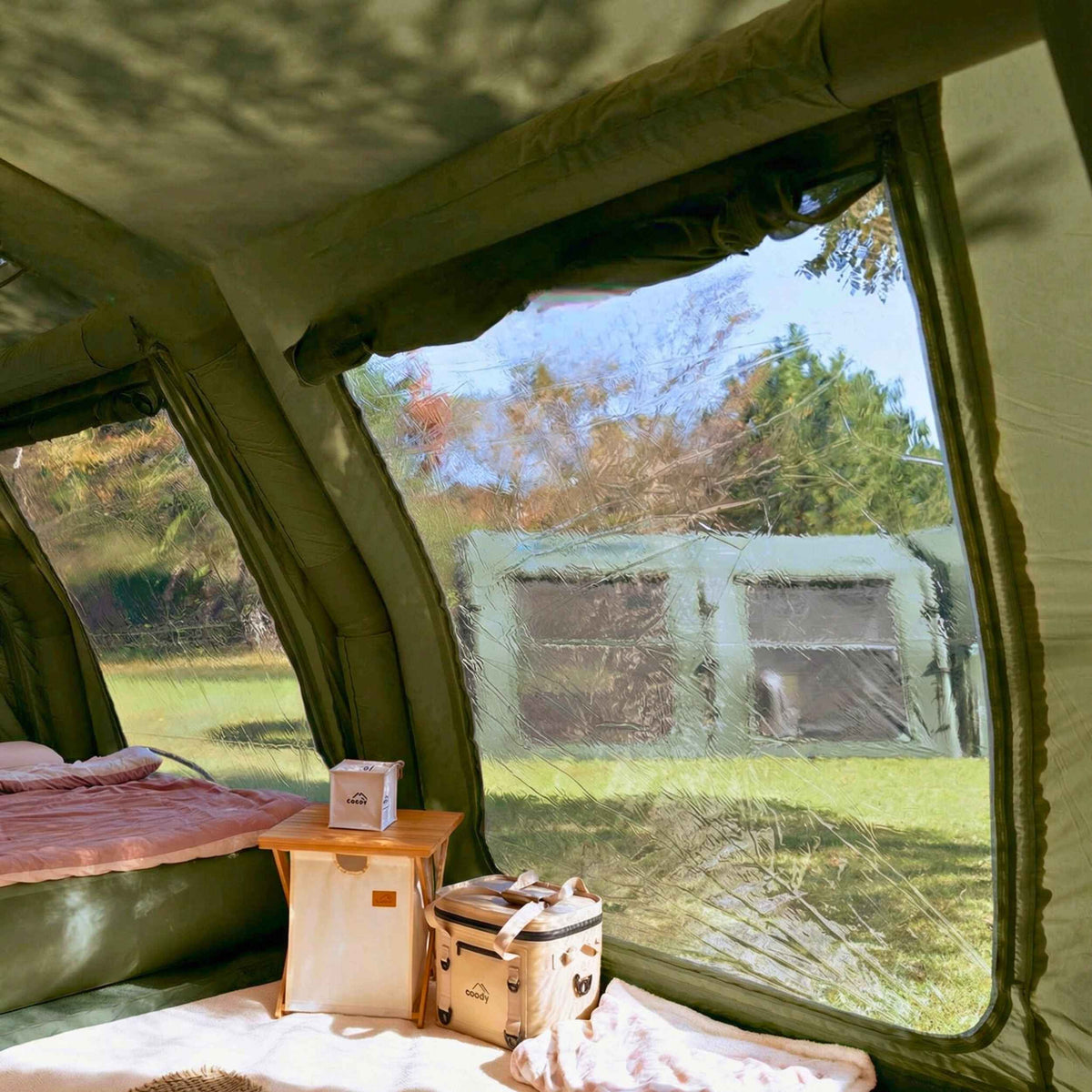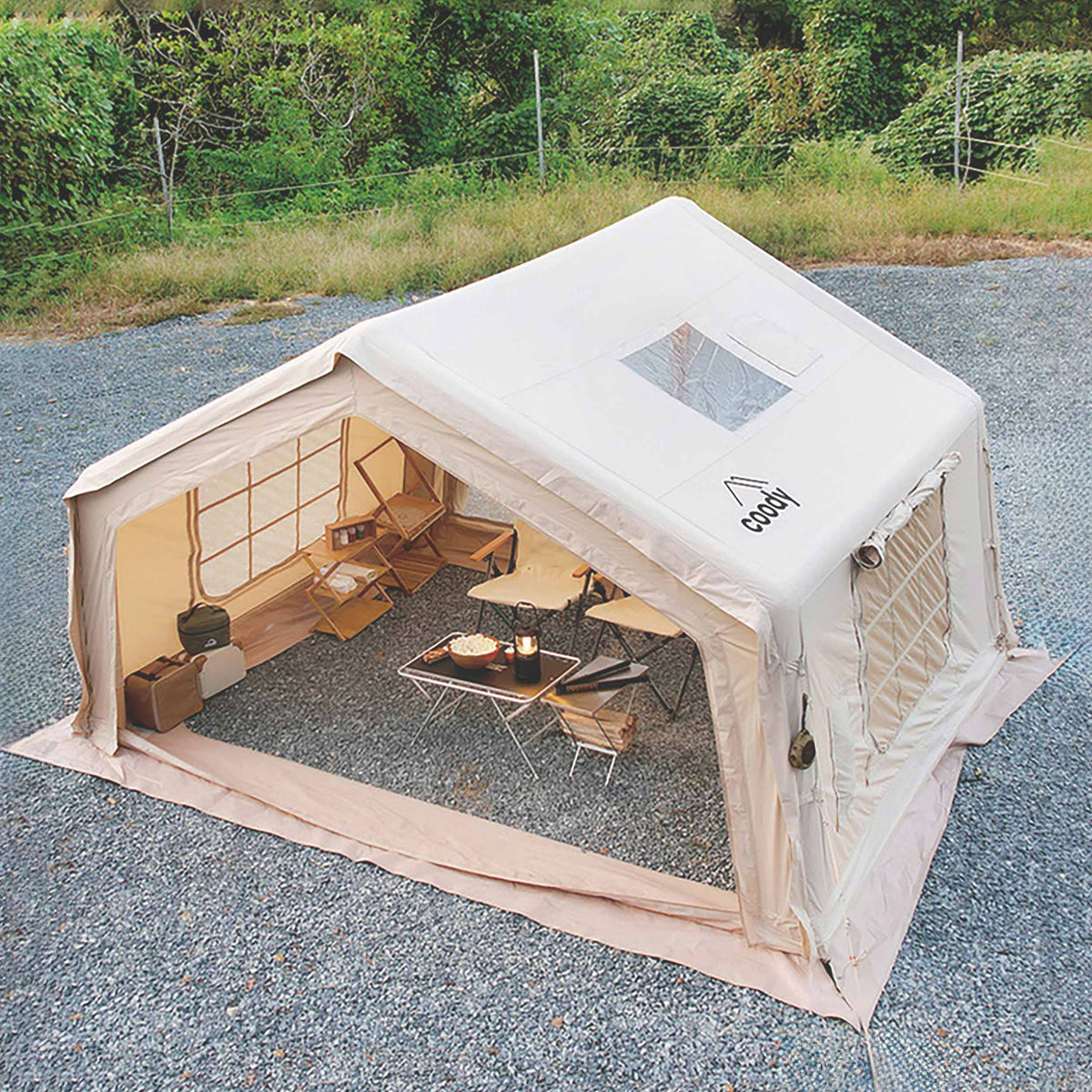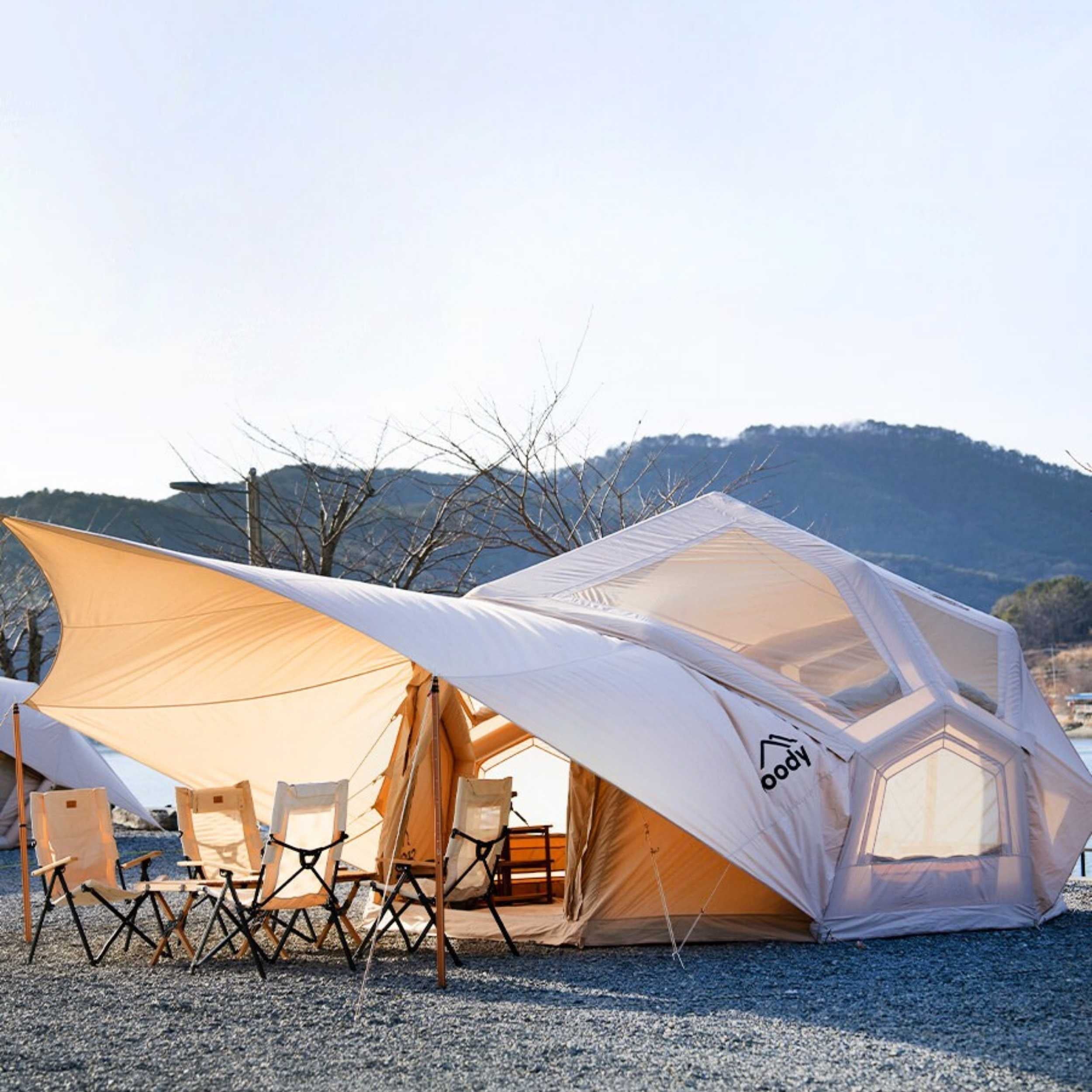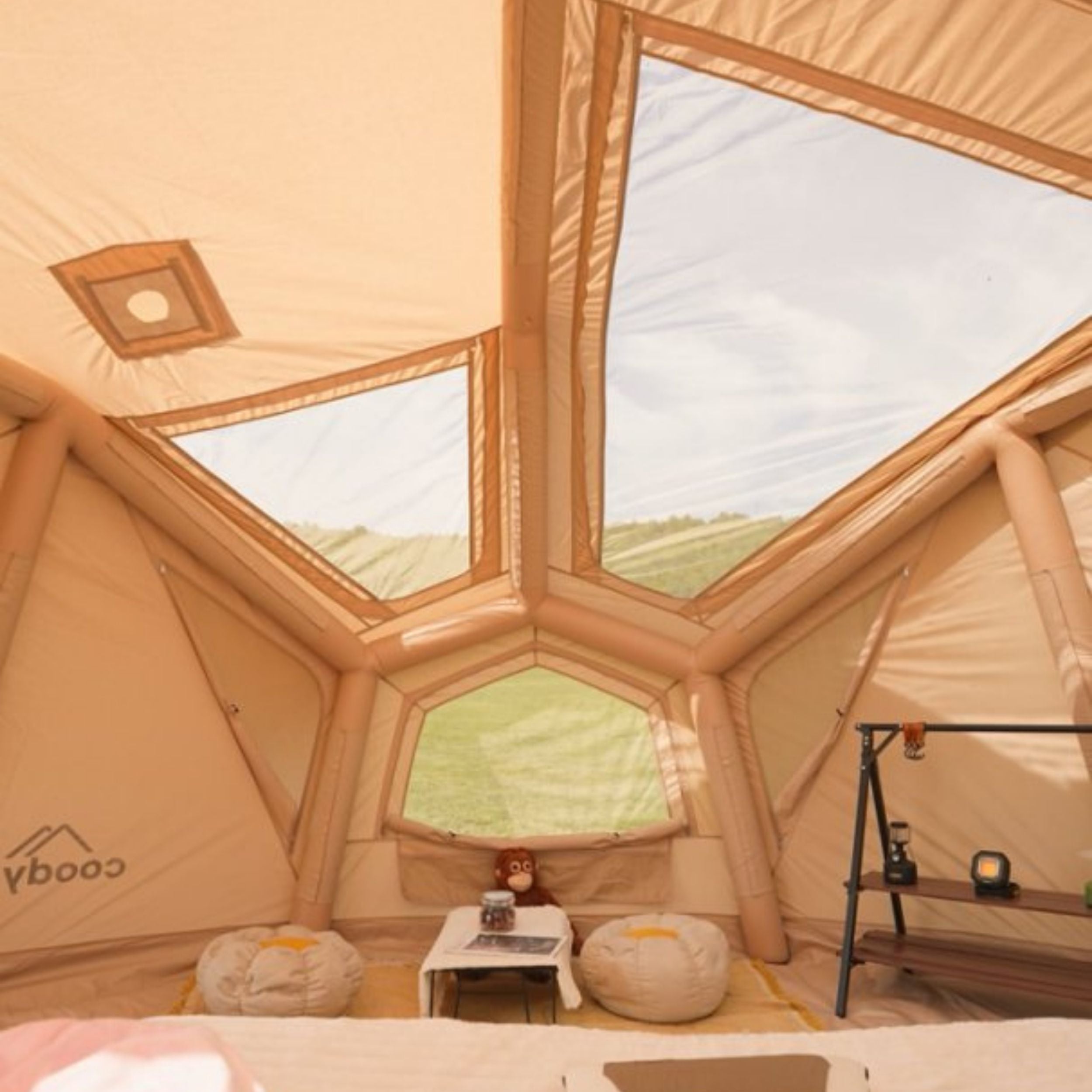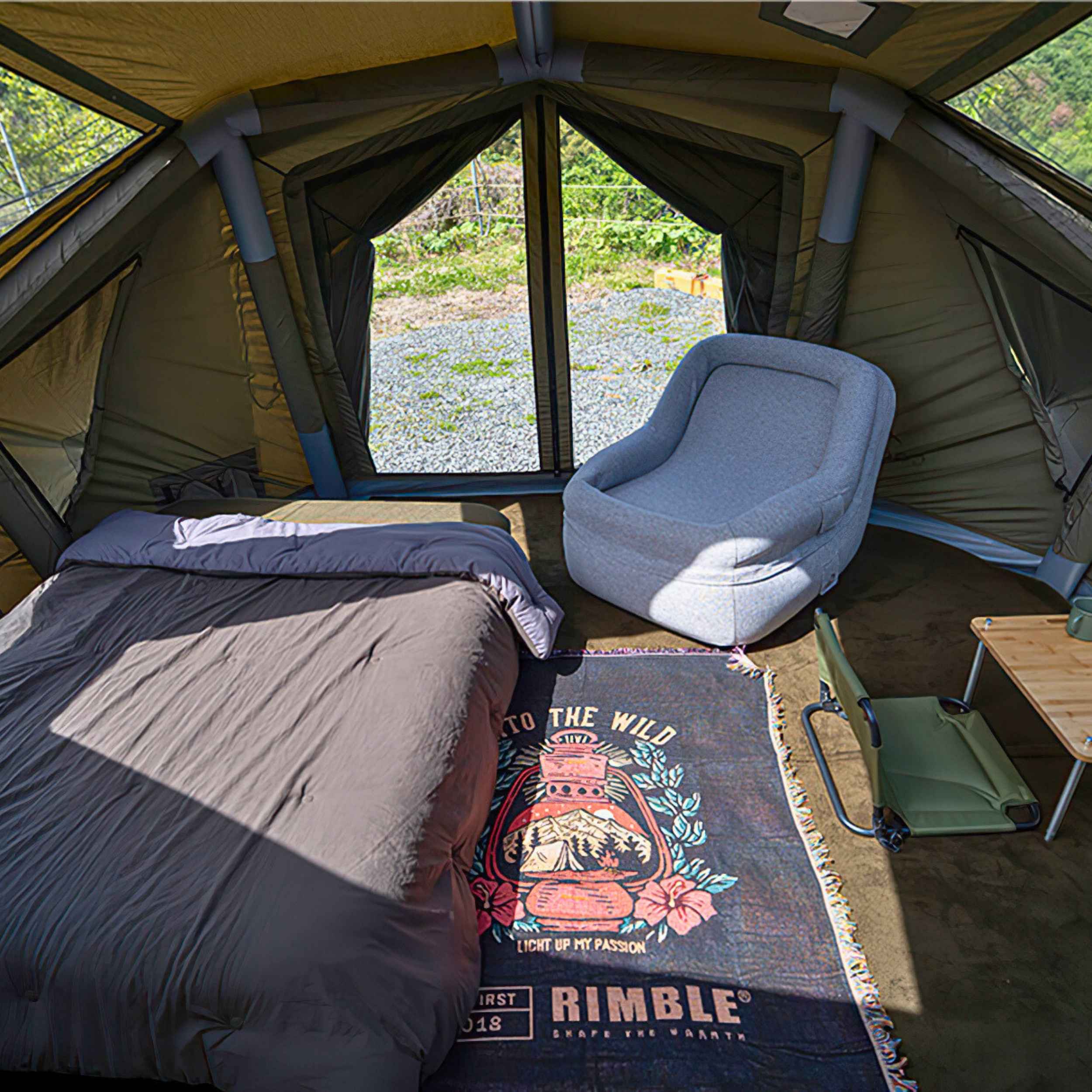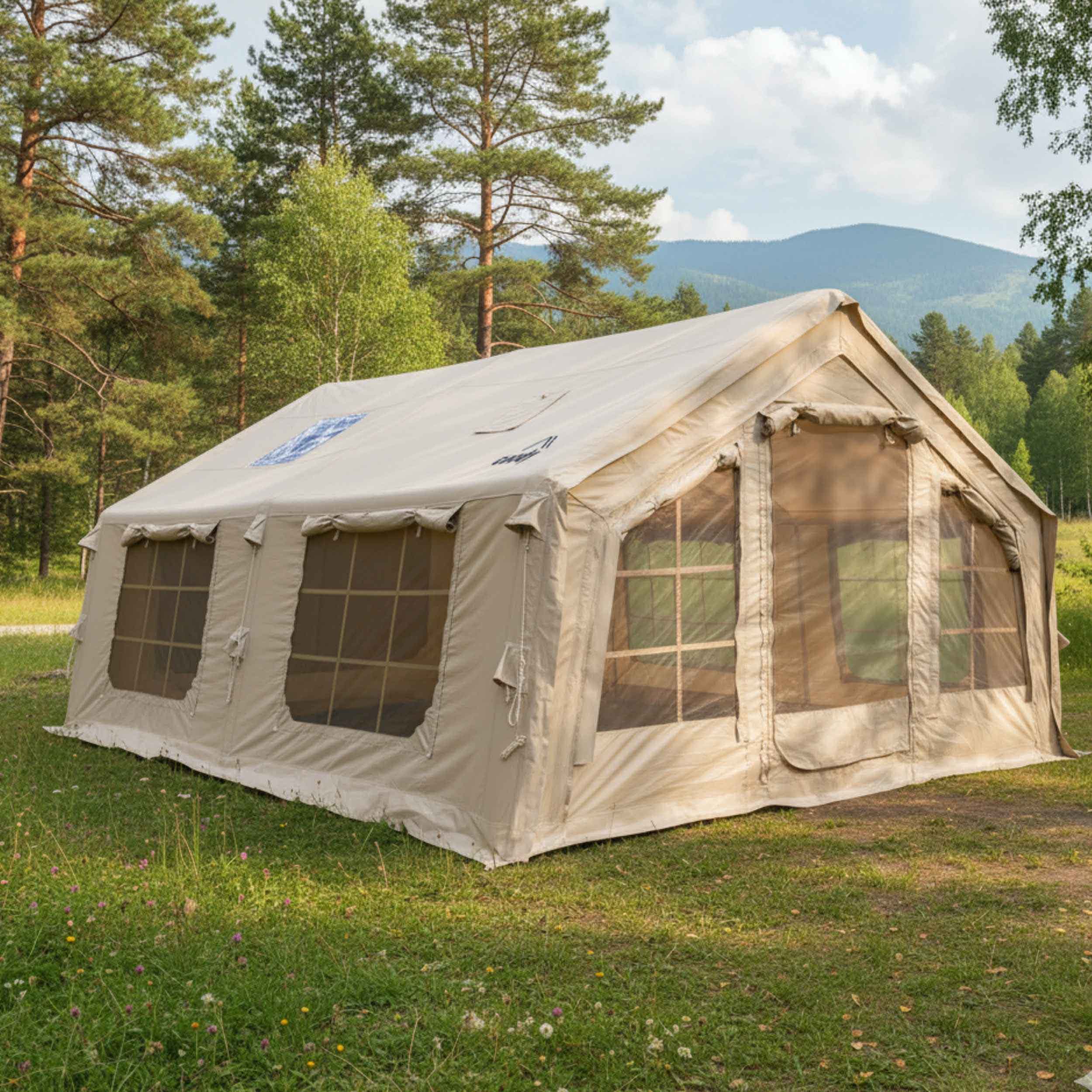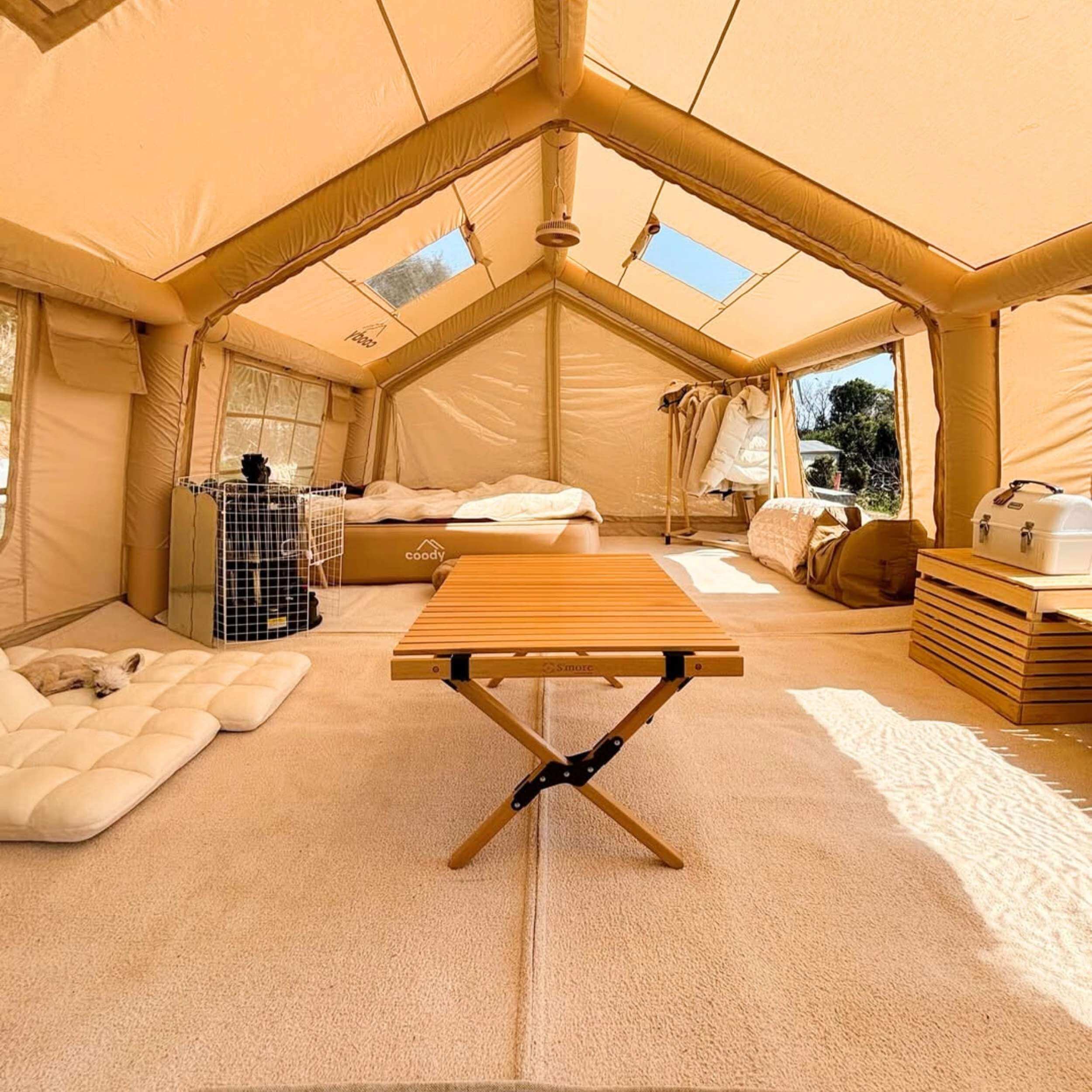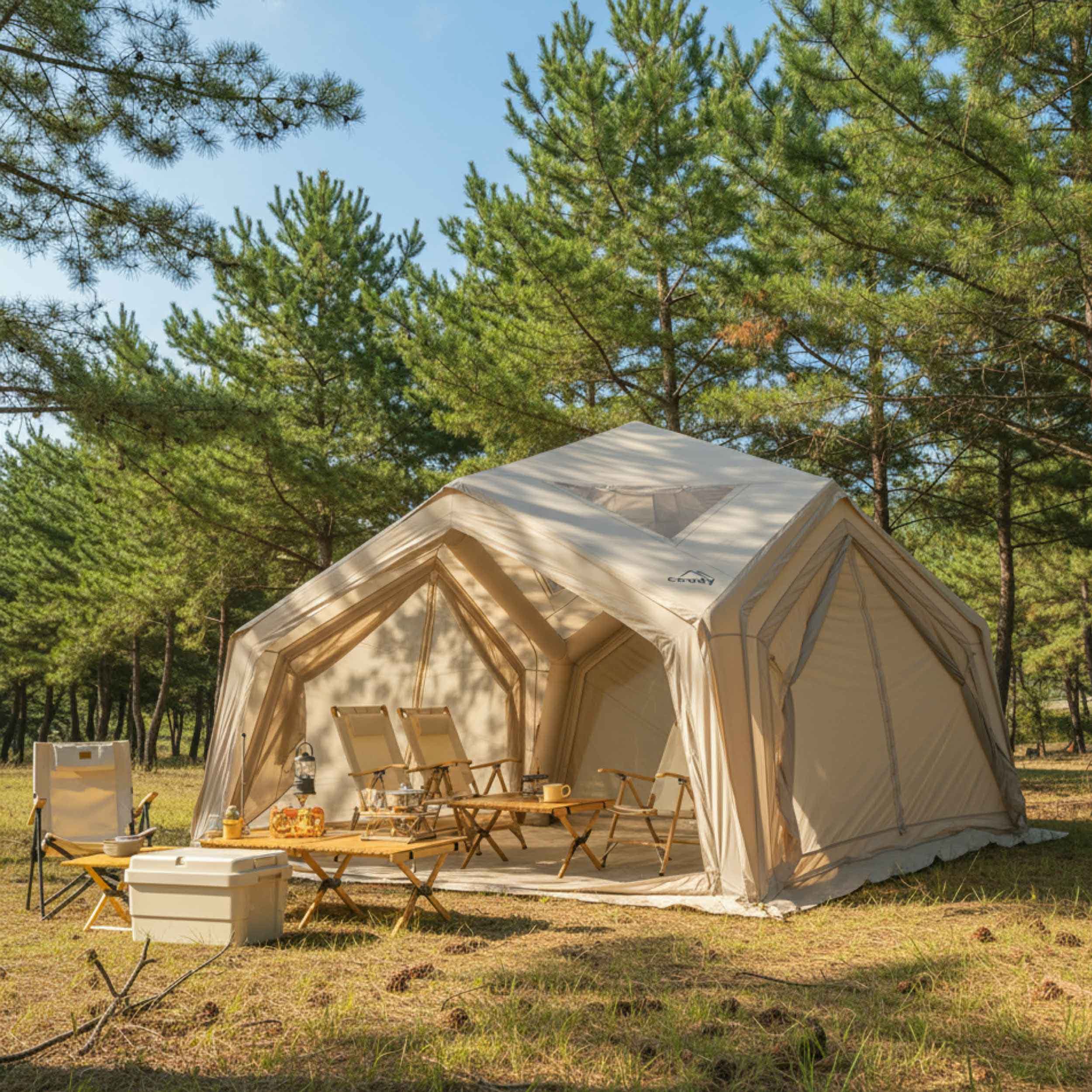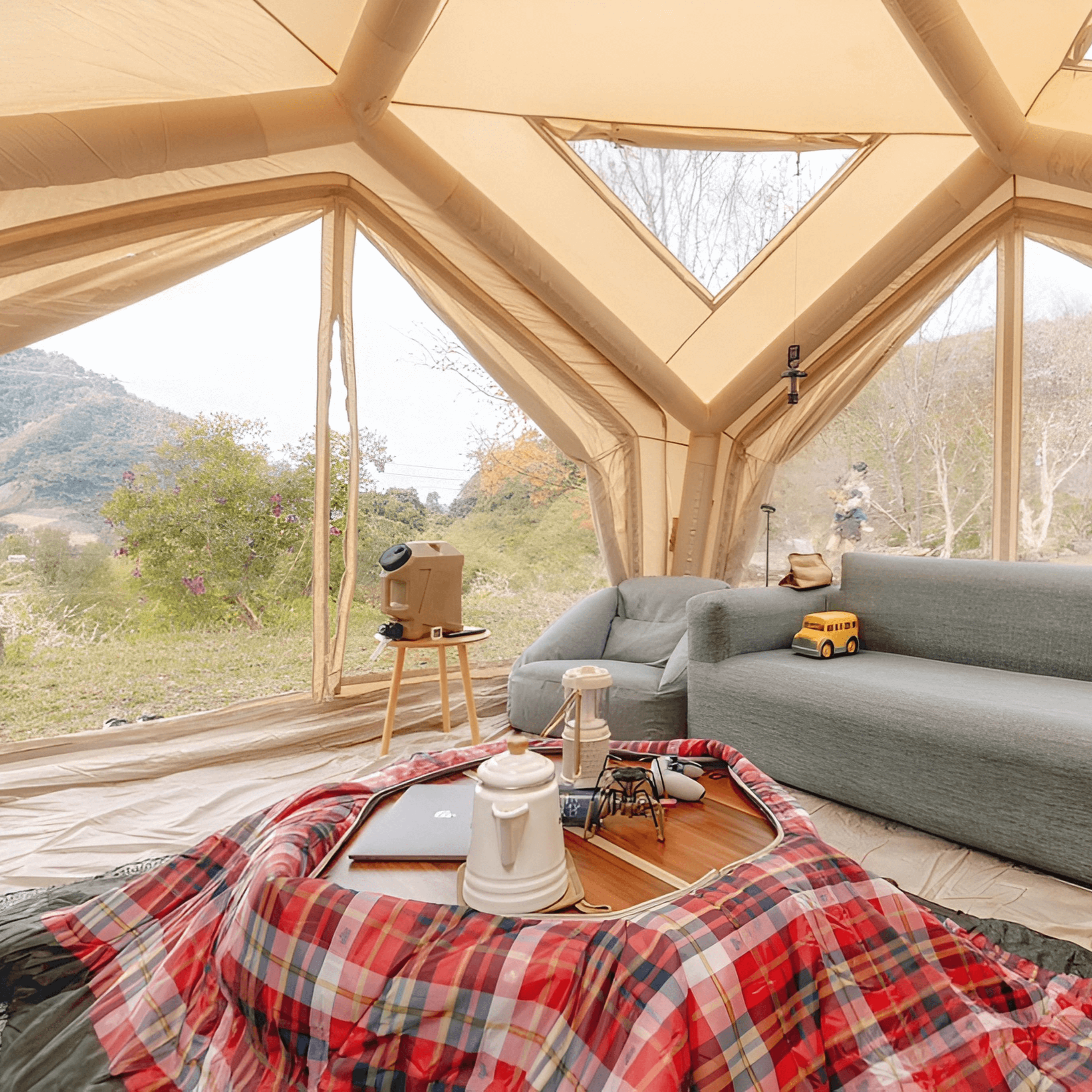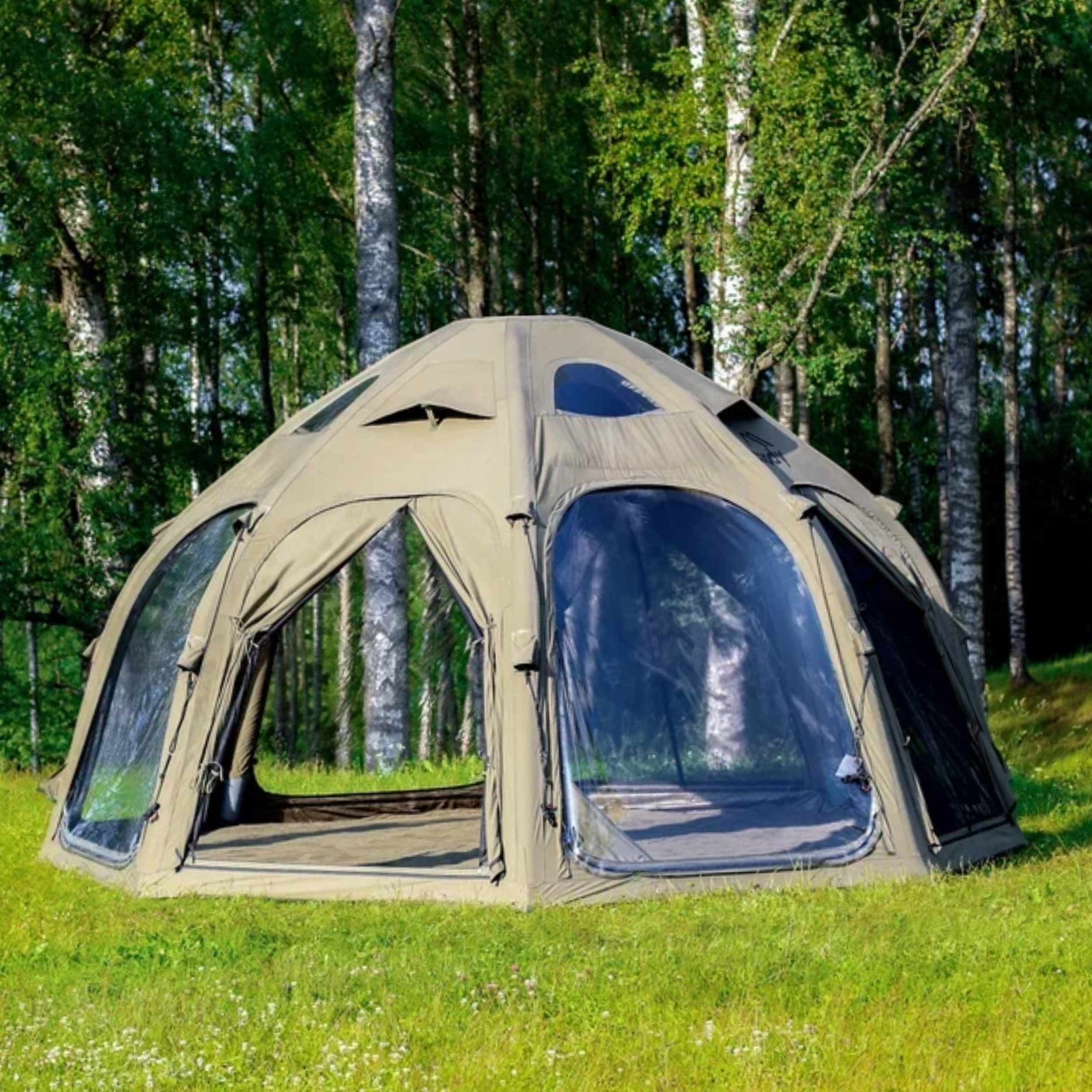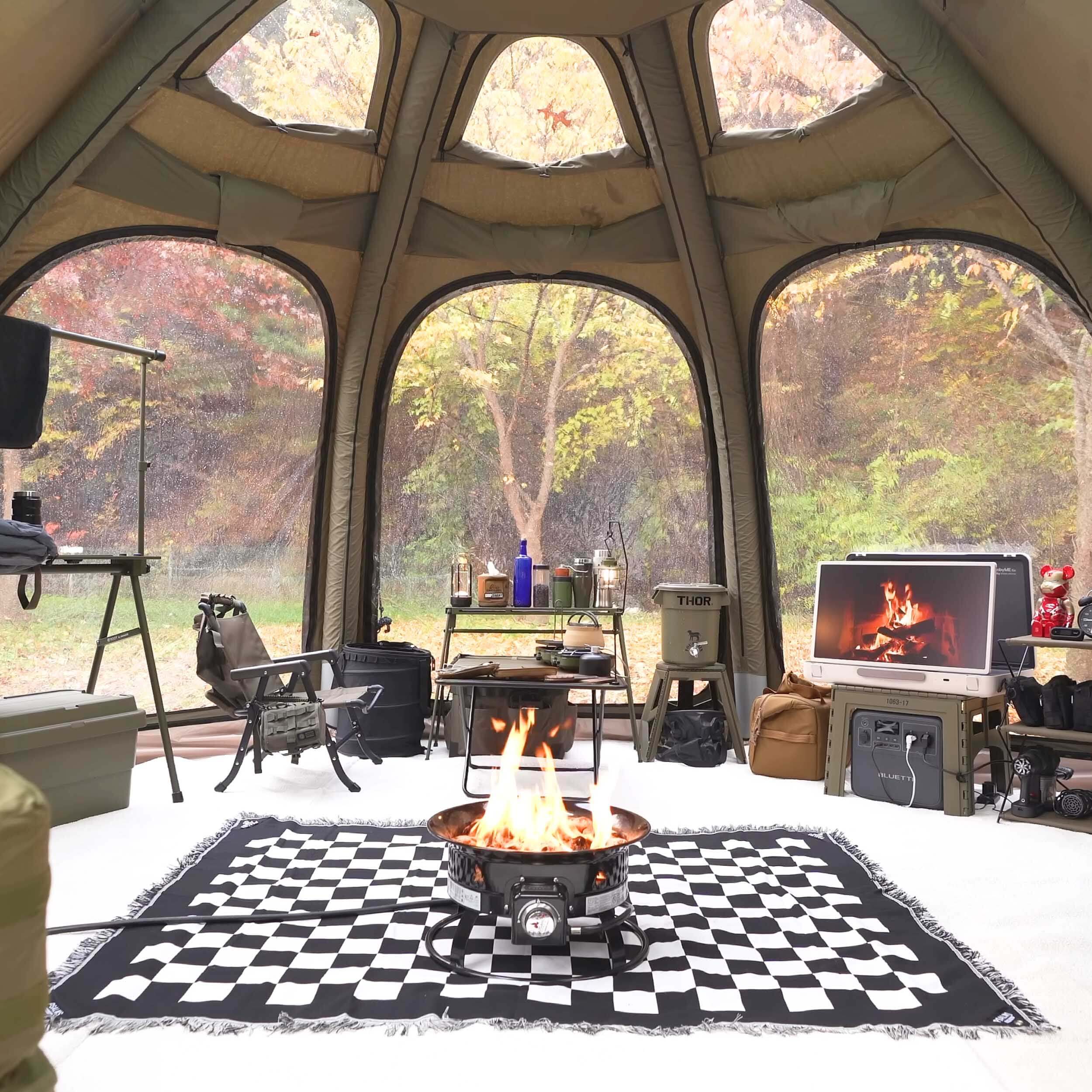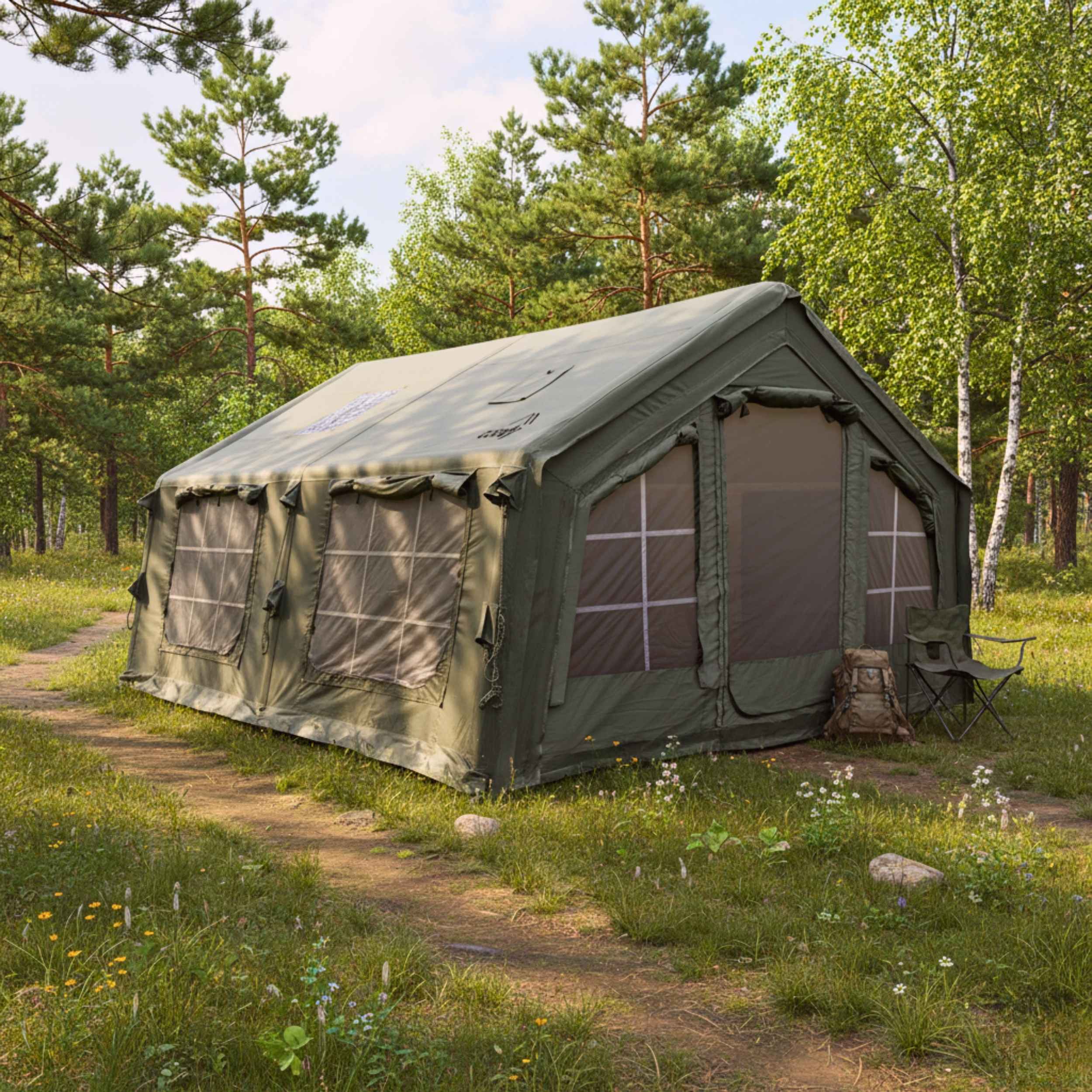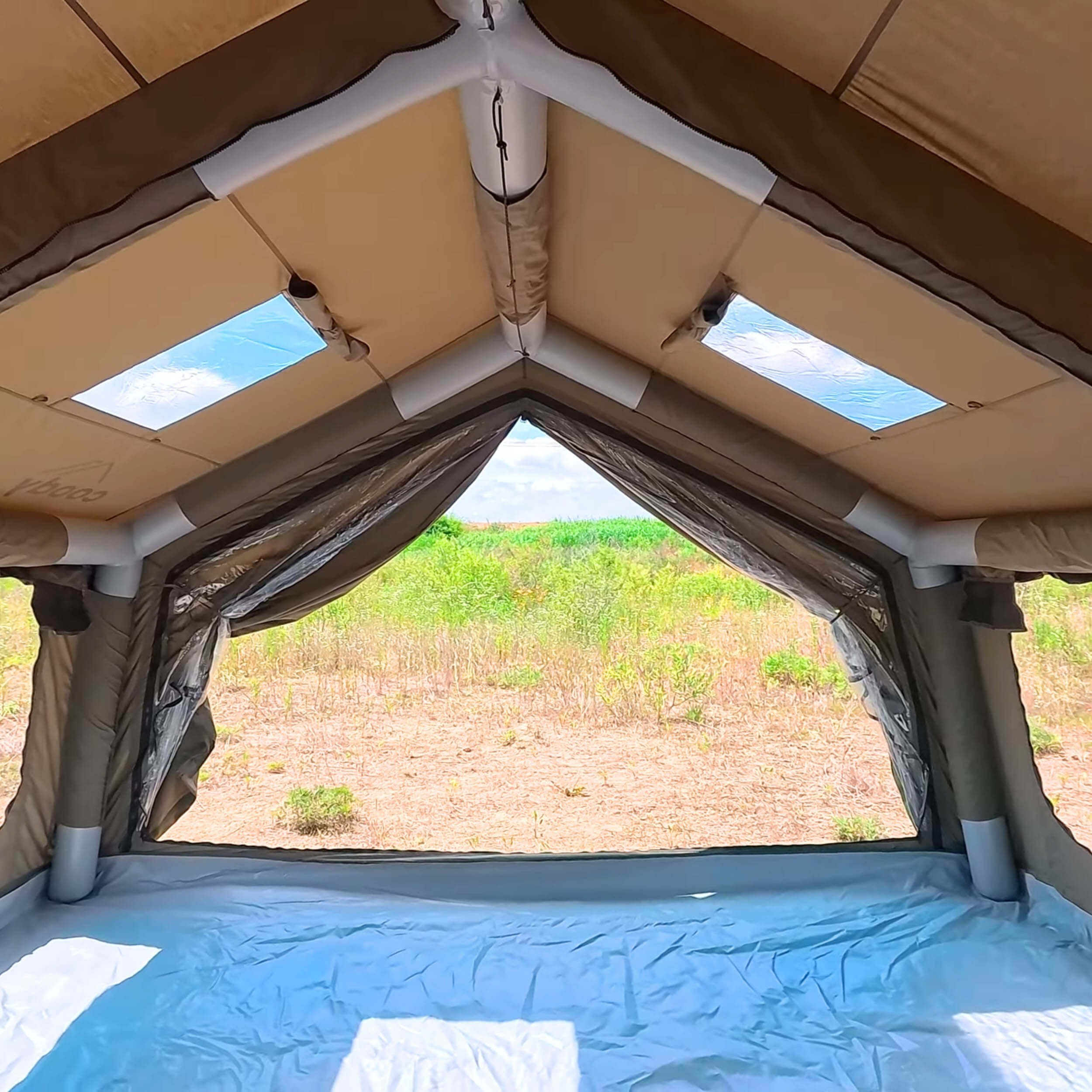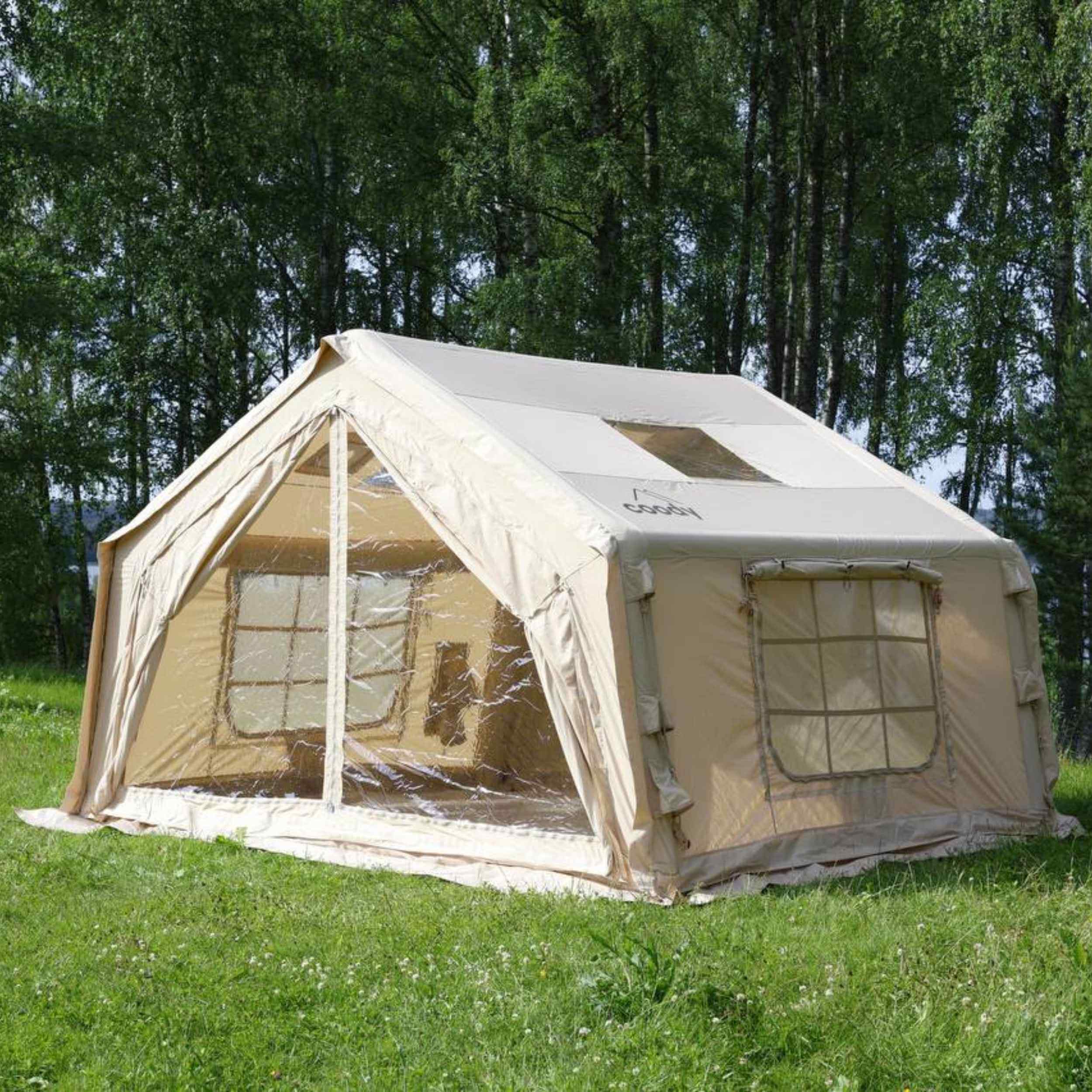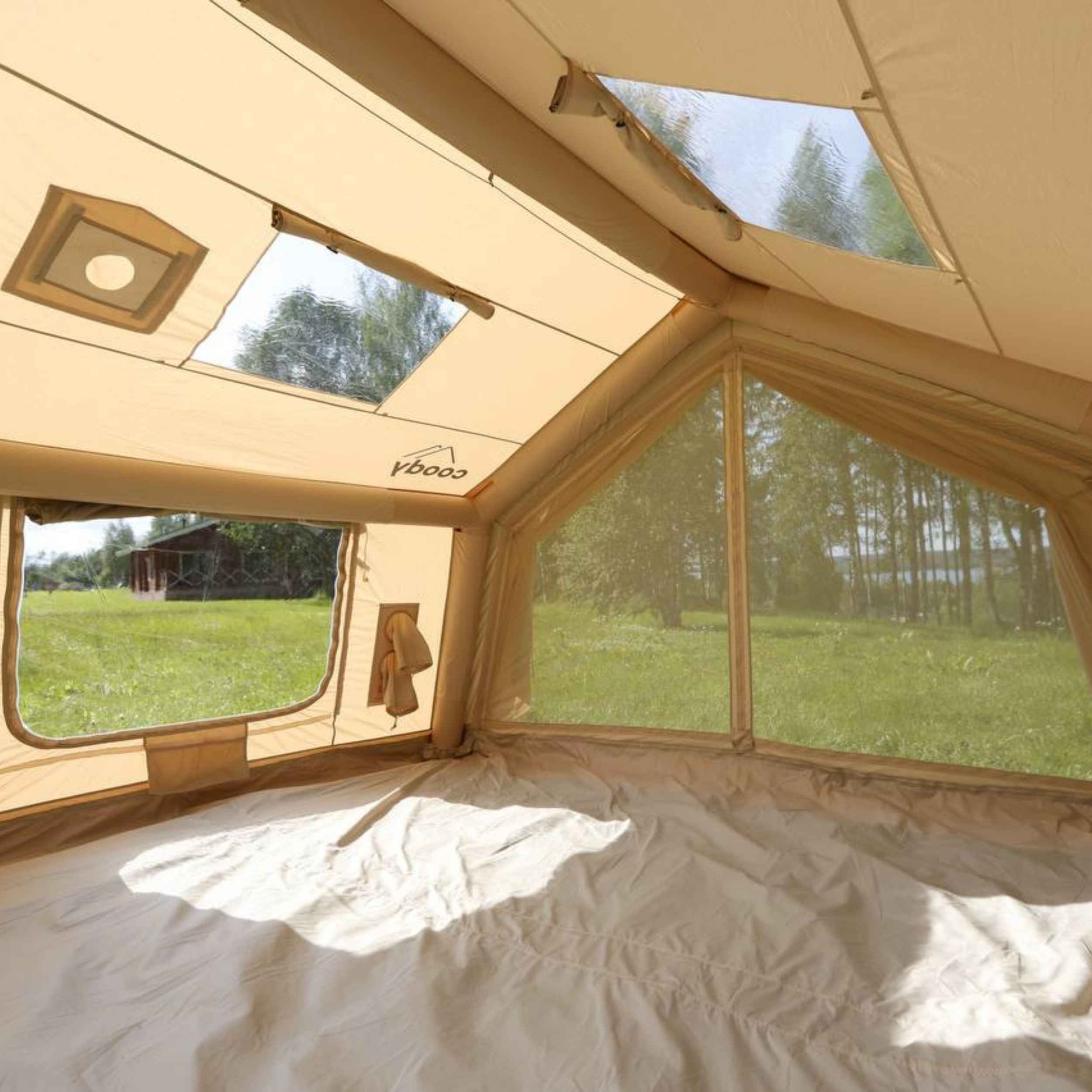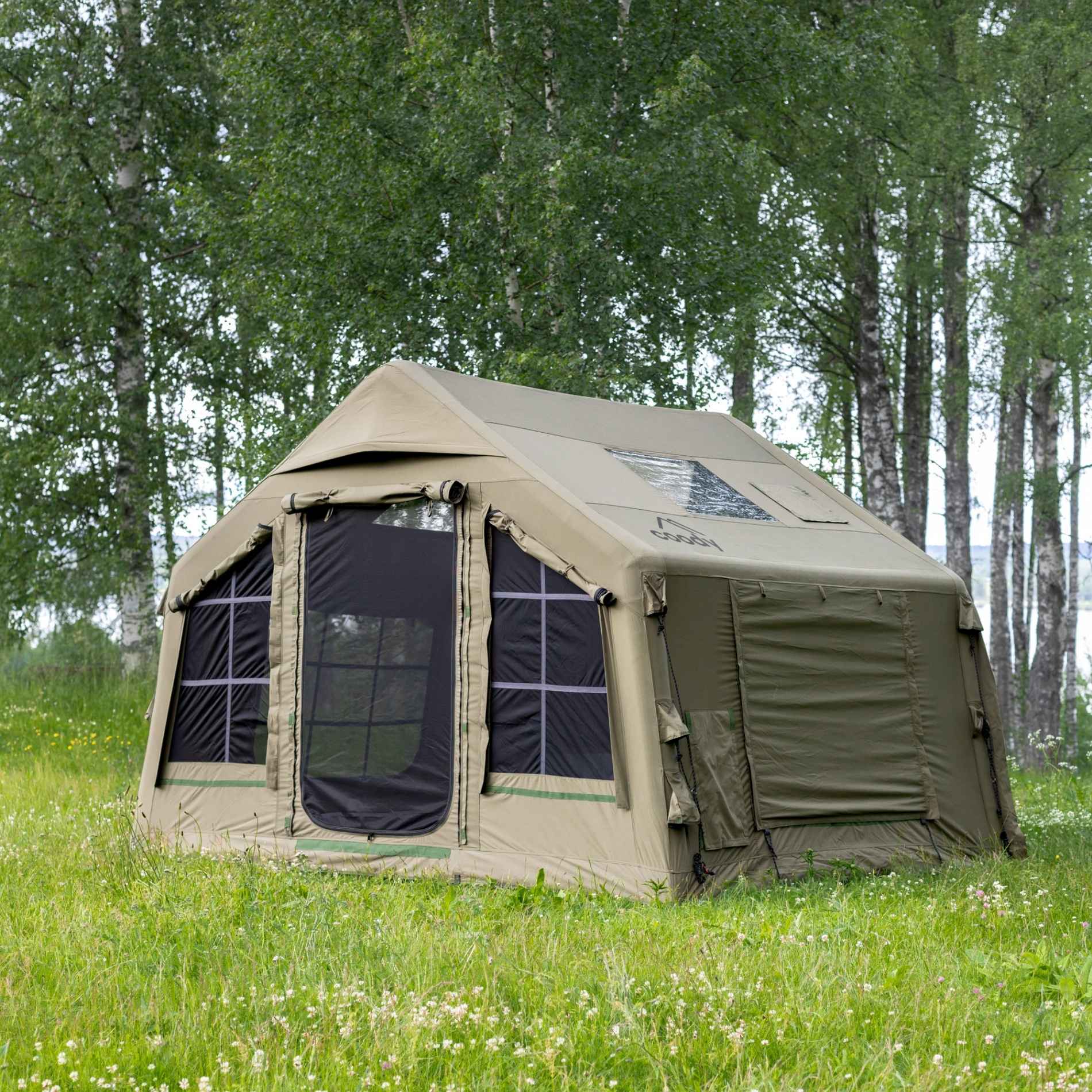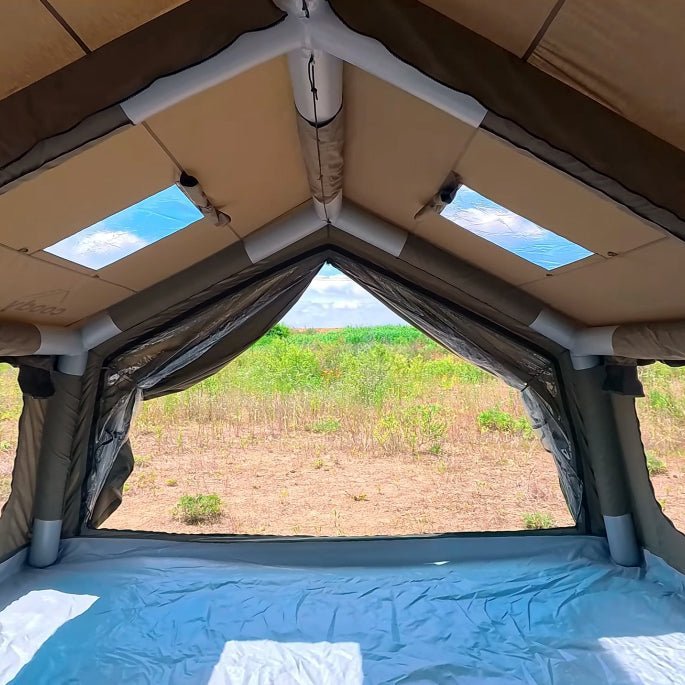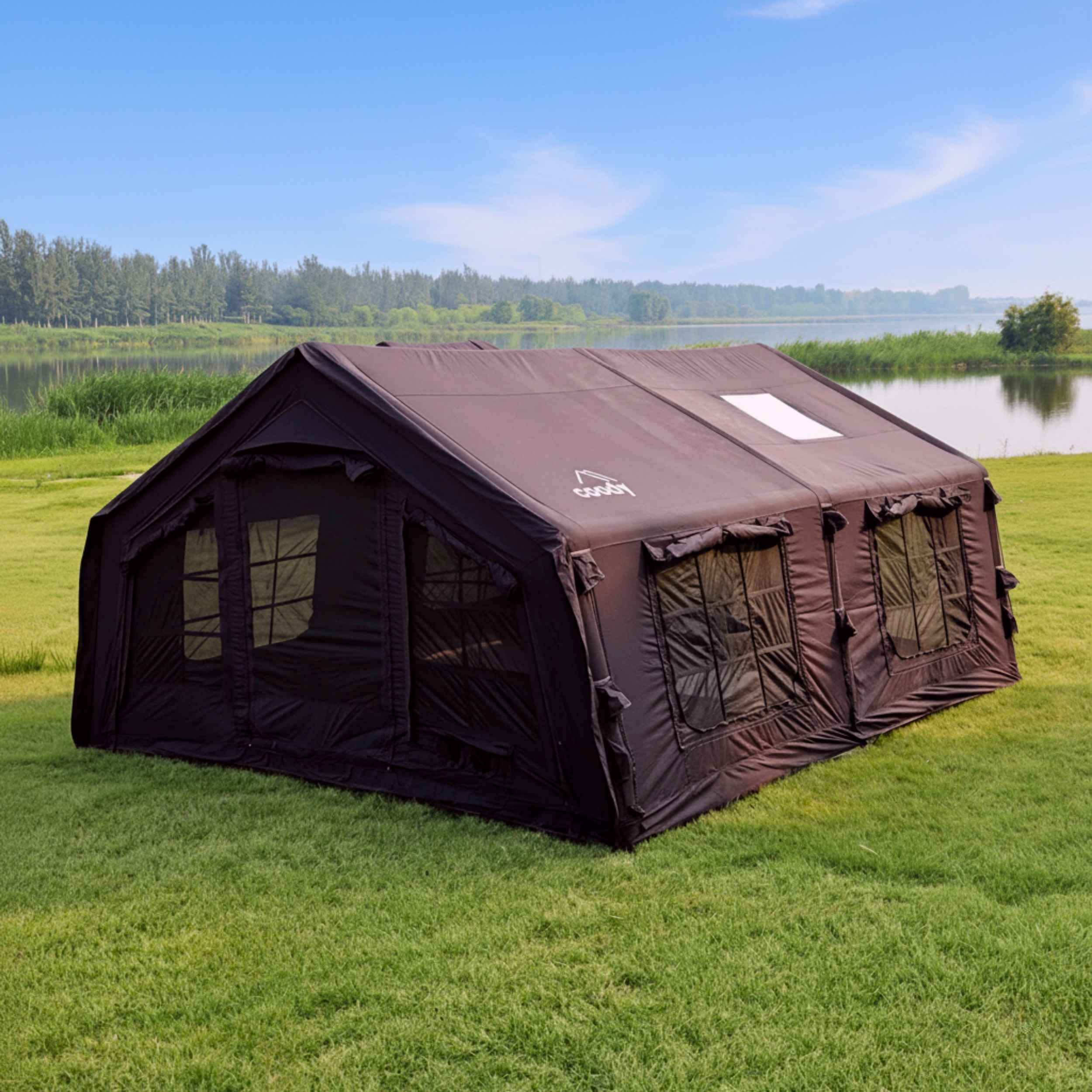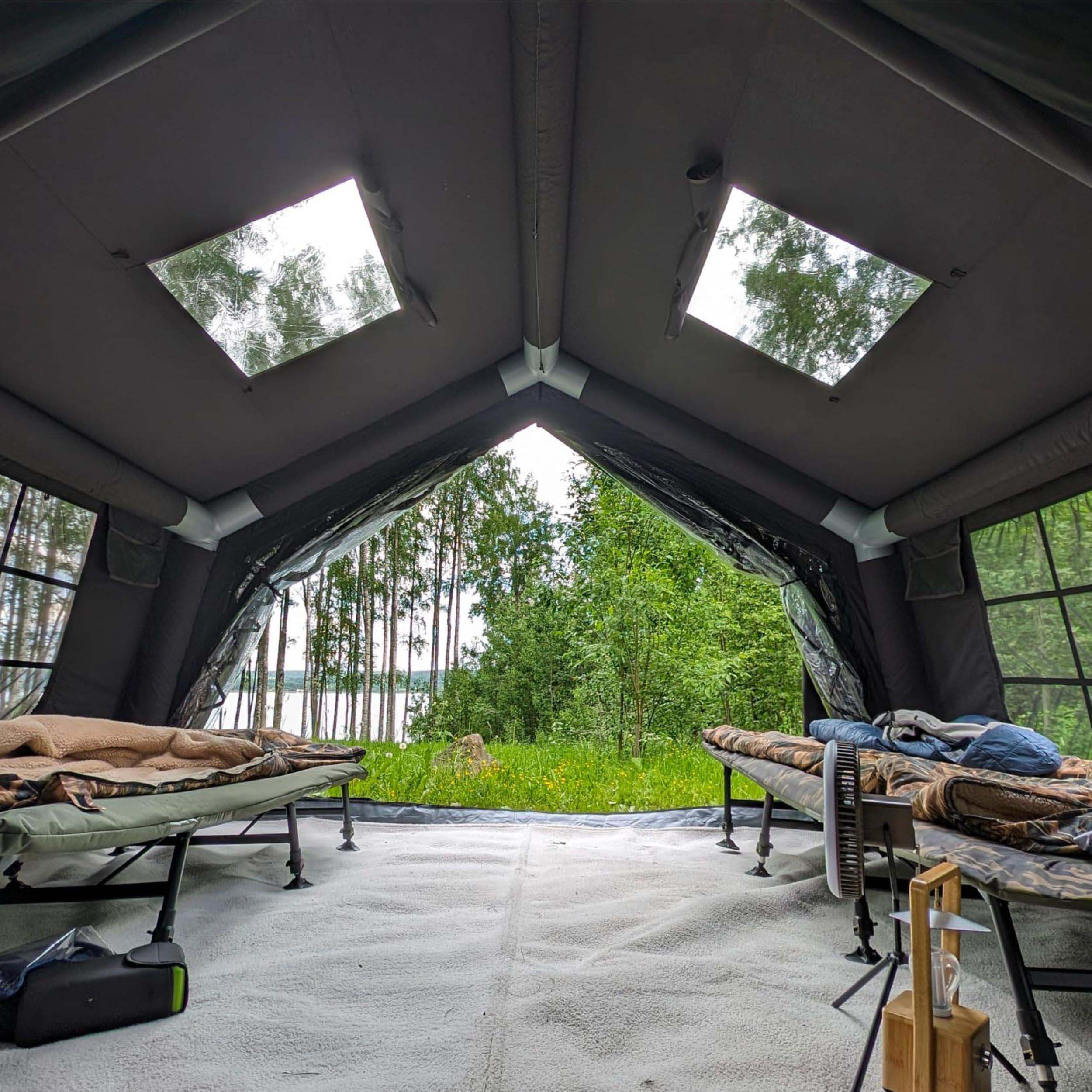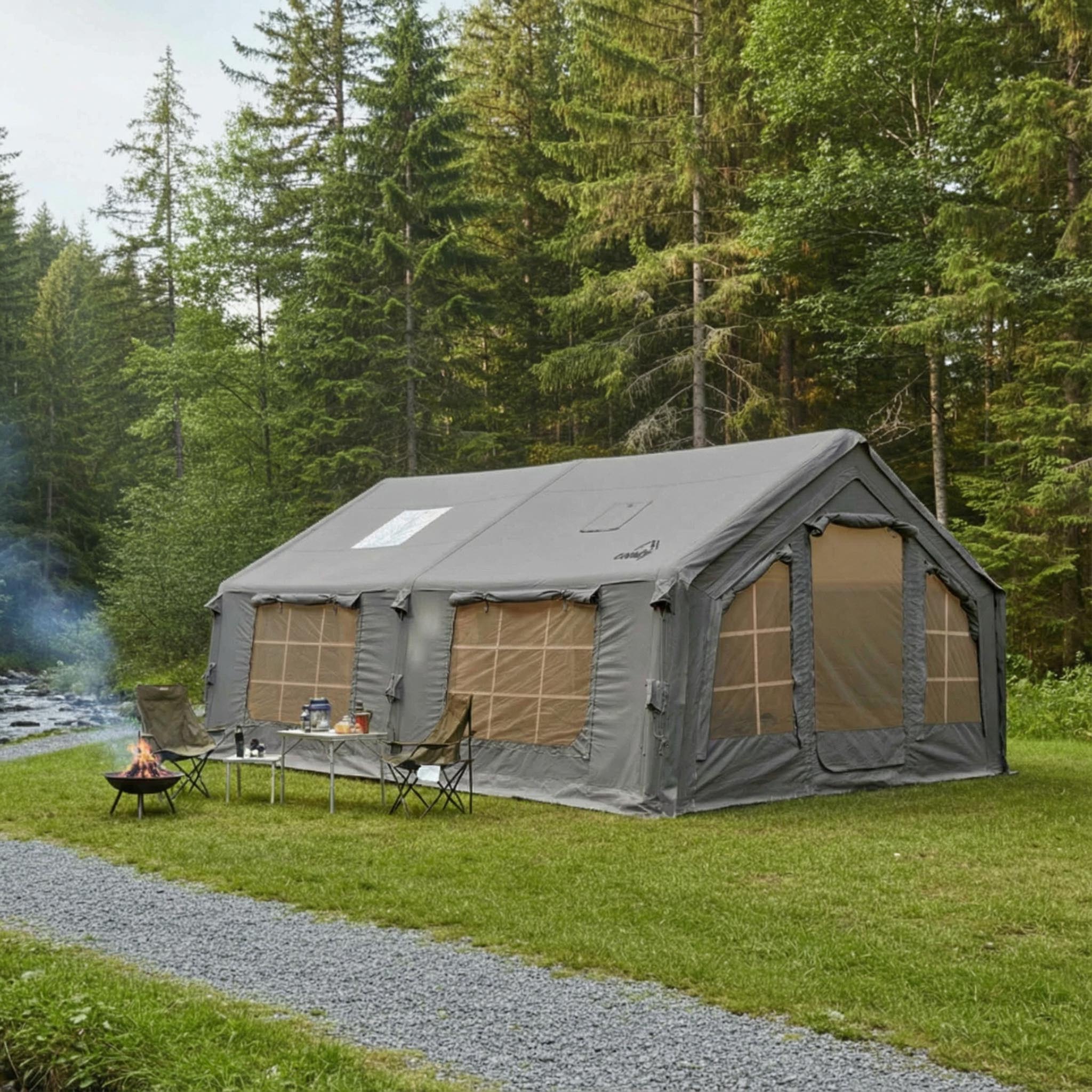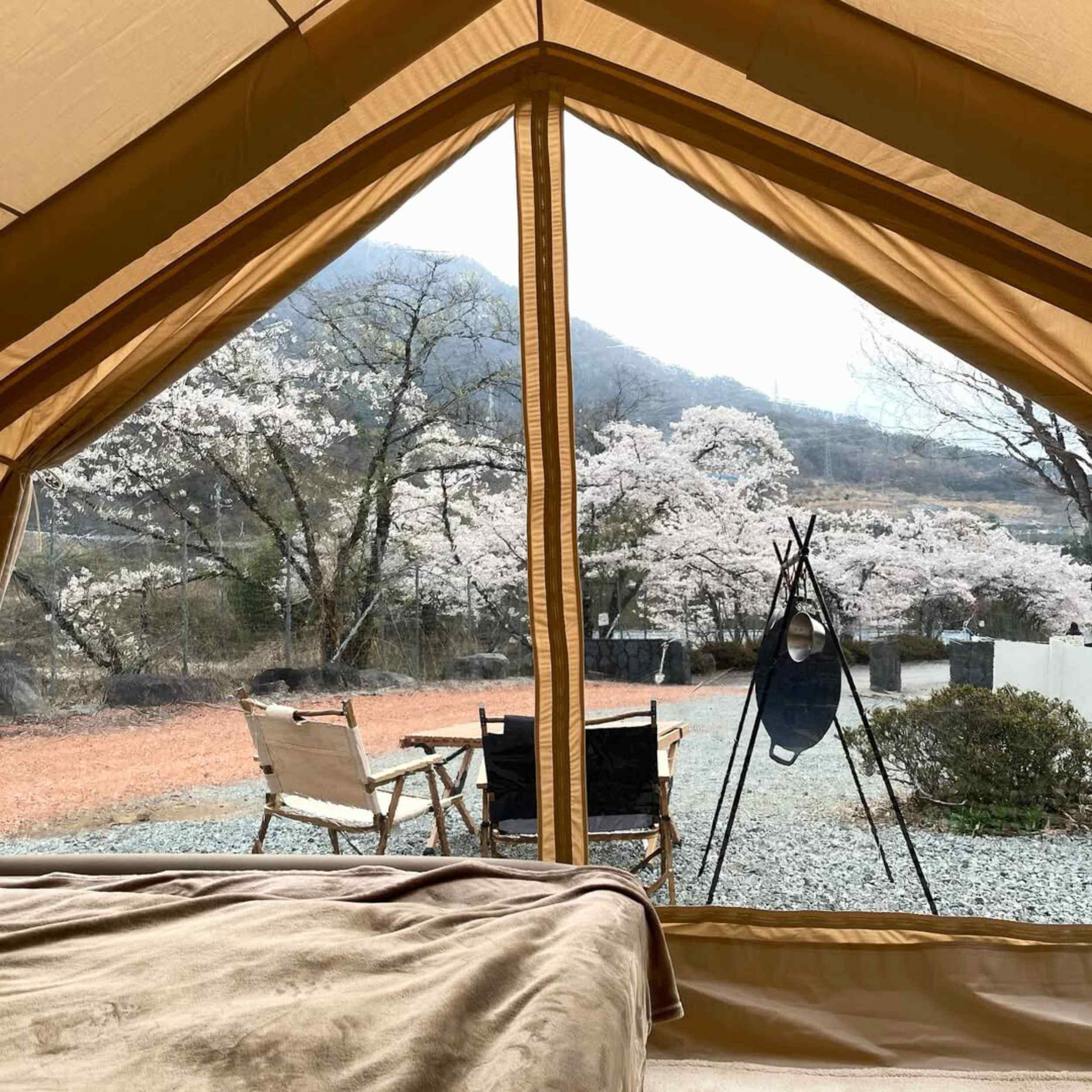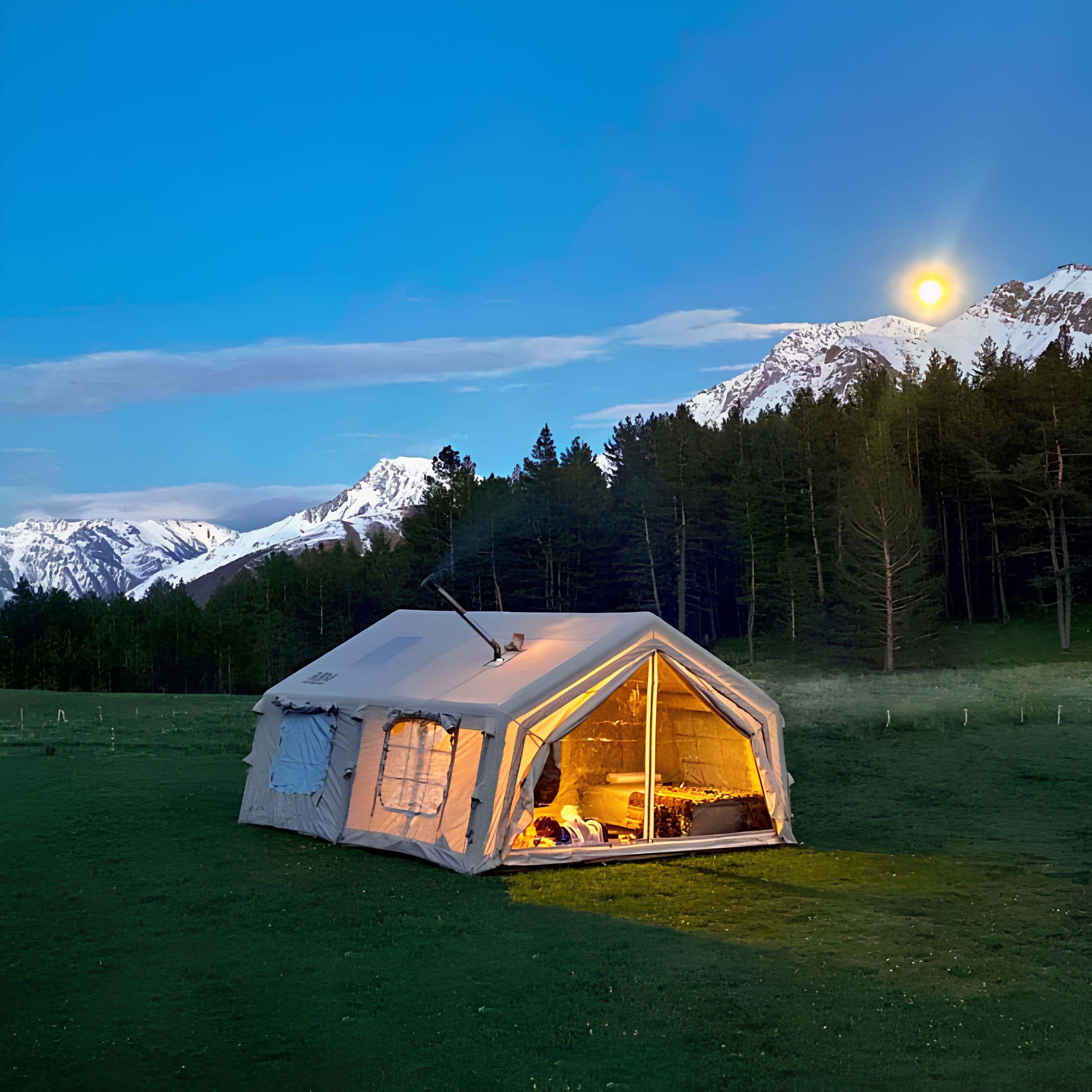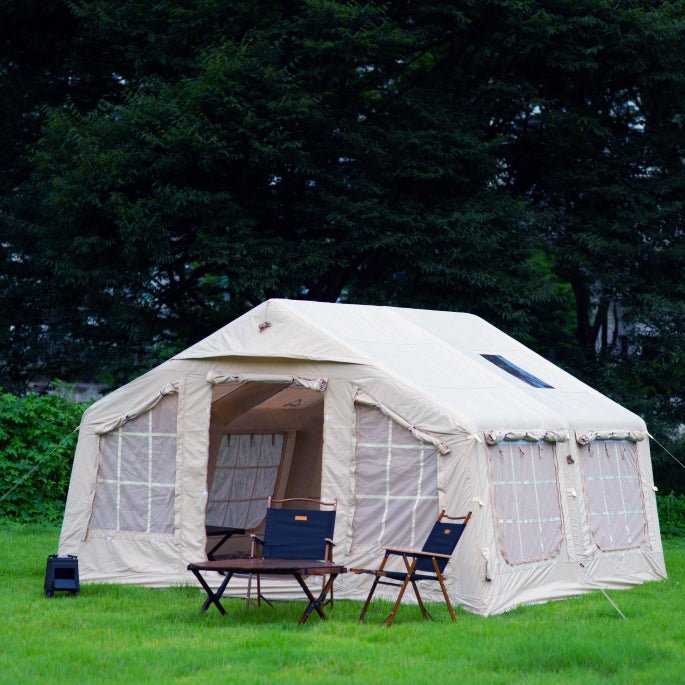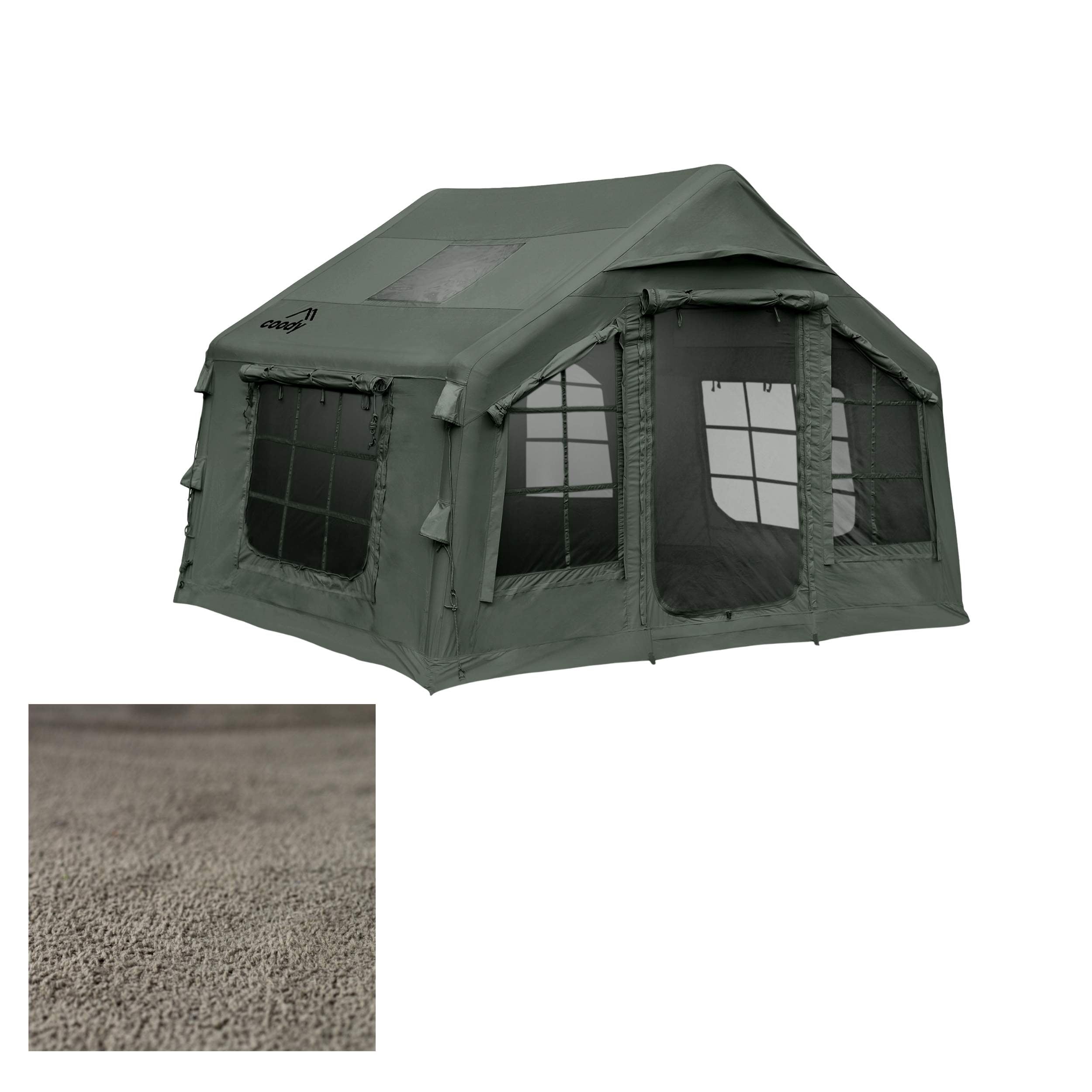

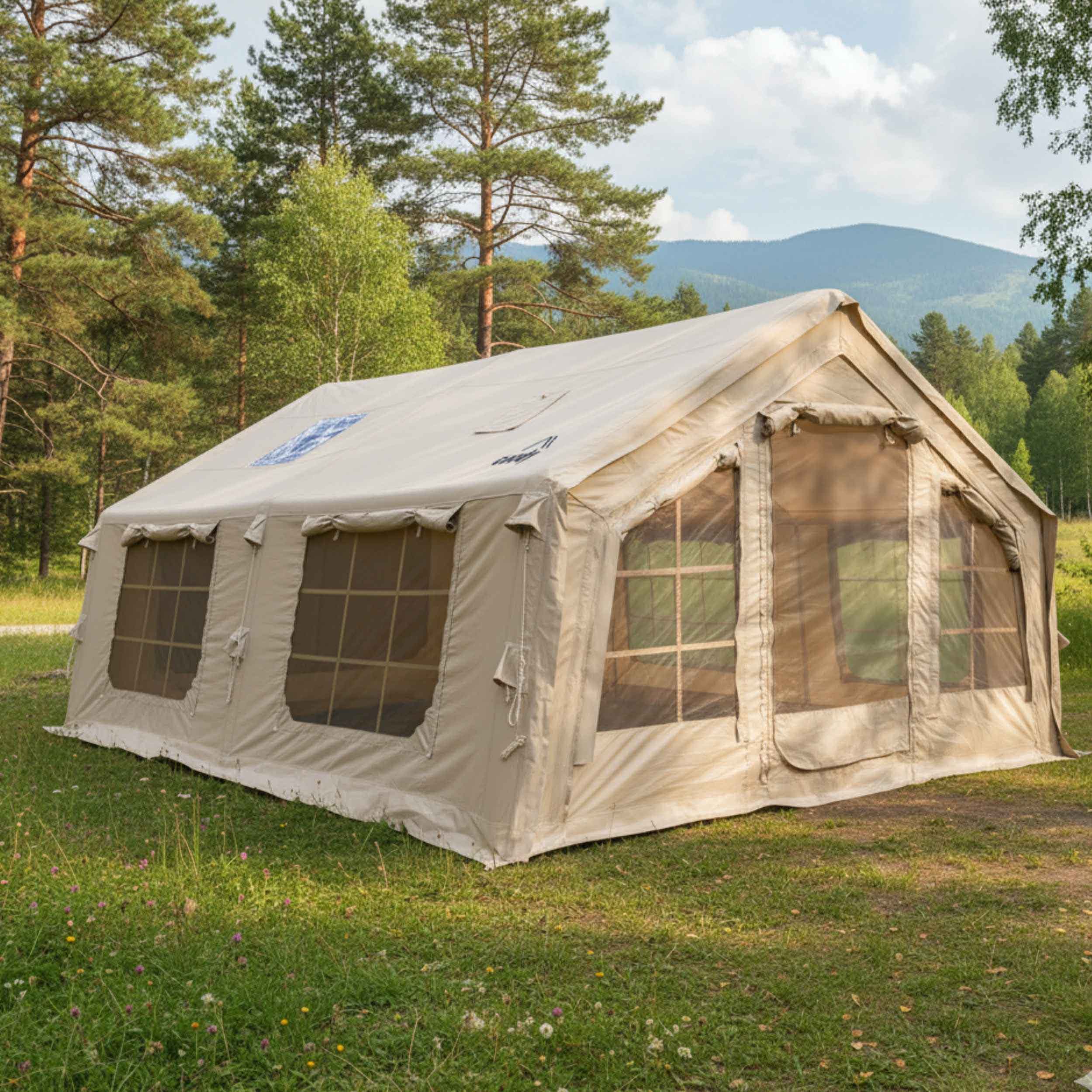

A waterproof camping tent is more than a fabric rating. Protection during heavy rain depends on the tent body, rainfly, floor system, site drainage, ventilation, anchoring, and the way the tent is dried and stored after use. Understanding how these parts work together is more useful than relying on a single number or an absolute waterproof claim.
Coody inflatable tents combine breathable TC fabric with a coated Oxford rainfly and model-specific floor systems. The air frame makes setup faster and provides structural support, while the fabrics and floor provide the actual barriers against rain and ground moisture.
What does a waterproof rating mean?
Waterproof ratings are commonly expressed in millimeters. The value describes the level of hydrostatic pressure a material can resist under test conditions. A higher number indicates greater resistance at the fabric level, but it does not guarantee that a complete tent will remain dry in every storm or on every campsite.
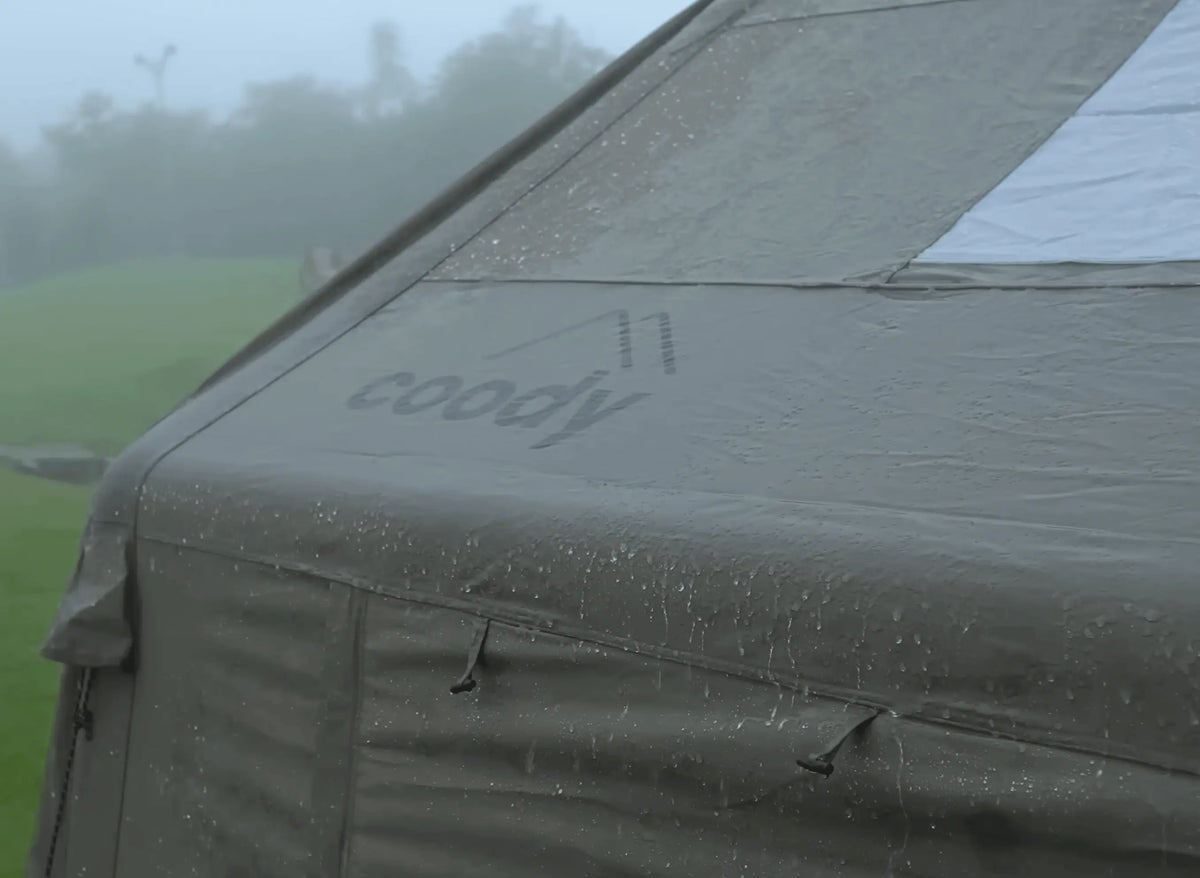
Coody inflatable tent bodies use 210 gsm TC fabric with a verified waterproof rating of 2000+ mm (PU2000+). The included rainflies are made from 420D Oxford fabric and are rated 3000+ mm (PU3000+). These are separate layers with different jobs: the TC body supports breathability, while the rainfly adds protection during prolonged rain, snow, and strong sun.
The TC fabric is a blend of 65% polyester and 35% cotton. Its breathability can help manage condensation when vents remain open and moisture is allowed to escape. It should not be described as condensation-proof, and the PU2000+ rating does not depend on a separate seasoning process.
Coody weather-performance specifications
- Tent waterproof rating - 2000+ mm (PU2000+)
- Rainfly waterproof rating - 3000+ mm (PU3000+)
- Wind resistance - Tested up to 72 km/h (45 mph)
- UV protection - UPF 50+
- Operating temperature - from -10 °C to +40 °C (14 °F to 104 °F)
- Seasons - Four-season
The wind figure is a test result, not a certification or a guarantee for every storm. Actual performance depends on correct inflation, ground conditions, guy-line tension, peg placement, wind direction, exposure, and changes in weather.

How the inflatable frame performs in wet weather
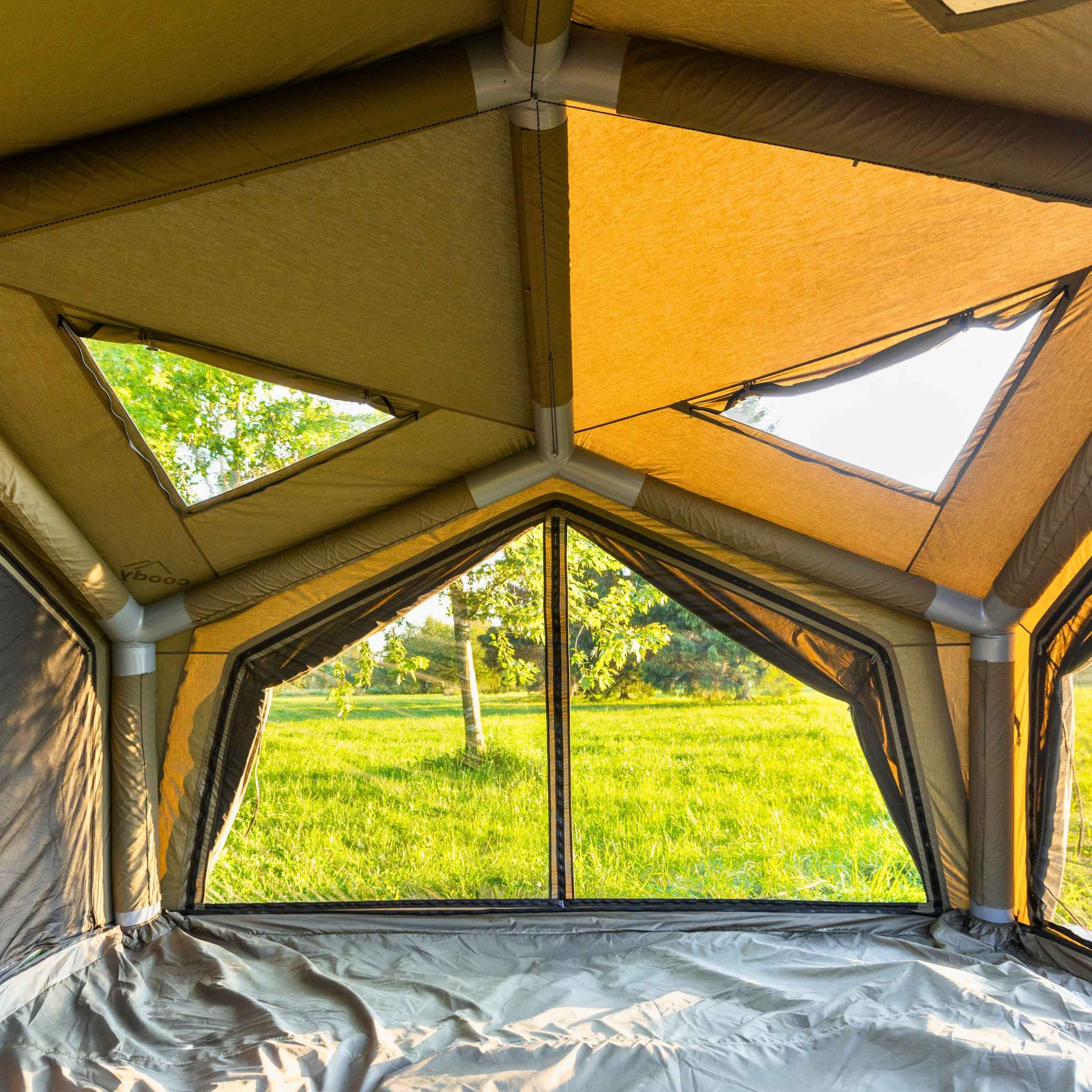
The inflatable frame affects setup and structural support; it does not create the tent's waterproof barrier. Coody air tubes are made from PVC, with a 15 cm (5.91") diameter and a 0.7 mm (0.03") wall thickness. Recommended pressure is 6-8 psi.
Each air frame is inflated and pressure-tested for 72 hours to check for air leaks. Before a trip, valves should be checked and the frame inflated to the recommended range. In cold weather, air pressure can decrease and may need to be checked again.
Why the floor system matters
Rain can reach a tent from above, but moisture can also enter the campsite from below. A tent should be placed on level, well-drained ground without sharp stones, roots, or debris. The floor must stay above pooling water; no fabric rating can compensate for pitching in a depression that collects runoff.
Coody floor construction varies by model, so the terms PVC, Oxford, removable, and integrated should not be used interchangeably. A separate fitted ground sheet can protect the tent floor from moisture, dirt, and abrasion. It should remain fully inside the tent footprint so rainwater does not collect between the ground sheet and the floor.
Coody inflatable tents for wet-weather camping
Coody Familia 17.2
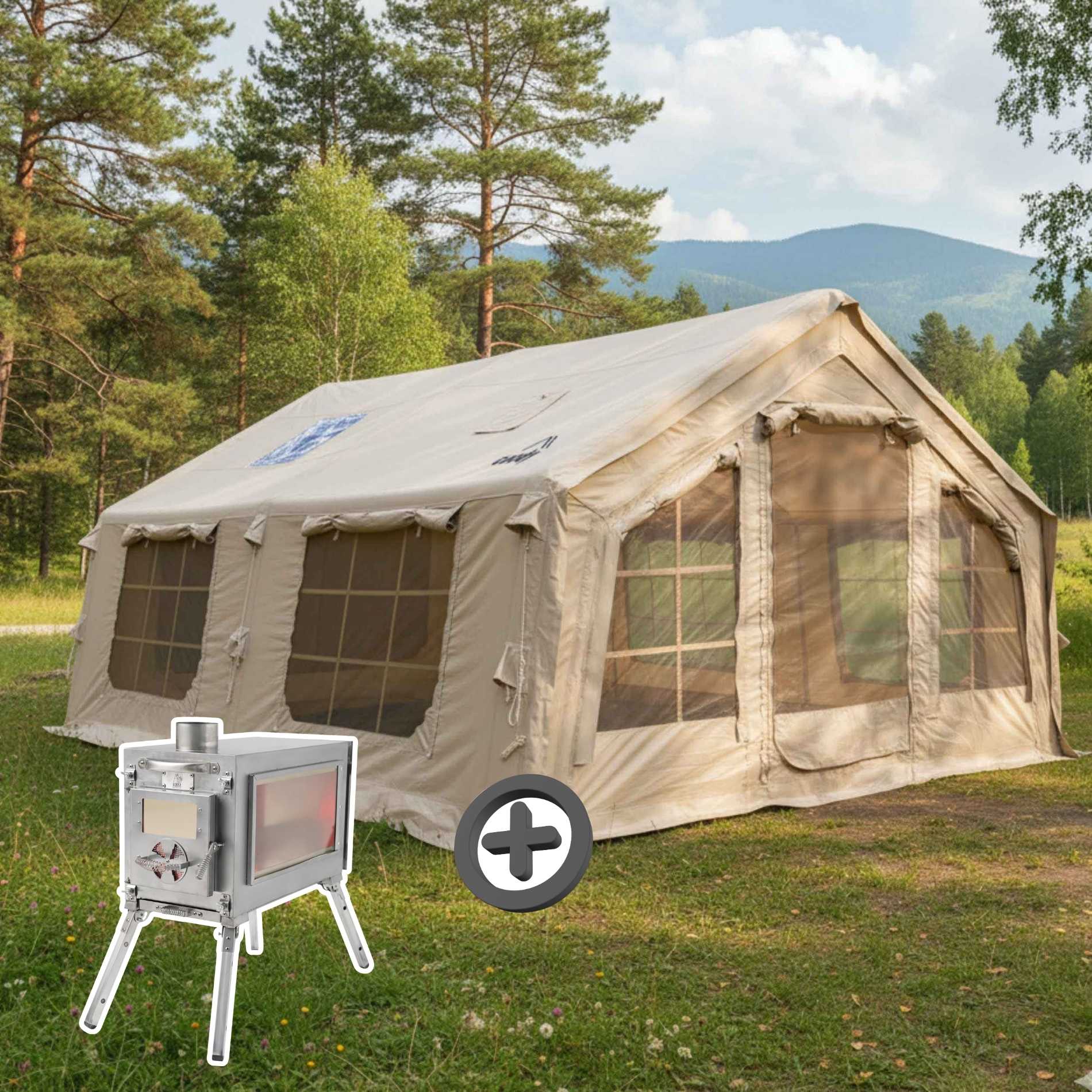
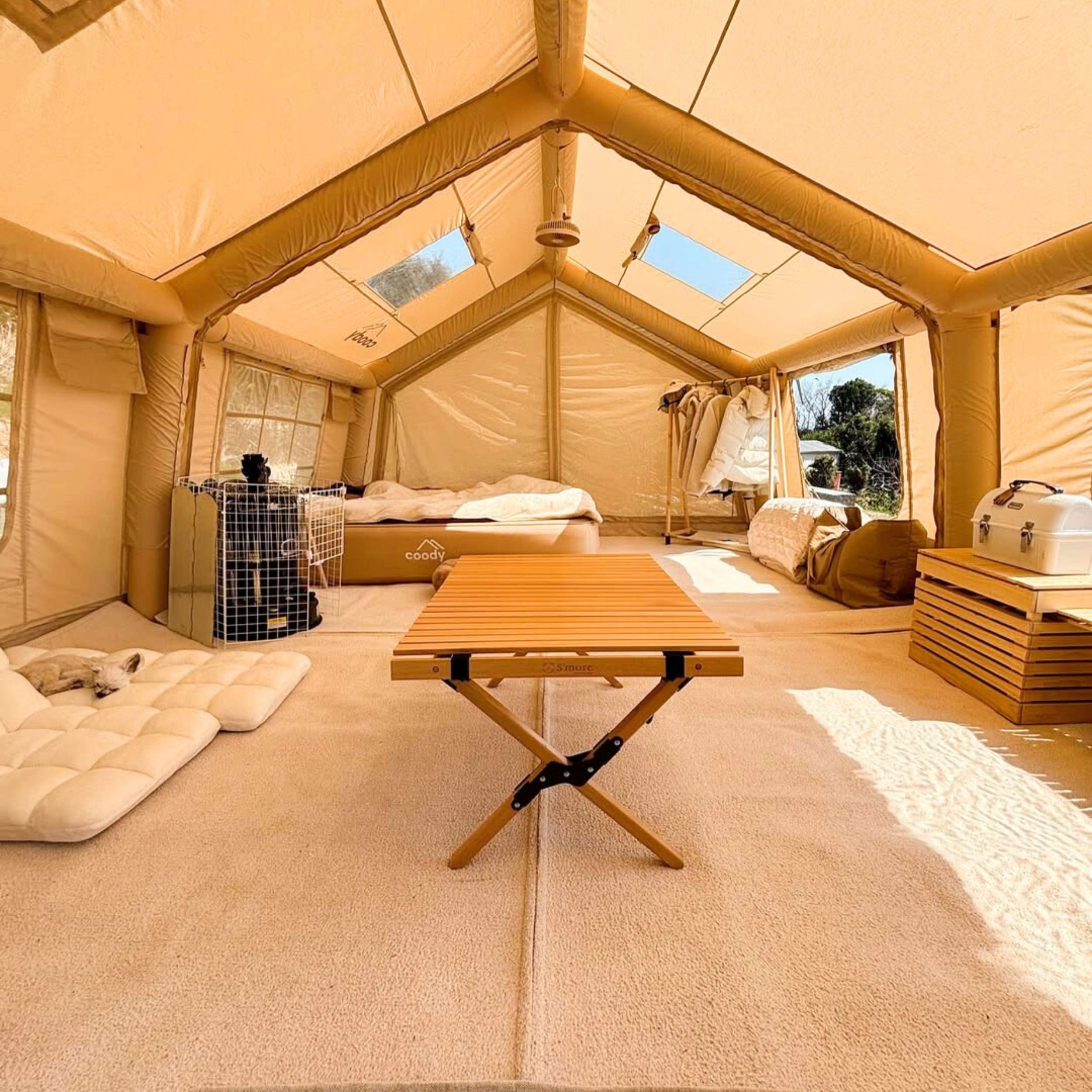
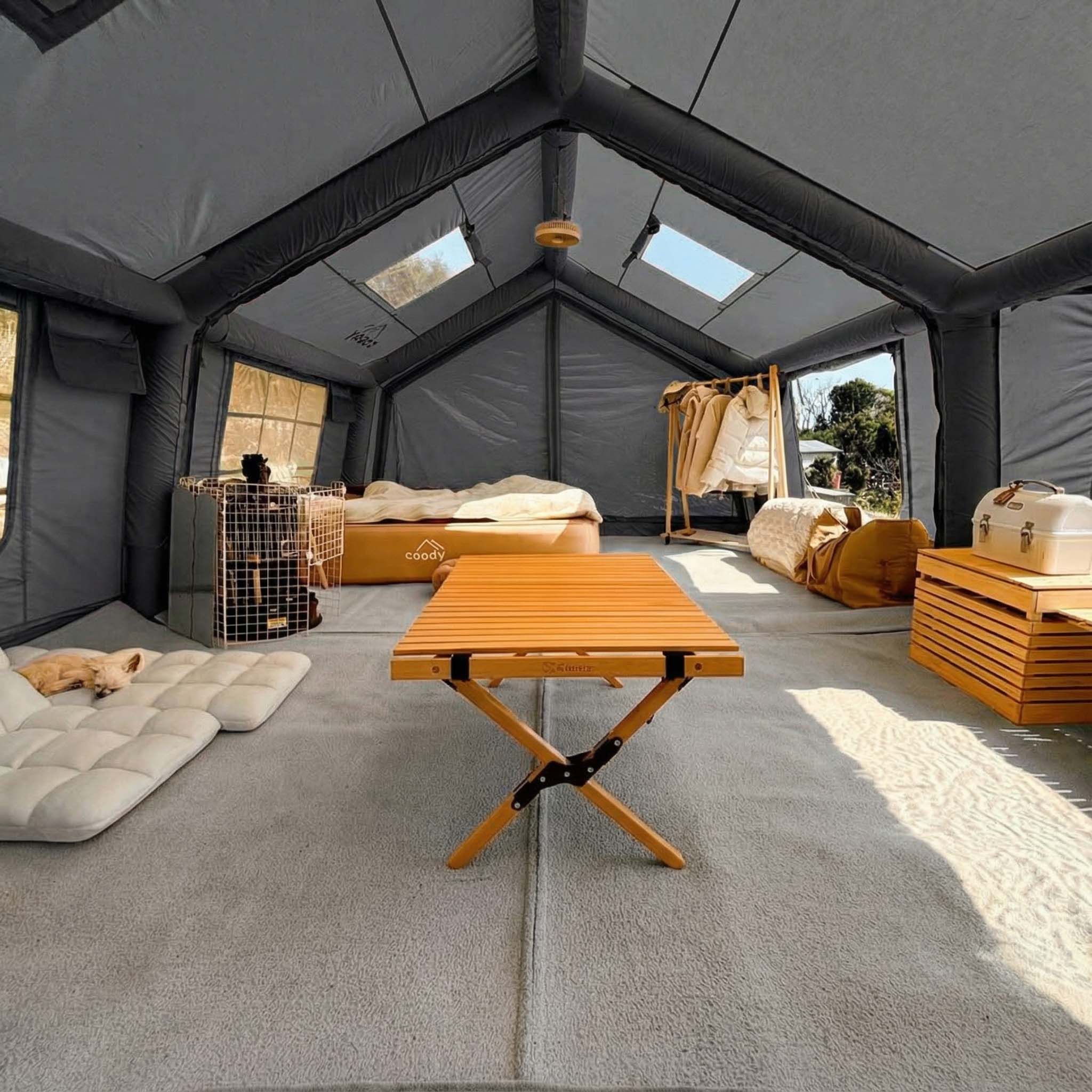
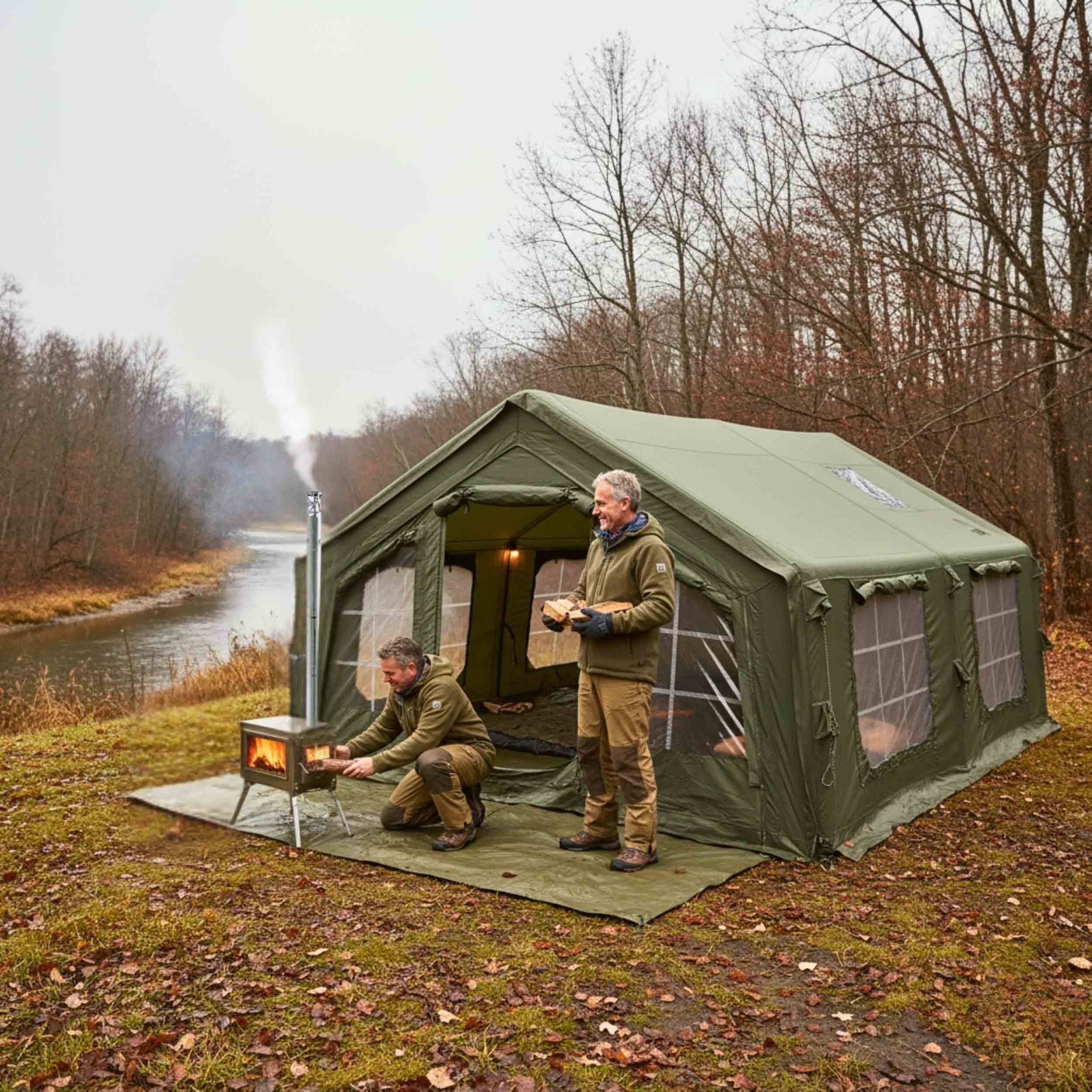
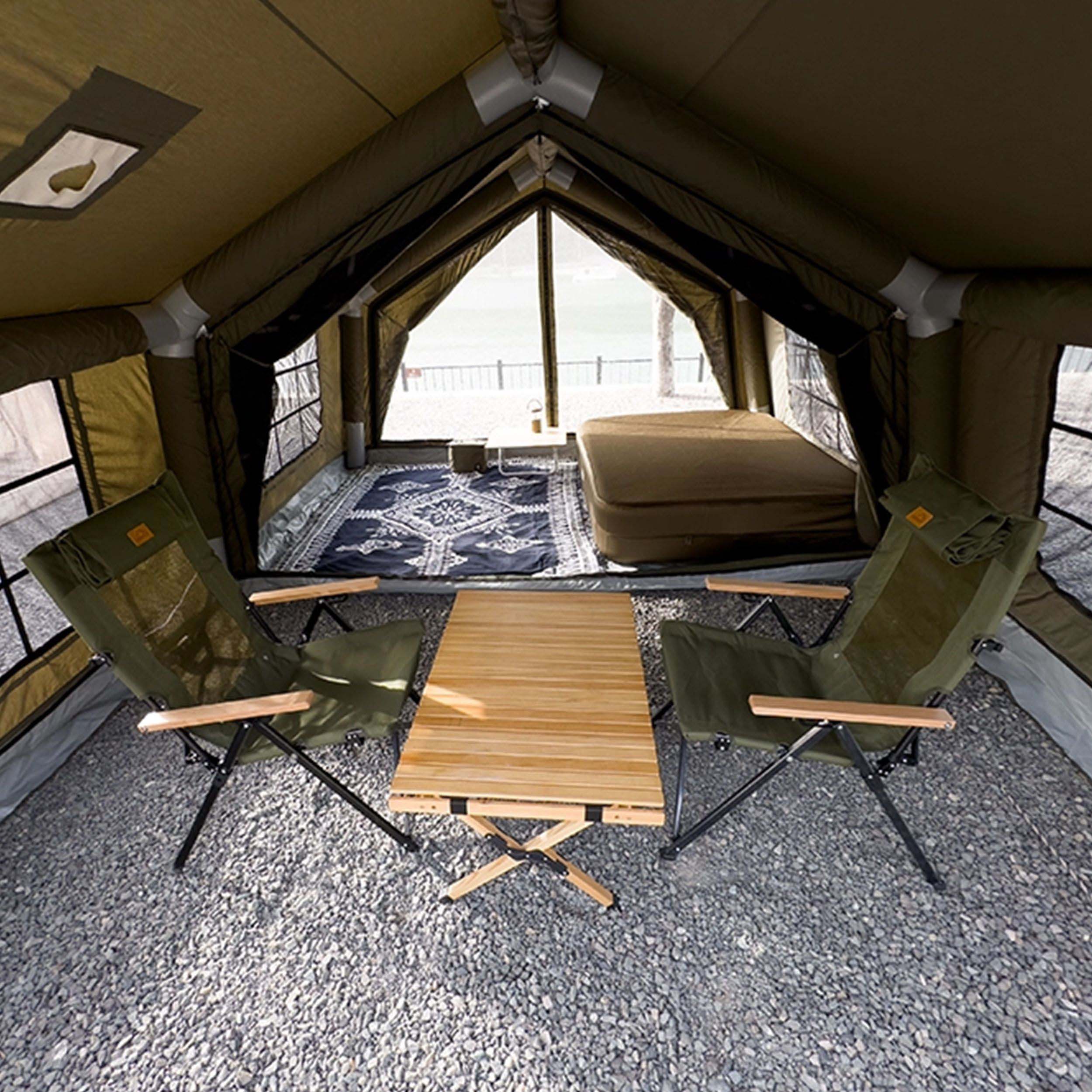
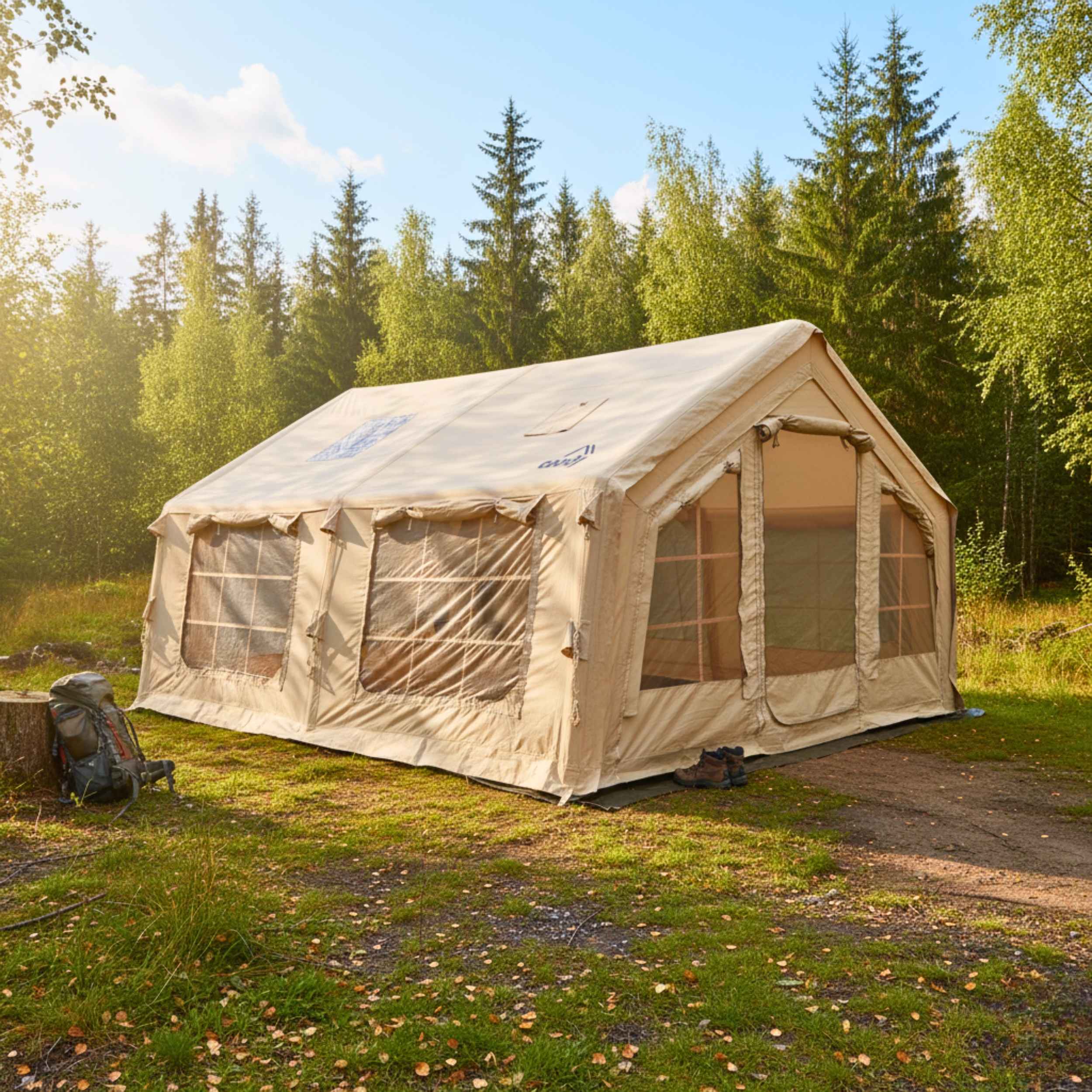
Familia 17.2 is a two-room inflatable hot tent for 2-10 people, with sleeping capacity for up to 10 people in sleeping bags. It offers 17.2 m² (185.14 ft²) of floor area and sets up in approximately 10 minutes. Exterior size is 3.6 x 4.8 x 2.2 m, and ceiling height is 2.04 m (80.31").
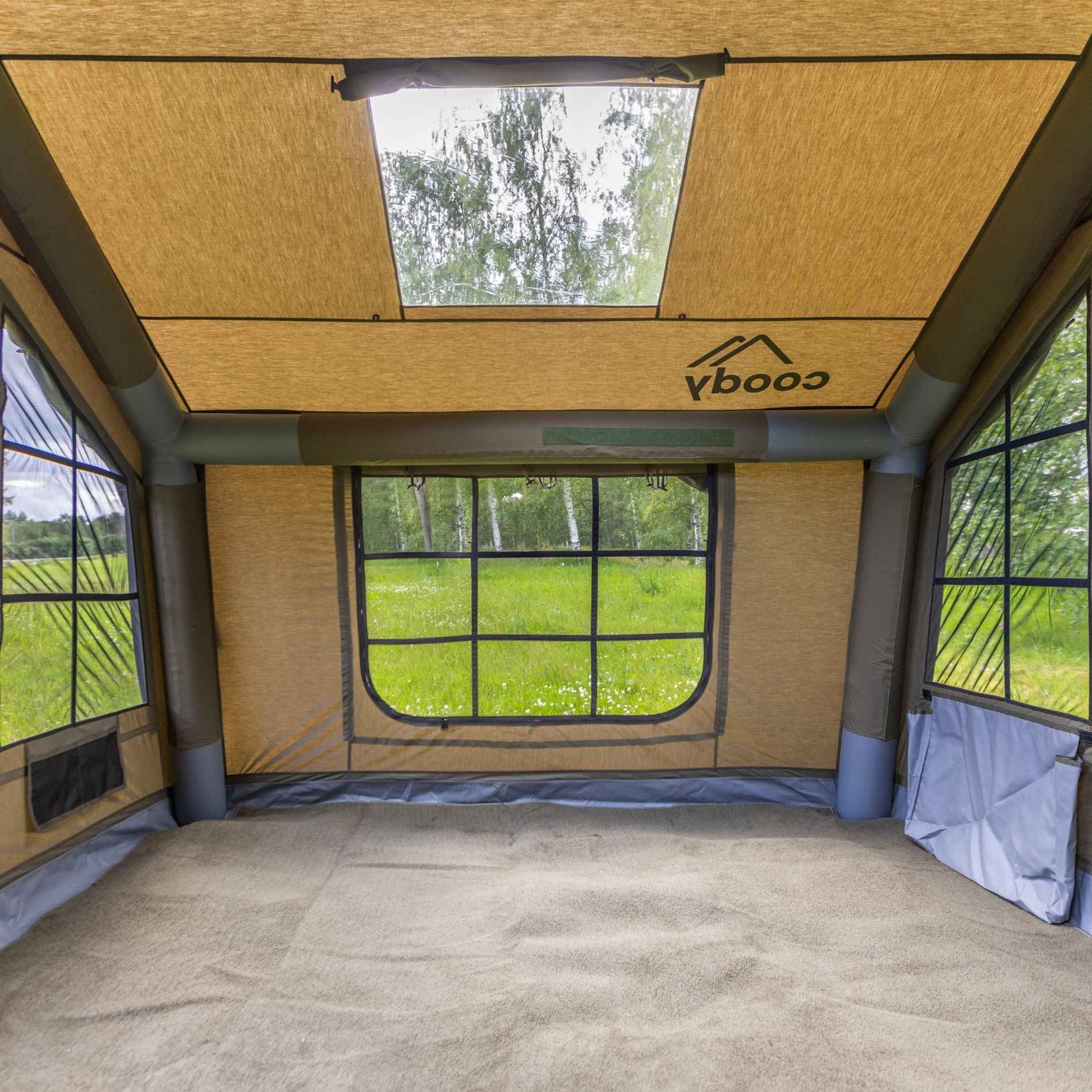
The front room has a removable Oxford floor, while the rear room has an integrated 550 gsm PVC floor. Six windows, including two roof windows, two doors, mosquito protection, a removable room divider, and a 10 cm (3.94") stove jack make the layout adaptable for sleeping and living zones.
Coody Aurora Dome
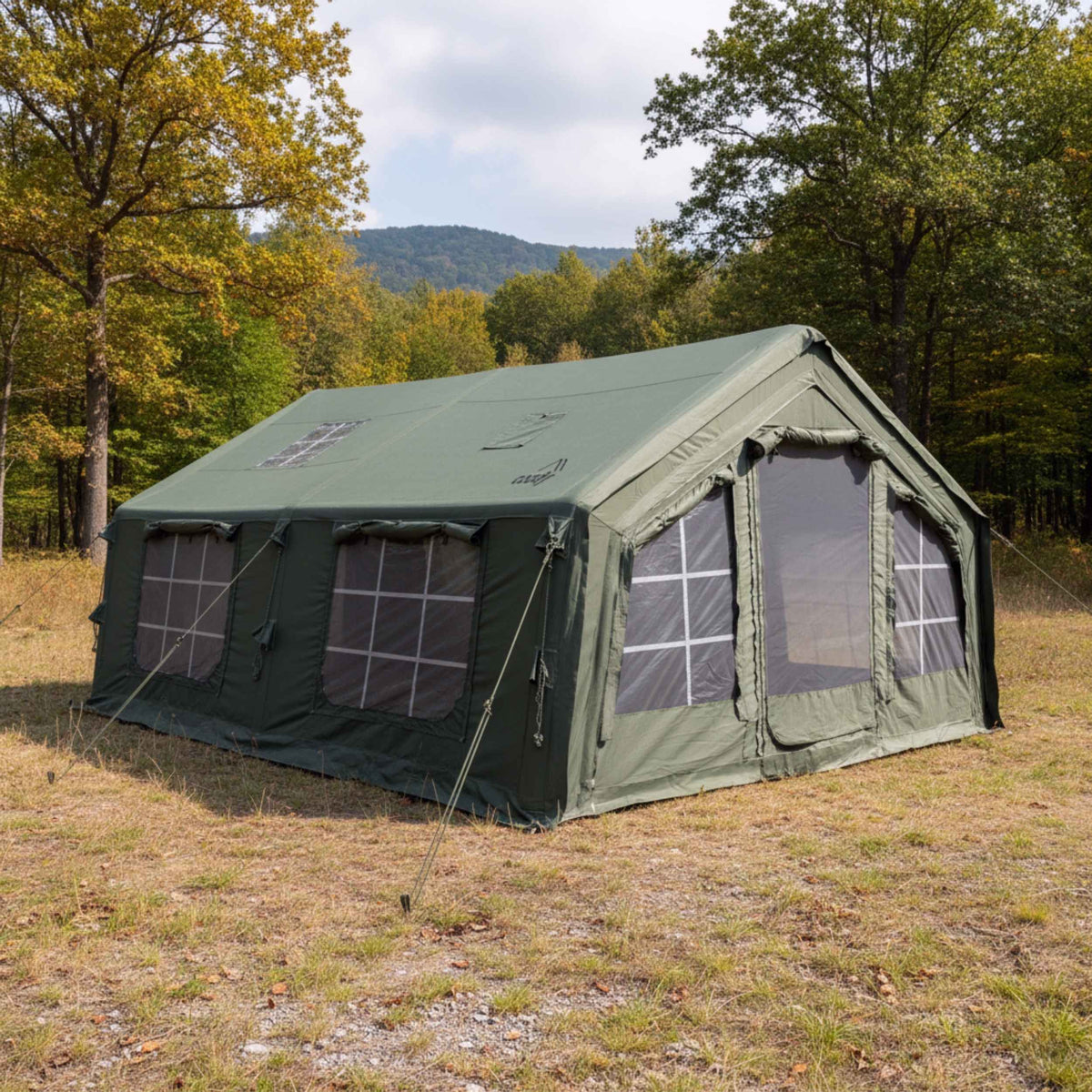
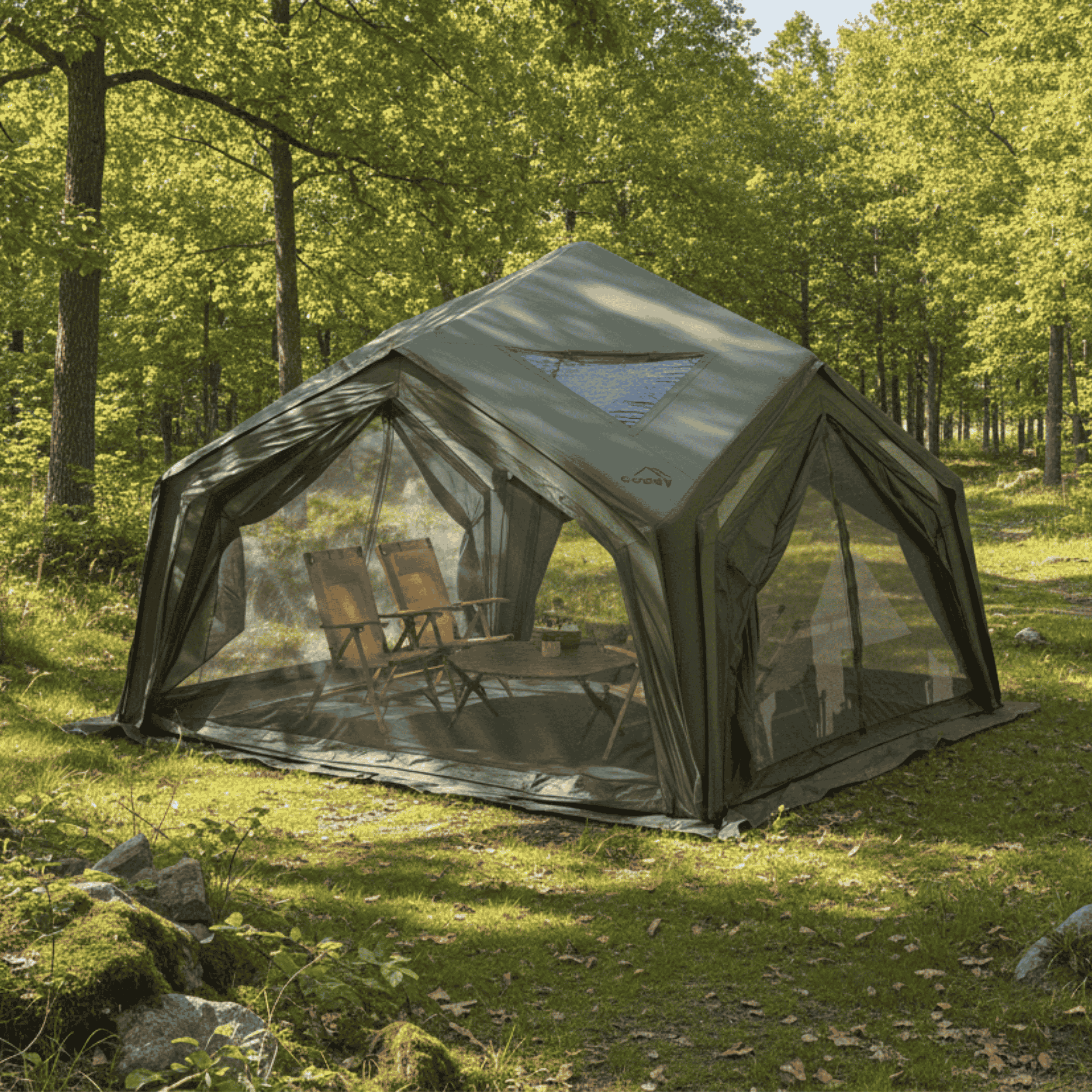
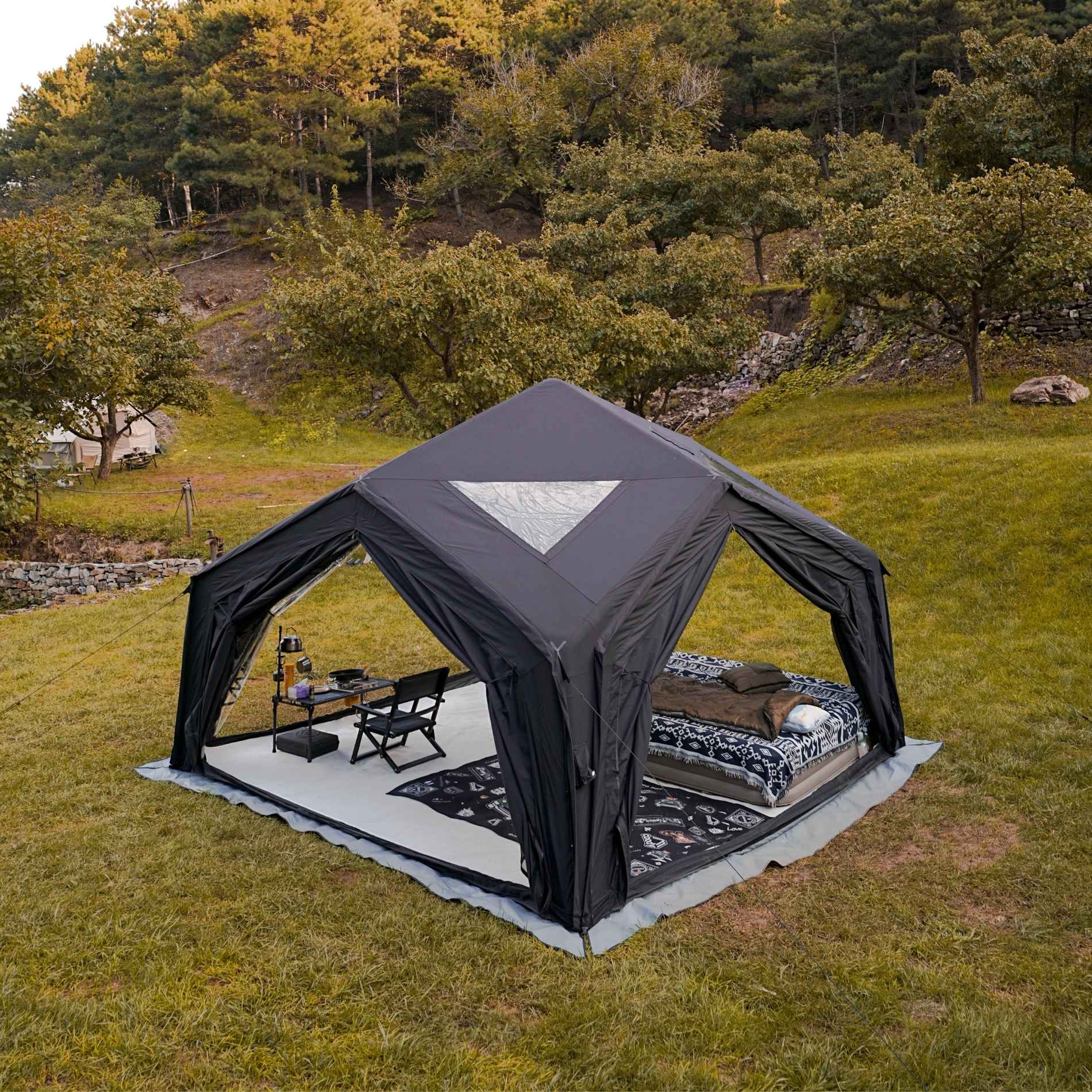
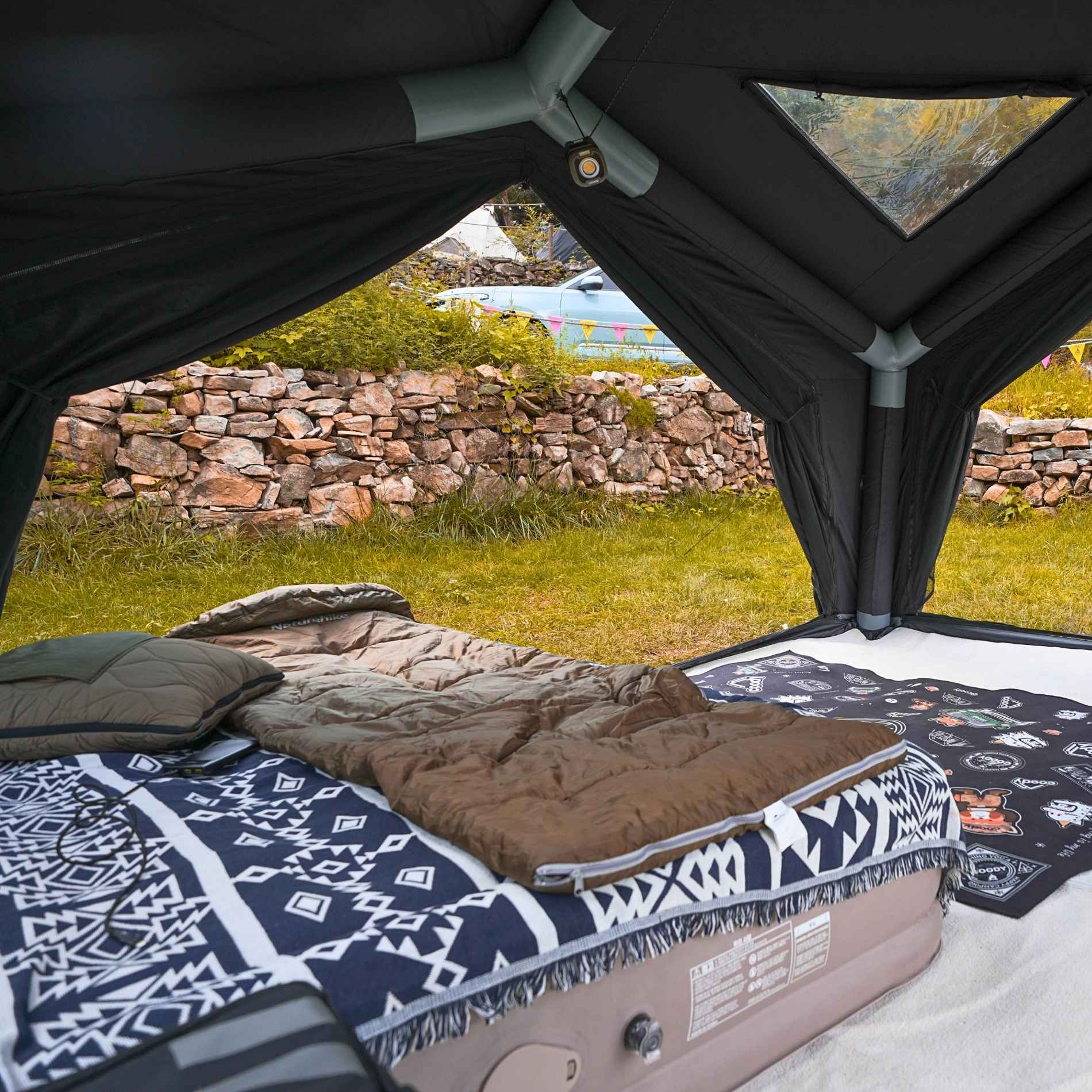
Aurora Dome is an inflatable dome tent for 2-4 people. It provides 16.4 m² (176.53 ft²) of floor area, measures 5 m (196.85") corner-to-corner and 4.6 m (181.10") wall-to-wall, and has an exterior height of 2.5 m (98.42") with a 2.34 m (92.13") ceiling height. Setup time is approximately 10 minutes.
The tent has six roof windows, five wall windows, and three doors. Its Oxford floor is removable, and an additional PVC ground sheet is included. The verified shared Coody ratings for tent-body waterproofing, rainfly waterproofing, wind resistance, UV protection, and operating temperature apply to this model.
Coody Bestona
Bestona is an octagonal inflatable tent for 2-4 people. It offers 12 m² (129.17 ft²) of floor area, measures 3.8 x 3.8 x 2.7 m, and has a ceiling height of 2.55 m (100.39"). Setup takes approximately 10 minutes.
Bestona uses a PVC floor and has six windows, including four roof windows, plus two doors. The rainfly, hand pump, TPU panels, ropes, pegs, and storage bags are supplied with the tent. As with the other models, wet-weather performance depends on correct inflation, anchoring, rainfly use, ventilation, and campsite drainage.
Coody 10.0 Pro
Coody 10.0 Pro is a one-room inflatable hot tent for 2-4 people, with sleeping capacity for up to four people in sleeping bags. It has 10 m² (107.64 ft²) of floor area and a removable Oxford floor. Setup takes approximately 6 minutes.
The tent measures 3.6 x 2.8 x 2.3 m and has a 2.14 m (84.25") ceiling height. It includes four windows, including two roof windows, two doors, and a 10 cm (3.94") stove jack. Net weight is 42.6 kg (93.92 lb), and gross packed weight is 47 kg (103.62 lb). The floor is removable Oxford, not PVC.
Ready for Any Weather? Whether you need the massive Familia 17.2 for a large group or the compact Aurora Dome for a weekend getaway, all Coody tents feature PU2000+ breathable canvas and PU3000+ rainflies to keep you completely dry. Choose your storm-ready shelter below.
Quick comparison
|
Model |
Capacity |
Floor area |
Setup |
Floor system |
|
Familia 17.2 |
2-10 |
17.2 m² |
10 min |
Removable Oxford front; integrated PVC rear |
|
Aurora Dome |
2-4 |
16.4 m² |
10 min |
Removable Oxford; additional PVC ground sheet included |
|
Bestona |
2-4 |
12 m² |
10 min |
PVC |
|
10.0 Pro |
2-4 |
10 m² |
6 min |
Removable Oxford |
How to set up a tent for heavy rain
- Choose level, raised ground with natural drainage; avoid depressions where runoff can collect.
- Remove stones, roots, branches, and other sharp objects before laying out the tent or ground sheet.
- Keep a separate ground sheet fully inside the tent footprint to reduce water pooling between layers.
- Inflate the air frame to 6-8 psi and make sure every valve cap is closed securely.
- Install all required pegs and guy lines and recheck their tension as weather changes.
- Use the supplied rainfly during prolonged rain, snow, or strong sun.
- Keep ventilation openings partly open to allow moisture from breathing, cooking, and wet clothing to escape.
- Keep wet footwear and gear away from sleeping bags and wipe away accumulated interior moisture when needed.
Drying and storage after wet-weather use
Never store a Coody tent while it is damp. Release the air completely, unfold any trapped floor or fabric sections, and allow the tent and rainfly to dry before packing. Moisture left in folded TC fabric can lead to mold, odor, staining, and material deterioration.
The verified operating range is from -10 °C to +40 °C (14 °F to 104 °F). After use below 0 °C (32 °F), dry the tent completely in a warm, dry indoor space before storage. Cold PVC can become stiff, so do not force tight folds while the floor or air tubes are still cold.
Frequently asked questions
Does PU2000+ mean a tent is completely waterproof?
Should the rainfly be installed in heavy rain?
Is condensation the same as a leak?
Can Coody inflatable tents be used below freezing?
Conclusion
Choosing a waterproof camping tent requires more than comparing one fabric number. Coody tent bodies are rated PU2000+, the included rainflies are rated PU3000+, and the line has been tested for wind resistance up to 72 km/h (45 mph). The right model then depends on group size, floor construction, room layout, setup time, and transport weight. Correct site selection, full rainfly coverage, secure anchoring, ventilation, and complete drying remain essential parts of wet-weather tent care.