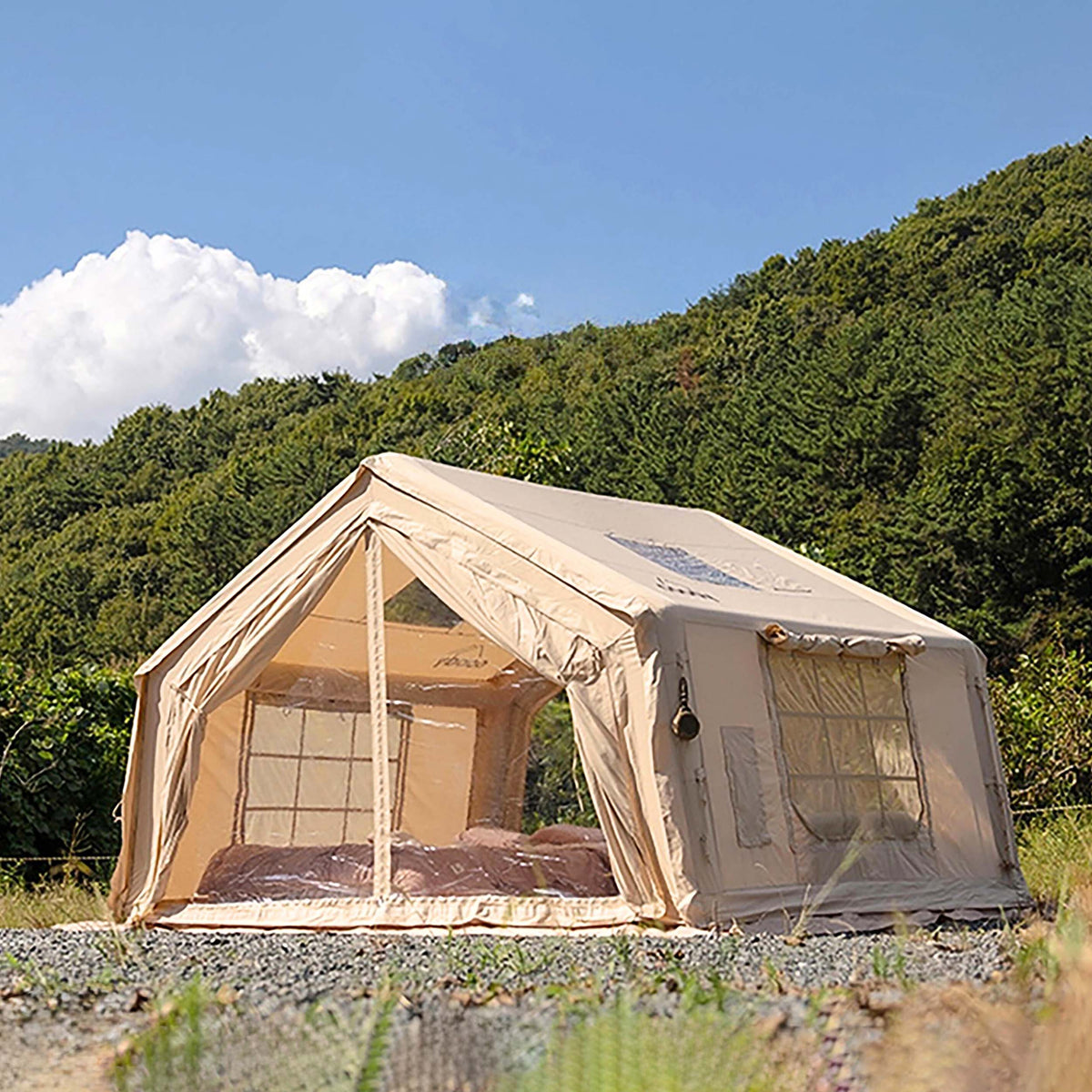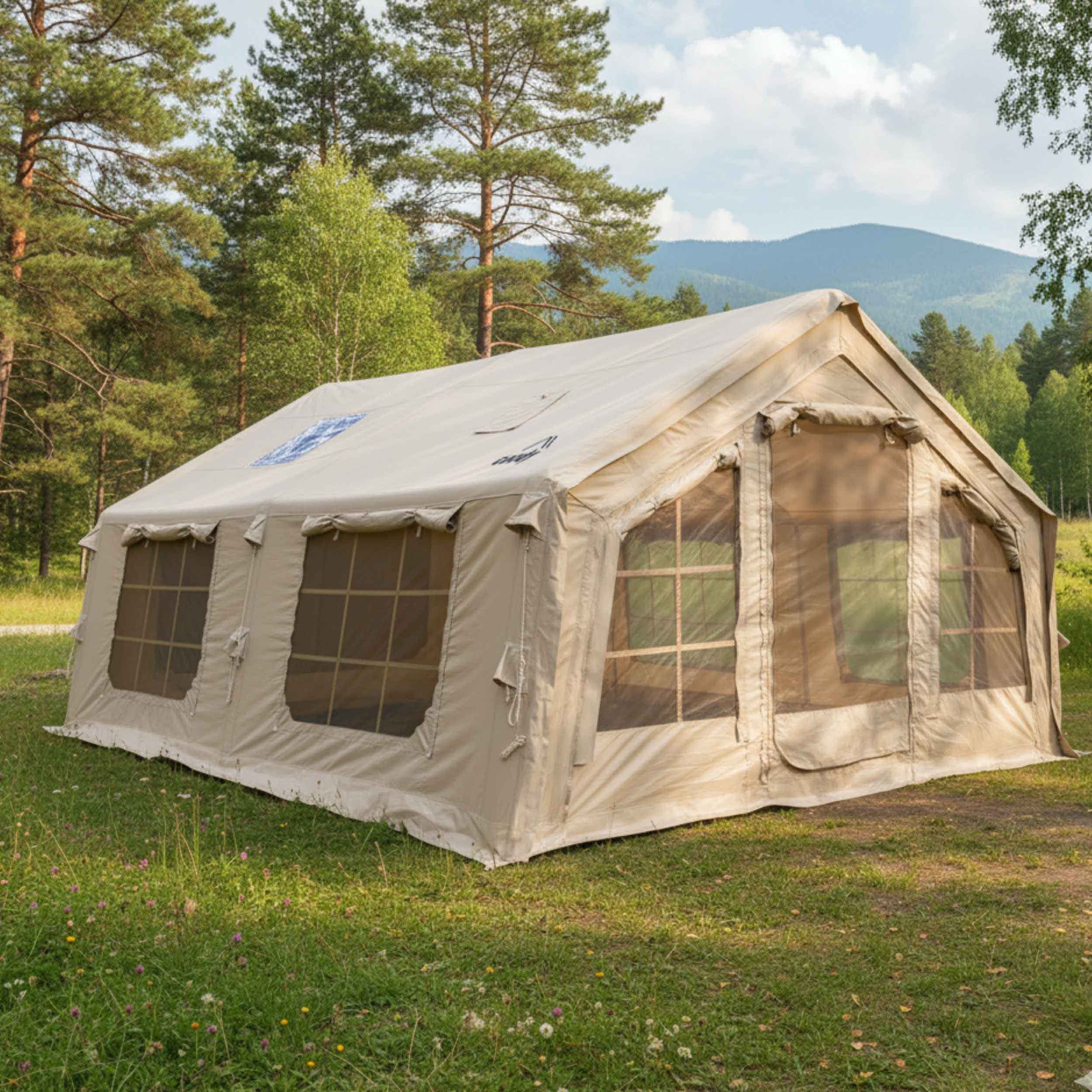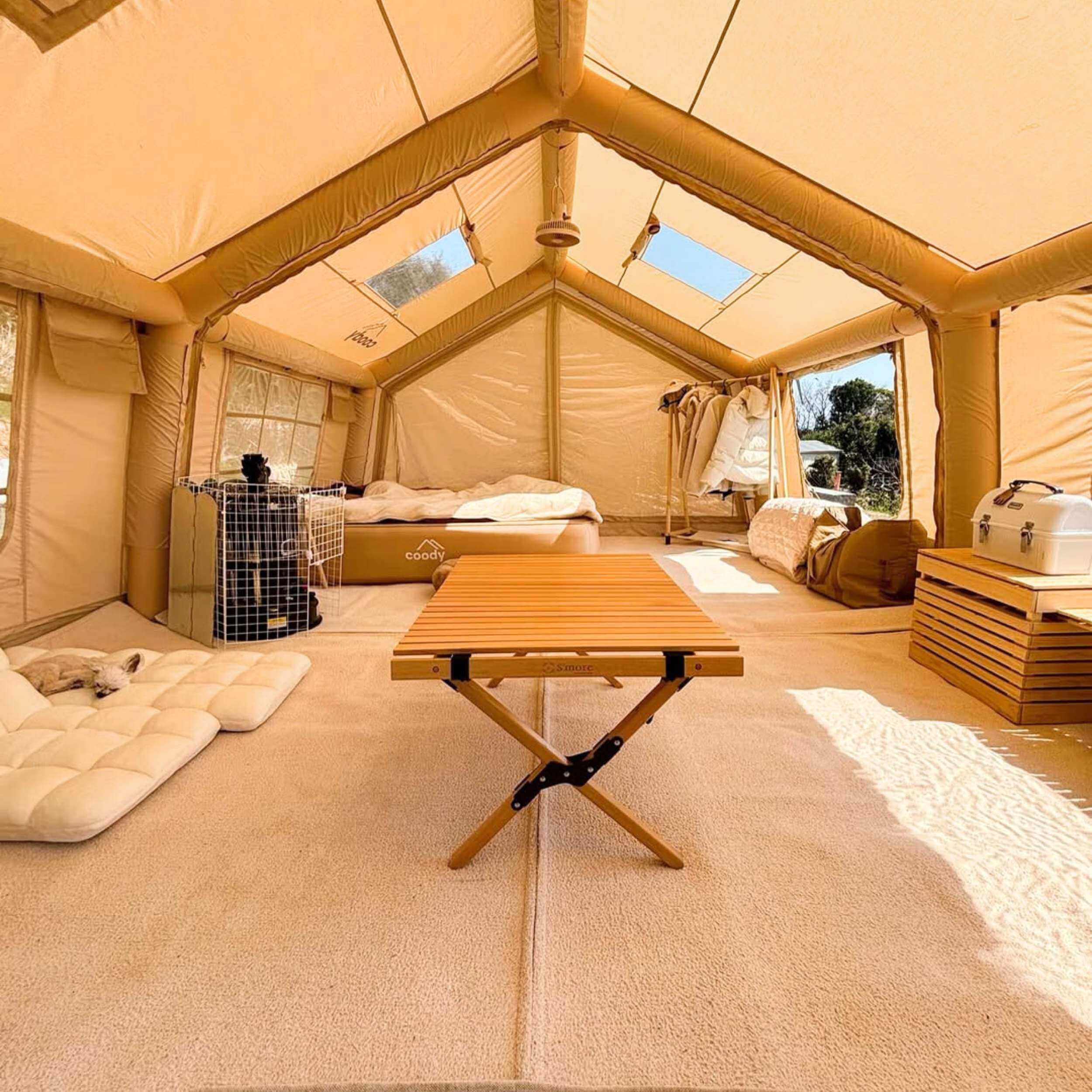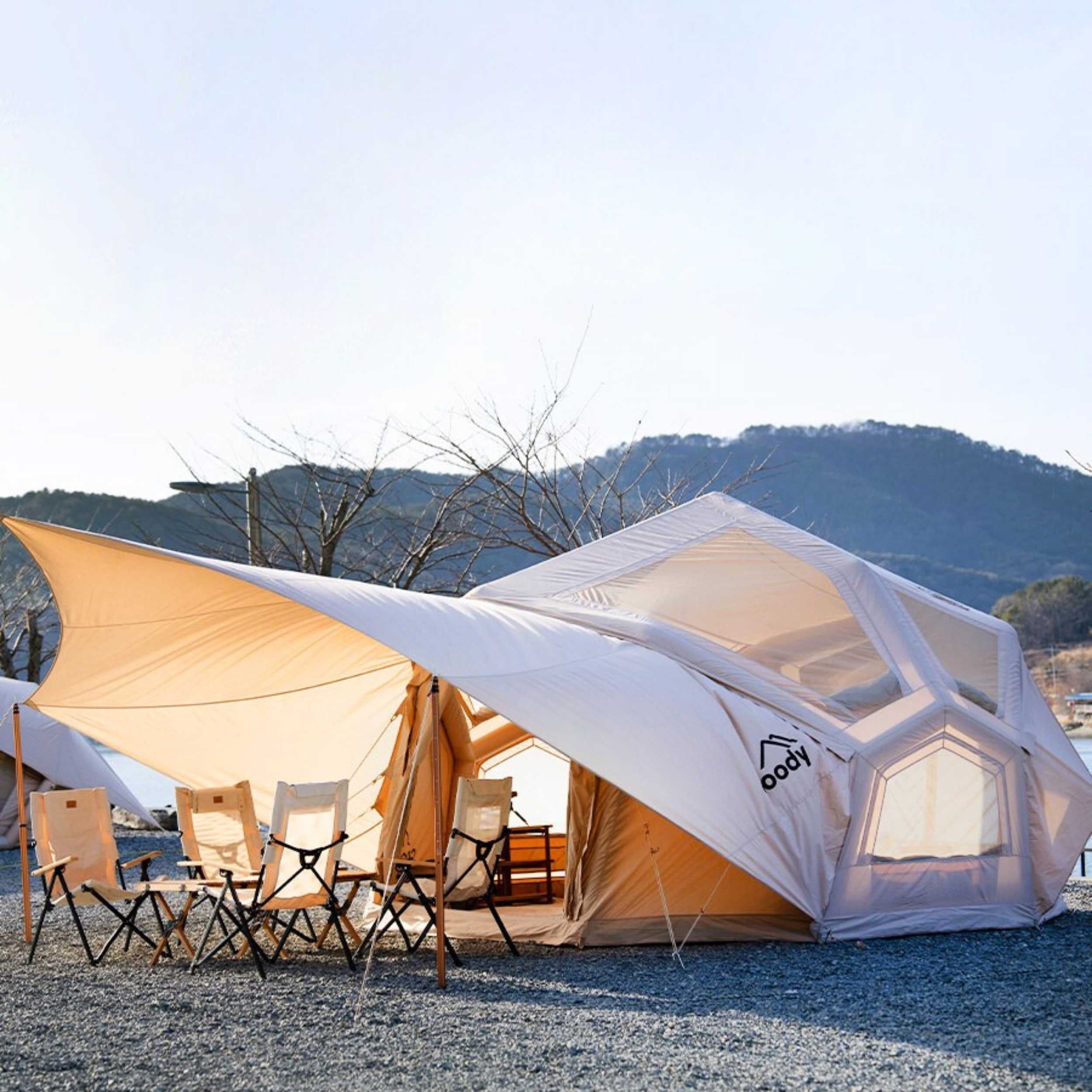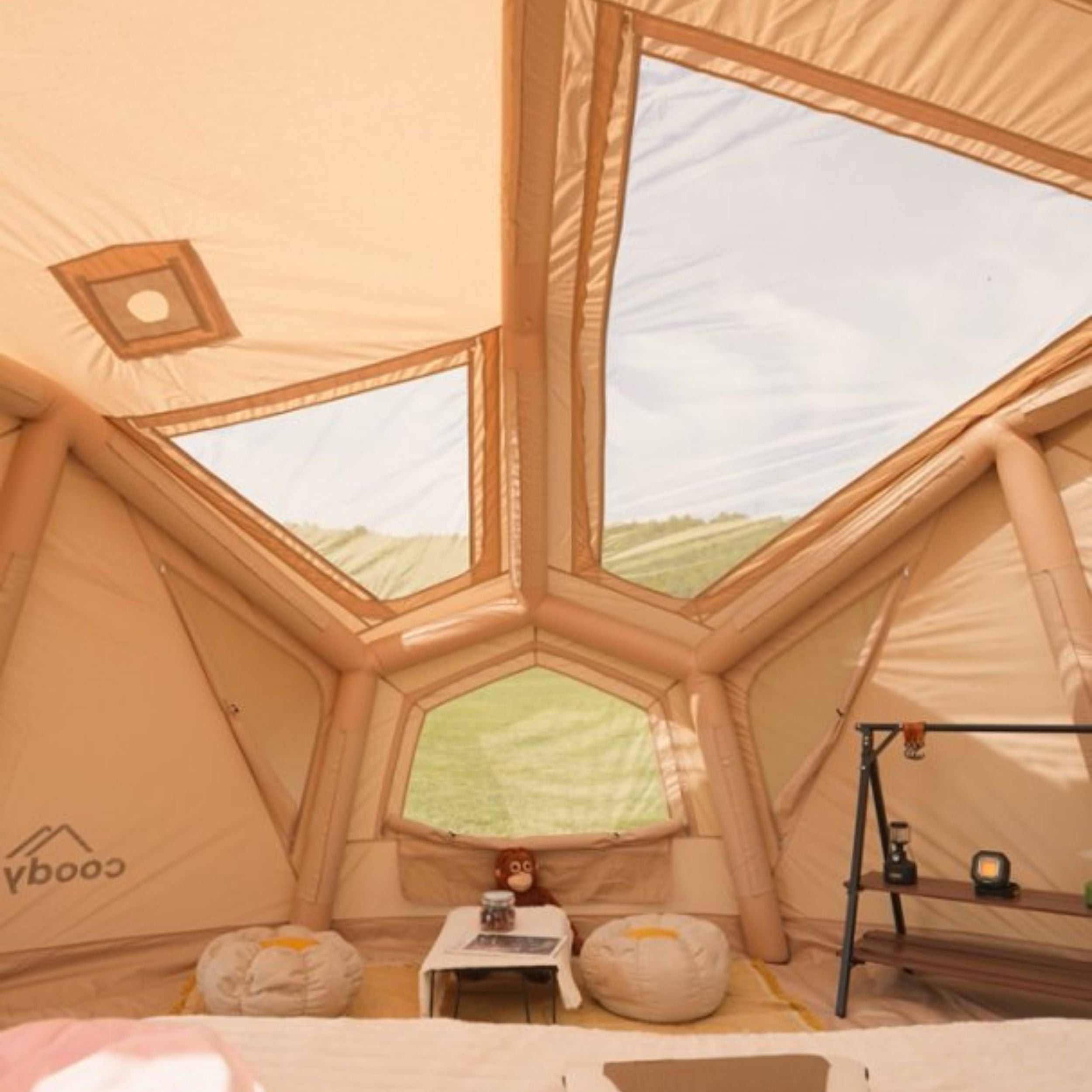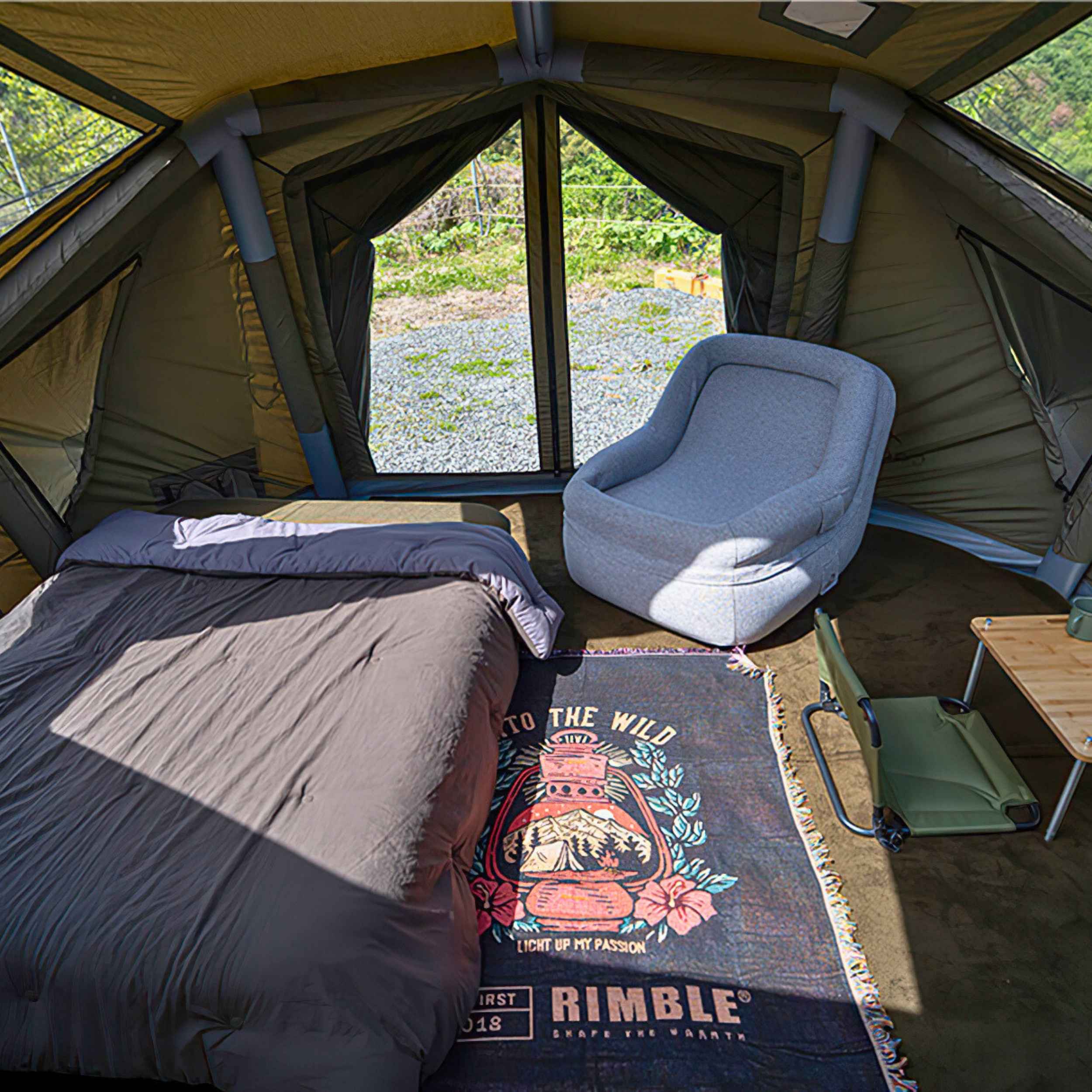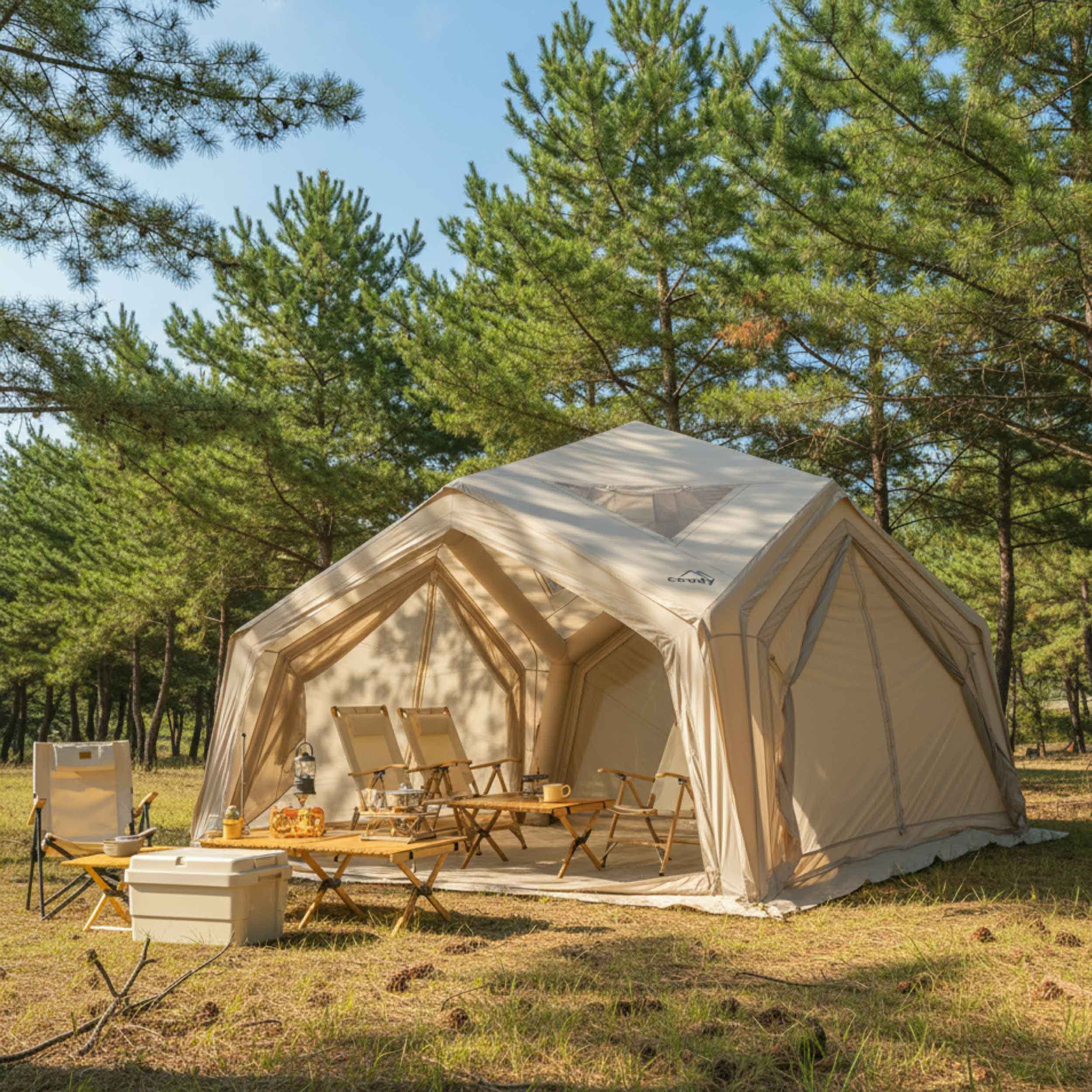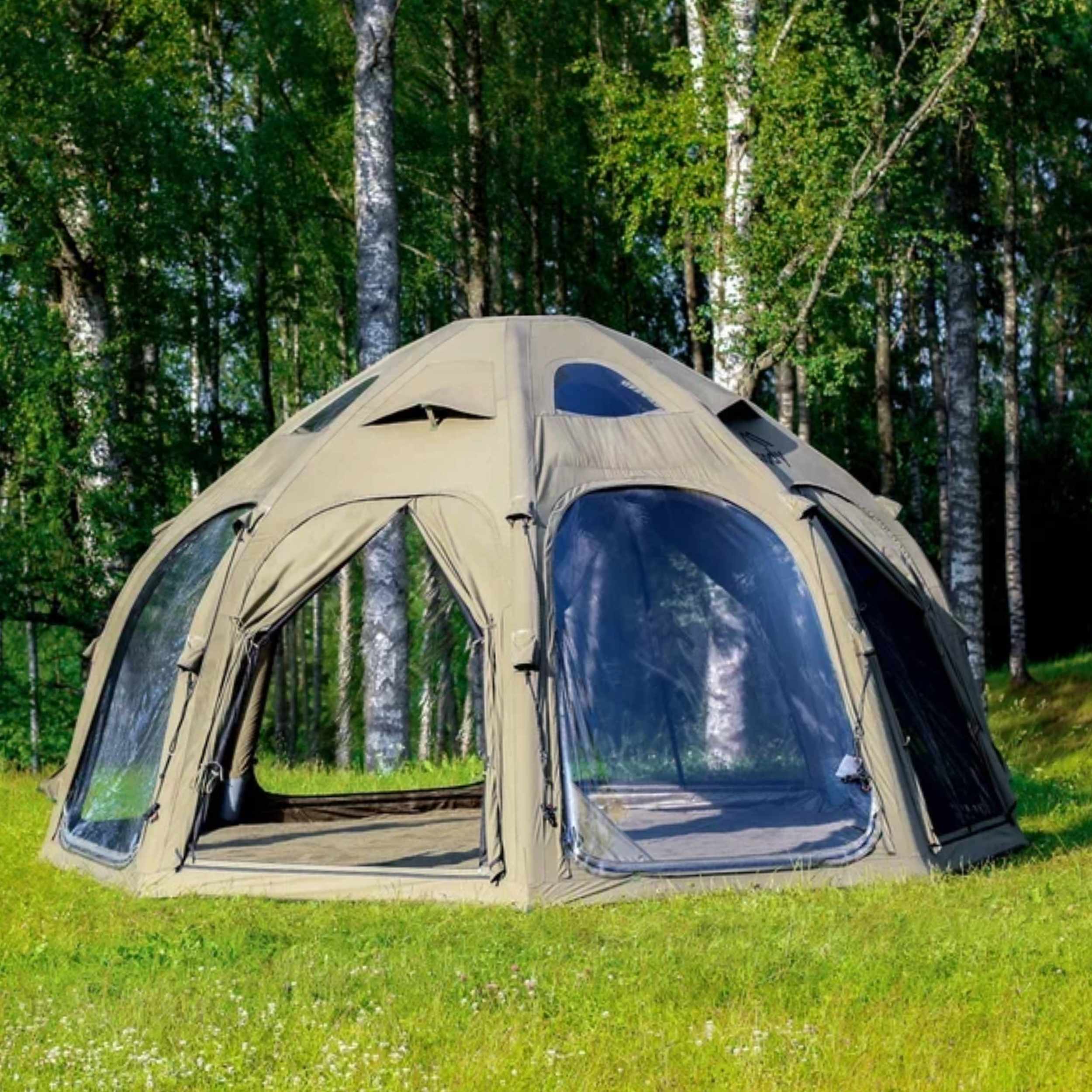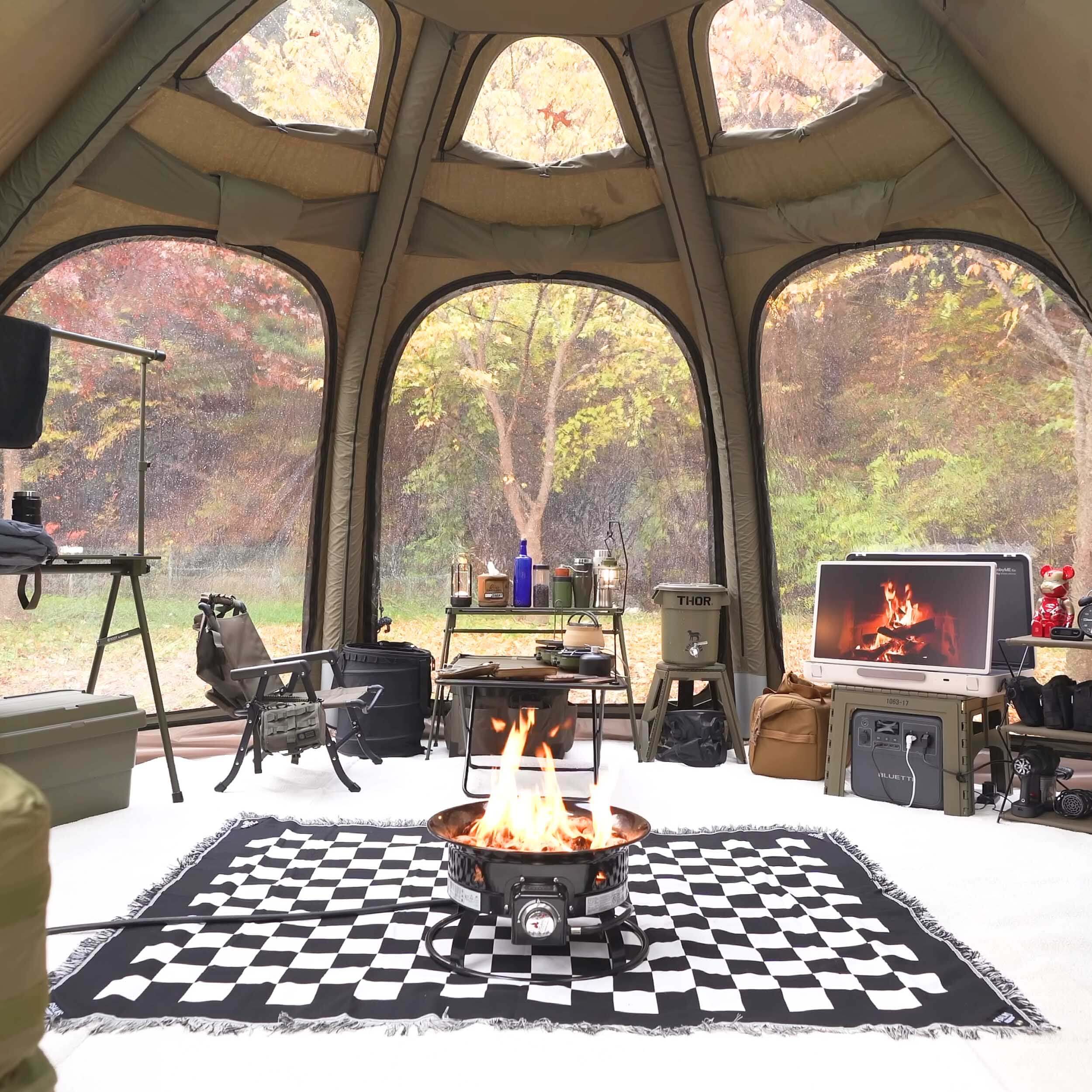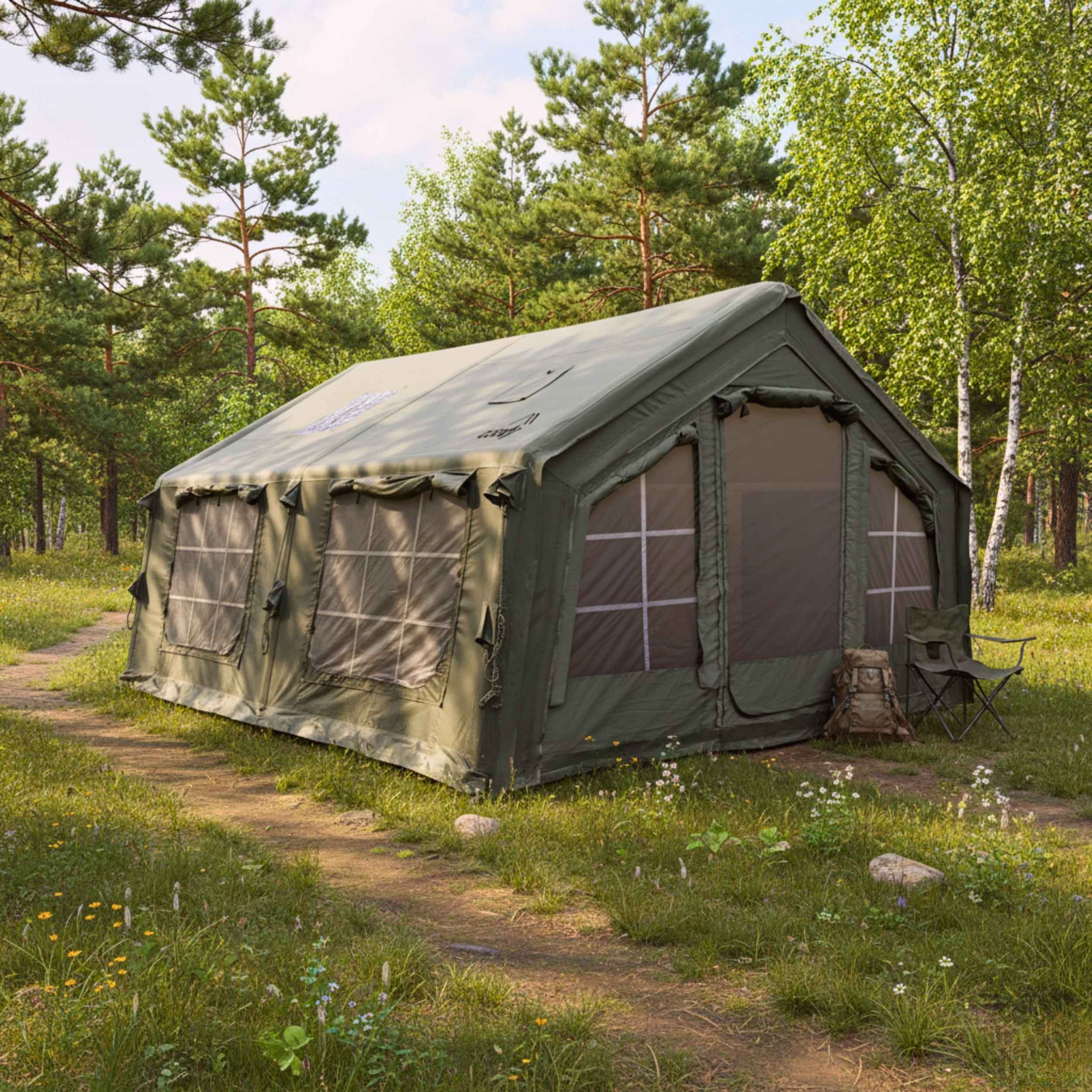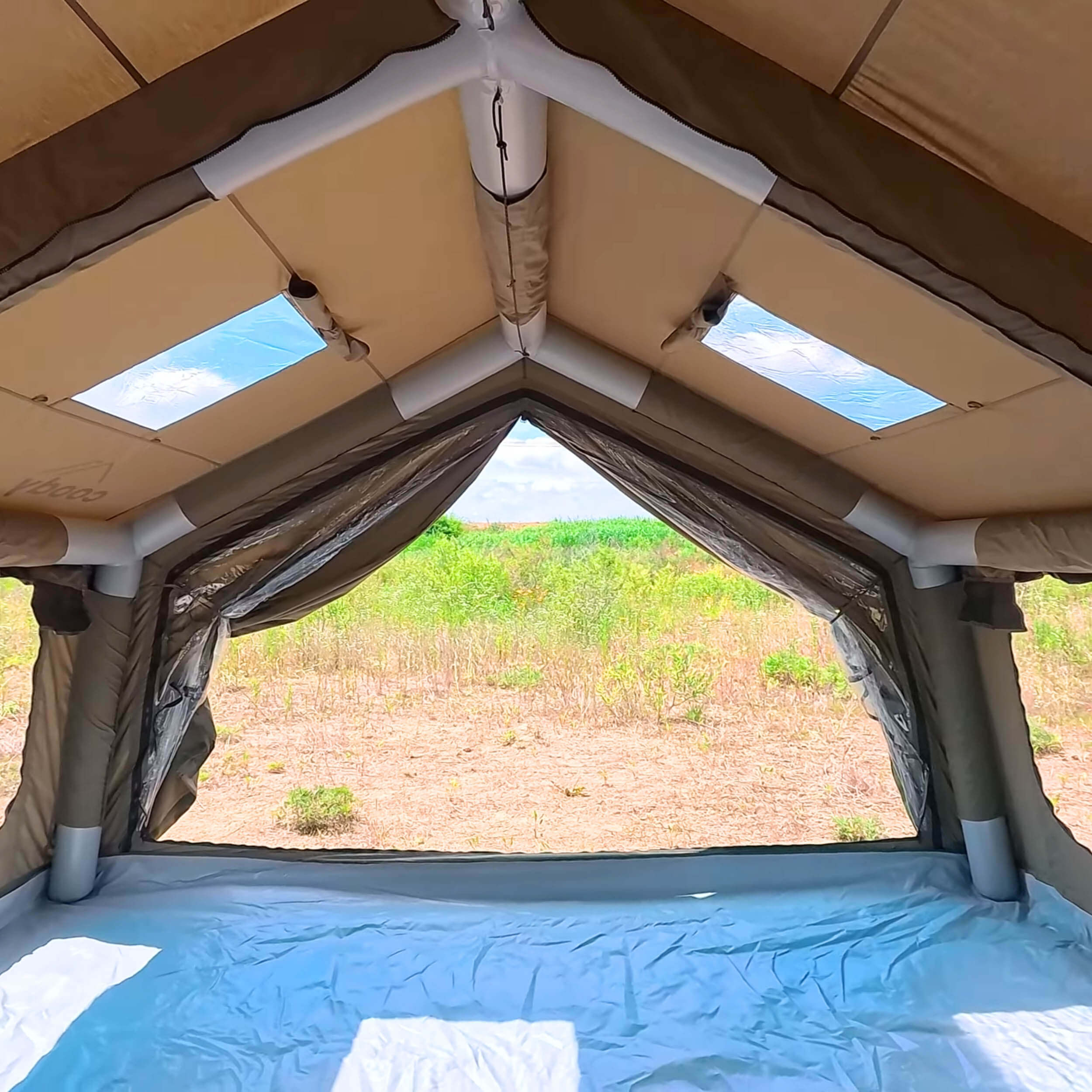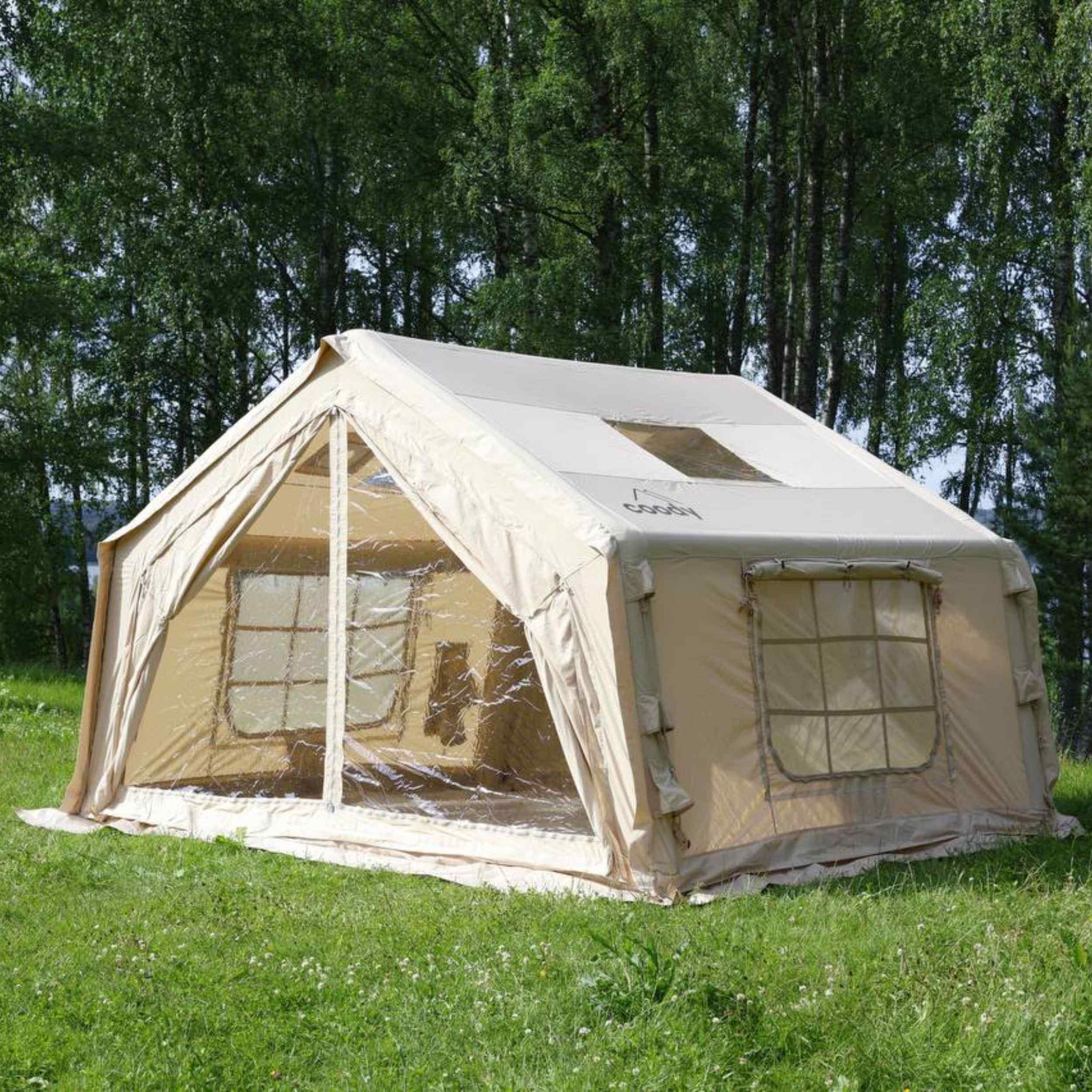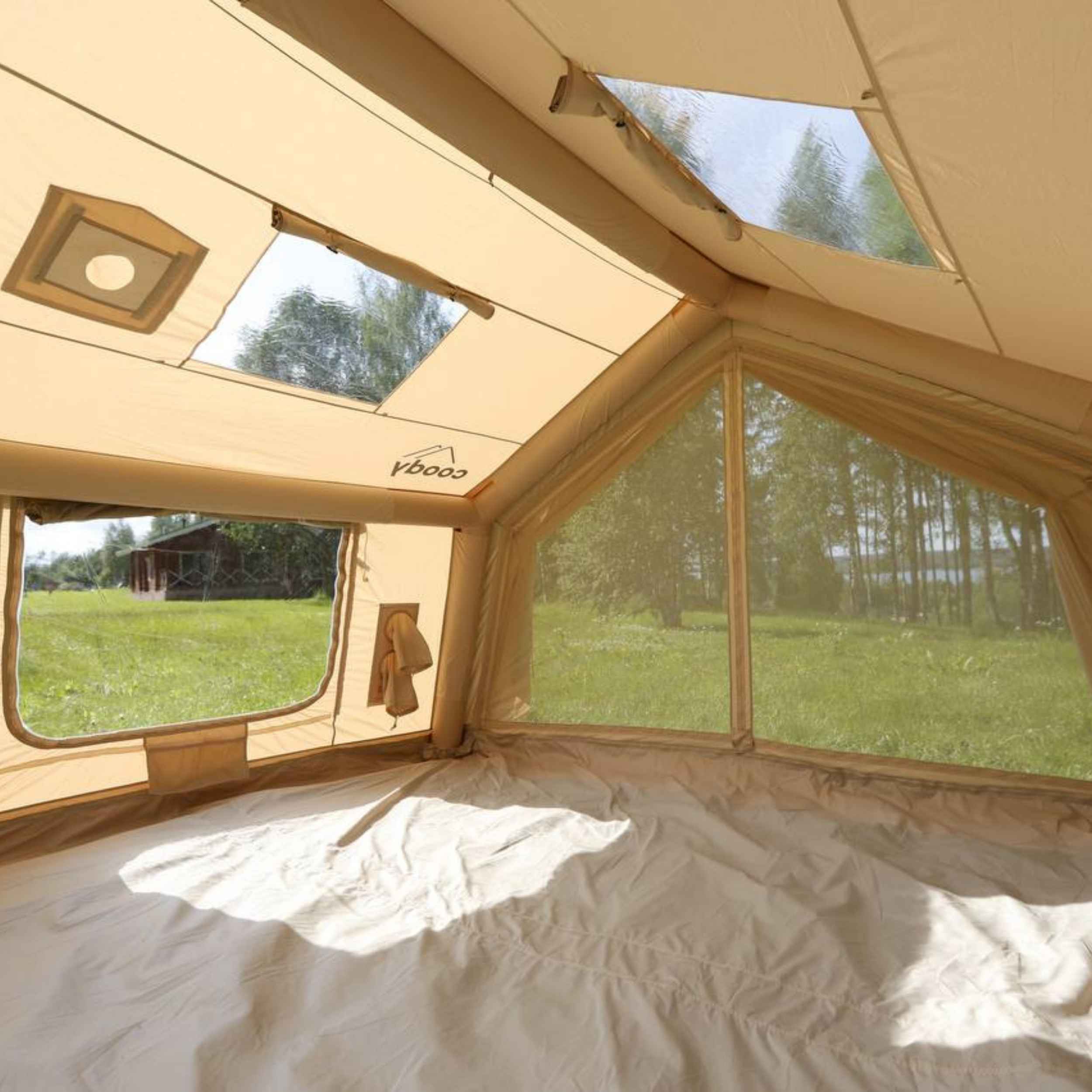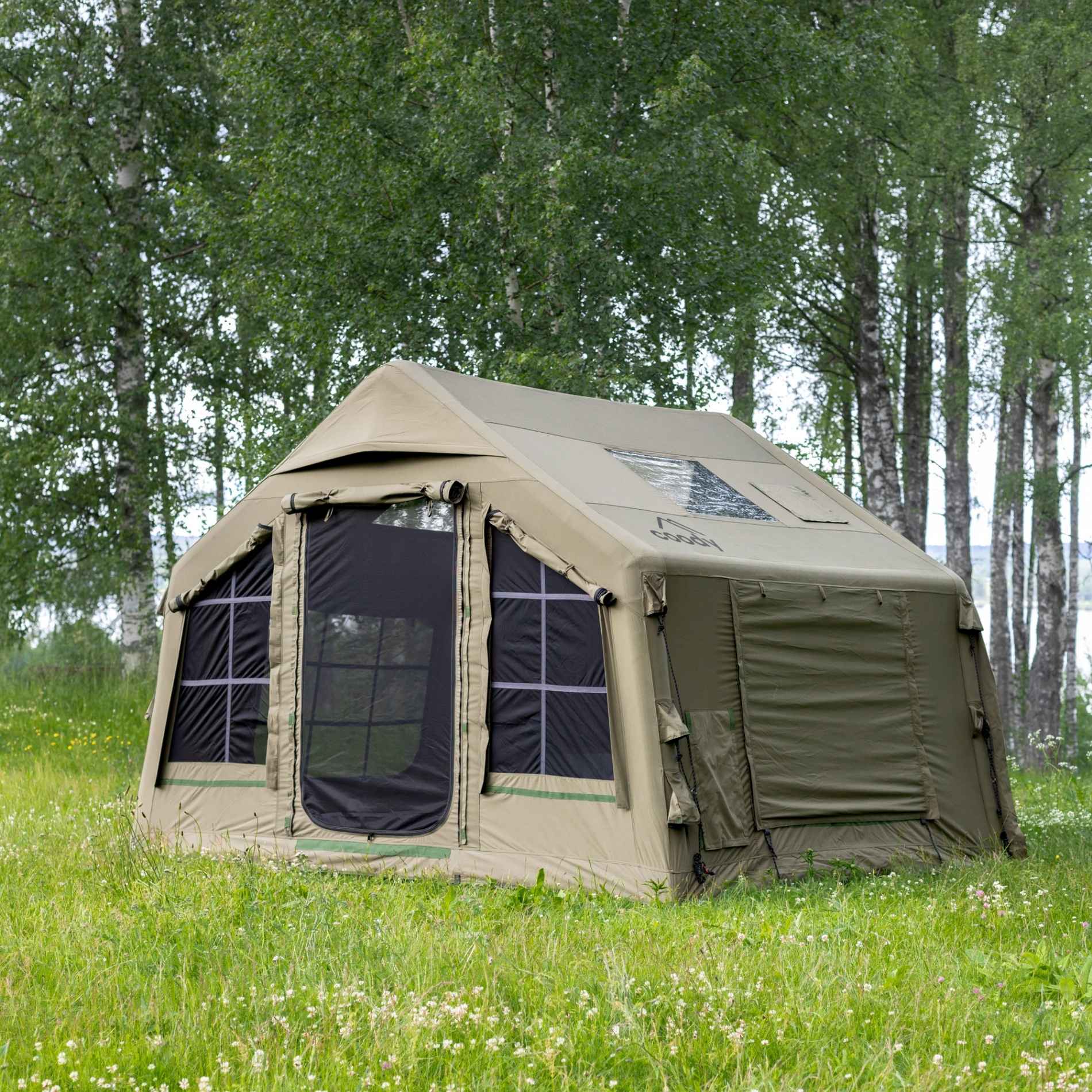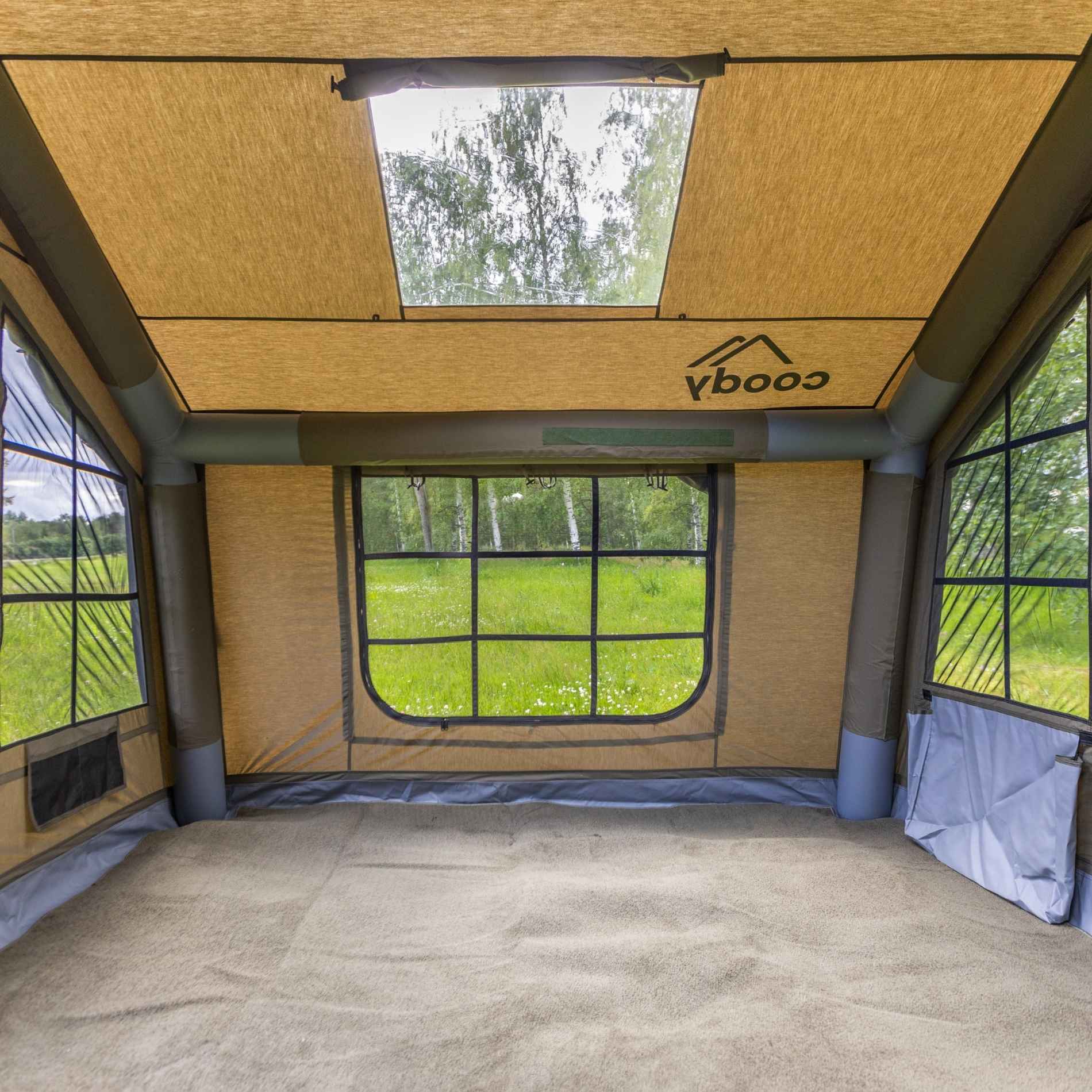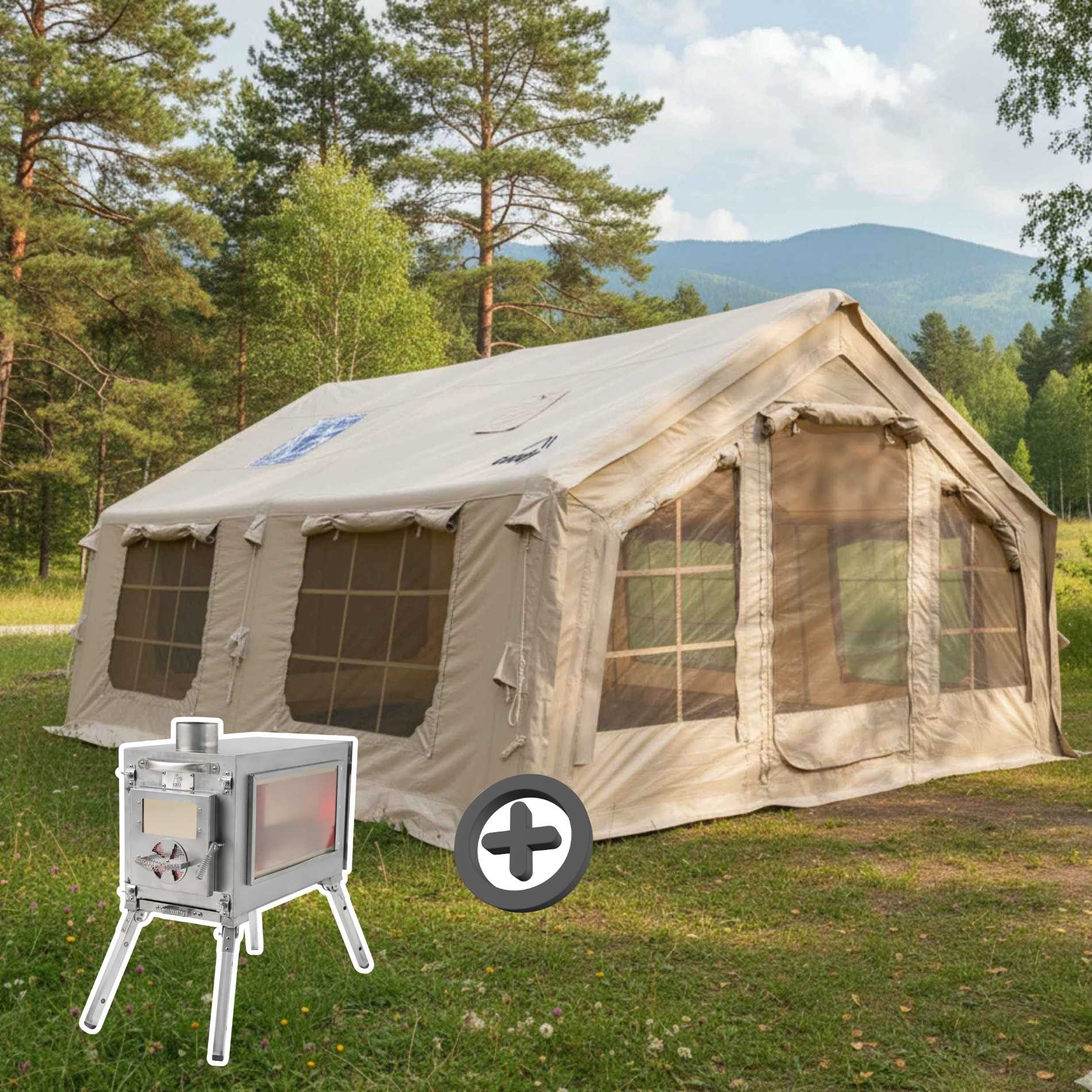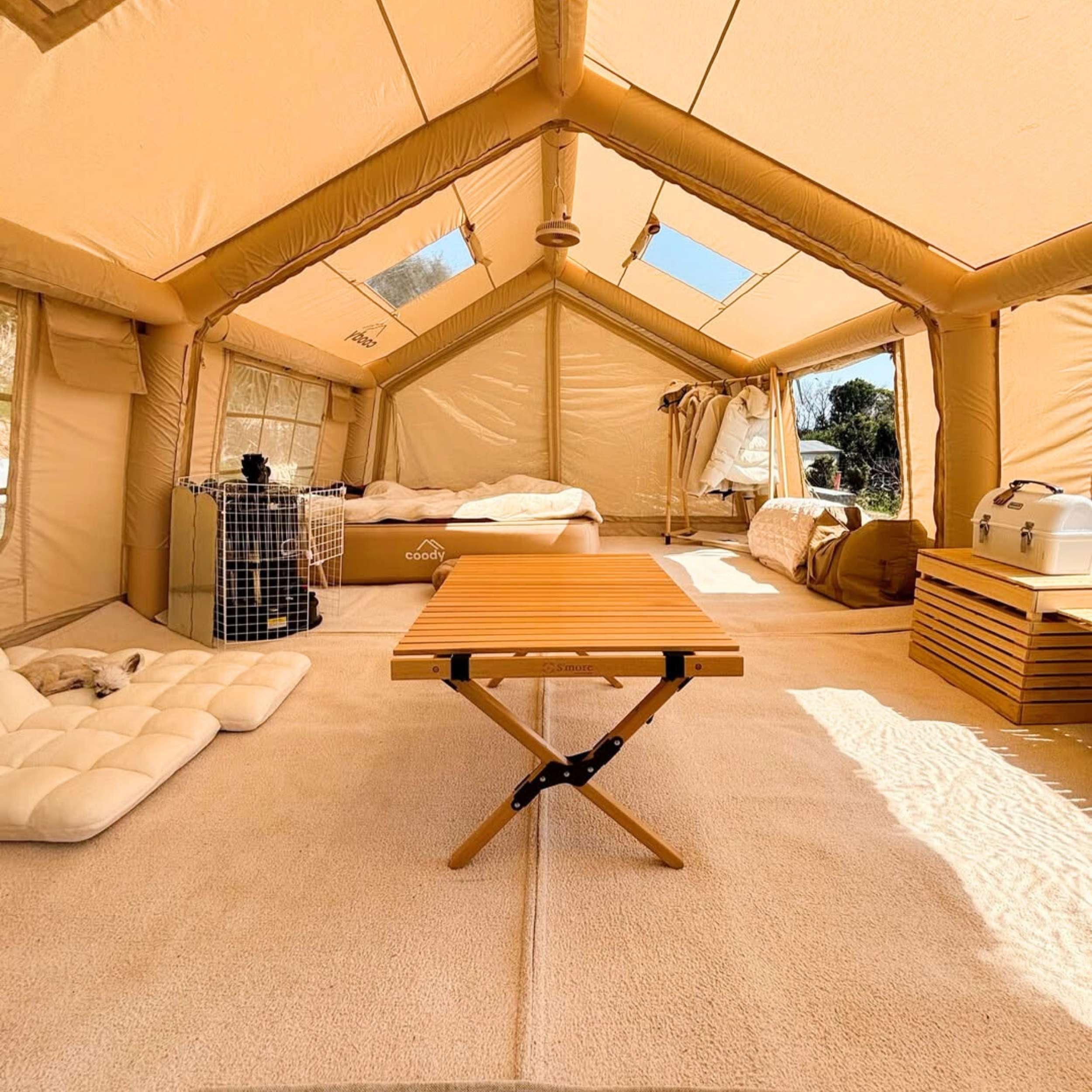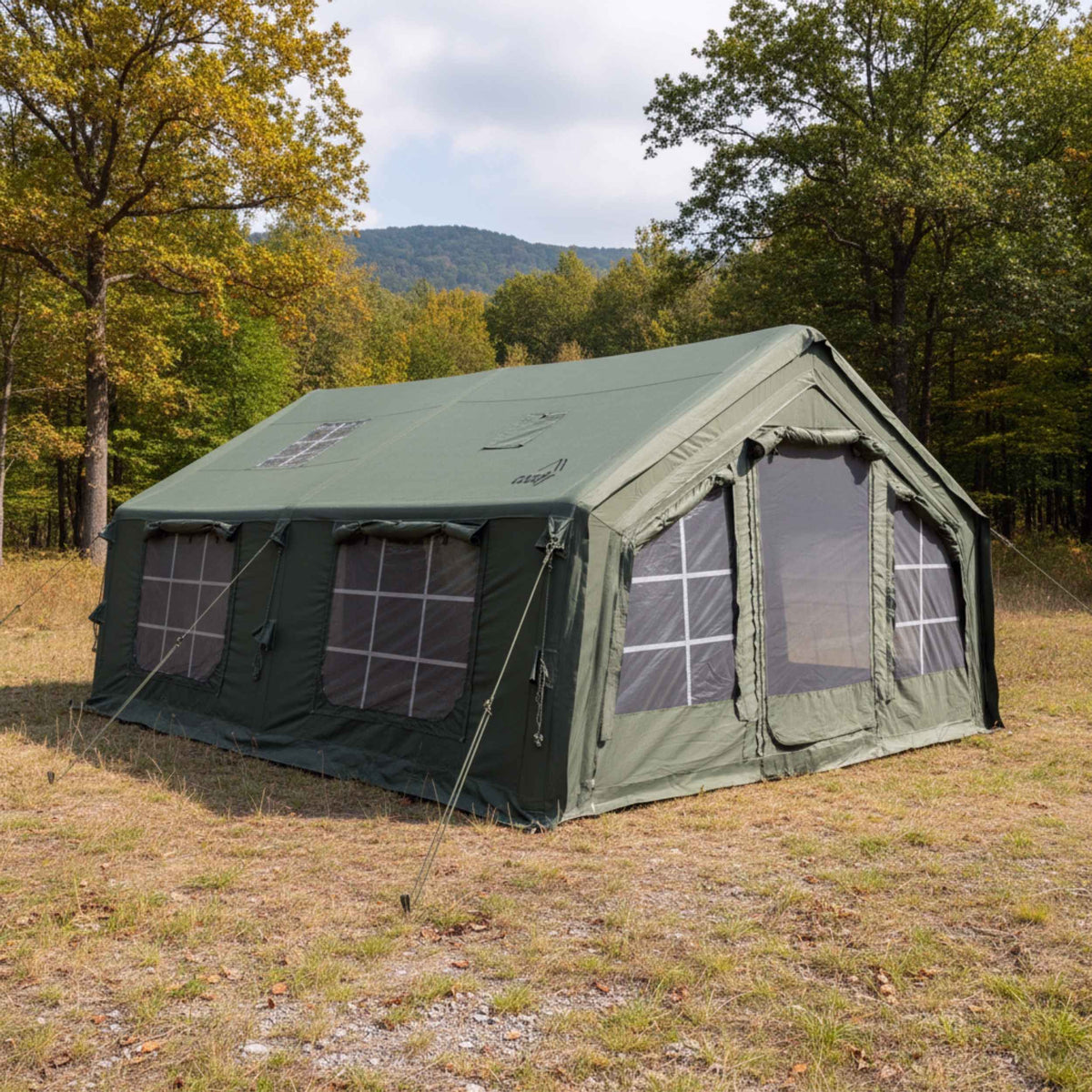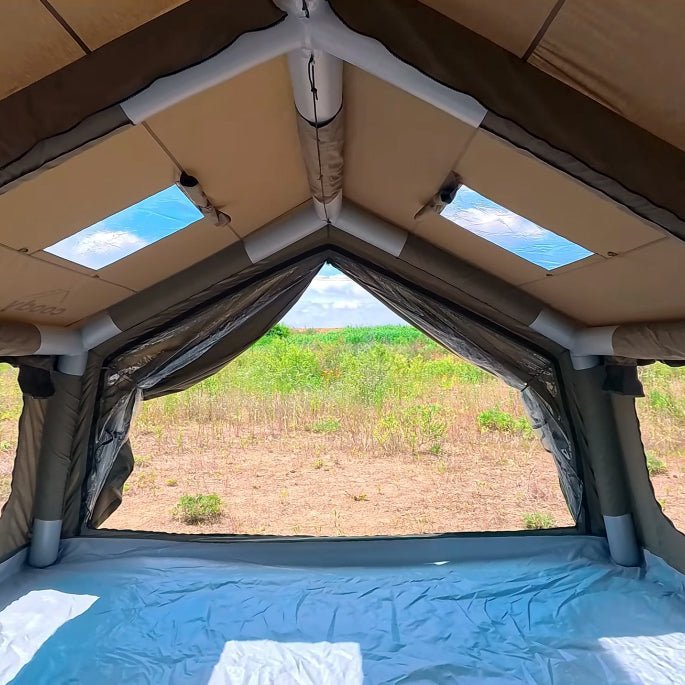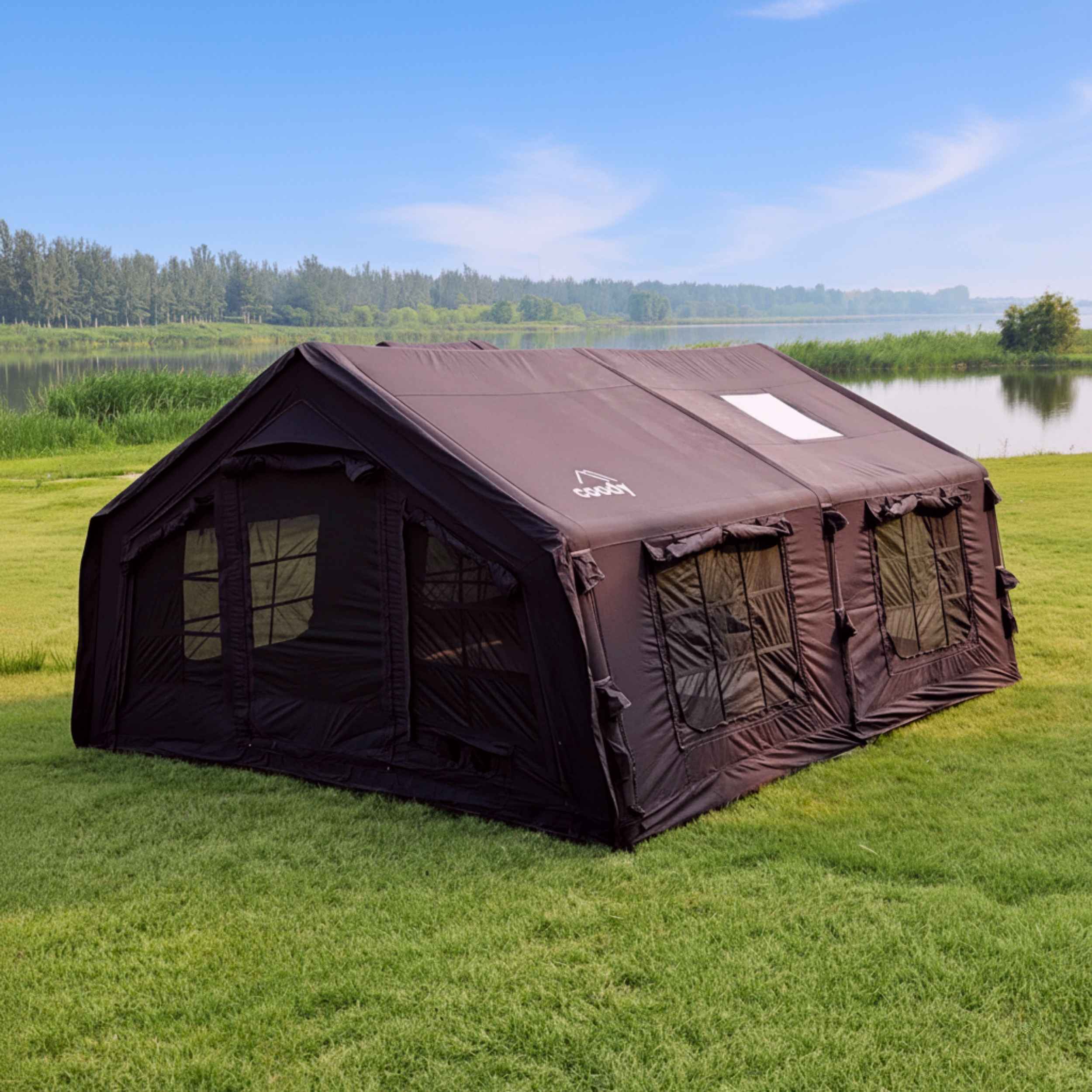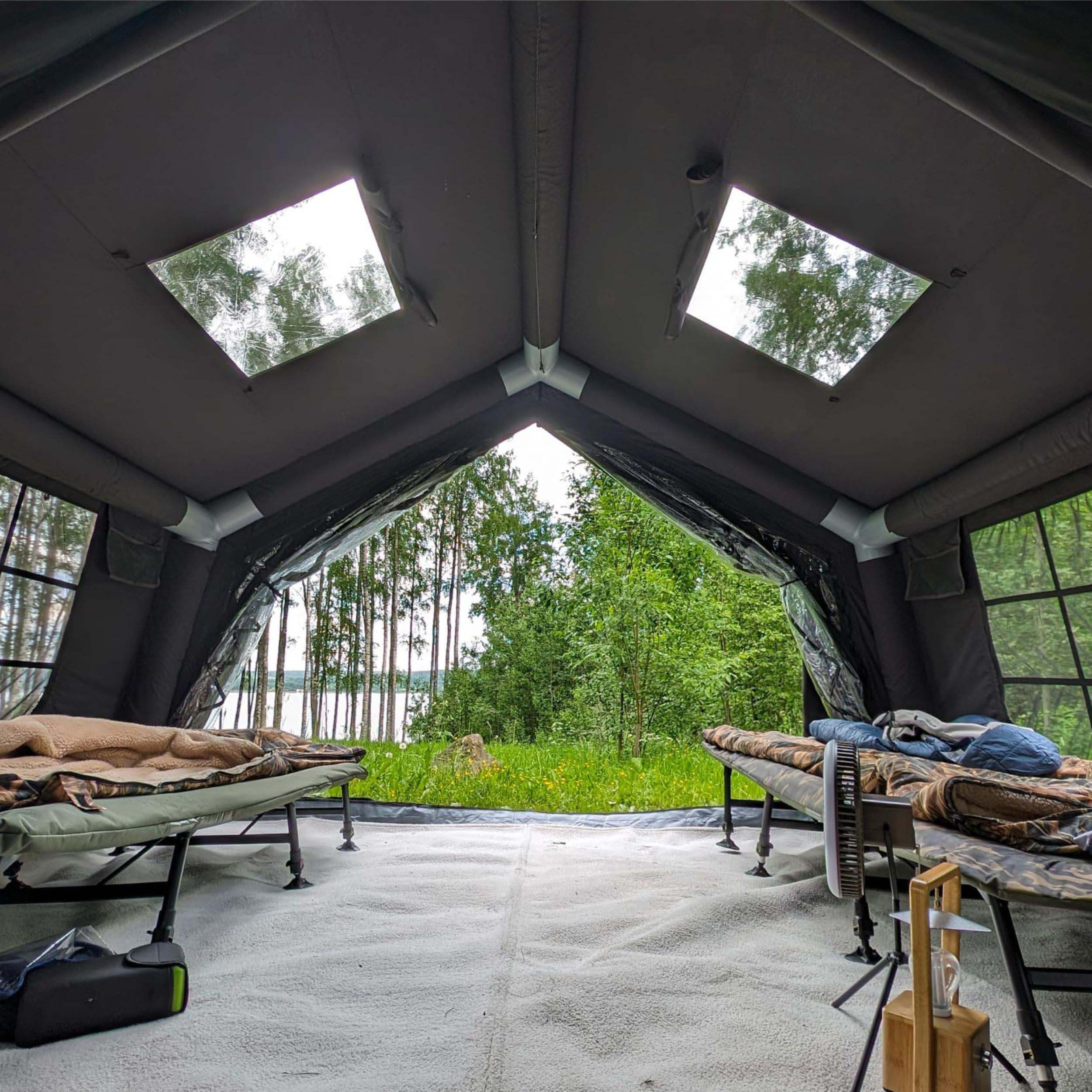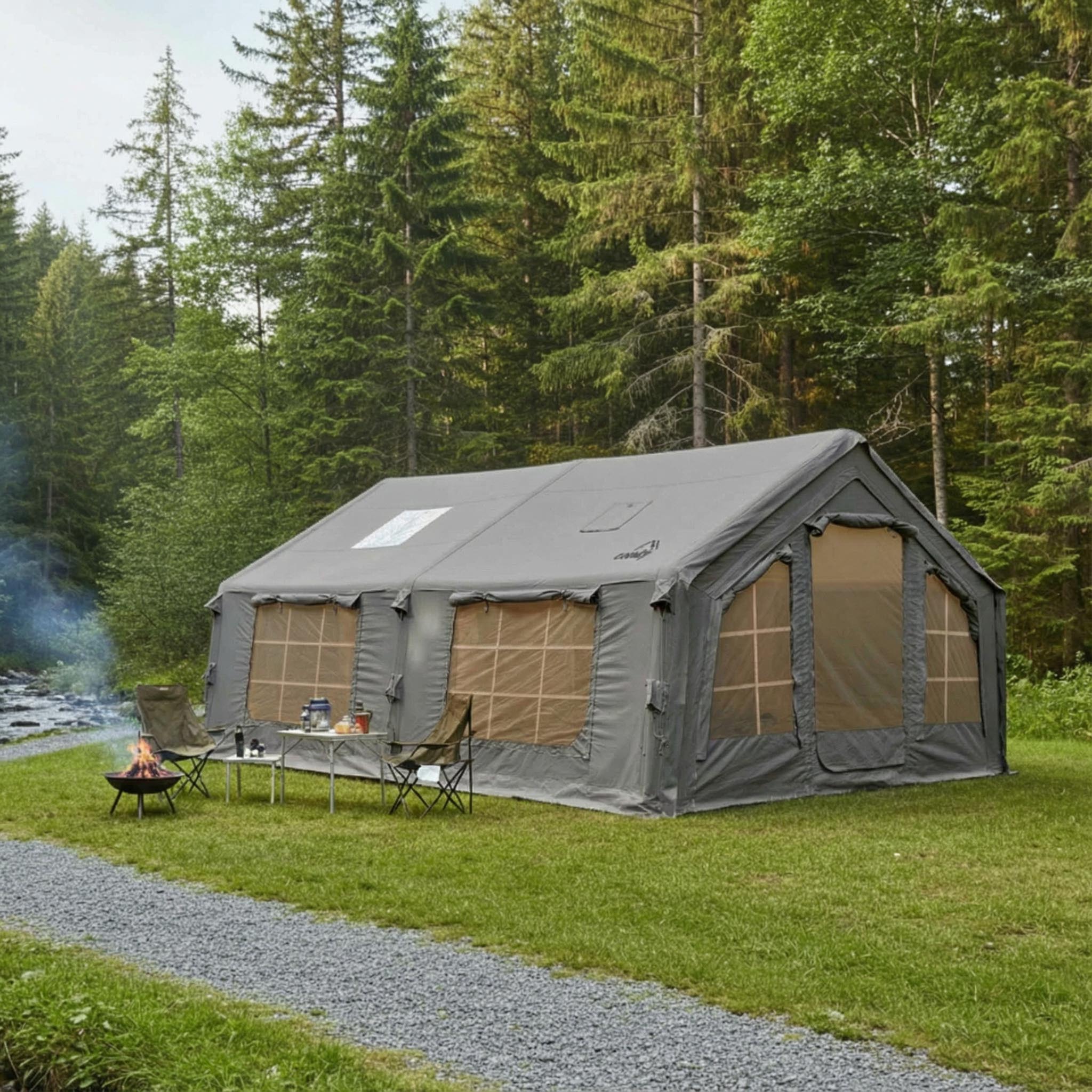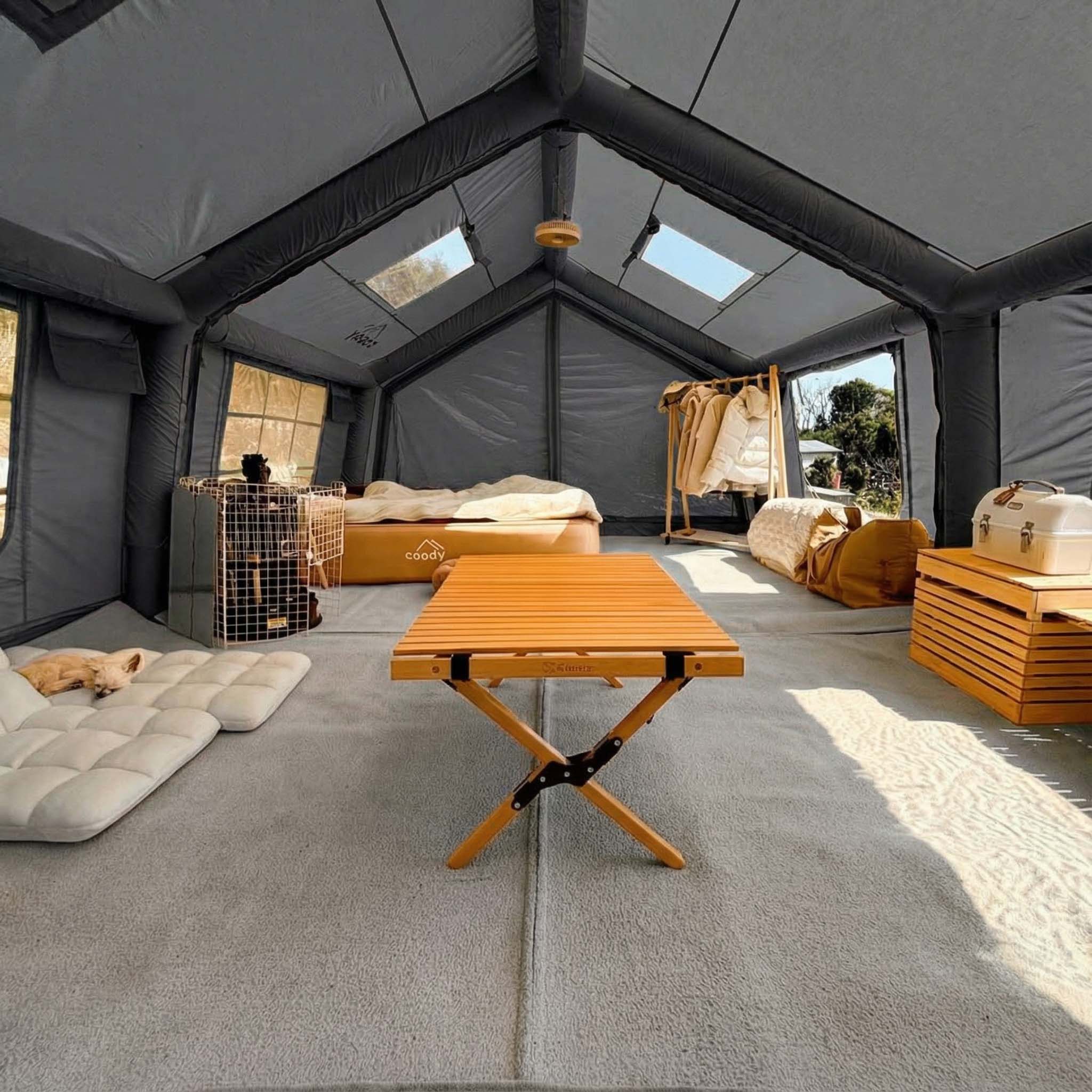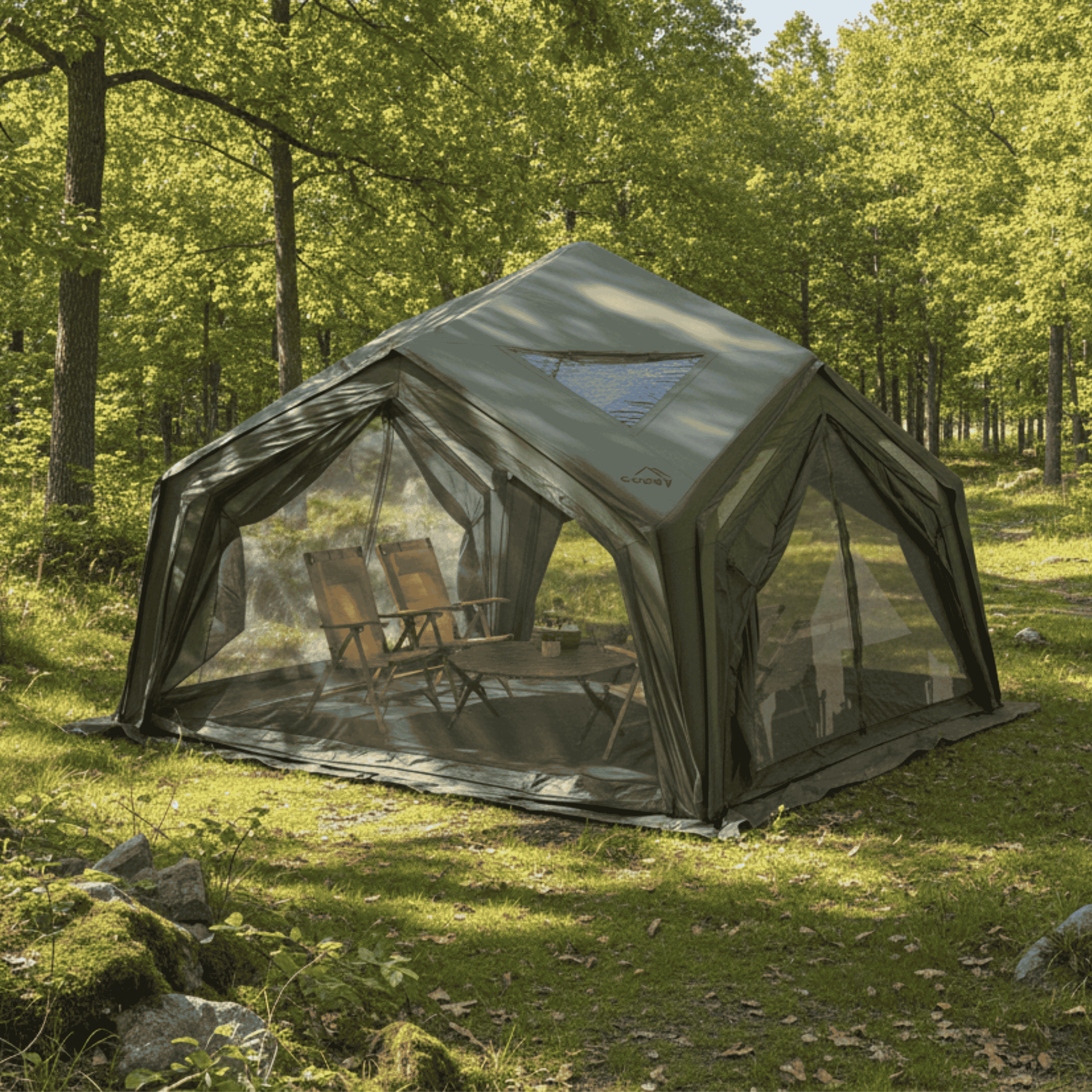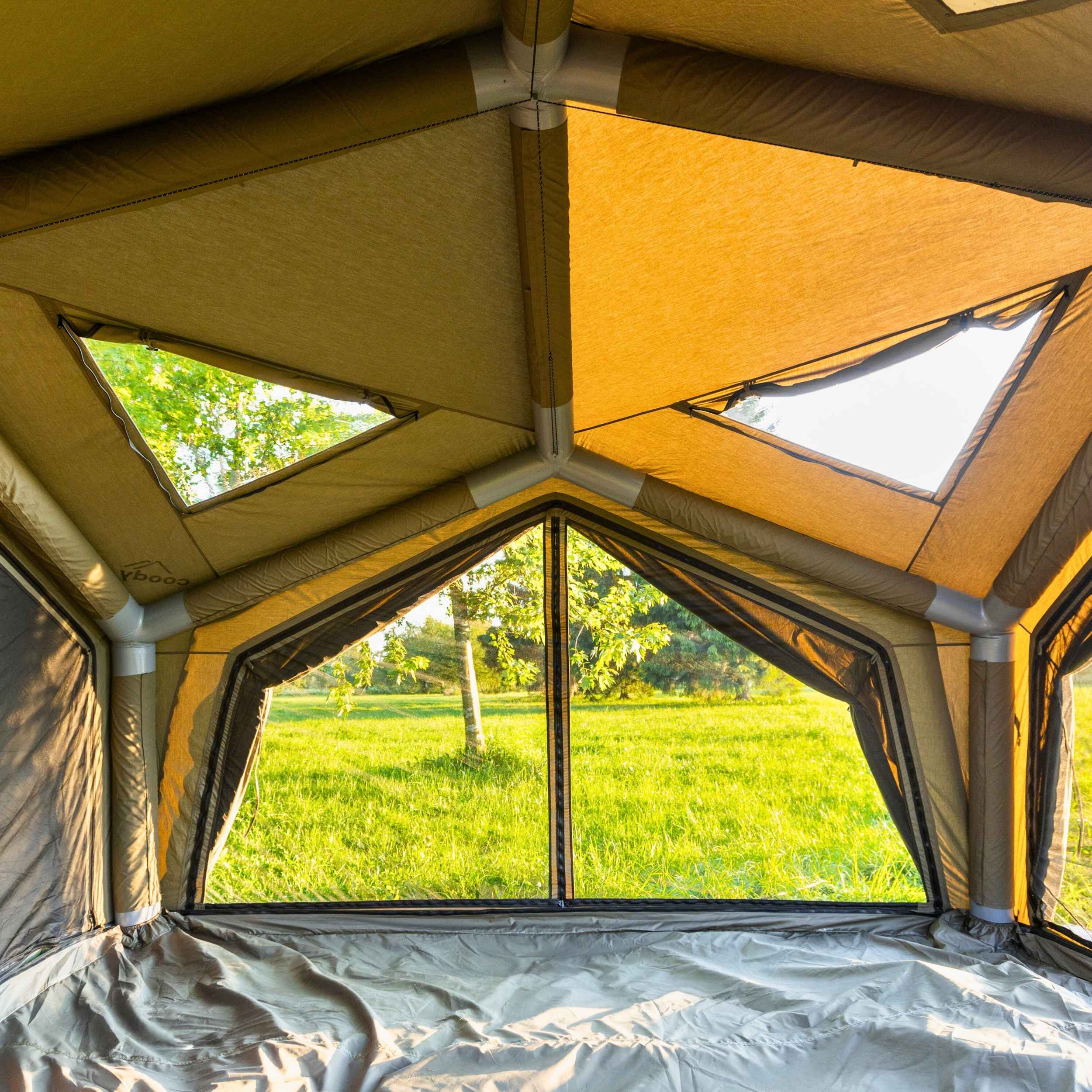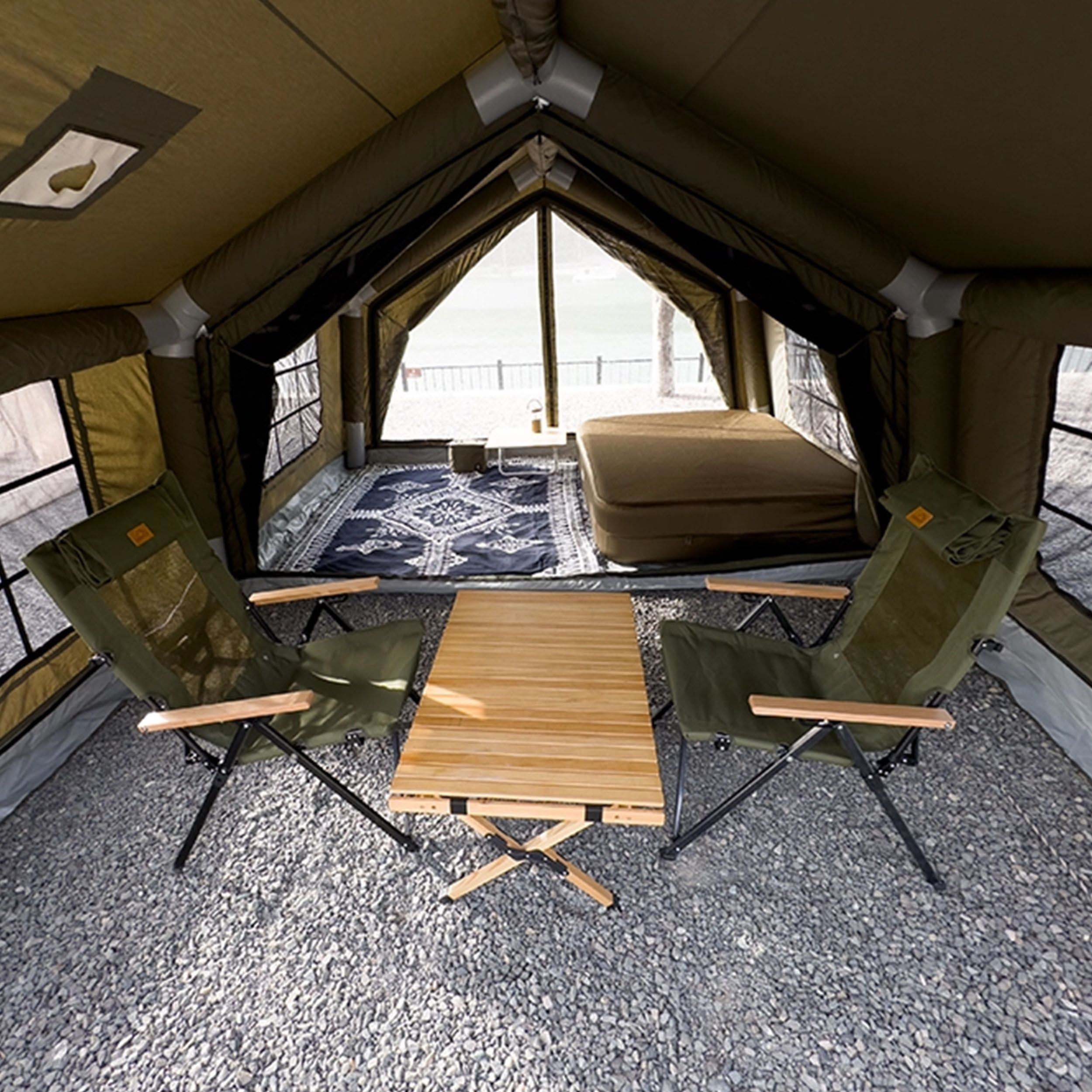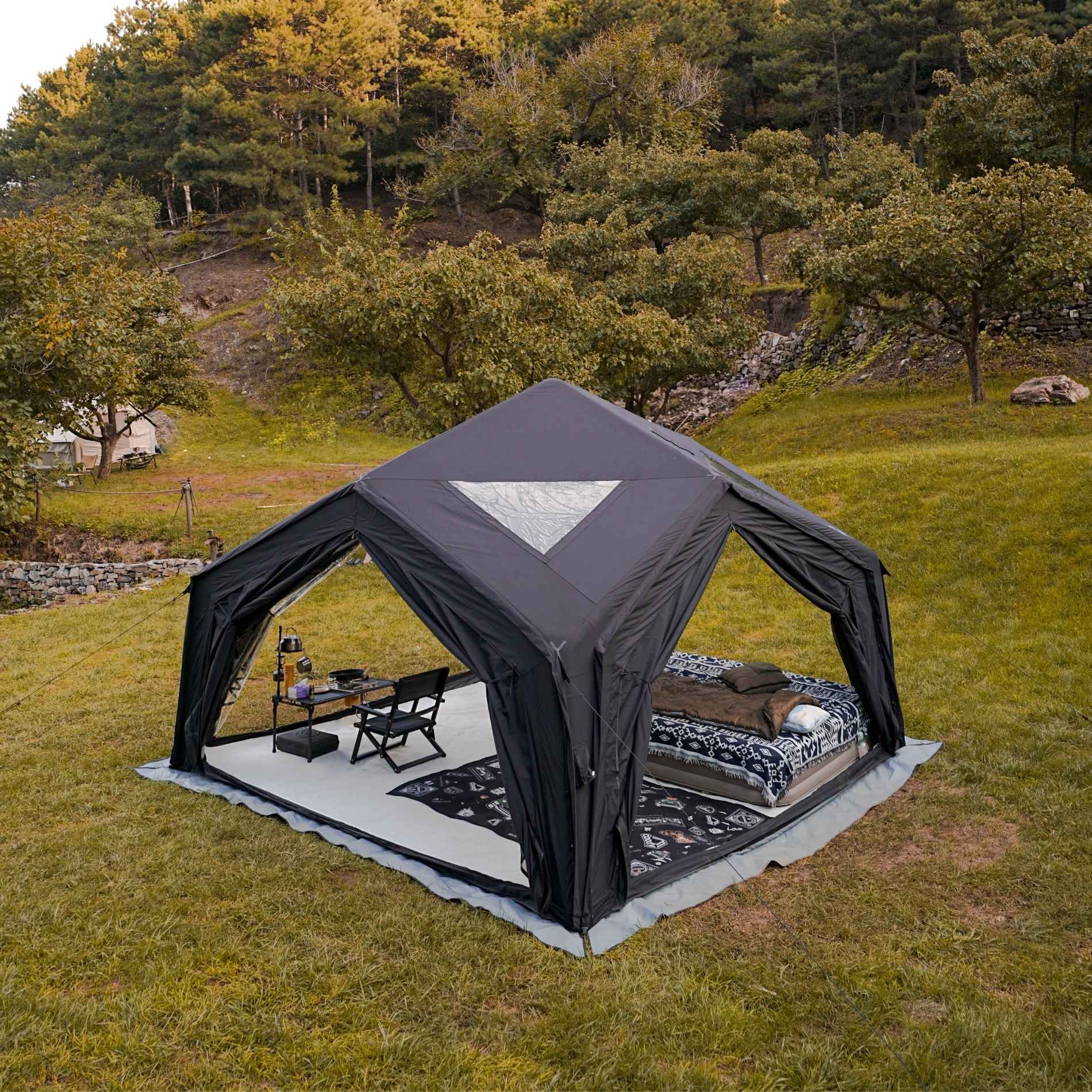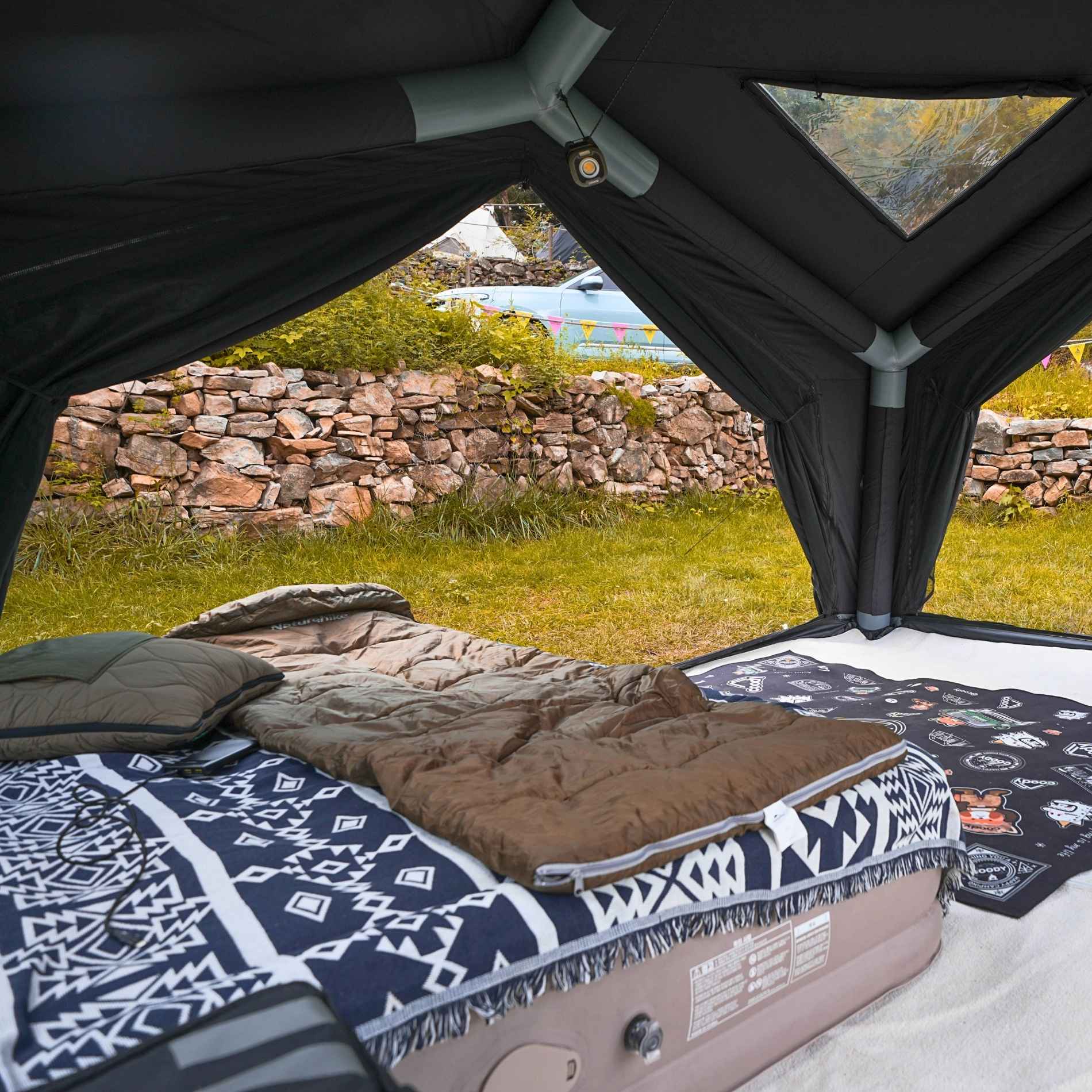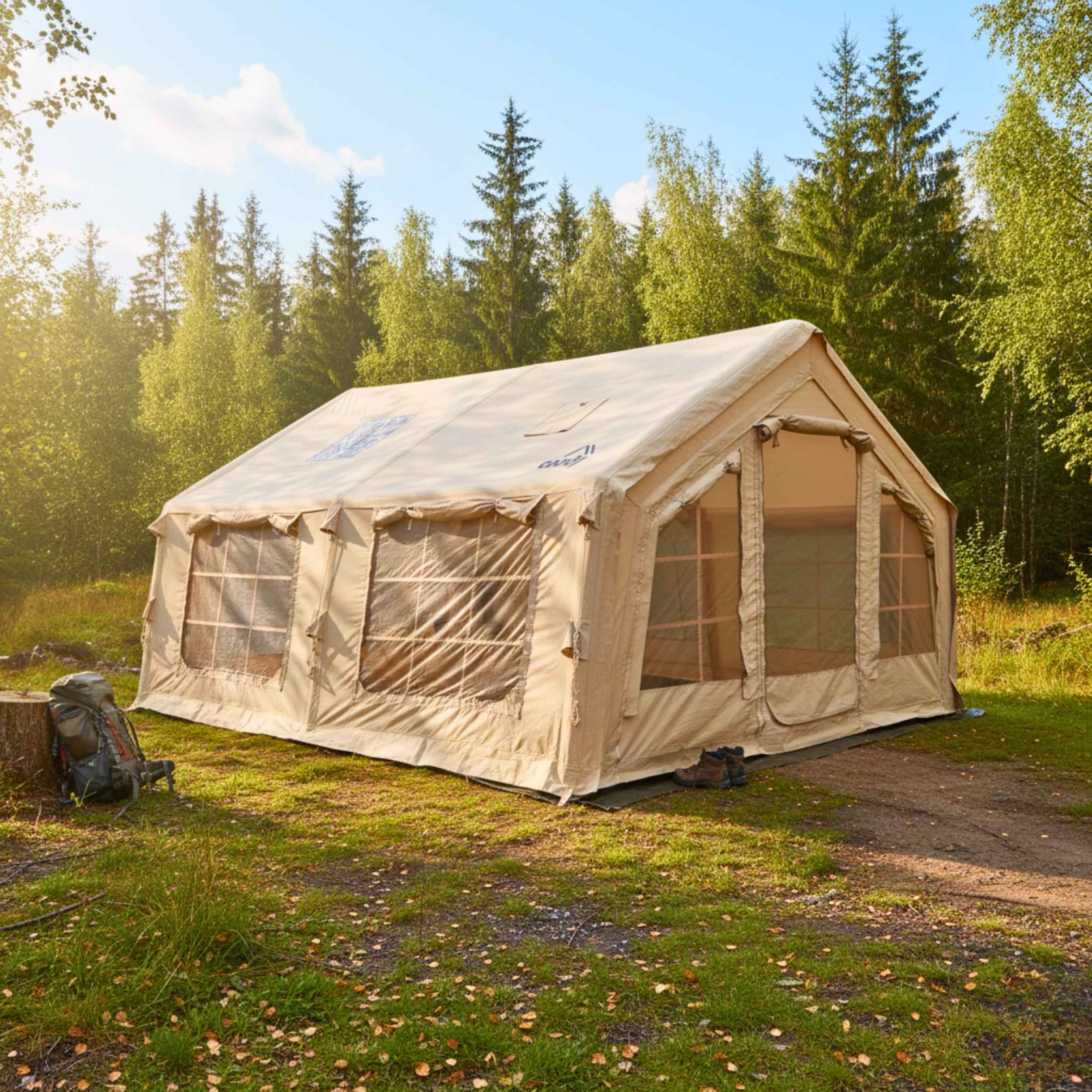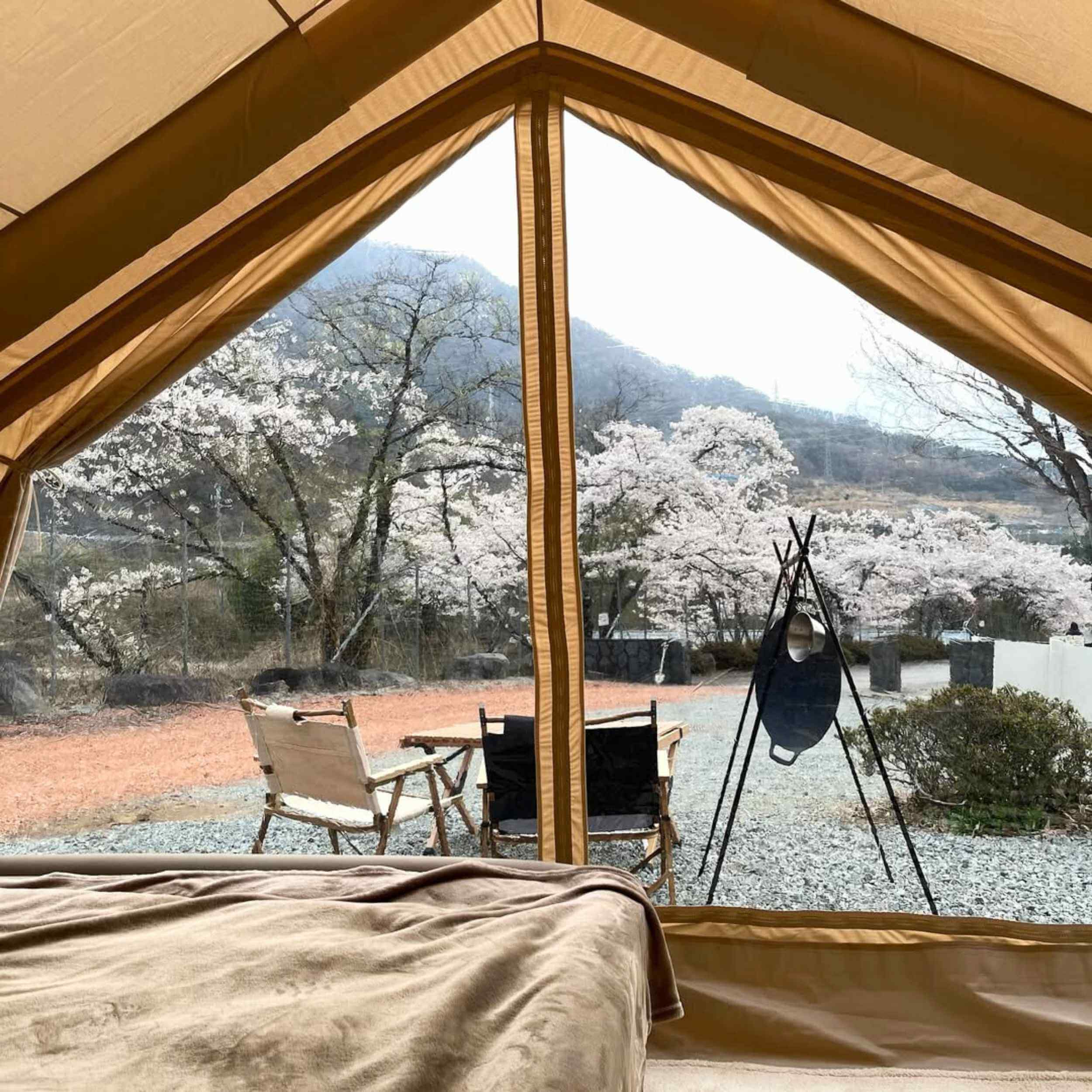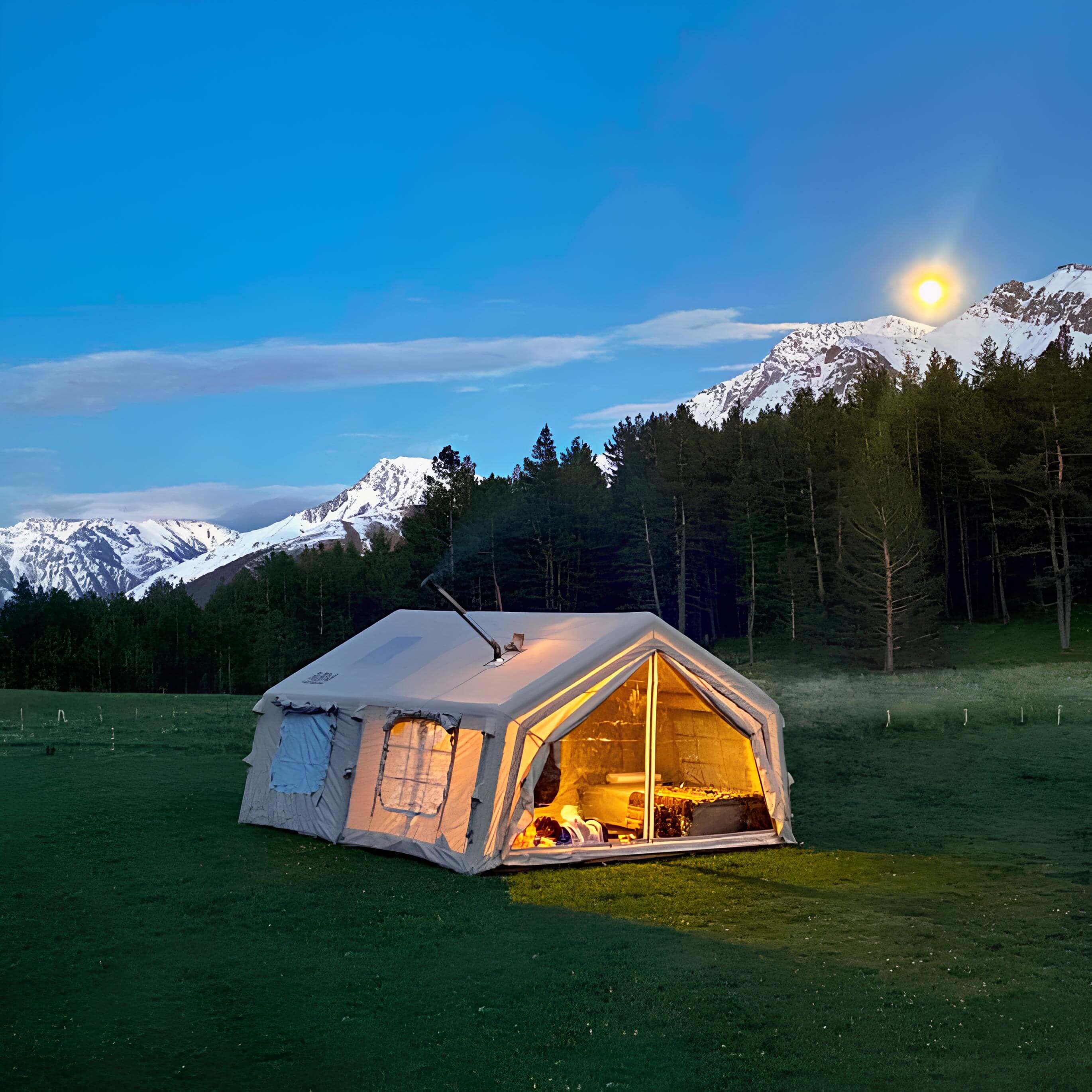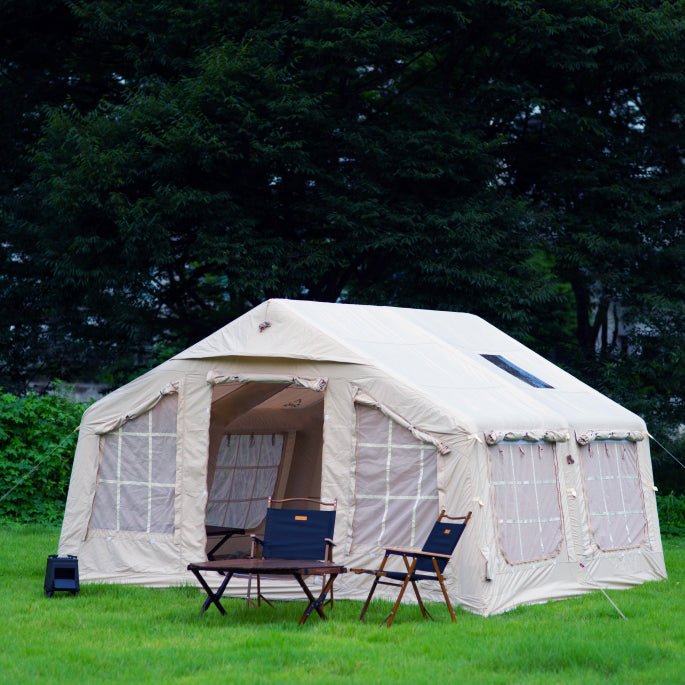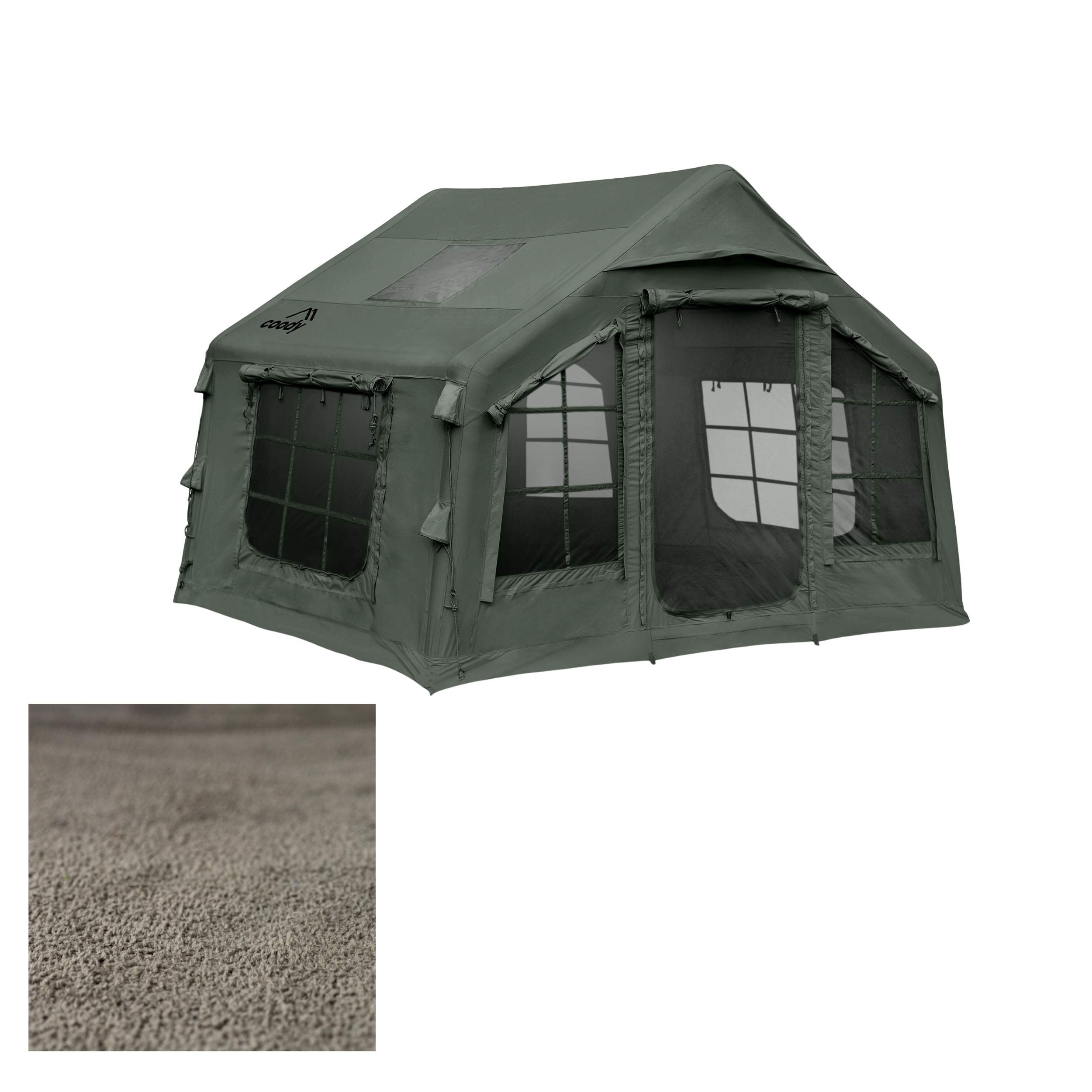



A Coody air tent gives a vehicle-supported camp standing room, space for bedding, and a layout you can organize before the trip. In cold weather, that space needs a routine: check air pressure, manage moisture and snow, and prepare every sleeping place for the forecast without relying on a fire all night.
Below freezing means below 32°F (0°C). If a forecast says “sub-zero”, check whether it means below 0°F or below 0°C. The cold-weather guidance here uses Familia 17.2 as the reference model. Temperature limits depend on the specific model; check the product page and RBM manuals before traveling.

Cold-Weather Basics and Common Myths About Coody Air Tents
PVC Air Beams and Pressure Checks in Cold Weather
If the beams feel softer after sunset, use the pressure gauge before assuming a puncture. Cooling air can lose pressure, while PVC becomes stiffer in freezing conditions. Add air only as needed within the recommended 6–8 psi range, never above 8 psi, and check again when temperatures rise.
Continued pressure loss at a stable temperature needs investigation. Check valve closures, inspect for a leak, and follow the repair instructions or contact support. Keep the pump and repair supplies accessible without moving the beds.
Myth: You Always Need a Heavy-Duty Pole Tent Instead of a Coody Air Tent for Snow
A separate pole set is not the only way to build a standing-height camp. Coody uses inflatable beams inside the tent, so you unfold and inflate the structure rather than assemble separate frame poles. Choose by the forecast, campsite access, and your setup experience. Our guide to Coody inflatable construction explains the design. For tent camping in snow, secure the anchors, fit the rainfly, and remove roof accumulation.
Materials, Rainfly and Moisture in Cold Weather
Coody Fabric and Ventilation
Coody uses 210 gsm TC canvas: 65% polyester and 35% cotton. The breathable blend works with built-in ventilation to help moisture escape. Condensation can still form when humid interior air meets a colder surface. Keep airflow steady, separate damp clothing from bedding, and wipe away moisture before it reaches your sleeping equipment.
Familia 17.2 has a PU2000+ (2,000+ mm) body and a 420D Oxford PU3000+ (3,000+ mm) rainfly. Use the included rainfly in rain or snow, tension it correctly, and clear roof accumulation. A fabric rating does not specify an allowable snow load. When comparing a 4 season tent for snow, check the exact model instructions rather than relying on a seasonal label.

Essential Winter Camping Gear & Setup Guide for Coody Tents
Sleep Systems and Thermal Insulation Below the Floor
When deciding how to insulate a tent for winter camping, start underneath the sleeper. A sleeping pad's R-value describes resistance to heat flow: a higher value means more insulation. Select a pad and sleeping bag for the expected conditions, using their manufacturers' guidance.
A PVC ground sheet protects the base from moisture and abrasion; a carpet makes the interior more comfortable underfoot. Neither replaces a sleeping pad selected for the overnight low. When planning how to keep a tent warm in winter, distinguish comfort while sitting beside an attended fire from the insulation needed underneath a sleeper.

Safe Heating Solutions in Coody Tents (Wood Stoves, Venting, and Heat Retention)
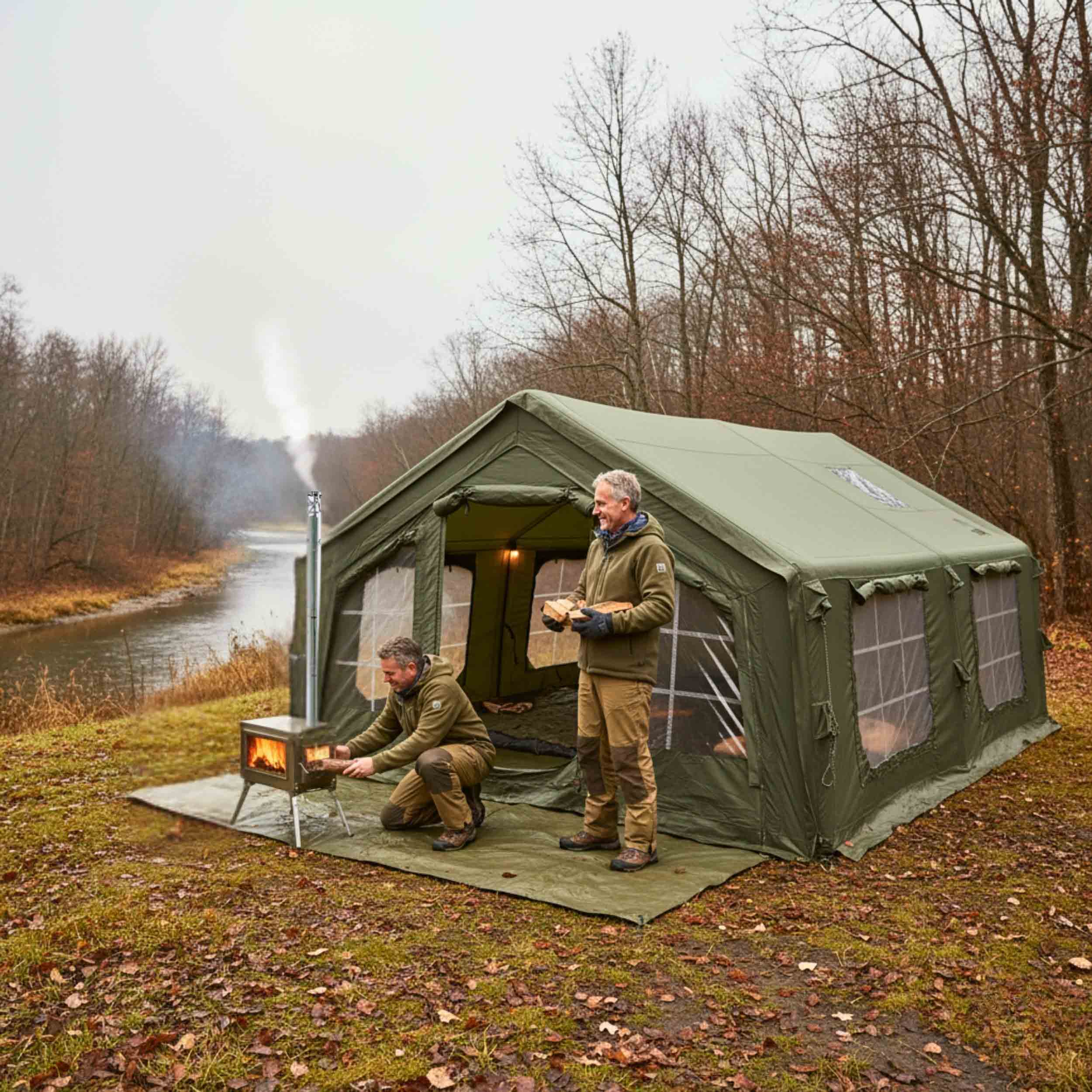
Caminus S and M have a built-in spark arrestor and heat-resistant ceramic-glass panels, so you can watch the fire without opening the loading door. Choose the model matched to your tent: standard Familia 17.2 is offered with Caminus M. Use the designated stove jack, the included heat-resistant mat, and the clearances specified in the Caminus manual.
Maintain ventilation and use working smoke and carbon monoxide alarms. Never leave a burning stove unattended or operating while everyone sleeps. Before lighting it, check the chimney route through the tent and rainfly. Check whether your rainfly has its own stove jack: standard and Pro models differ.
Step-by-Step: How to Pitch and Secure a Coody Air Tent in the Snow
For tent camping in snow, prepare the site before unfolding the shelter. Choose sheltered, level ground away from unstable trees and avalanche terrain. If camping on snow, compact a level platform. Plan arrival early enough to inspect your anchoring and rainfly in daylight.
- Remove sharp objects and position the ground sheet within the tent footprint.
- Fully unfold the Coody air tent, connect the compatible pump adapter, and inflate to 6–8 psi.
- Secure the required guy lines using anchors suitable for the ground or snow. Ordinary pegs may not hold in loose snow.
- Fit and tension the rainfly. Keep ventilation openings and entrances clear.
- Check pressure, anchors, and roof accumulation as weather changes.
The air frame is pressure-tested for 72 hours at the factory to check for leaks. At camp, continue checking pressure, valves, anchors, and roof accumulation. Rehearse the complete setup at home, including the rainfly and your selected accessories. Check that the pump adapter fits and that you can reach the valves without moving furniture or blocking an exit.
5 Common Mistakes When Camping in the Winter with Air Tents (and How to Avoid Them)
- Adding air by feel instead of checking the pressure gauge.
- Letting snow accumulate because a seasonal label sounds sufficient.
- Closing every vent to retain warmth, allowing condensation to build up.
- Using a ground sheet or carpet as the only insulation under a sleeping bag.
- Forcing stiff PVC into a bag, then leaving the tent packed damp.
Winter tent camping continues after you reach home. Let cold PVC components warm before folding. After use below 32°F (0°C), completely dry the Coody air tent in a warm, dry, well-ventilated indoor space before storage. Unfold it again if you had to pack it wet. Air the underside, corners, and folds as well as the visible canvas.
Checklist: Pre-Trip Winter Camping Essentials for Your Coody Tent
For tent camping in winter, plan for the forecast, campsite access, and the return home. Check your winter camping gear before loading the vehicle. These winter camping essentials cover the Coody-specific part; use our winter camping checklist for the broader packing list.
- Exact model instructions, forecast, and a plan to leave if conditions exceed your setup.
- Rainfly, pressure-gauge pump, repair supplies, pegs, guy lines, and suitable snow anchors.
- Sleeping bags, insulated pads, and dry layers for the expected overnight low.
- If using a stove: its instructions, required protection, alarms, and a clear exit.
- A warm indoor place and enough time to dry the tent after the trip.
Conclusion
The best tent for winter camping fits your trip as well as your equipment. Plan an insulated sleep system, an accessible pressure gauge, the correct rainfly arrangement, and time for drying at home. Those choices make cold weather camping easier to manage than a packing list built around continuous heating.
Check your exact model’s product page and manual, then contact Coody US support if conditions are unclear.
Frequently Asked Questions
Can I use Familia 17.2 in cold weather?
Familia 17.2 has an operating range of 14°F to 104°F (−10°C to +40°C). Completely dry it indoors after below-freezing use. This is a model-specific rating, not a promised indoor temperature. Temperature limits depend on the specific model; check the product page and RBM manuals before traveling.
Should I use the rainfly in rain or snow?
Use the included rainfly in rain or snow. Keep it correctly tensioned, remove accumulation, and leave the required ventilation open. Check that the intended chimney route is ready before using a wood stove; do not pass a hot pipe through ordinary rainfly fabric.
What should I do if air-beam pressure changes in cold weather?
Check the gauge and adjust within 6–8 psi, never above 8 psi. A small temperature-related drop can be normal. Persistent loss at a stable temperature calls for a valve and leak check.
How should I dry a Coody tent after a cold or wet trip?
Fully unfold it in a warm, dry, well-ventilated indoor space after below-freezing use. Let all components dry before storage, including the floor and folded edges. Do not store it damp.
Where can I confirm guidance for my exact model?
Use its Coody US product page and model instructions. For more on how to insulate a tent for winter camping, see our floor and sleeping-area insulation guide. Ask support about unresolved model details before you travel.