







OX Diesel Heater X10 – Portable 10 kW Tent Heater
Up to 10 kW of diesel heat · Wireless remote · AUTO temperature control · 20 L (approx. 5.3 US gal) external tank
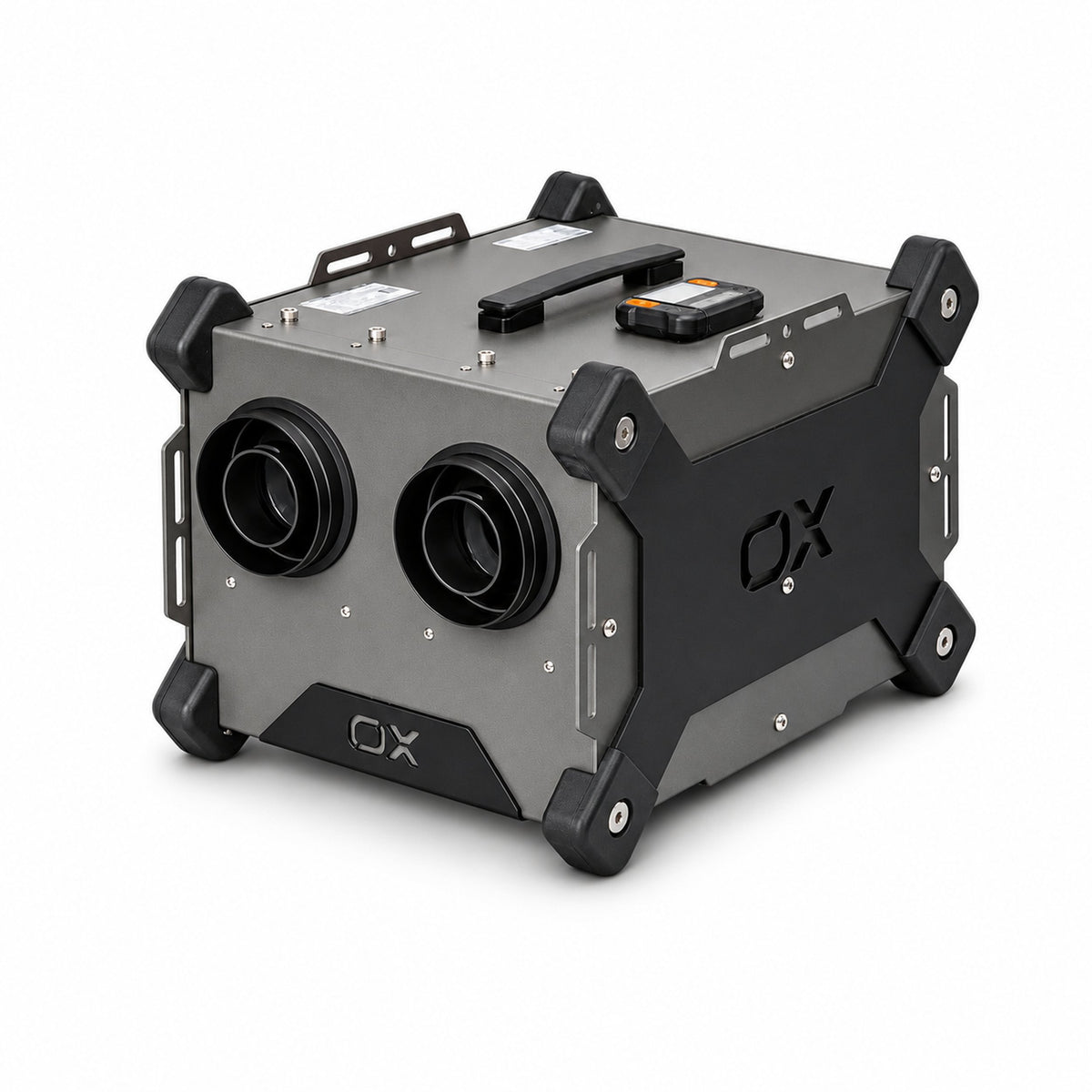
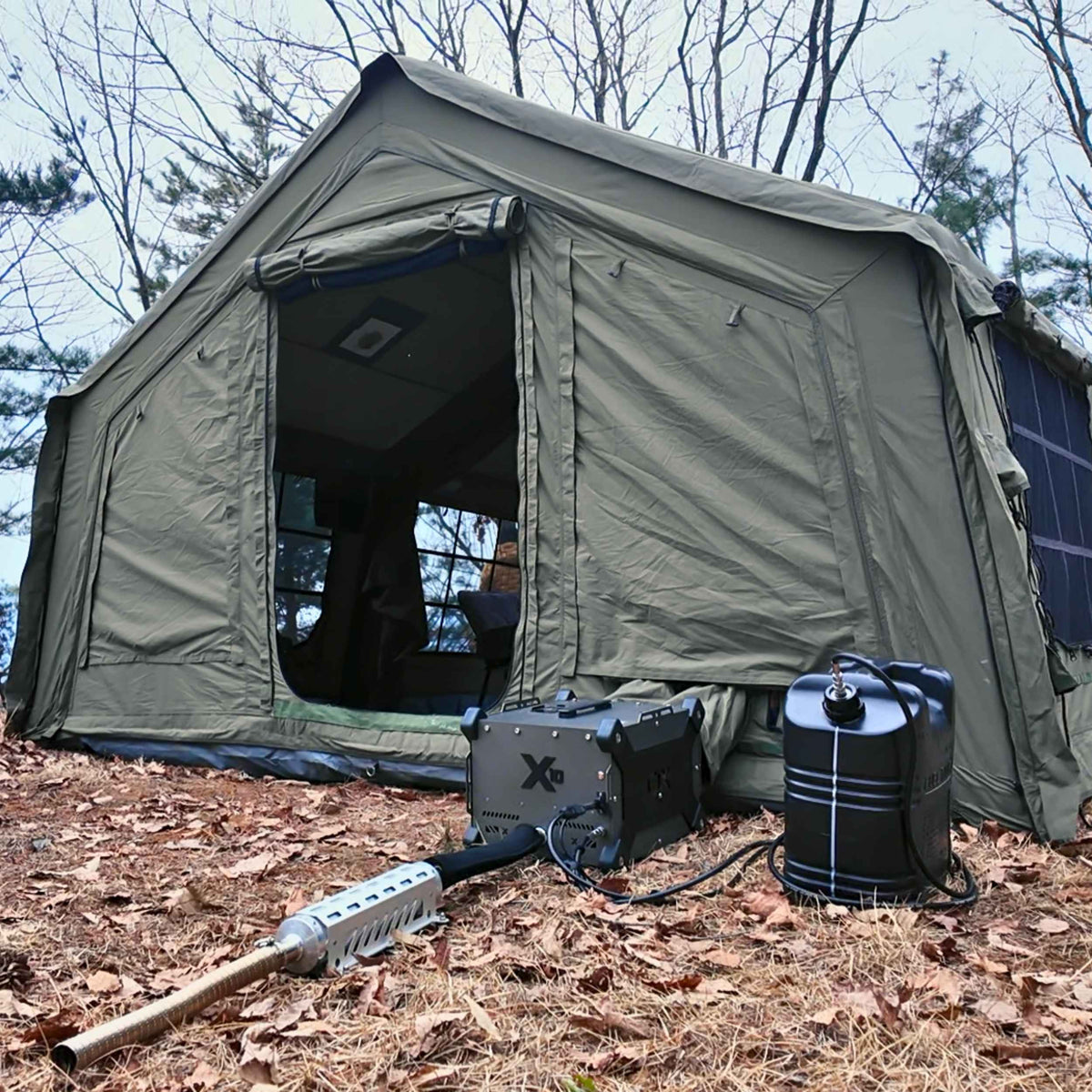
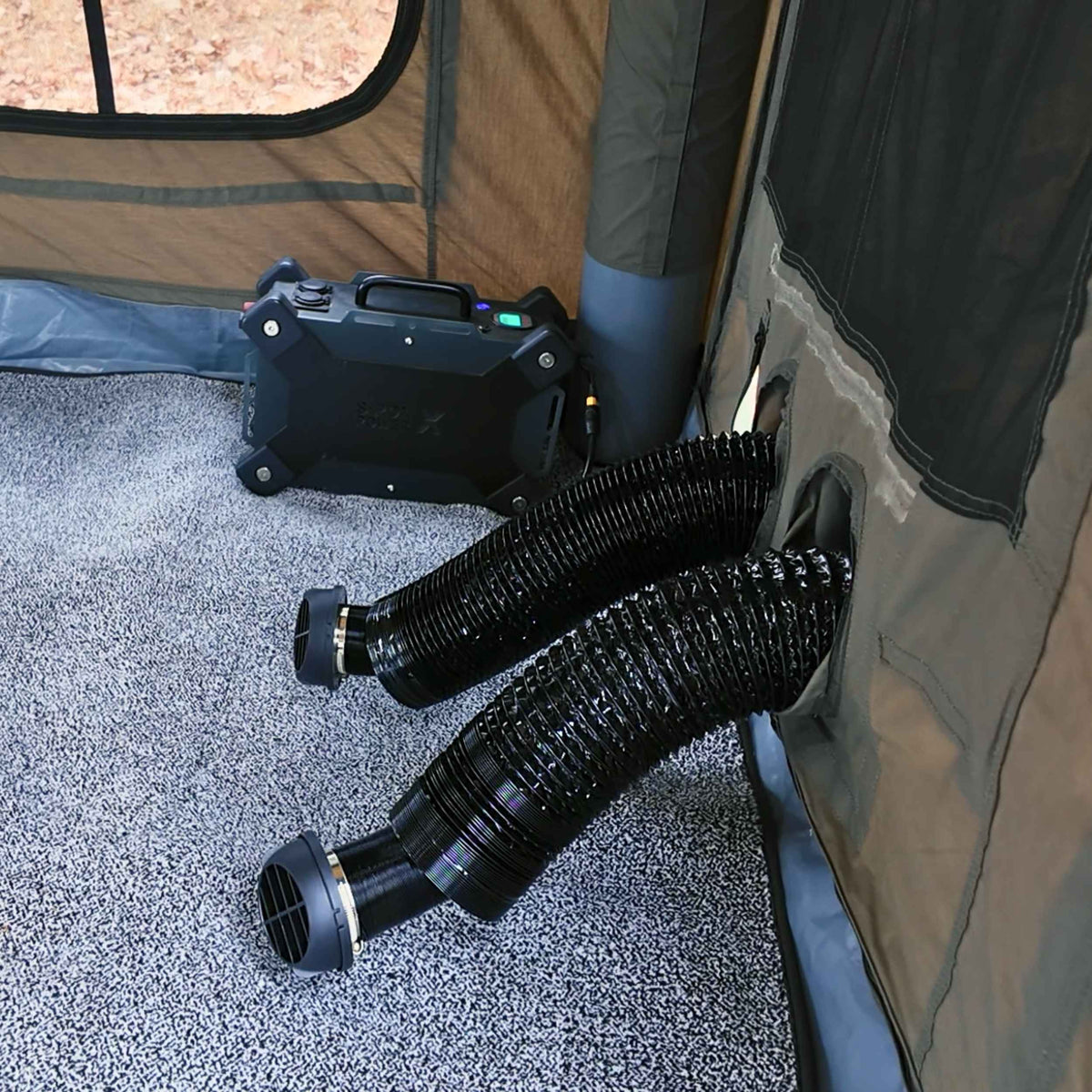
Bring controlled warmth to your camping setup with the OX Diesel Heater X10. Developed by South Korean engineers, this diesel heater delivers up to 10 kW of heat while drawing 10–80 W of electrical power during normal operation. The heater stays outdoors and supplies warm air to your tent through two air outlets.
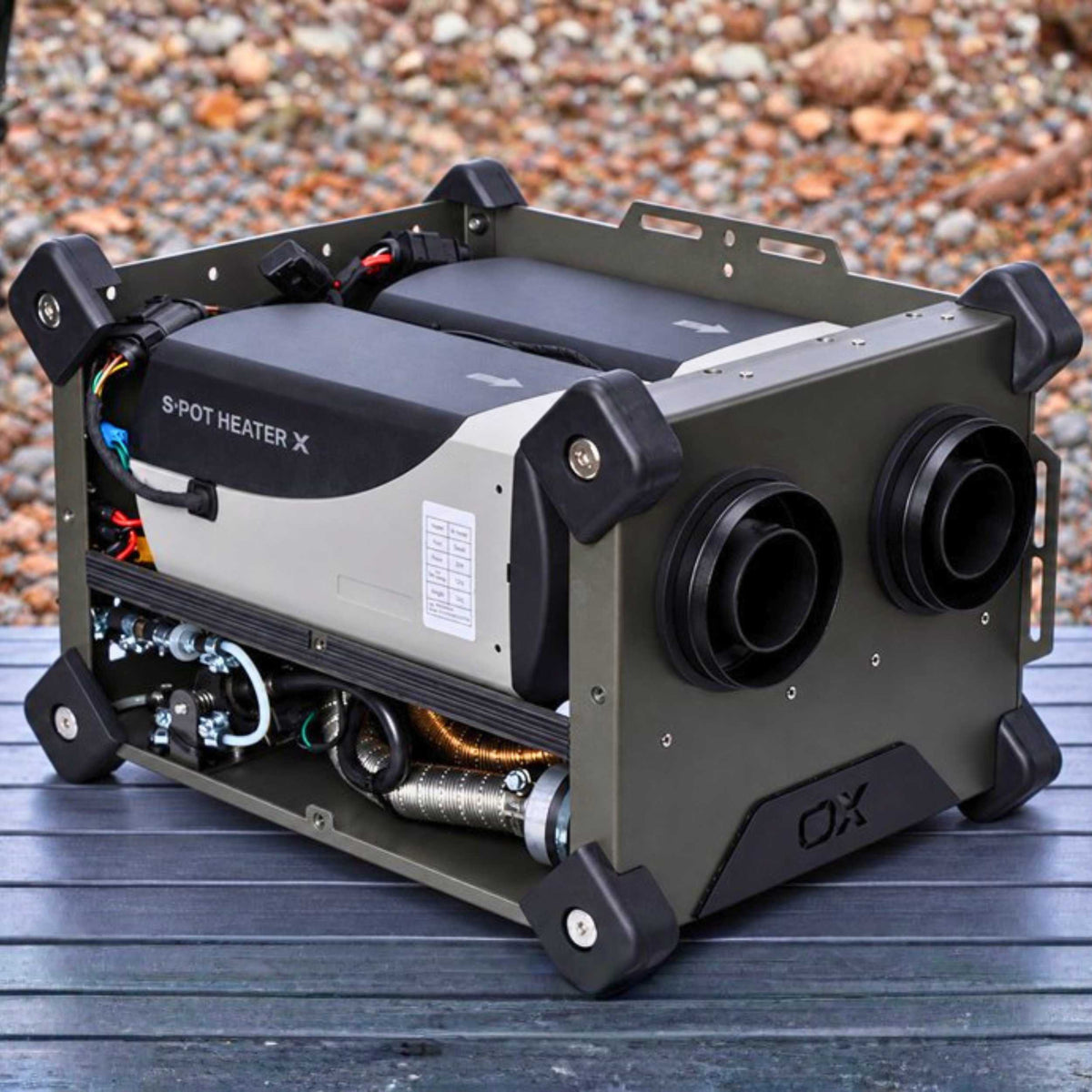
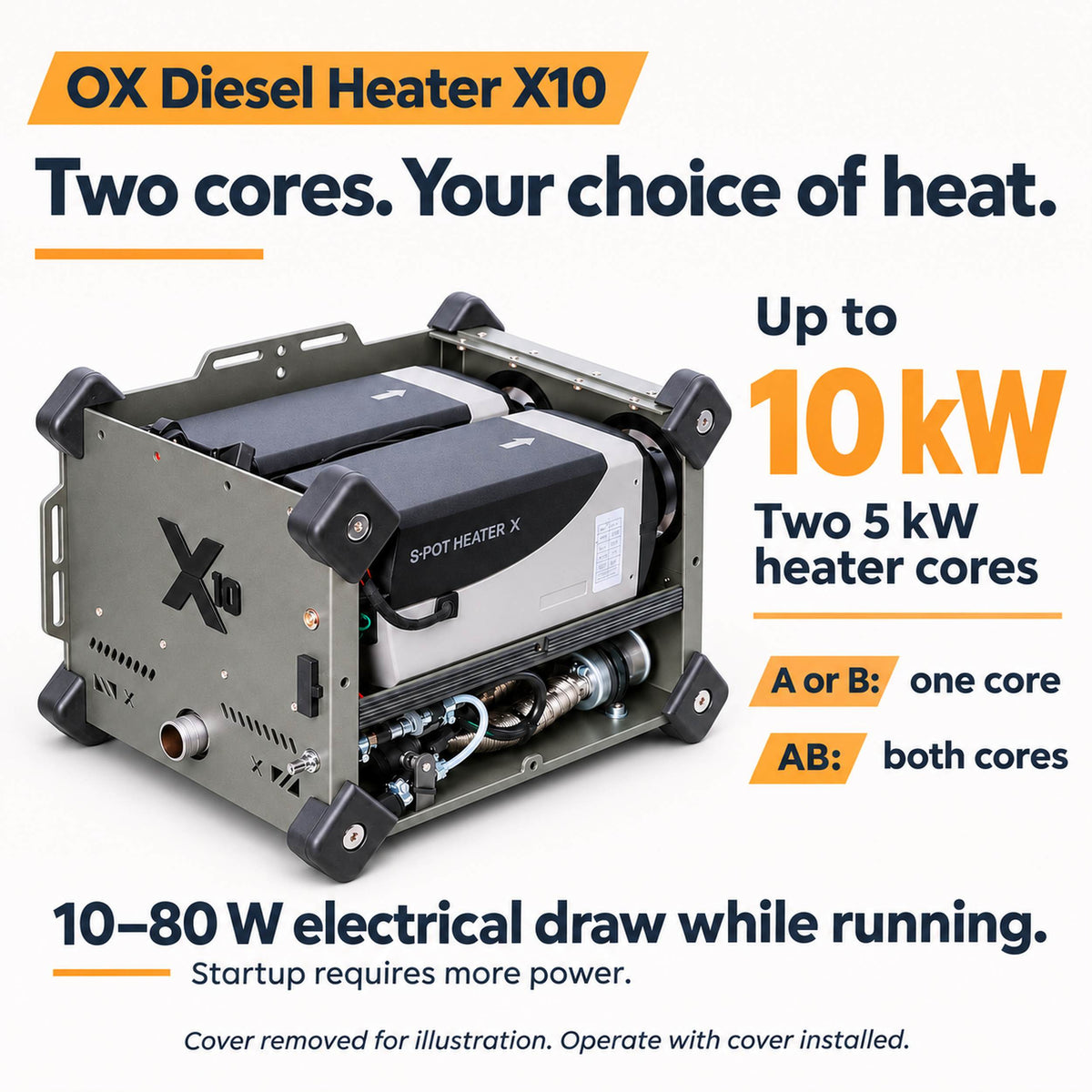
Two 5 kW heating cores in one unit. The X10 combines two independently selectable 5 kW heating cores in a single housing. Run either core on its own for up to 5 kW, or use both together for up to 10 kW of heat.
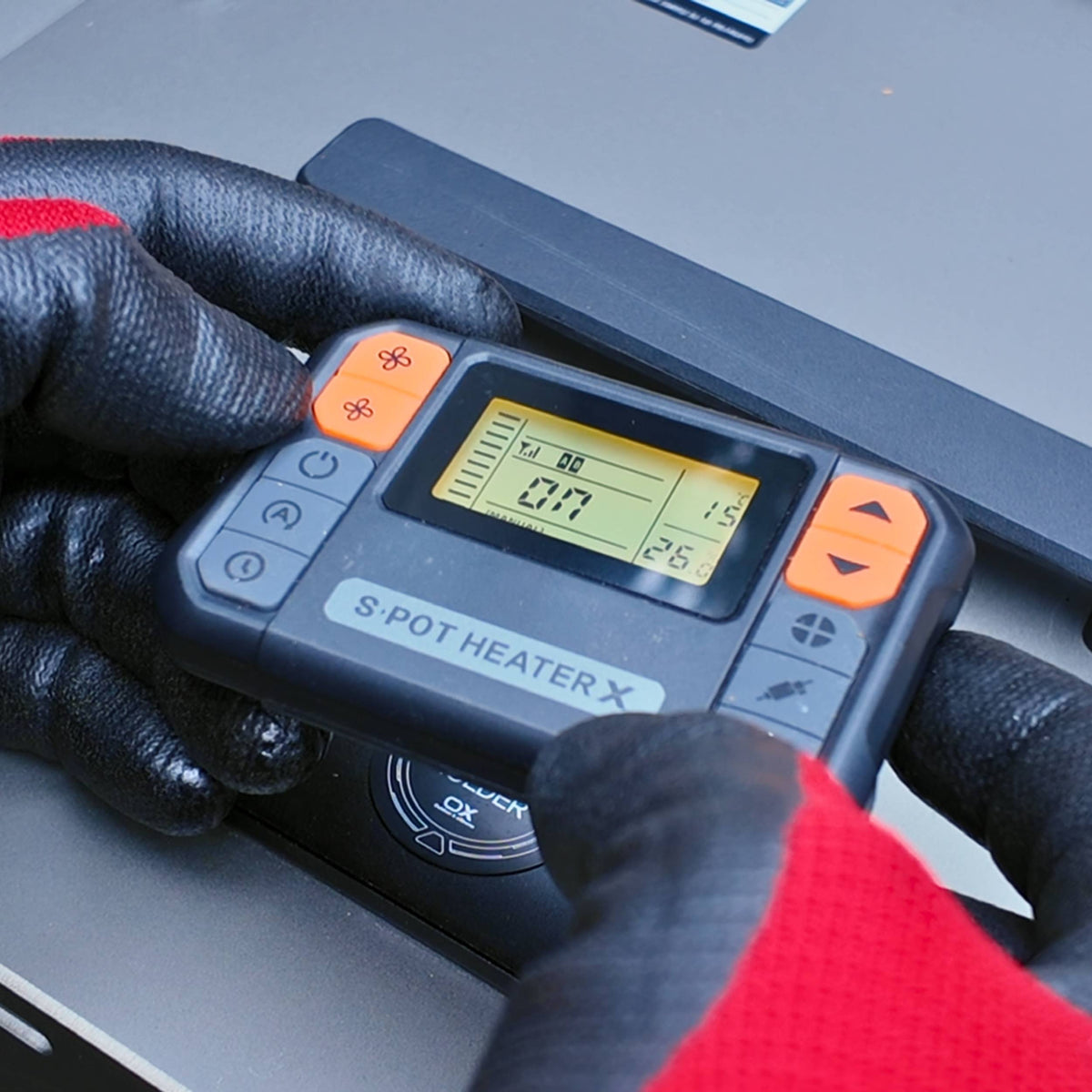
Set your temperature from inside. AUTO mode adjusts heat output to maintain your target temperature. The wireless remote lets you change settings without stepping outside, while its magnetic holder keeps it conveniently attached to the heater during transport.
Choose how you heat. Select from 10 manual power levels, use AUTO temperature control, or choose the separate Stop & Go mode for automatic stopping and restarting. Timer and fan-only functions provide additional flexibility.
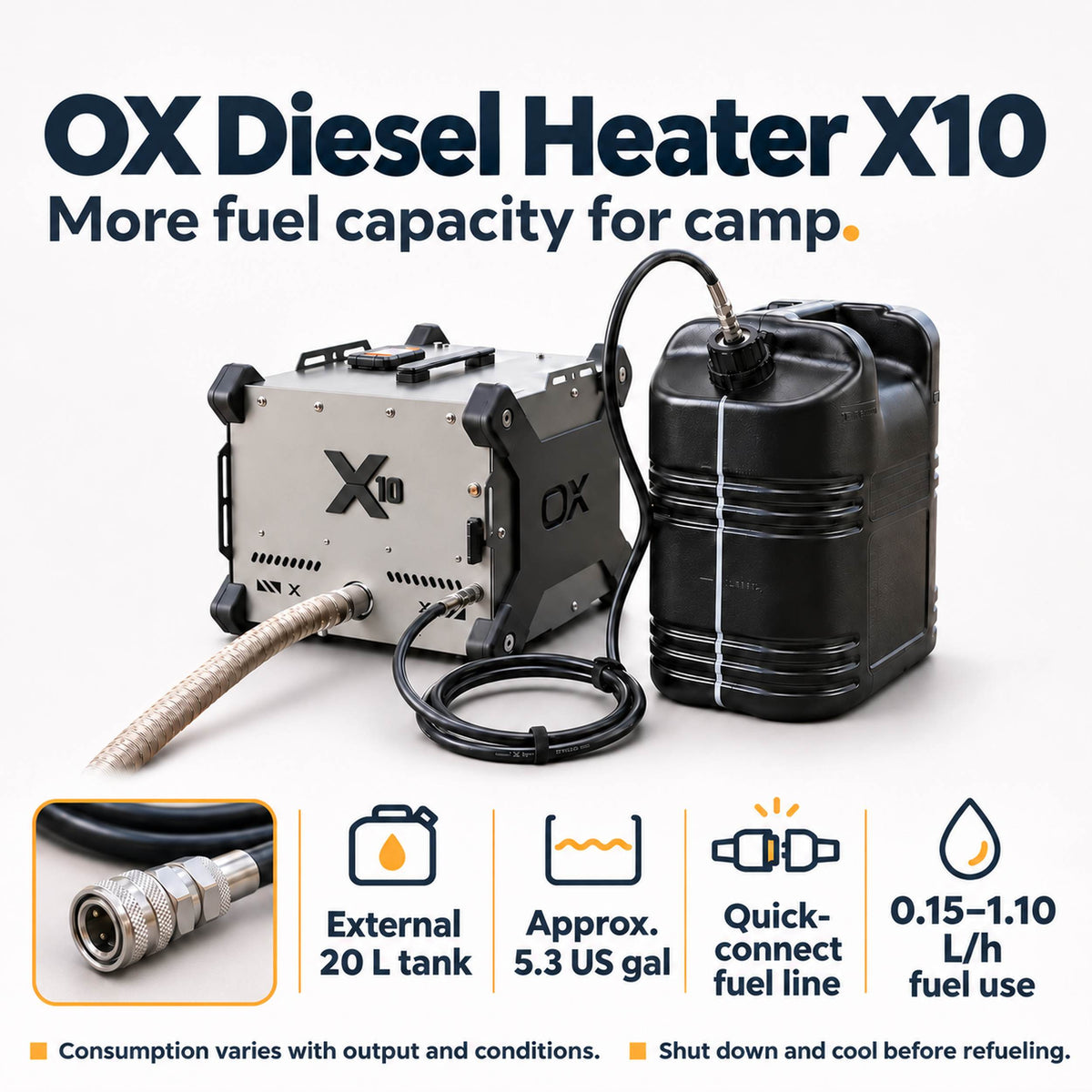
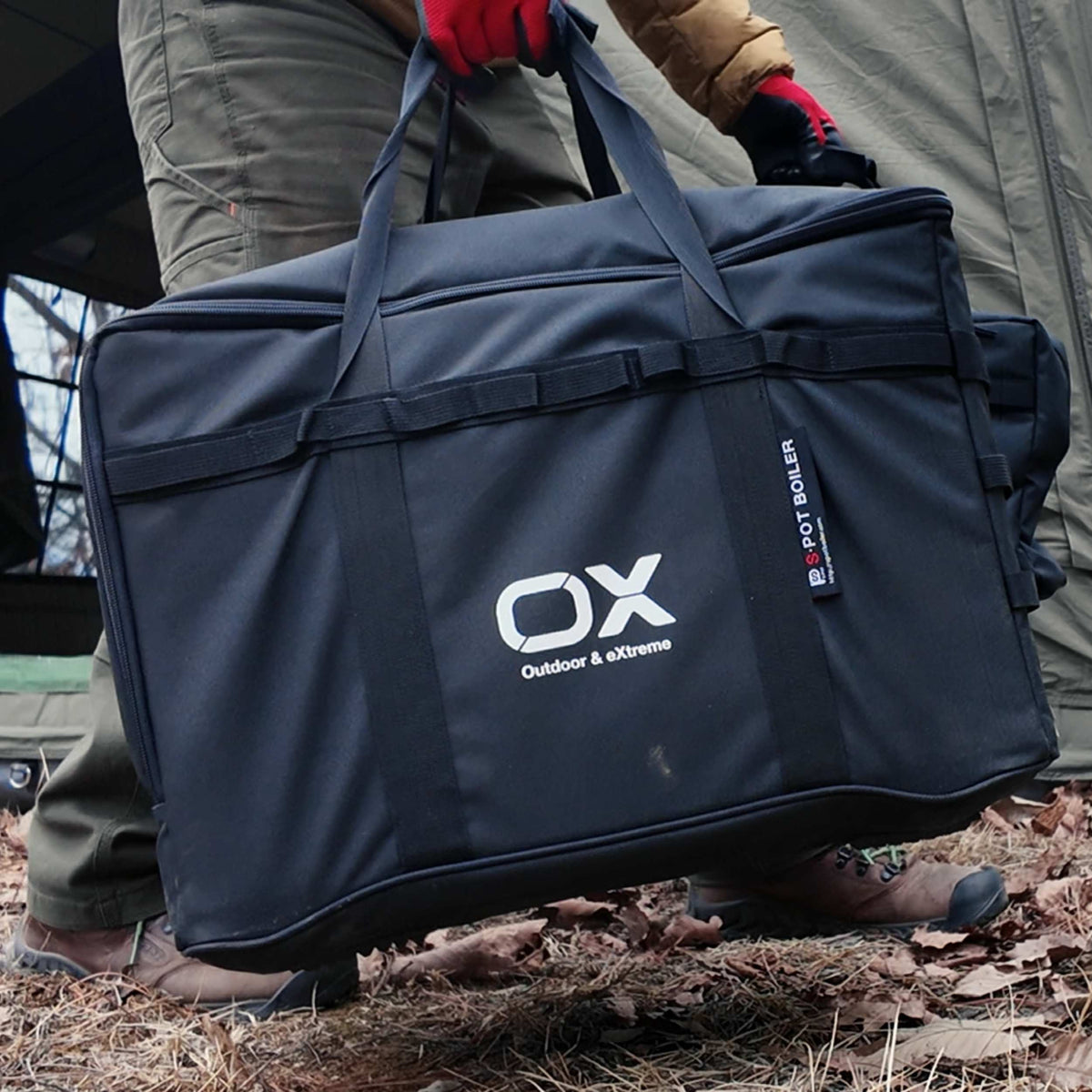
Keep fuel connections simple. The external 5.3 US gal (20 L) diesel tank connects through a quick-connect fitting. The kit includes a U.S. power supply and two carrying bags for transporting the heater and accessories.
CO monitoring at two points. Sensors are built into the heater and wireless remote. Keep the remote powered and connected in the occupied area. Always keep the heater, fuel tank and exhaust outdoors, use a separate working CO alarm inside, and follow the supplied manual. Leave electrical power connected until the shutdown cooldown cycle is complete.
Backed by a 1-year warranty.
Two cores. More ways to warm your camp.
Choose one 5 kW core or run both for up to 10 kW of heat. With two warm-air outlets and a wireless remote, the X10 gives you more control over your camping setup.
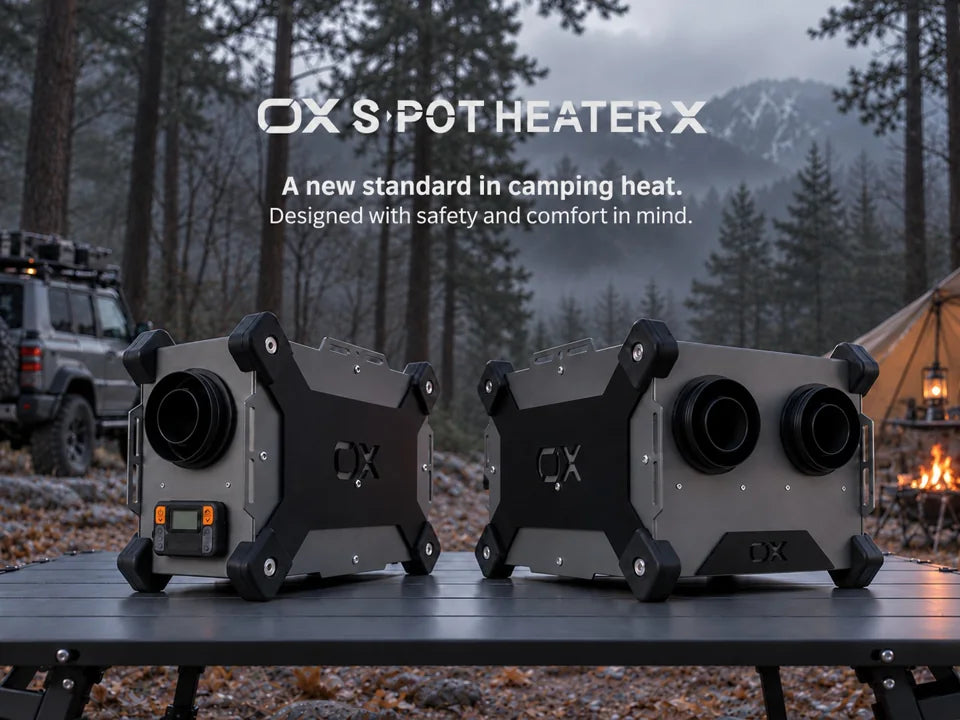
Developed by South Korean engineers for controlled camp heating, without firewood to load or ash to clear.
Which OX fits your camp?
Choose around your space, climate and packing needs. X5 keeps the system compact; X10 adds a second selectable heating core.
| Feature | OX X5 | OX X10 |
|---|---|---|
| Heat output | 1.5–5 kW | 1.5–10 kW |
| Cores / warm-air outlets | 1 / 1 | 2 / 2; A, B or A+B |
| Tank capacity | 10 L / 2.6 US gal | 20 L / 5.3 US gal |
| Body weight | 22.5 lb / 10.2 kg | 36.4 lb / 16.5 kg |
| Body size (in) | 18.1 × 7.3 × 12.2 | 18.1 × 13.4 × 12.2 |
| Running draw | 10–40 W | 10–80 W |
Both include AUTO, a wireless remote, two CO sensors, 10 manual levels, Stop & Go, timer, fan-only mode and backup start/stop on the body. Heating needs depend on insulation, ventilation and weather, not floor area alone.

Use one core. Or both.
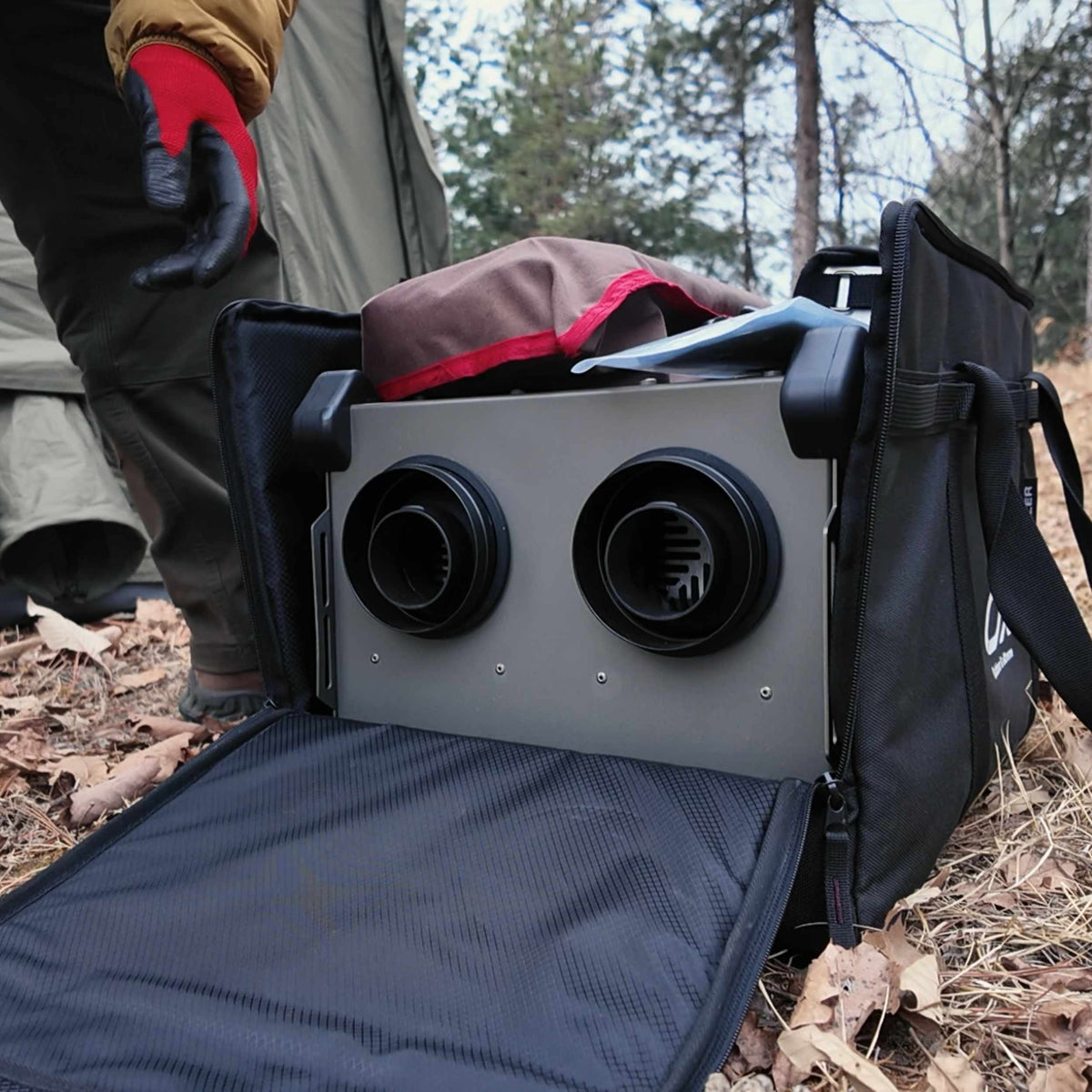
The X10 houses two 5 kW heating cores. Select A or B to run one core, or AB to use both. Two outlets let you plan how warm air enters your space.
Diesel provides the heat. A 12 V DC electrical connection powers the controls, fans and startup sequence.
Cover removed for illustration. Operate with the cover installed. Electrical draw rises during startup.

Set the temperature. Stay comfortable.
AUTO mode adjusts heat output to maintain your target temperature. Keep the wireless remote inside, near the occupied area, and make adjustments without stepping out.
Prefer direct control? Choose from 10 manual power levels. Stop & Go is a separate automatic stop-and-restart mode; timer and fan-only functions add flexibility.
Watch the X10 at camp
Explore the controls, connections and real camping footage. Open a topic and press play. Field readings describe the setup shown, including optional equipment where noted.
More heat when you need it.
Select core A, core B or both. The outlets do not provide separately set room temperatures.
See the temperature inside.
About 70°F (21°C) was observed in this winter setup with an optional heated floor. Tent size, outside temperature, heating duration and mode are not documented. This is not a standard-package performance guarantee.
Hear it outside. Then inside.
Original heater and background sound without commentary. About 44 dB was reported indoors in this setup with an optional heated floor. Distance, output and surroundings change the reading; playback volume is not a calibrated sound measurement.
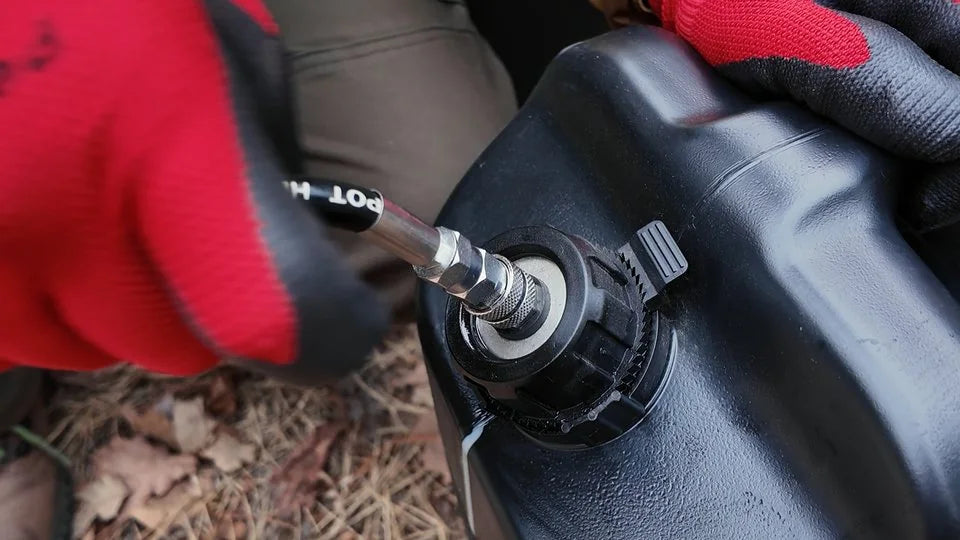
Connect your diesel supply.
Connect the external diesel tank using the quick-connect fuel line. Check for leaks and follow the manual for first-use priming.
Keep the exhaust outdoors.
Secure the exhaust and muffler outdoors. Keep the outlet away from people, openings and air intakes, and clear of snow or water.
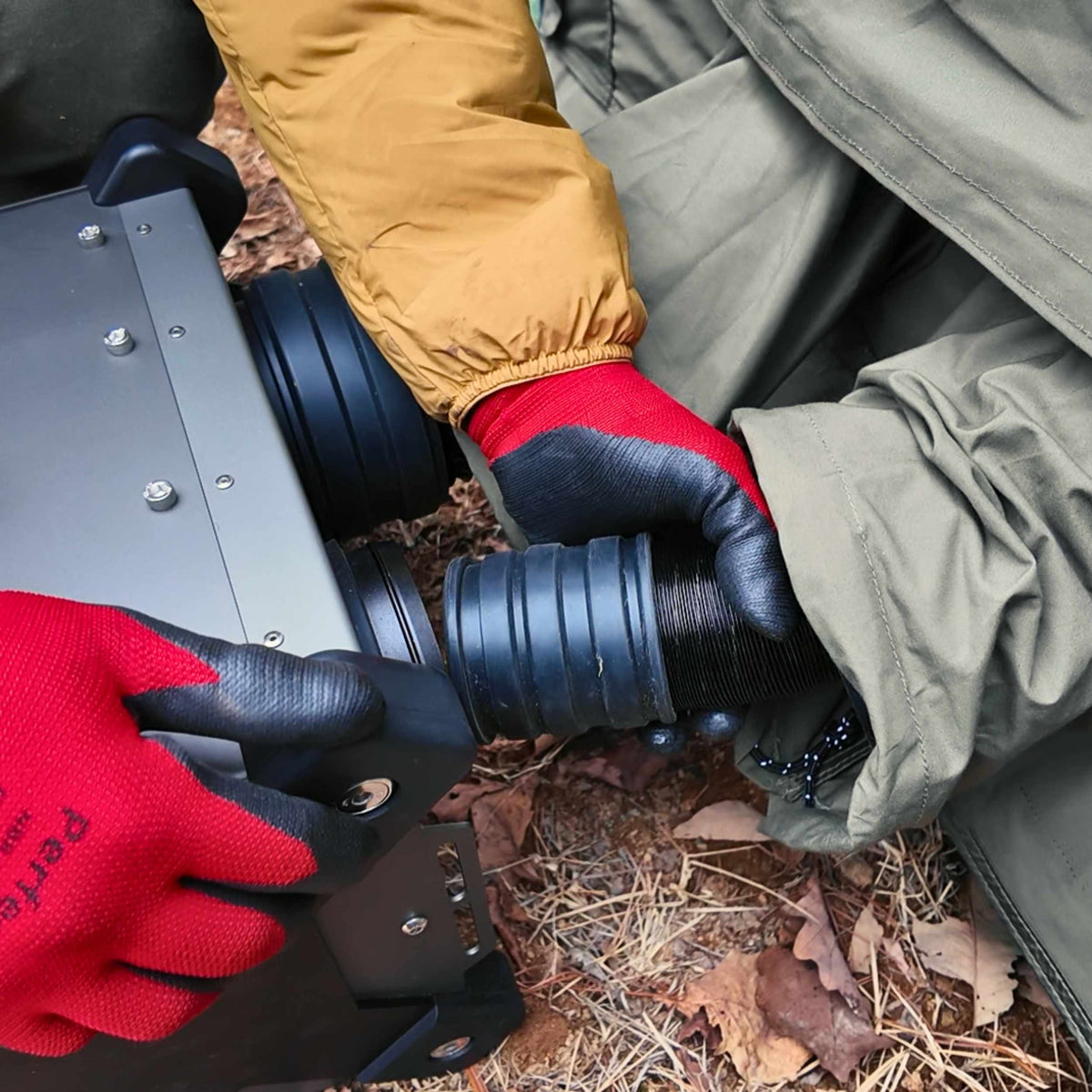
Connect the two air paths.
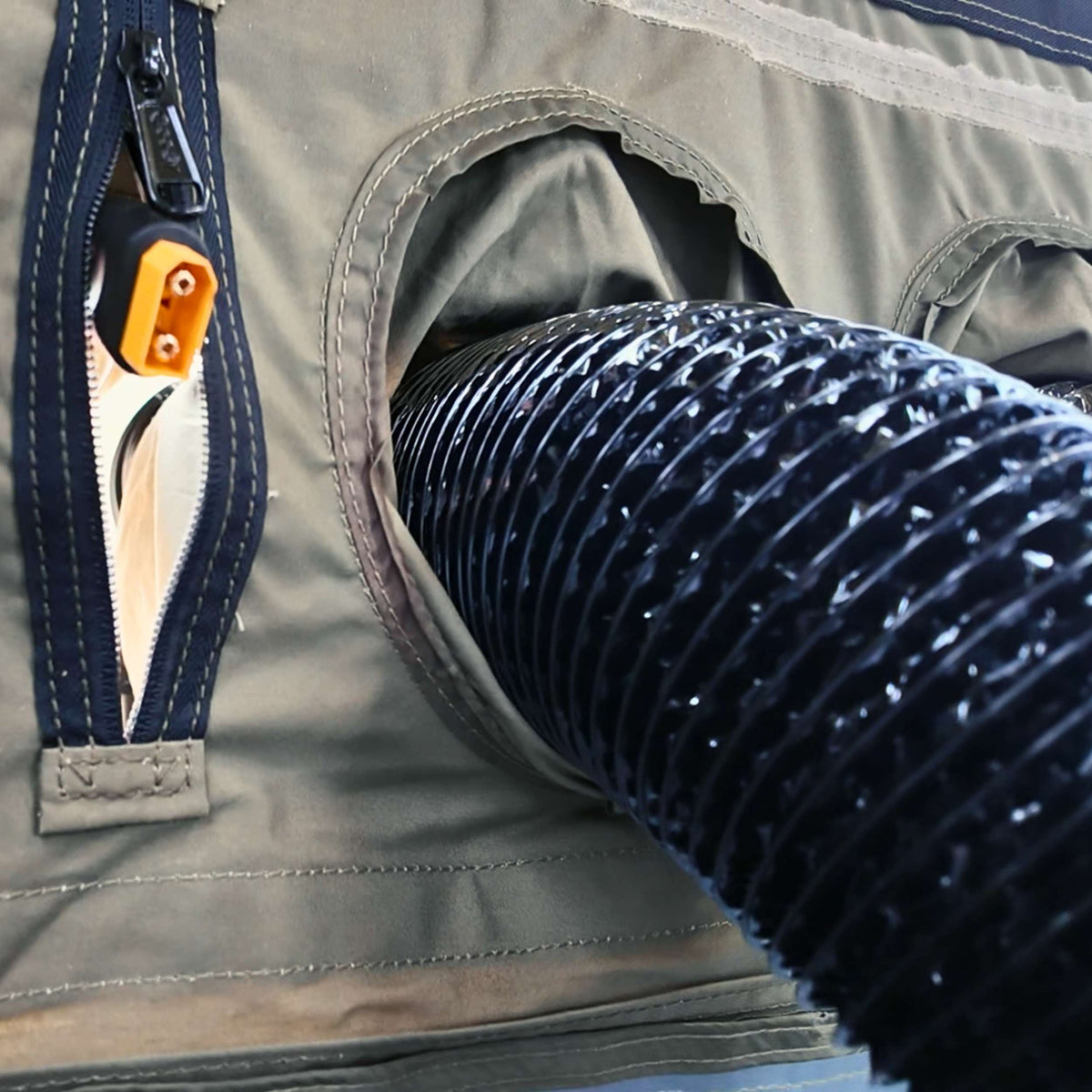
The inner duct supplies warm air; the outer passage returns air to the heater. Keep both paths open and maintain ventilation.
Aim the warmth into your space.
Direct the warm air into the living area. Keep the outlet clear of bedding and gear.
Check the port, not just the battery size.
Check voltage, polarity and startup capacity. A 12 V / 10 A port supplies 120 W, below the stated 130 W startup demand.
Give the heater its own space.
Use stable outdoor placement and the clearances in the manual. Keep the heater, fuel tank and exhaust outside.
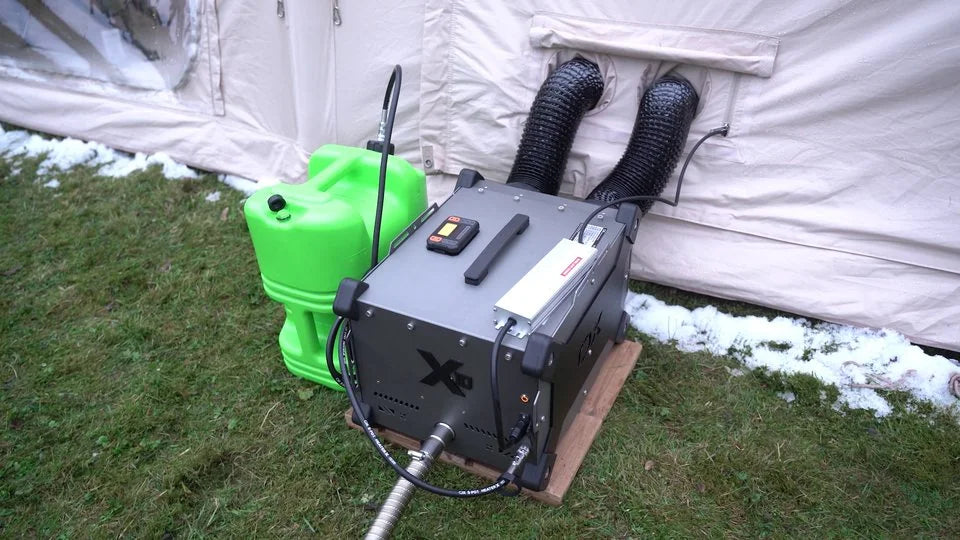
This is where the warm air arrives.
Warm air enters through the ducts while the heating equipment remains outdoors.
Heater outside. Warm air inside.
X10 outside a Coody 17.2 Pro tent. About 81°F (27.3°C) is shown inside. Outside temperature, duration, mode and any additional heating are undocumented. A field observation, not a guaranteed result. No audio.
AUTO temperature control
AUTO adjusts heating output toward the selected temperature. Demonstration filmed with X10; X5 also has AUTO. Follow the manual for your model. No audio.
Stop & Go control
Stop & Go stops and restarts heating as a separate function from AUTO output regulation. Demonstration filmed with X10; X5 also has Stop & Go. Follow your model’s manual. No audio.

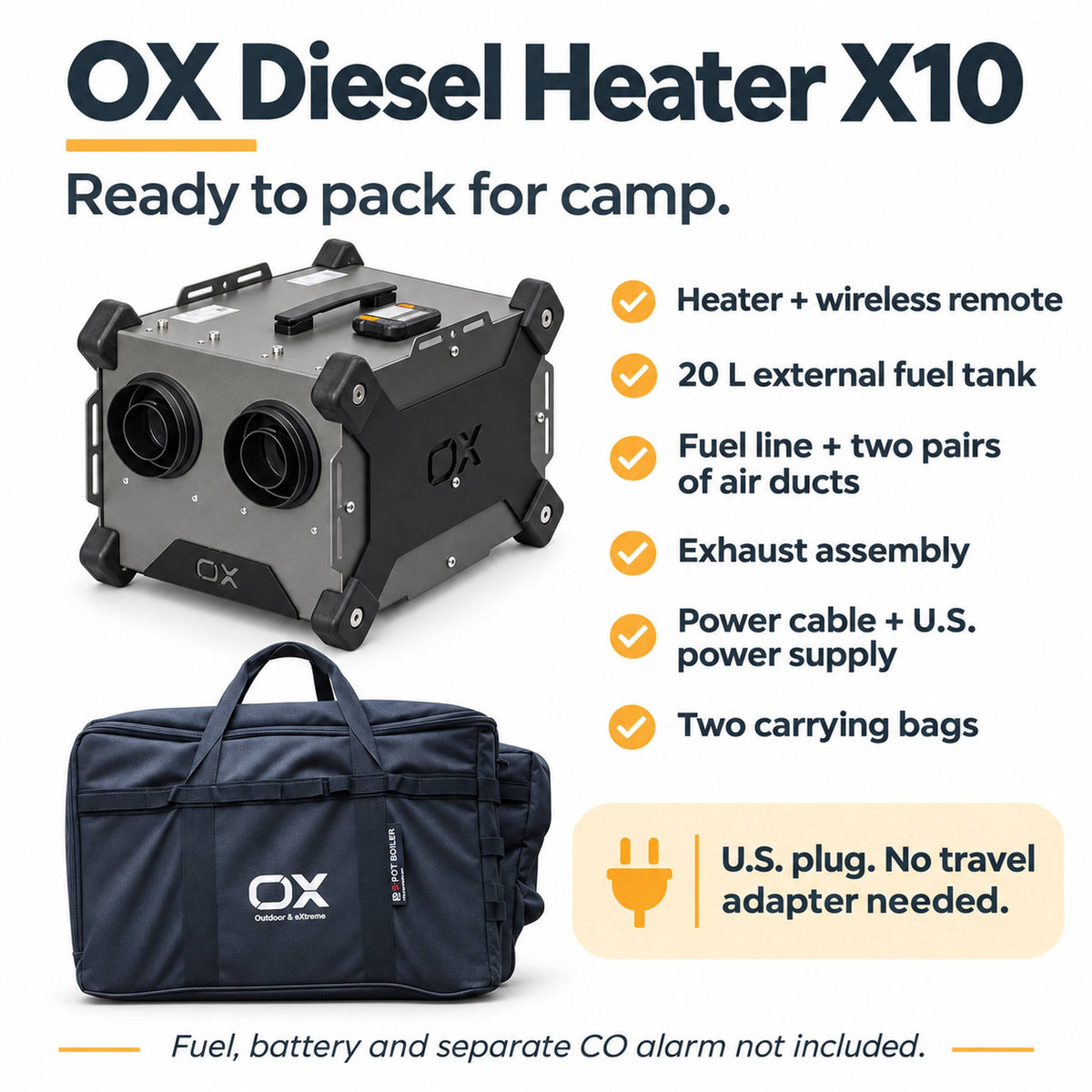
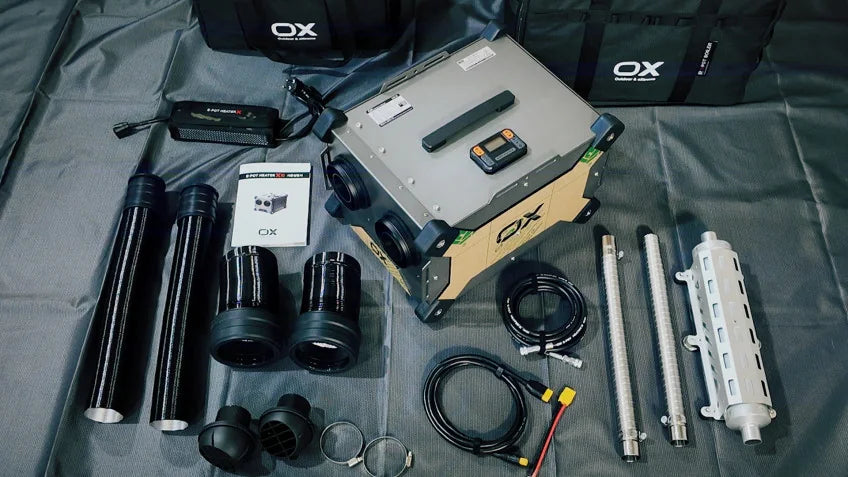
Packed for the next trip.
- OX Diesel Heater X10 and wireless remote with batteries
- 20 L (5.3 US gal) external diesel tank
- Two warm-air ducts, Ø2.36 in (6 cm), and two return-air ducts, Ø4.09 in (10.4 cm)
- Exhaust and muffler assembly
- Quick-connect fuel hose with check valve, about 118.1 in (3 m)
- XT90 power cable, about 78.7 in (2 m), and power supply with a native U.S. plug
- Two carrying bags and an English operating manual
Diesel, battery or power station, tent, separate CO alarm, vehicle mount, and tent-specific duct fittings are purchased separately. A boiler and heated floor are optional equipment, not included. No travel plug adapter is needed for the supplied U.S. power supply.

Warm air inside. Equipment outside.
Keep the heater, external tank and exhaust outdoors. The coaxial air connection carries warm air through the inner duct and returns tent air through the surrounding passage. Keep both paths clear, maintain ventilation and position exhaust away from the return intake and tent openings.
CO monitoring is built into both the heater and remote. Keep the remote powered and connected in the living area, and use a separate working CO alarm.
After switching off, keep the power connected until the heater completes its cooldown cycle.
Prepare for your first trip
Diesel produces the heat; electricity powers the fan, pump and controls. X10 uses 10–80 W while running, with higher startup demand. Plan both fuel and electrical energy for your trip.
Use this overview alongside the complete operating manual.
Your X10 manual
English PDF covering installation, controls, shutdown, care and troubleshooting. Opens in a new tab.
CO monitoring in two places
CO sensors in the heater and wireless remote provide monitoring at the unit and in the occupied space, with alarms and automatic shutdown protection. Keep the remote switched on, supplied with working batteries and connected. Its sensor protection is unavailable if the remote is off, discharged or disconnected.
Built-in monitoring does not replace outdoor installation, ventilation or a separate working CO alarm.
Connect before you start
Place the heater on a stable, noncombustible surface outdoors. Connect the supply/return ducts and exhaust as directed, keeping exhaust away from doors, windows and return-air intakes. Keep the external tank away from hot parts. Connect fuel, open the tank vent as instructed and check for leaks before connecting power. Follow your model’s manual for first-start priming.
Match the power source to startup
The heater takes 12 V DC through XT90. Never connect 24 V or AC directly to it. Use the supplied U.S.-plug power supply with a suitable AC source, or an appropriate protected 12 V connection with correct polarity.
Startup can reach 130 W. A 12 V / 10 A outlet supplies only 120 W and may switch off. Check the exact port, cable and adapter, including conversion losses; battery capacity alone does not establish compatibility.
Choose temperature or heat output
AUTO adjusts heat output toward 46–97°F (8–36°C). MANUAL offers 10 levels. Stop & Go is a separate automatic stop/restart function. Timer and fan-only modes add control; fan-only circulation is not air conditioning. The wireless remote attaches to a magnetic holder on the heater, with backup start/stop on the body.
Shut down, then let the fan finish
Use the controls to stop heating. Keep electrical power connected until the complete cooldown cycle ends and the fan stops. Disable timer and automatic-start functions before refueling, transport or maintenance. Let the body and exhaust cool before disconnecting and packing.
Pack and restart after storage
Pack only a cooled system. Close the tank vent for transport as directed and check for leaks. Before the next trip, inspect fuel lines, fittings and wiring, clear the air ducts and exhaust, and use diesel suited to the weather. Test the exact power setup before leaving. A separate battery helps preserve your vehicle’s starting power.
Ground tents, rooftop tents and campers
Route warm air through a suitable duct entry with the heater, tank and exhaust outdoors. Check duct reach, clearances and any external mount before use; vehicle mounting hardware is not included. X5 suits lighter packing and lower heat demand; X10 provides extra capacity. A coaxial connection carries warm air through the inner duct and return air through the outer passage.
Outdoor housing and weather
X10 has a rain-resistant aluminum housing with protective corner bumpers. It is not described as waterproof or submersible. Follow the manual for outdoor placement; protect the power supply and connections, keep the remote indoors and avoid standing water.
Know your X10
| Heating output | 1.5–10 kW |
|---|---|
| Heating cores / outlets | 2 / 2 |
| Electrical input | 12 V DC · XT90 |
| Running electrical draw | 10–80 W |
| Startup electrical draw | 100 W for about 2 min, then 130 W for about 1 min |
| Fuel | Diesel |
| Fuel consumption | 0.04–0.29 US gal/h (0.15–1.10 L/h) |
| Tank capacity | 20 L (approx. 5.3 US gal) |
| Airflow | 35–218 CFM (60–370 m³/h) |
| AUTO temperature setting | 46–97°F (8–36°C) |
| Heater dimensions | 18.1 × 13.4 × 12.2 in (46 × 34 × 31 cm) |
| Heater weight | 36.4 lb (16.5 kg) |
| Warranty | 1 year |
| Operating ambient temperature | −40 to 68°F (−40 to +20°C) |
| Controls | Wireless remote; AUTO, 10 MANUAL levels, Stop & Go, timer, fan-only |
| CO monitoring | Sensors in the heater and remote; alarms and shutdown protection |
| U.S. power connection | Supplied power unit with native U.S. plug; heater input is 12 V DC |
Dimensions and weight refer to the heater body. Allow additional space for the external tank, ducts and exhaust. Heat output and electrical draw are different measurements.
Before you head out
Does the heater go inside the tent?
No. Place the heater, fuel tank and exhaust outdoors. Bring warm air into the tent through the air duct. Follow the manual for clearances and ventilation, and use a separate working CO alarm inside.
Can I use a portable power station?
Use a compatible 12 V DC supply or the supplied U.S. power supply with a suitable AC source. Check the continuous output and startup capacity of your source. Startup needs more power than normal operation; never disconnect power during cooldown.
How do AUTO and Stop & Go differ?
AUTO adjusts heat output to maintain the target temperature. Stop & Go is a separate mode that automatically stops and restarts heating. MANUAL offers 10 selectable power levels.
How long will a tank last?
Runtime depends on the selected output, outdoor conditions and the way the heater cycles. Use the fuel-consumption range as a planning guide, not a guaranteed overnight runtime.
What should I have ready before use?
You need diesel, a suitable electrical source, a separate working CO alarm and a suitable duct entry into your tent. Read the supplied English manual before connecting or operating the heater.
Which OX model should I choose?
The X5 offers a narrower body, one outlet and up to 5 kW of heat. The X10 adds a second selectable 5 kW core, two outlets and a 20 L tank. Match the heater to your setup and conditions; heating needs vary with tent size, insulation and ventilation.
How do I estimate battery capacity?
Multiply expected average watts by operating hours, then allow for conversion losses, cold weather, startup and reserve. For illustration, 40 W for 10 hours uses 400 Wh; keeping 20% of nominal capacity in reserve suggests 500 Wh. This is a calculation, not a tested runtime. Battery chemistry also affects usable capacity.
How long could a 1,000 Wh power station run it?
At an assumed 40 W average, 1,000 Wh is theoretically 25 hours, or about 20 hours with 20% reserved. Actual output, cold weather, restarts and conversion losses can shorten this. Confirm startup compatibility and leave power for cooldown.
What do W, Wh and Ah mean?
W measures power draw; Wh measures energy. Multiply battery Ah by voltage for nominal Wh: 100 Ah × 12 V = 1,200 Wh. Usable energy is lower. The current rating of the output port matters separately.
Does AUTO guarantee lower fuel use?
AUTO regulates heat output toward the target temperature. Lower output uses less fuel than continuous maximum output, but weather, heat loss and settings determine actual consumption. No fixed savings percentage is promised.
Does it need a U.S. plug adapter?
No. The included power supply has a native U.S. plug. Follow its rating label; the heater itself requires 12 V DC.
Are 70°F and 44 dB guaranteed?
No. Those observations came from one winter setup with an optional heated floor. The tent, weather, duration and mode are not fully documented. Sound varies with distance and output; playback volume is not a calibrated reading.
Are the two outlets separate temperature zones?
No. A, B and A+B select heating cores; they do not set an independent room temperature for each outlet.
A closer look at X10


Actual product and field photographs. Open a photo for a larger view. Refer to the package list and manual for your supplied equipment and installation.